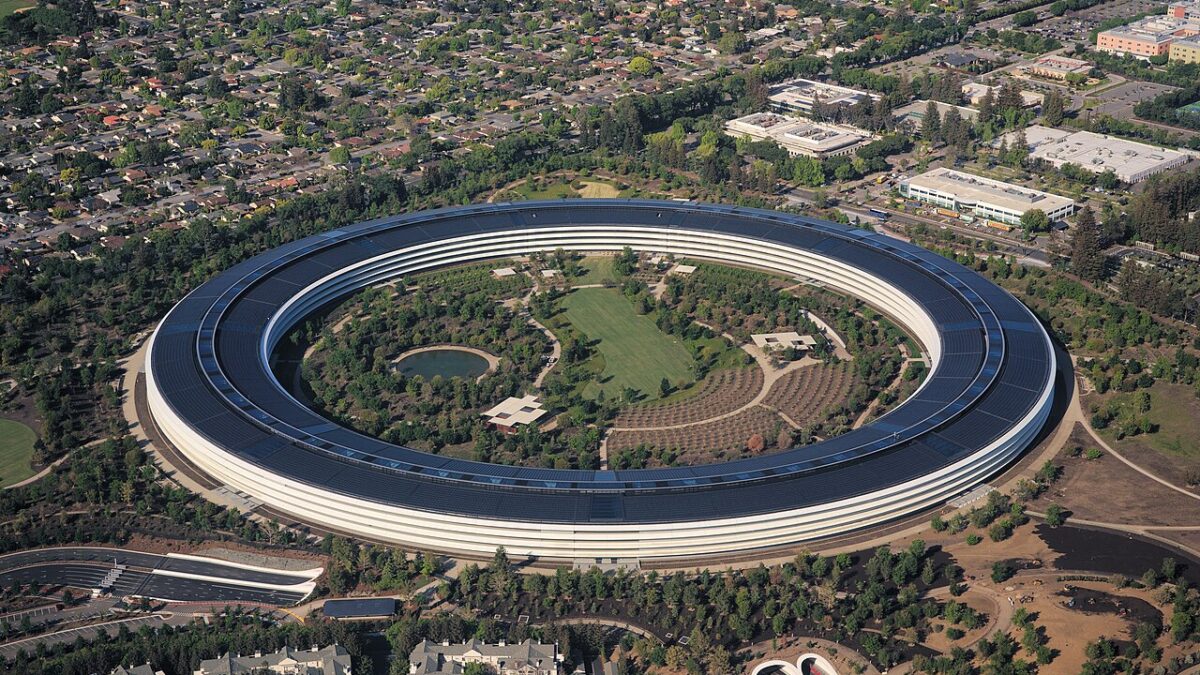
Weeks after WWDC 2026, one detail from that event still hasn’t gotten the attention it deserves: Apple’s Private Cloud Compute — the system built specifically so Apple never has to send your data to someone else’s servers — is now running, in part, on someone else’s servers. Specifically, on Google Cloud, powered by Nvidia GPUs.
Here’s my honest take: this isn’t a scandal, and it isn’t really “news” anymore given how long it’s been public. It’s evidence of something bigger — that in AI infrastructure, being rivals and being business partners aren’t mutually exclusive anymore. Apple, Google, and Nvidia compete for your attention and your wallet everywhere else, but underneath the products, they need each other’s hardware to function. That’s the real story, and it’s more interesting than any single headline about “who partnered with whom.”
What Actually Happened (and When)
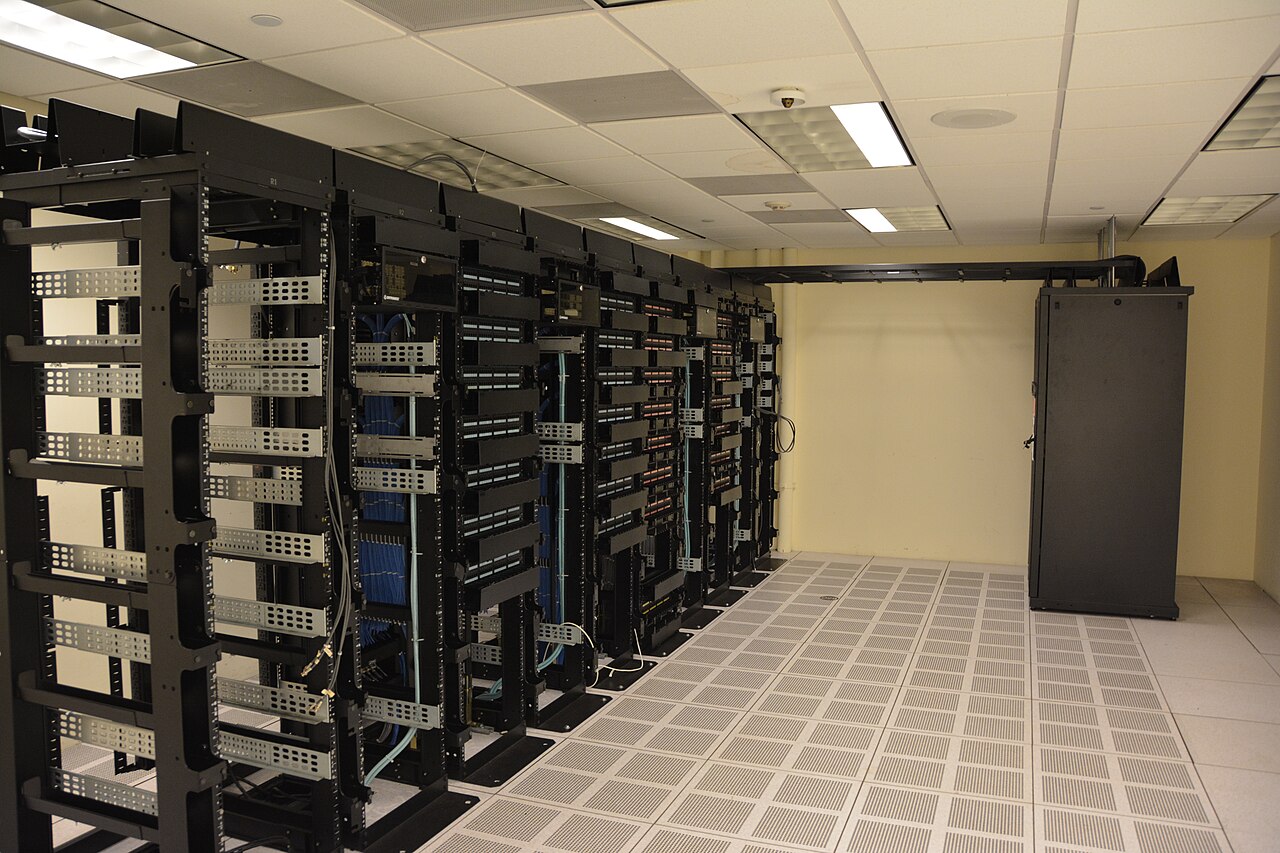
Let’s get the facts straight, because the timeline matters here. Reporting on this arrangement started rolling out in late May and June 2026 — 9to5Mac first flagged it on May 28, AppleInsider followed on June 4, and CNBC, Seeking Alpha, CIO Dive, and others covered it in depth around June 8–10, timed to WWDC. According to that reporting, Apple’s Private Cloud Compute — the backend that handles heavier Apple Intelligence workloads like agentic tool-use and complex reasoning your iPhone can’t crunch on-device — is expanding beyond Apple’s own data centers for the first time. The new capacity runs on Google Cloud infrastructure, built on Google’s own Titan chip, Nvidia’s Blackwell GPUs running “Confidential Computing,” and Intel CPUs with trusted execution (TDX) to keep the whole thing walled off and encrypted end to end. Nvidia’s own technical blog post on the collaboration calls it the first time these confidential-computing primitives have been assembled into “a comprehensive, end-to-end confidential inference pipeline capable of operating at global scale” — corporate language for “we built the trust layer that lets Apple say yes to this.”
Separately — and this is a related but distinct story — Apple also worked with Google’s Gemini models to help develop its next generation of Apple Foundation Models. Two different flavors of the same idea: Apple leaning on Google’s AI stack in ways it would never advertise on a billboard.
No one at Apple, Google, or Nvidia has gone on the record with a quote confirming any of this in a press release. There’s no disclosed price tag, no GPU count, no contract length. What we have is a well-sourced, multi-outlet technical picture with the corporate messaging left conspicuously blank.
Why Apple Needs Someone Else’s GPUs
This is the part that actually explains the “why.” Apple’s total 2026 capital expenditure sits around $14 billion. Compare that to the four biggest AI infrastructure spenders — Amazon (~$200 billion), Alphabet (~$175–185 billion), Microsoft (~$190 billion), and Meta (~$115–135 billion) — a combined roughly $725 billion in 2026 alone, up 77% year over year. Apple isn’t in that conversation, and it was never going to be. Building out Nvidia-scale GPU farms from zero, on Apple’s own balance sheet, on Apple’s own timeline, would take years and tens of billions of dollars Apple has shown no appetite to spend.
Renting capacity that already exists — from a company that already built it, using chips Apple doesn’t manufacture — is simply the faster, cheaper path to frontier-scale AI compute. Tim Cook said as much on Apple’s earnings call, describing AI spending as the company “clearly investing more” in, while framing it as incremental progress on an existing roadmap rather than a strategic pivot. Reading between the lines: Apple isn’t trying to out-capex Google or Amazon. It’s trying to rent just enough of their infrastructure to keep Apple Intelligence competitive without blowing up its margins. That restraint looks smarter by the week — we’ve already covered the investor doubts creeping into the wider AI infrastructure bet, and not being the one who owns $190 billion in idle GPU capacity if sentiment turns is its own kind of hedge.
The “Frenemies” Angle
Patrick Moorhead of Moor Insights & Strategy put it more bluntly than any corporate statement ever would, reacting to the news in June: “Awwww, Apple and Nvidia are friends again. Nvidia won that standoff for sure.” That line captures something real — Apple and Nvidia have had a genuinely frosty relationship for years (Apple dropped Nvidia GPUs from its own Macs back in the 2010s over a public falling-out), and Apple and Google compete head-on for the exact same AI assistant use case, Siri versus Gemini, on billions of devices.
And yet here they are, wiring their infrastructure together. This is the part of AI’s current moment that doesn’t get said out loud enough: at the compute layer, the biggest tech companies increasingly look less like rivals and more like landlords and tenants, trading capacity because the alternative — everyone building redundant, world-scale GPU farms in parallel — is a waste nobody can actually afford, not even Apple, Google, or Nvidia.
Devil’s Advocate: Isn’t This Still Just Rivalry?
The counterargument is fair: infrastructure partnerships don’t erase product competition. Apple Intelligence and Gemini are still fighting for the same home screen. Apple could, in theory, walk away from this arrangement the moment its own AI silicon and data centers catch up — nothing here is permanent, and nothing here is a merger. You could read this whole story as Apple simply doing what any company does when it’s behind: buying time from whoever’s willing to sell it.
That’s true, but it doesn’t hold up against the capex math. Apple isn’t behind by a matter of months it can quietly close with a clever chip design — it’s behind by an order of magnitude in infrastructure spending that would take the better part of a decade to close on its own, even if it wanted to. Renting Nvidia GPUs through Google Cloud isn’t a stopgap while Apple builds its own equivalent. It’s an acknowledgment that, in this specific layer of the AI stack, Apple has decided it never needs to.
The Real Story
Strip away the “who’s friends with whom” framing and what’s left is a genuinely new dynamic: the companies fighting hardest over your AI assistant are quietly dependent on each other’s silicon and data centers to make it run at all. That’s not a partnership announcement — it’s a structural fact about how AI compute works in 2026, and it’s not going away just because nobody wants to put out a press release about it. The compute-for-cash logic behind SpaceX’s arrangement with Anthropic follows the exact same shape, and it’s worth watching for who else in tech quietly becomes a GPU tenant next.
If anything, the muted reaction to this story — barely covered outside a few outlets, no follow-up in the two months since — tells you it’s already the new normal. And that, more than any single deal, is what should get more attention than it has.
Deixe um comentário