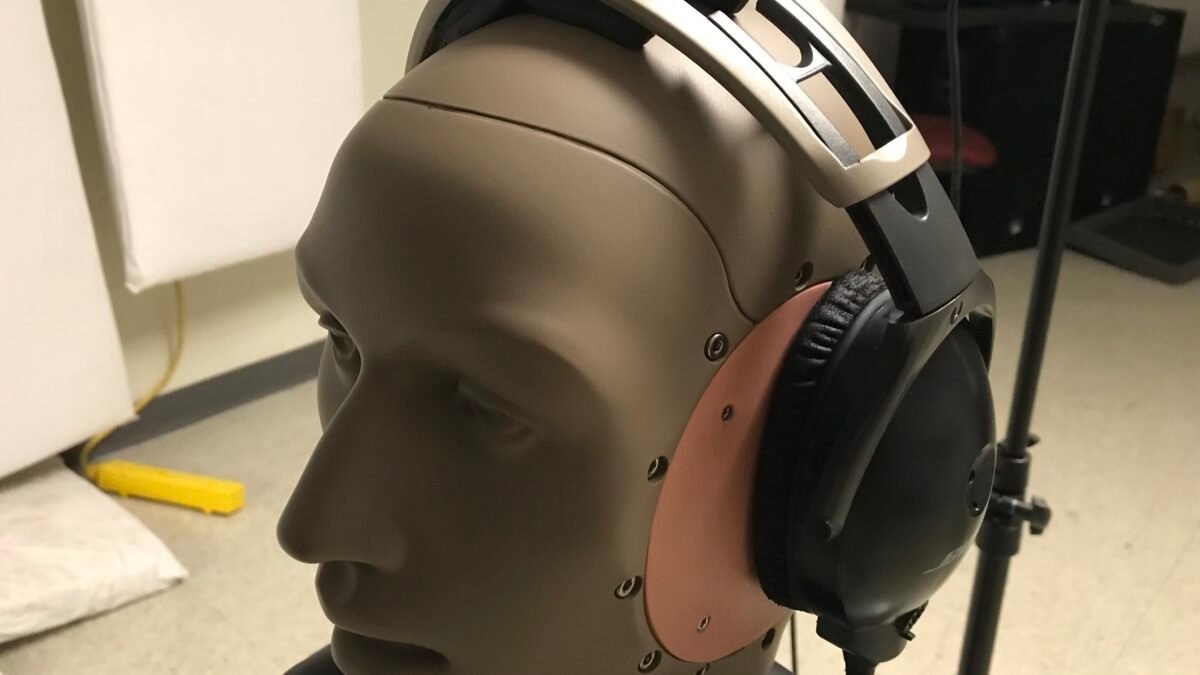
It was April 1978, and Dr. Amar Bose was flying home to Boston from a business trip in Switzerland. He put on the airline’s headphones, hoping to relax to some music over the Atlantic. Instead, he got engine noise with a faint melody buried somewhere underneath it. Most people would have given up and pulled the headphones off. Bose, an MIT professor and acoustics researcher, spent the rest of the flight scribbling equations on a napkin, working out a mathematical way to subtract the noise from what he was hearing in real time.
By the time the plane landed, he’d sketched the outline of what would become active noise cancellation as we know it. He founded a Noise Reduction Technology Group the moment he got home. What most people don’t know — and what makes this story more interesting than the version Bose likes to tell — is that he wasn’t actually first.
The Inventor Nobody Credits: Lawrence Fogel and the Helicopter Cockpit
Two decades before Bose’s transatlantic epiphany, an engineer named Lawrence J. Fogel filed a series of patents — U.S. Patents 2,866,848, 2,920,138, and 2,966,549, plus a Canadian counterpart — for active noise cancellation inside helicopter cockpits. Between 1958 and 1961, Fogel’s system used microphones and inverted sound waves to cancel out the deafening rotor noise that made pilot communication nearly impossible. It’s the earliest known patented application of the exact principle every ANC headphone still uses today.
Here’s the twist: Fogel’s invention worked, and it predates Bose’s “napkin moment” by roughly two decades — but almost nobody outside acoustics history circles has heard his name. Bose had something Fogel didn’t: a company, a brand, and 22 years of patient (expensive) engineering to turn a working principle into a product people would actually buy. Invention and popularization, it turns out, are two very different jobs, and history tends to remember whoever does the second one.
From Military Cockpits to Airline First Class
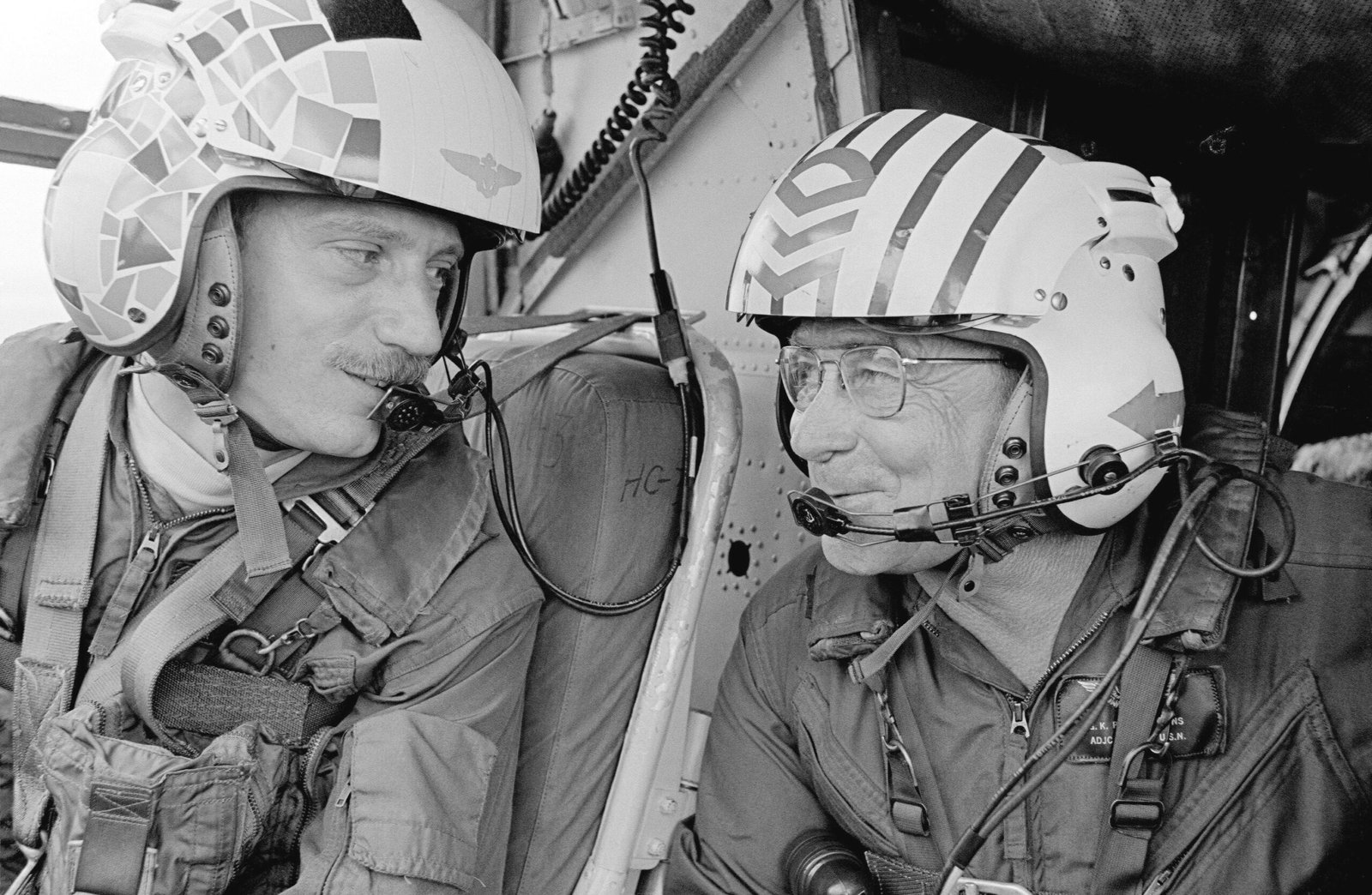
After forming his research group in 1978, Bose didn’t rush a consumer product to market — he spent years refining the technology for the people who needed it most: pilots. His prototypes were tough enough to be worn by Dick Rutan and Jeana Yeager during their record-setting 1986 nonstop flight around the world without refueling, a grueling nine-day endurance test that doubled as a real-world stress test for the hardware. The military took notice too, and Bose built and sold noise-reducing headsets for defense applications through the late 1980s.
Consumer availability came in careful stages. In 1989, Bose started selling noise-reducing aviation headsets to the public — pilots, mostly, who wanted the same gear the military was using. Ten years later, in 1999, American Airlines became the first commercial carrier to offer Bose’s noise-cancelling headphones to first and business-class passengers, a small taste of the tech for people who’d never sat in a cockpit. It took until 2000 — 22 years and a reported $50 million in R&D after that flight from Switzerland — for Bose to release the first true consumer noise-cancelling headphones anyone could walk into a store and buy.
Why It Took So Long, and Why That Still Matters
The gap between “we know this works” (1958, Fogel) and “you can buy this at the mall” (2000, Bose) is 42 years. That’s not a story about slow engineers — it’s a story about how hard it is to shrink a system built for a helicopter cockpit or a jet engine down into something light enough to sit comfortably on your head for a six-hour flight, cheap enough to sell at retail, and reliable enough that it doesn’t need a technician to calibrate it before every use.
That same tension — powerful noise cancellation vs. something you’d actually want to wear all day — is still the central engineering problem every headphone brand is solving right now. It’s just compressed into a much shorter cycle. What took Bose two decades in the 20th century, competitors now iterate on in a single product generation.
How This Shapes What You’re Buying Today
Every time you put on a pair of ANC headphones for a flight, a commute, or an open office, you’re using a direct descendant of Fogel’s helicopter patents and Bose’s napkin math — just with digital signal processors doing in microseconds what used to require analog circuitry the size of a suitcase. Modern chips can adapt the cancellation profile to your specific ear shape and the specific noise around you in real time, something neither Fogel nor 1978-era Bose could have built at any price.
The core trick hasn’t actually changed since Fogel’s patents: a microphone picks up incoming noise, a chip generates a sound wave that’s the exact inverse of it, and the two waveforms cancel each other out through destructive interference before the sound ever reaches your eardrum. Fogel did this with analog circuitry tuned for one specific noise profile — a helicopter rotor. Today’s chips run “feedforward” mics on the outside of the ear cup and “feedback” mics on the inside simultaneously, comparing the two streams thousands of times per second so the cancellation adjusts itself whether you’re on a plane, in traffic, or sitting next to a loud coworker. That adaptability is the actual 47-year leap — not the core idea, which Fogel already had, but the ability to do it instantly, for any noise, on hardware small enough to fold into a pocket.
That’s exactly why the category still splits the way it does: our Best Noise-Cancelling Headphones roundup covers the current flagships if you want the state of the art, and if you’re weighing Sony’s latest against the brand that essentially started this entire product category, our Sony 1000X The ColleXion review puts that exact question to the test. If budget is the real constraint, ANC has trickled all the way down — our JBL Tune 770NC review looks at what $100 gets you now, something that would have sounded like science fiction to a pilot testing prototypes in 1986.
The Part of the Story Most People Get Wrong
Ask most people who invented noise-cancelling headphones and they’ll say Bose, full stop. It’s not wrong exactly — Bose is who actually built the product category and made it work at consumer scale — but it erases Fogel’s helicopter patents from the record entirely, along with two decades of quiet aerospace engineering that had nothing to do with music or commutes. The lesson isn’t really about headphones. It’s a pattern that shows up across tech history: the name people remember is rarely the first person to solve the problem. It’s whoever solves it in a form the rest of us can actually buy.
Further reading: If you want to see where that 47-year-old idea has ended up, our current picks for the best ANC headphones are a good place to start.
Leave a Reply