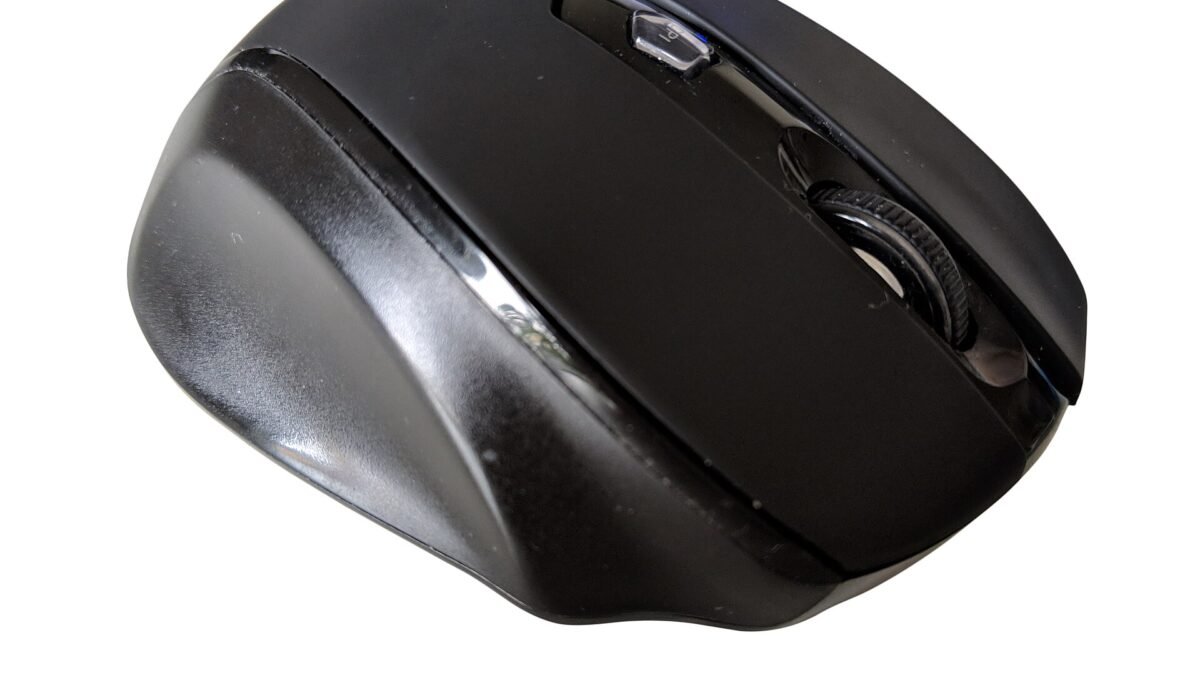
It’s 1984, and a Logitech engineer is demoing a new pointing device to a room of skeptical executives. The cursor tracks perfectly — until someone walks between the desk and the receiver, and the screen freezes dead. That awkward pause, repeated in boardroom after boardroom, is the real history of the wireless mouse: not a triumphant leap forward, but a decade of near-misses before the technology worked well enough that nobody had to think about it anymore.
The Cordless Mouse That Only Worked in a Straight Line
The first wireless mouse in the world shipped in 1984, built by Logitech as part of a short-lived system called Metaphor Computer. It worked exactly like a TV remote of the era: an infrared (IR) beam carried the cursor data from the mouse to a receiver sitting on the desk. That’s a clever trick, and it’s also the design’s fatal flaw. IR needs a direct, unbroken line of sight to work — block the beam with a coffee mug, a stack of papers, or your own arm, and the cursor simply stops. For an office tool meant to sit under your hand for hours, “don’t obstruct the beam” is a hard rule to follow.
It’s easy to forget how radical the idea even was. Douglas Engelbart’s original wired mouse, demoed back in 1968, had already made the case for pointing-and-clicking as the future of computing. Going cordless wasn’t really about proving the concept — it was about removing the one physical tether left on the desk. Logitech just picked the wrong beam to do it with.
Metaphor Computer Systems, the company that shipped this first cordless mouse, was itself a footnote — a workstation maker built around a graphical, icon-driven interface years before that idea became mainstream. The hardware didn’t survive, but the wireless mouse concept it introduced outlived the company by decades. That’s the pattern that repeats through this whole story: the individual products mostly failed or got forgotten, but each one left behind a piece of the puzzle the next generation solved.
1991: The Year Wireless Mice Stopped Needing Eye Contact
The fix arrived seven years later. In 1991, Logitech released the Cordless MouseMan, and the headline change was invisible: it swapped infrared for radio frequency (RF). RF signals don’t care about line of sight — they pass through your hand, your keyboard, even a closed desk drawer. For the first time, a wireless mouse behaved like an object instead of a very picky remote control.
It wasn’t a clean win, though. Early RF mice operated on the 27MHz band, the same crowded, low-power spectrum used by cheap walkie-talkies, garage door openers, and CB radios. Range topped out around two meters, and any nearby device broadcasting on a similar frequency could scramble the signal mid-click. You’d gained freedom from line of sight and traded it for a mouse that occasionally forgot you existed.
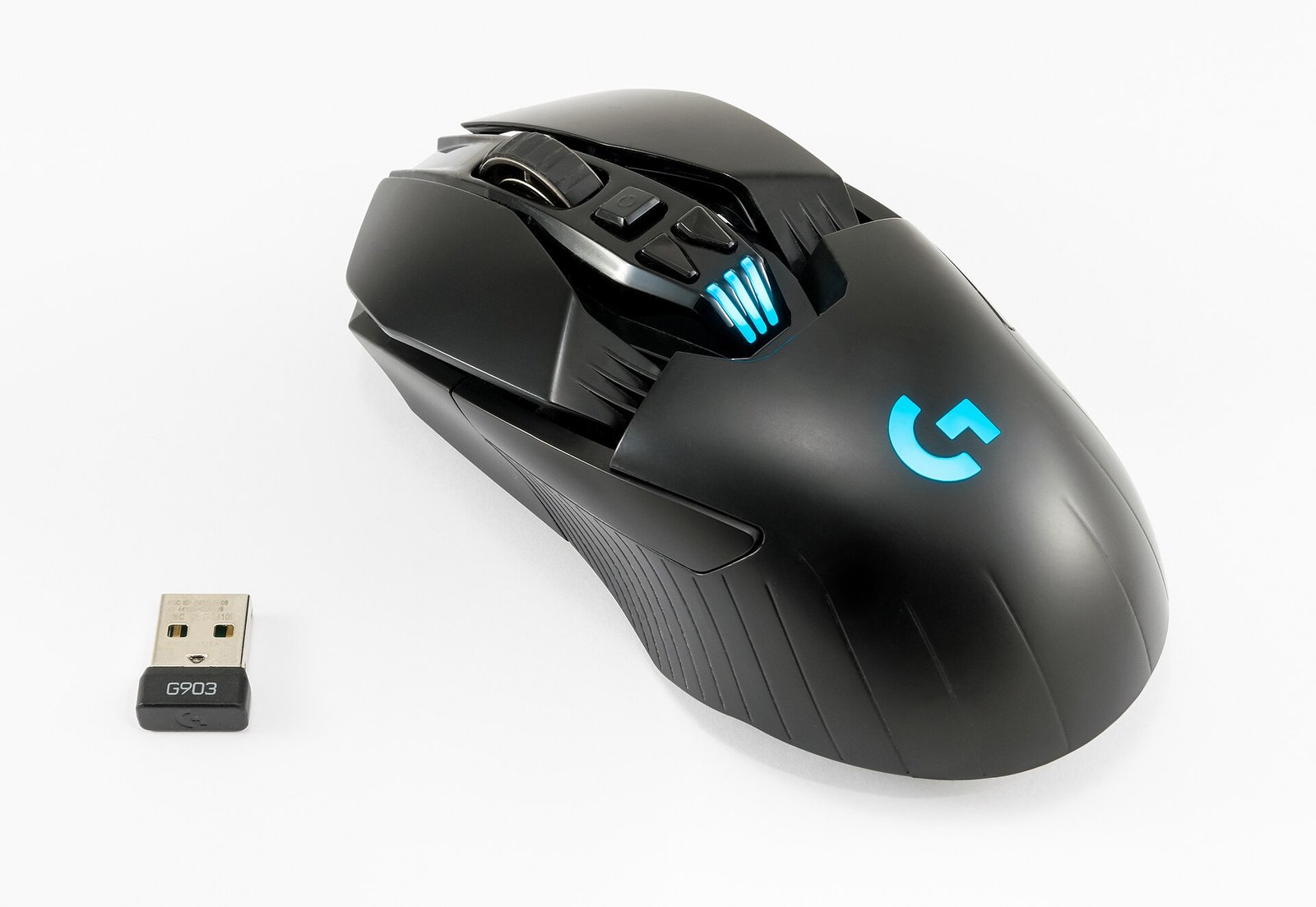
The Decade Gamers Refused to Trust Wireless
This is the part of the story that explains a stereotype that still lingers today: the idea that “serious” gamers only use wired mice. Through the 1990s and into the 2000s, that skepticism was earned. Cheap 27MHz mice dropped signal without warning, introduced perceptible input lag, and chewed through AA batteries fast enough that you kept a spare pack in a drawer. In a genre where a missed click can lose a match, “probably reliable” wasn’t good enough. Wired mice became the default not out of nostalgia, but because wireless genuinely couldn’t keep up.
2.4GHz Fixed What Nothing Before It Could
The real turning point came in the 2000s, when mice moved to the 2.4GHz band and adopted frequency-hopping — automatically jumping between channels dozens of times per second to dodge interference before it becomes a dropped signal. That matters because 2.4GHz is crowded real estate: it’s the same band used by Wi-Fi routers, cordless home phones, and microwave ovens. Frequency hopping isn’t a marketing feature bolted on top — it’s the only reason a 2.4GHz mouse can survive sitting three feet from a router without stuttering. Combined with optical sensors that tracked cursor movement with the same precision as their wired counterparts, range jumped to roughly ten meters and the random disconnects that had defined the category for two decades mostly disappeared.
This is also the generation where Bluetooth mice entered the picture, trading a little latency for the convenience of pairing directly with a laptop — no USB dongle, no receiver to lose in a drawer. For everyday productivity use, that trade barely registers. It only becomes a real decision once you’re chasing every last millisecond, which is exactly the audience the next generation of wireless mice was built for.
How This Shapes What You Buy Today
That 2.4GHz-versus-Bluetooth split from twenty years ago is still exactly why today’s wireless mice come in two flavors, and it’s worth knowing which one you’re actually buying. A proprietary 2.4GHz RF dongle talks to the mouse over a dedicated, low-overhead connection, which is why it still edges out Bluetooth on raw latency. Bluetooth is more convenient — one less port occupied, easier multi-device switching — but the protocol carries more overhead, so competitive gamers still lean RF when it matters. If you’re shopping for something less performance-obsessed and more grab-and-go, our guide to picking a travel mouse breaks down exactly which trade-off makes sense for a bag instead of a battlestation.
The Short History of the Wireless Mouse, All the Way to 2026
The current generation has effectively closed the gap that kept gamers loyal to cables for thirty years. Logitech’s Lightspeed and Razer’s HyperSpeed wireless systems now report sub-millisecond latency with polling rates near 1000Hz — numbers that, in practical terms, are indistinguishable from a wired connection to a human hand. Razer markets HyperSpeed as “25% faster” than rival wireless tech; that’s the company’s own claim rather than an independently verified benchmark, worth keeping in mind if you see it repeated as fact. What isn’t marketing spin is the broader shift: wireless is no longer the compromise pick. It’s common enough now that even collectors chase limited-run wireless mice — Razer’s $1,337 anniversary Boomslang sold out in six minutes, wireless internals and all.
None of that happened in a straight line. It took a failed infrared remote-control knockoff, a crowded and unreliable radio band, and roughly twenty years of gamers refusing to trust the category before wireless mice earned the “you probably can’t tell the difference” reputation they have now. The cord didn’t disappear because someone had a breakthrough idea in a lab — it disappeared because four separate generations of engineers kept fixing what the last one got wrong.
Further reading: If you’re ready to go cordless yourself, our best wireless gaming mouse picks for 2026 cover today’s fastest RF options across every budget.
Leave a Reply