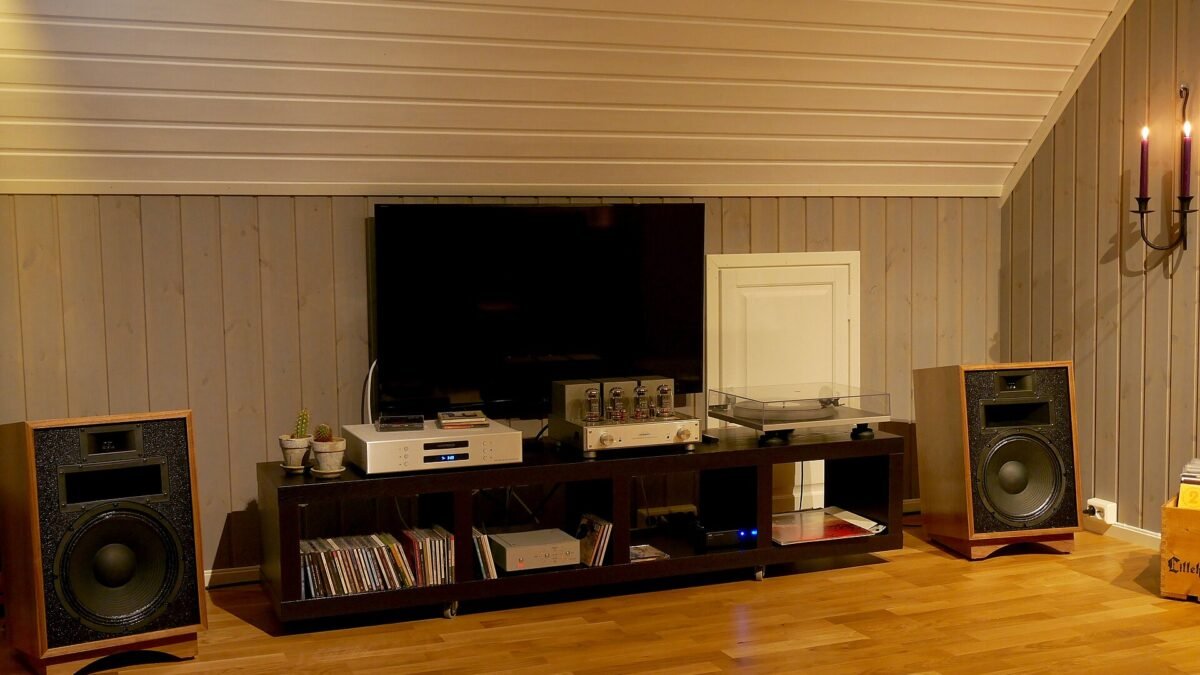
Most people who spend $4,000 on a pair of speakers can’t tell you why they spent $4,000 instead of $1,200 — they just assumed more money meant more sound. Sometimes it does. Often, past a certain point, you’re paying for a badge, not bass.
Disclosure: DecodeGear may earn a commission from qualifying purchases made through Amazon links in this article, at no extra cost to you.
What you’ll learn: which specs actually predict how a flagship speaker will sound in your room, which ones are marketing noise, and where the real ceiling on “worth it” sits in 2026.
What “Flagship” Actually Buys You (It’s Not Magic — It’s Engineering Refinement)
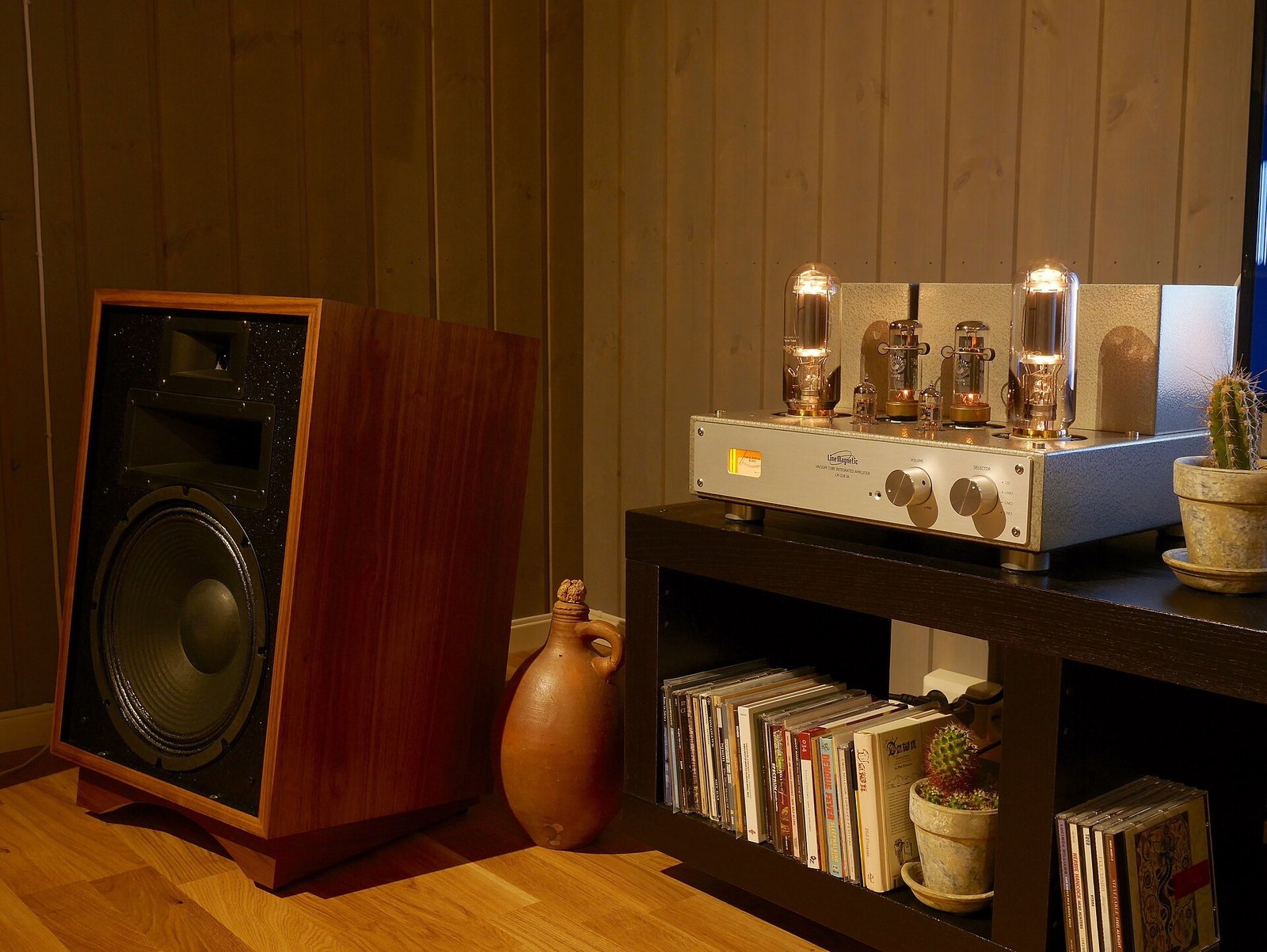
Step into any flagship line and the pitch sounds the same: titanium tweeters instead of aluminum, cerametallic woofers instead of standard cones, cabinets braced like a bank vault. None of that is marketing fluff — it’s real. Klipsch’s own comparison between its base Reference line and the step-up Reference Premiere line shows exactly what those upgrades buy: more output headroom before distortion creeps in, tighter control over where the sound actually goes in the room (directivity), and cabinets that stay quiet instead of adding their own resonant “boxiness” to the mix.
What flagship tiers don’t reliably buy is a night-and-day leap in raw sound quality. Independent measurements have repeatedly shown $500–$1,000 speakers landing within a decibel or two of far pricier models on anechoic frequency response. The honest way to think about the flagship premium: it’s paying for consistency at the edges — how the speaker behaves at high volume, off-axis, in a big room — not a fundamentally different sound at normal listening levels.
What Klipsch’s 2026 Lineup Actually Shows About the Tiers
Klipsch is a useful real-world example right now, because its current 2026 lineup happens to illustrate the whole ladder — as long as you’re careful about what’s actually shipping versus what’s still a concept slide. The Fives II, Sevens II, and Nines II are real, priced, and arriving this spring: powered horn-loaded speakers built with Onkyo electronics, Dirac Live room correction, and Dolby Atmos support, running $1,399.99 to $2,399.99 per pair. That’s genuinely upper-mid territory — excellent gear, but not the flagship tier.
The actual flagship story from Klipsch is still unwritten. At CES 2026 the company teased two concepts — a “Reference Signature Series” and something it’s calling “Project Apollo” — with zero confirmed specs, no pricing, and an explicit “subject to change” label. If you see a review, a price, or a spec sheet for either of those floating around online right now, treat it as speculation. Nobody has that information yet, including Klipsch’s own site.
The Specs That Actually Matter (and the Ones That Don’t)
Two numbers do most of the real work when you’re comparing flagship speakers: sensitivity and frequency response smoothness. Sensitivity, measured in dB, tells you how loud a speaker gets per watt of amplifier power — a speaker rated 90dB or higher will play convincingly loud on a modest amp, while a lower-sensitivity design demands serious power to wake up. Frequency response matters less for its raw range (nearly every flagship speaker claims deep bass and airy highs) and more for its smoothness — a response that stays within about ±3dB across the audible range will sound far more natural than one with wild peaks and dips, regardless of how impressive the spec sheet’s range numbers look.
What matters far less than the marketing implies: peak wattage handling, driver material name-dropping without context, and cabinet weight as a standalone bragging point. A heavier cabinet can mean better bracing — or it can just mean more MDF. Ask what the weight or material is actually solving, not just what it’s called.
Room Size and Placement — Why a $4,000 Speaker Can Sound Worse Than a $600 One
This is the part flagship shopping guides tend to skip, and it’s the part that actually determines what you hear. Room acoustics — wall reflections, bass buildup in corners, furniture placement — routinely create peak-and-null swings bigger than the measured difference between two competent $2,000–$5,000 speakers. A pair of genuinely excellent flagship towers, jammed into a corner with no acoustic treatment, can sound worse than a modest bookshelf pair set up correctly with some room-correction software doing the heavy lifting.
Before you spend flagship money, spend an afternoon on placement: pull speakers away from walls, angle them toward your listening position, and if your gear supports it (like the Dirac Live room correction Klipsch bundles with its Onkyo-powered models), actually run the calibration. It’s the cheapest upgrade available, and most people skip it entirely.
Pro Tip: Match Speakers to Amplifier Headroom, Not Just “More Watts”
The instinct is to chase bigger wattage numbers. The better question is whether your amp and speakers are actually compatible partners. A high-sensitivity speaker paired with a modest amp can outperform a low-sensitivity flagship paired with an underpowered receiver — because the amp never runs out of clean headroom. If you’re buying speakers and an amp together, check the sensitivity-to-power match before you check the price tag. Most in-store demo rooms use amplification that flatters the speaker; your living room setup might not.
Do You Actually Need Flagship, or Is Upper-Mid the Smarter Buy?
Across nearly every source we checked — measurement-focused reviewers, enthusiast forums, and manufacturer comparison pages alike — the same number keeps showing up: $2,000 to $5,000 is where returns start flattening out hard for most home listeners. Below that range, upgrades are usually audible and worth chasing. Above it, you’re increasingly paying for exotic materials, finish quality, and bragging rights rather than proportional sound gains.
If your budget realistically tops out around $2,000, a pair like the 🛒 Check the KEF LSX II LT on Amazon gets you most of the way there without chasing the flagship badge — we cover it and four other strong picks in our hi-fi speakers roundup if you want the full comparison. And if you’re weighing speakers against a simpler headphone setup for the same budget, our Sony 1000X flagship headphones review covers the tradeoffs from the other direction.
Frequently Asked Questions
Is a flagship speaker worth it if I have a small room?
Usually not. Flagship towers are engineered for output and dispersion control across large spaces; in a small, untreated room, a well-placed bookshelf pair will often sound tighter and more balanced.
What’s the single most important spec to check before buying?
Sensitivity, paired with your amplifier’s actual power output — it predicts real-world loudness and headroom far better than frequency response range alone.
Does room treatment matter more than the speaker itself?
Past the $1,000 mark, often yes. Uncorrected room acoustics can introduce bigger swings in what you actually hear than the measured difference between two well-reviewed speakers.
Are Klipsch’s Reference Signature Series or Project Apollo available to buy yet?
No — both were only teased as concepts at CES 2026, with no confirmed specs, pricing, or release date. Anything claiming to review or price them right now isn’t describing a real, shipping product.
The flagship tier isn’t a scam — the engineering behind it is real, and if your room and budget can support it, the difference is audible. But “flagship” is a spec-sheet word, not a guarantee. Check sensitivity and frequency response smoothness, fix your room before you upgrade your gear, and be honest with yourself about where your listening habits actually sit on that $2,000–$5,000 curve before you go past it.
Leave a Reply