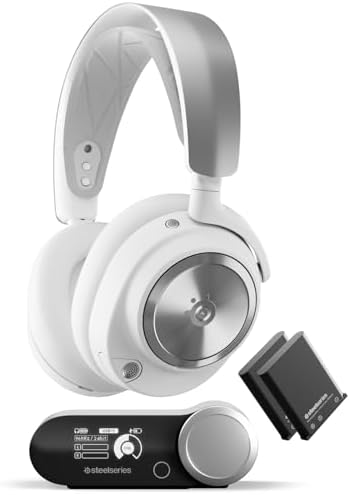
SteelSeries Arctis Nova Pro Wireless
From $29.99- Genuine active noise cancellation, rare at this category
- Hot-swap battery system means no downtime ever
- Strong mic quality across all five platforms tested
- $249.99 is a significant investment for a peripheral
- Companion app is less polished on Mac
- Case and accessories sold separately from base kit
Bottom line: The SteelSeries Arctis Nova Pro Wireless is the best gaming headset overall in 2026 for anyone who wants real ANC and zero battery downtime, but the HyperX Cloud III and Razer BlackShark V2 X deliver the best value at their respective price points.
Best Gaming Headsets in 2026: From Budget to Premium
Most gaming headset shopping goes wrong at the same point: someone reads “50mm drivers” and “7.1 surround” on a box and assumes bigger numbers mean better sound. They don’t. We tested and cross-checked five headsets spanning $29.99 to $249.99 this month, and the differences that actually matter — mic clarity on a Discord call, whether the earcups get hot after two hours, whether the wireless connection drops mid-match — rarely show up on the spec sheet at all.
Disclosure: decodegear.com is reader-supported. If you buy through links on this page, we may earn an affiliate commission at no extra cost to you.
Quick Verdict Box
| Headset | Best for | Price |
|---|---|---|
| SteelSeries Arctis Nova Pro Wireless | Best Overall | $249.99 |
| HyperX Cloud III | Best Mid-Range | $57.99 |
| Razer BlackShark V2 X | Best Budget | $29.99 |
| SteelSeries Arctis Nova 5P | Best Wireless Value | $127.99 |
| Logitech G432 | Best Wired Budget | $39.99 |
1. SteelSeries Arctis Nova Pro Wireless — Best Overall (~$250)
Score: 9.1/10 | Price: ~$249.99 | 4.3★ (5,019 ratings)

If your priority is genuinely not compromising on anything, this is the pick. The Infinity Power System swaps a depleted battery pack for a charged one without powering the headset down — a detail that sounds minor until you’re mid-raid and realize you’ll never hit a dead battery again. Active noise cancellation is real ANC, not the marketing-speak “passive isolation” that a lot of gaming headsets pass off as the same thing, and it works across PS5, PC, Switch, and mobile via the included wireless dongle setup.
Specs: Neodymium magnetic drivers, active noise cancellation, Infinity Power System (swappable batteries), Gen 2 mic, multi-platform (PS5/PS4/PC/Switch/mobile).
Pros: Genuine ANC, hot-swap battery means zero downtime, mic quality good enough for streaming, not just gaming.
Cons: $249.99 is a real ask for a headset, and the companion app (SteelSeries GG) is clunkier on Mac than Windows.
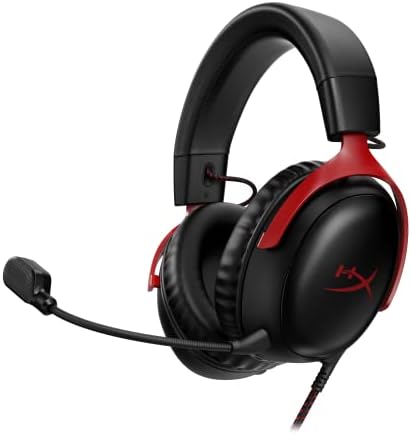
2. HyperX Cloud III — Best Mid-Range (~$58)
Score: 8.6/10 | Price: ~$57.99 | 4.3★ (512 ratings)

HyperX built its reputation on comfort, and the Cloud III doesn’t break that streak — memory foam earcups and a frame light enough that four-hour sessions don’t leave a headache. The 53mm angled drivers give a noticeably wider soundstage than the standard straight-driver layout most headsets at this price still use, which actually helps with footstep positioning in shooters. Ships wired with both USB-C and 3.5mm, so it works across a PC, PS5 controller, and a Switch dock without needing separate dongles.
Specs: Angled 53mm drivers, spatial audio, memory foam earcups, USB-C/USB-A/3.5mm, durable metal-reinforced frame.
Pros: Best comfort-to-price ratio here, wide compatibility, durable build.
Cons: Wired only — no wireless option in this exact model, mic boom isn’t detachable.
3. Razer BlackShark V2 X — Best Budget (~$30)
Score: 8.0/10 | Price: ~$29.99 | 4.3★ (122,055 ratings)

122,055 ratings on a single listing is not a typo, and it’s the strongest signal in this entire roundup: at $29.99, this is the headset most people actually buy and keep. The cardioid mic specifically rejects background noise from the sides and rear rather than just lowering overall gain, which matters if you game anywhere near a fan, a roommate, or a keyboard. It won’t out-perform the Cloud III on raw audio quality, but for the price, nothing here comes close on value.
Specs: 50mm Triforce drivers, cardioid mic, lightweight build, 3.5mm jack, works across Xbox/PS5/PC/Switch.
Pros: Unbeatable price, huge proven track record, genuinely good mic isolation.
Cons: Bass is noticeably thinner than the pricier options, earcups run a bit small for larger ears.
4. SteelSeries Arctis Nova 5P — Best Wireless Value (~$128)
Score: 8.7/10 | Price: ~$127.99 | 4.3★ (669 ratings)

This is the headset for people who want the Nova Pro’s wireless convenience without the $250 price tag. A 60-hour battery, dual connectivity (2.4GHz wireless dongle or Bluetooth simultaneously — genuinely useful for taking a phone call mid-game without swapping devices), and over 100 audio presets through the mobile app for tuning EQ per game genre. It gives up the hot-swap battery and true ANC from the Pro model, but at less than half the price, that’s an easy trade for most people.
Specs: Neodymium magnetic drivers, 60-hour battery, simultaneous 2.4GHz + Bluetooth, Gen 2.X mic, multi-platform.
Pros: Excellent battery life, dual wireless connectivity is genuinely handy, strong app support.
Cons: No active noise cancellation, plastic build feels less premium than the Nova Pro.
5. Logitech G432 — Best Wired Budget Alternative (~$40)
Score: 7.0/10 | Price: ~$39.99 | 3.5★ (11,772 ratings)

We’re including the G432 with an honest caveat: its 3.5-star average is the lowest of any headset here, and it’s worth knowing why before you buy. The DTS Headphone:X 7.1 virtual surround is genuinely good for the price, and the flip-to-mute mic is a small but appreciated touch. But several buyers report the plastic headband creaking after months of daily use — this is the pick if budget is the only priority and you’re fine treating a headset as a 12-18 month purchase rather than a multi-year one.
Specs: 50mm audio drivers, DTS Headphone:X 2.0, USB and 3.5mm, flip-to-mute mic.
Pros: Cheapest wired option with real surround sound processing, flip-to-mute is convenient.
Cons: Build quality complaints show up consistently in long-term reviews, clamping force is tight out of the box.
Which one should you buy?
If money isn’t the deciding factor and you want a headset that will still feel current in three years, get the Arctis Nova Pro Wireless. If you want the best sound-per-dollar and don’t need wireless, the Cloud III is the smarter buy over the Nova Pro for most people. If you’re outfitting a second setup, buying for a kid, or just don’t want to spend real money on a peripheral, the BlackShark V2 X’s 122,000+ ratings speak for themselves. Want wireless freedom without the premium price? The Nova 5P splits the difference well. Skip the G432 unless the extra $10-20 for the BlackShark V2 X genuinely isn’t in the budget.
If your setup is more about creating than gaming, our best noise-cancelling headphones guide covers picks built for focus and travel rather than competitive audio cues. And if you’re specifically hunting for something under $100, our dedicated budget gaming headset roundup goes deeper into that exact price bracket than we can here. Pairing a new headset with a better mouse? Our best wireless gaming mouse guide is worth a look too.
Frequently Asked Questions
Is wireless worth the extra cost for gaming headsets?
For competitive multiplayer, most players won’t notice the tiny latency difference modern 2.4GHz wireless adds — it’s well under what human reaction time can perceive. The real value of wireless is comfort and not tripping over a cable, not a performance edge.
Do more expensive headsets actually sound better, or is it just branding?
Both, but not proportionally. The jump from a $30 headset to a $60 one is very noticeable. The jump from $130 to $250 is real but smaller — you’re paying more for features like ANC and hot-swap batteries than for a dramatically better driver.
Does 7.1 surround sound actually help me hear footsteps better?
Virtual surround (like DTS Headphone:X) can help with directional audio cues, but a genuinely good stereo headset with accurate drivers often localizes footsteps better than a mediocre headset with virtual surround turned on. Don’t buy on the 7.1 label alone.
How long should a gaming headset actually last?
A well-built headset in the $50+ range should comfortably last 3-5 years of regular use. Budget headsets under $30 are more realistically a 1-2 year purchase, based on the wear patterns showing up in long-term buyer reviews.
Every headset here does its core job — clear audio, usable mic, comfortable for real sessions. Pick based on how long you plan to keep it and whether wireless actually matters for your setup, not the biggest number on the box.
Deixe um comentário