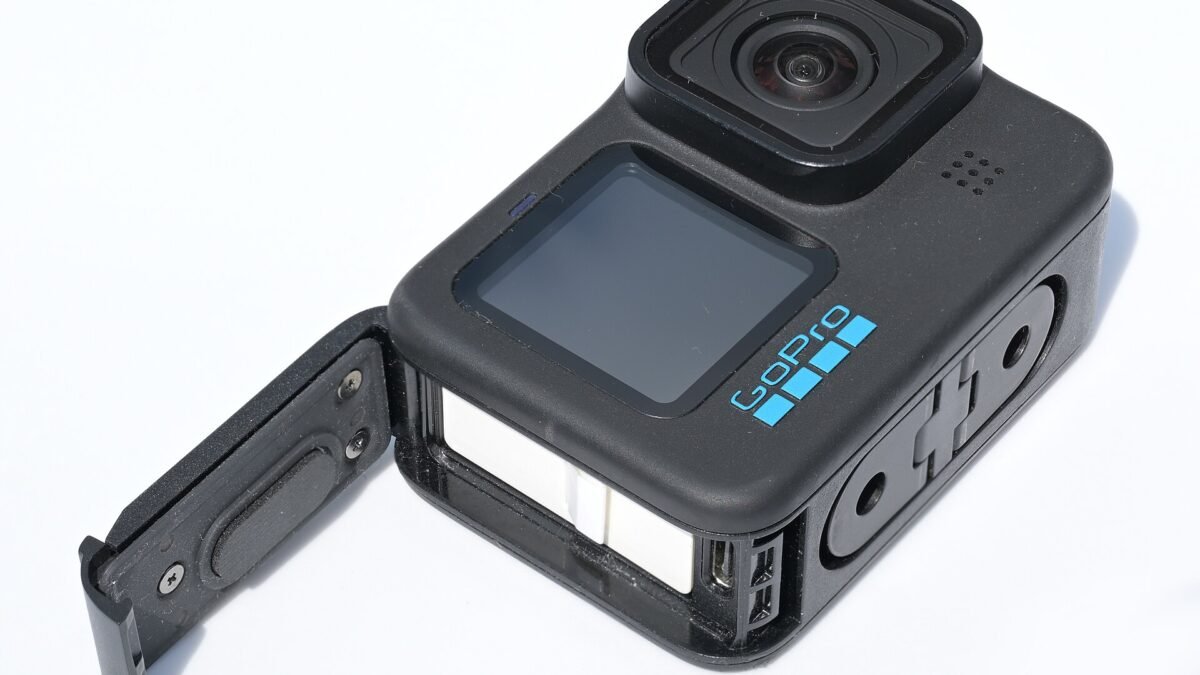
GoPro just announced a camera with no rubberized armor, no built-in wide-angle fisheye lens, and — this is the part that should stop you — interchangeable glass. If you’ve spent the last decade thinking of GoPro as “the company that makes the little cube you strap to a helmet,” the Mission 1 Pro is GoPro quietly admitting that formula has a ceiling, and that the real growth market is somewhere else entirely.
The Mission 1 Pro’s Spec Sheet Reads Like a Cinema Camera
The Mission 1 Pro is built around a 50-megapixel 1-inch sensor and GoPro’s new GP3 processor, and the spec sheet reads more like a Panasonic or Sony compact cinema camera than anything with “Hero” in its history. It shoots 8K at 60fps, 4K at up to 240fps, and 1080p at a genuinely absurd 960fps for slow motion. There’s also an Open Gate mode — 8K30 or 4K120 in a 4:3 sensor crop — which is a format vloggers and social creators specifically ask for because it captures extra vertical resolution you can reframe for Reels or Shorts without losing quality. Stills shooters get 50MP RAW capture, something no previous GoPro has offered at this resolution.
Pricing starts at $699.99, with a $100 discount for existing GoPro subscribers, bringing it to $599.99. The standard Mission 1 Pro is up for pre-order now on GoPro’s site with wider availability later this year. A second variant — the Mission 1 Pro ILS — swaps in a Micro Four Thirds interchangeable lens mount and won’t ship until Q3 2026.
Why “Interchangeable Lens” Is the Detail That Matters
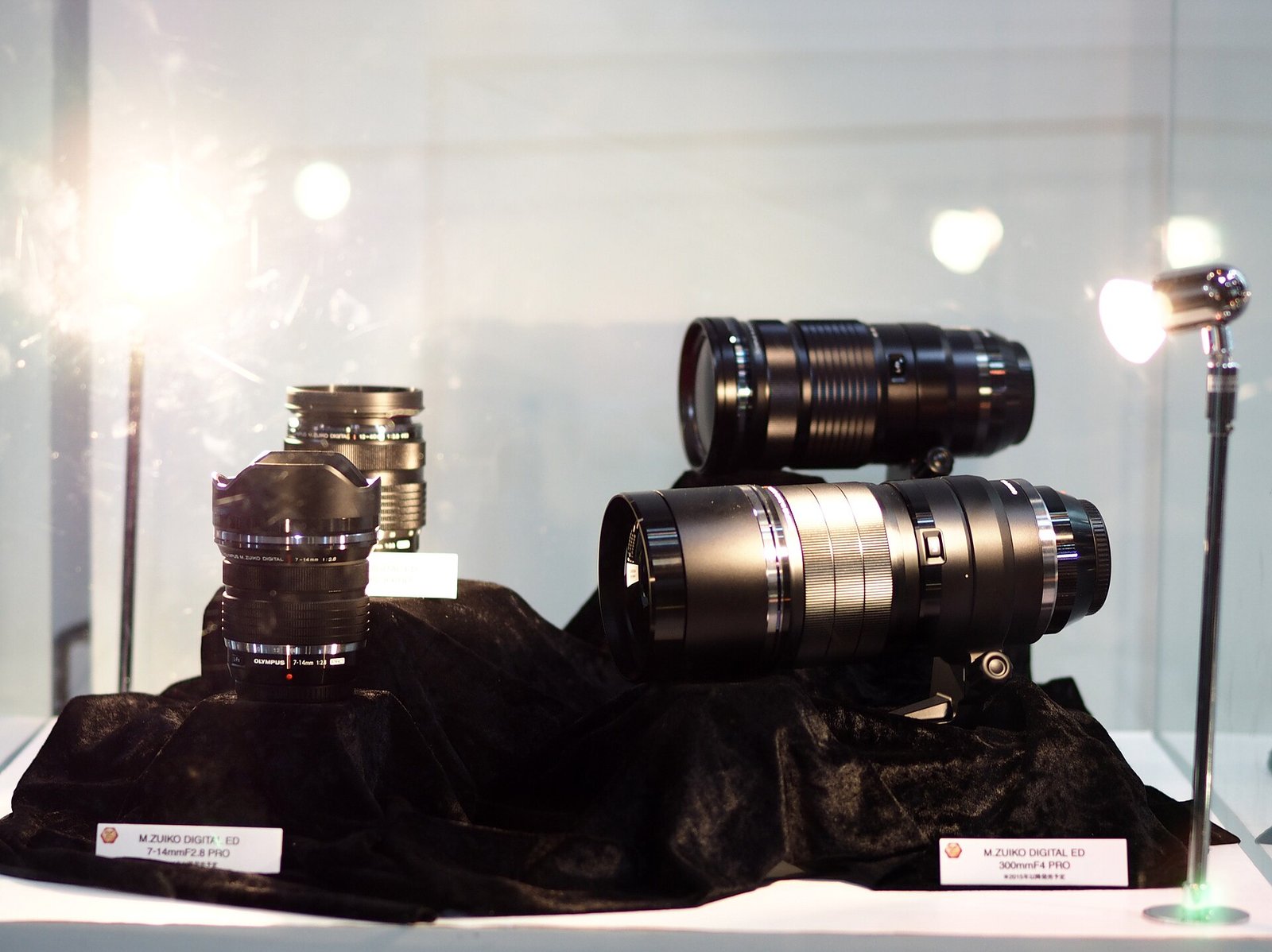
Every GoPro since the original has sold you one fixed, ultra-wide lens permanently bolted to a rugged shell. That’s the entire design philosophy — durability and simplicity over flexibility. The Mission 1 Pro ILS breaks that philosophy on purpose. MFT is the same lens mount used by Panasonic’s Lumix GH-series and OM System cameras, which means a Mission 1 Pro ILS owner can, in theory, reach for a portrait lens, a macro lens, or a longer zoom instead of being stuck with GoPro’s signature fisheye distortion. That’s not a spec bump. That’s GoPro deciding it wants a seat at the table where Sony’s ZV line and Panasonic’s compact cinema cameras have been eating alone.
Here’s the tangent worth sitting with for a second: action cameras and cinema cameras have historically been sold to almost entirely different buyers. One is for a person jumping off a cliff who needs a camera that survives the landing. The other is for someone lighting a shot carefully in a studio or on a controlled set. GoPro building a product that borrows the second buyer’s spec sheet — while presumably keeping some of its own ruggedized DNA — is a bet that the line between those two buyers is blurring faster than either category’s other players have accounted for.
The Counterintuitive Part
You’d expect a company doubling down on “professional” specs to price itself out of its existing audience. GoPro didn’t. At $599.99 for subscribers, the Mission 1 Pro undercuts a lot of entry-level MFT cinema cameras from Panasonic and Blackmagic, while offering frame rates — that 4K240 in particular — that cameras costing twice as much don’t match. GoPro isn’t just chasing prestige here. It’s trying to make the professional tier of the camera market look like something a serious hobbyist can actually afford, which is exactly the trick that made the original Hero line a phenomenon in the first place: taking something that used to require a specialist rig and making it a single box anyone could buy.
That’s also a hedge against a real problem GoPro has had for a few years now: smartphone cameras got good enough that “point a rugged camera at something extreme” stopped being a category only GoPro could serve. Every iPhone and Pixel shoots usable 4K now. GoPro’s answer, at least with this launch, isn’t to out-rugged the smartphone. It’s to out-spec it in a direction phones fundamentally can’t follow — interchangeable optics, sensor size, and frame rates a phone sensor physically can’t produce.
GoPro Has Bet on Reinvention Before — and It Didn’t Always Work
This isn’t the first time GoPro has tried to expand past the strapped-to-a-helmet formula. The Karma drone, launched in 2016, was recalled within weeks over a power failure and quietly discontinued a couple of years later. The Fusion, a 360-degree camera aimed at a more premium, professional-leaning buyer, never found the audience GoPro hoped for and got folded back into the Hero lineup’s feature set instead of surviving as its own product line. GoPro’s core business has also been shrinking for years — unit sales and revenue have both trended down since the mid-2010s peak, and the company has leaned harder on its subscription service to keep margins healthy while hardware sales cool off.
That history matters here because it’s the honest context for why the Mission 1 Pro exists. This isn’t a company flush with cash experimenting for fun. It’s a company whose original market has matured, whose main competitor for casual buyers is now the phone already in everyone’s pocket, and whose past attempts to diversify (drones, 360 cameras) didn’t stick. Moving into semi-pro cinema gear, where the GP3 processor and MFT lens mount put it in direct competition with Panasonic and Blackmagic instead of DJI and Insta360, is a bigger swing than it might look like from the spec sheet alone — and a more logical one than either of GoPro’s previous detours.
Where This Leaves the Rest of the Camera Market
GoPro isn’t launching into an empty field. We’ve covered the ongoing action-cam fight between GoPro, DJI, and Insta360 before, and that comparison mostly focused on ruggedness, stabilization, and 360-degree capture — categories where DJI and Insta360 have been closing the gap fast. The Mission 1 Pro sidesteps that fight almost entirely by moving upmarket instead of trying to out-rugged its rivals. Meanwhile, if compact all-in-one shooting is still what you’re after rather than a semi-pro rig, our picks for budget vlogging cameras cover the segment GoPro’s Hero line still competes in directly. And for anyone weighing GoPro’s new interchangeable-lens direction against the drone-camera hybrids already doing something similar, our review of DJI’s Avata 360 is a useful point of comparison for how differently these companies are solving the “one camera for everything” problem.
What’s actually interesting about the Mission 1 Pro isn’t any single spec — it’s what the product says about where GoPro thinks the money is. For twenty years, the company’s entire identity was “the camera that survives what you can’t.” The Mission 1 Pro is a quiet bet that survival isn’t the differentiator it used to be, and that the next decade of GoPro’s business depends on convincing serious creators it can also be their primary camera, not just their backup for the dangerous stuff.
Leave a Reply