GoPro vs DJI vs Insta360: Which Action Camera Brand Wins in 2026?
Most people buy the wrong action camera brand for a reason nobody warns them about: it’s not the sensor, the resolution, or even the price — it’s the app. You can film the best footage of your life at 8K and still hate the camera six months later if the editing workflow drives you crazy. So before you fall for a spec sheet, here’s what actually separates GoPro, DJI, and Insta360 in 2026, and which one fits how you actually shoot.
You’ll learn how each brand’s current flagship stacks up on sensor size, stabilization, and battery life, plus which one makes sense depending on whether you’re mounting a helmet, flying a drone alongside it, or just trying not to re-shoot every clip because the footage came out shaky.
GoPro HERO13 Black: the safe, proven choice
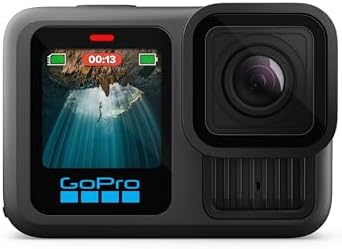
GoPro still owns the category by reputation, and the HERO13 Black is why. It shoots 5.3K at 60fps, pulls 27MP stills, and — new for this generation — supports swappable HB-series lenses, so you can bolt on a macro or an ultra-wide without buying a second body. Waterproofing is rated to 33 feet without a case, which still matters if you’re surfing or diving rather than just mountain biking.
The honest tradeoff: GoPro’s HyperSmooth stabilization is excellent but not class-leading anymore, and the touchscreen menu system, while much improved over older HEROs, still asks you to dig two menus deep for settings DJI puts on the home screen. At $379, it’s also the least generous on bundled accessories — the base kit is just the camera.
DJI Osmo Action 5 Pro: best for low light and battery life
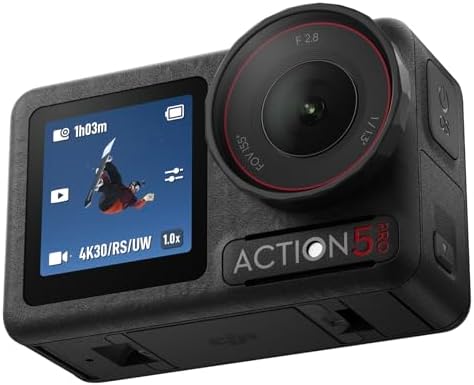
DJI’s Osmo Action 5 Pro undercuts GoPro on price ($319 for the Standard Combo) while beating it on the spec that matters most for anyone shooting dawn patrol or indoor sports: a 1/1.3″ sensor that’s noticeably larger than what GoPro or older Insta360 models pack, which translates directly into cleaner footage once the sun drops. It records 4K at up to 120fps, has dual OLED touchscreens (front and back, both fully usable — GoPro’s front screen is smaller and dimmer by comparison), and DJI rates it for extreme cold, which the Standard Combo backs up with a battery that holds charge notably better than GoPro’s in freezing conditions.
The Adventure Combo ($419) throws in three extended batteries and a 1.5-meter extension rod, which is the better buy if you’re filming solo sports where you need the camera on a pole away from your body. Reviewers rate it 4.5 stars, and it’s become the go-to recommendation for skiers and snowboarders specifically because of the cold-weather battery performance.
Insta360 Ace Pro 2: the Leica-tuned all-rounder
Insta360 took a different bet with the Ace Pro 2: co-engineer the color science with Leica, ship an 8K sensor, and add a 2.5-inch flip screen that rotates fully forward for vlogging — something neither GoPro nor DJI offers on their standard flagship. At $389.99, it’s the priciest of the three, but it’s also the highest-rated at 4.6 stars, largely because the AI-assisted editing in Insta360’s app genuinely saves time: it auto-selects the best clips from a session and applies stabilization presets tuned per activity (surfing, biking, skiing) rather than one generic algorithm for everything.
If you already shoot 360-degree footage with an Insta360 X-series camera, staying in the same ecosystem also means one app handles both — which is a bigger deal than it sounds once you’ve had to juggle GoPro Quik and a second app for a different device.
What most people miss: it’s the app, not the camera
Here’s the part spec sheets never tell you. GoPro’s Quik app is the most mature for straightforward clip trimming and social exports, but it pushes a subscription (GoPro Subscription, required for the best cloud backup and cheapest camera replacement) harder than either competitor. DJI Mimo is faster to open and preview footage but has fewer creative templates. Insta360’s app has the steepest learning curve of the three but the most powerful AI editing once you’re past it. If you’re buying for a teenager who wants five-second clips for social media, GoPro’s app friction is the smallest. If you’re a semi-serious creator building a YouTube channel, Insta360’s editing tools will save real hours.
Which one should you actually buy?
Buy the HERO13 Black if you want the most third-party mount compatibility (GoPro’s mount ecosystem is still the deepest after 15+ years) and don’t want to think about ecosystem lock-in. Buy the Osmo Action 5 Pro if you shoot mostly in cold or low light and want the best battery life for the money. Buy the Ace Pro 2 if editing speed matters more than raw specs and you’re willing to pay the premium for it.
If you’re also shopping for a way to talk over your footage or record cleaner audio on the same shoot, our DJI Mic 3 review covers the wireless mic kit that pairs directly with the Osmo ecosystem — worth reading before you commit to a full DJI setup. And if action cameras feel like overkill for what you actually need — say, video calls or streaming instead of helmet mounts — our best webcams guide is the more practical starting point.
Frequently Asked Questions
Is a bigger sensor always better for action cameras?
Not always — a bigger sensor (like the 1/1.3″ in the Osmo Action 5 Pro and Ace Pro 2) helps most in low light and generally improves dynamic range, but it can also mean a bulkier camera body. For daylight-only use, GoPro’s smaller sensor with strong processing still produces excellent results.
Do I need to buy the more expensive combo kits?
Only if you need the extras. The base HERO13 Black and Osmo Action 5 Pro Standard Combo cover most casual users. Extended-battery combos make sense specifically for cold-weather or all-day shooting where you can’t easily swap batteries mid-session.
Which brand has the best stabilization in 2026?
All three are close enough that most people won’t notice a difference in everyday footage. DJI’s RockSteady 3.0 and Insta360’s FlowState are both slightly ahead of GoPro’s HyperSmooth in extreme high-motion scenarios like mountain biking, based on independent reviewer testing.
Can I use these cameras without a subscription?
Yes, all three work fully offline with local storage. Subscriptions (GoPro, DJI Care, Insta360 Membership) mainly unlock cloud backup and discounted camera replacement — they’re optional, not required to shoot or edit.
None of these three brands makes a bad camera in 2026 — they’ve converged on similar hardware and now compete mostly on software and ecosystem. Pick based on how you’ll actually use it, not which one wins the spec sheet.
Deixe um comentário