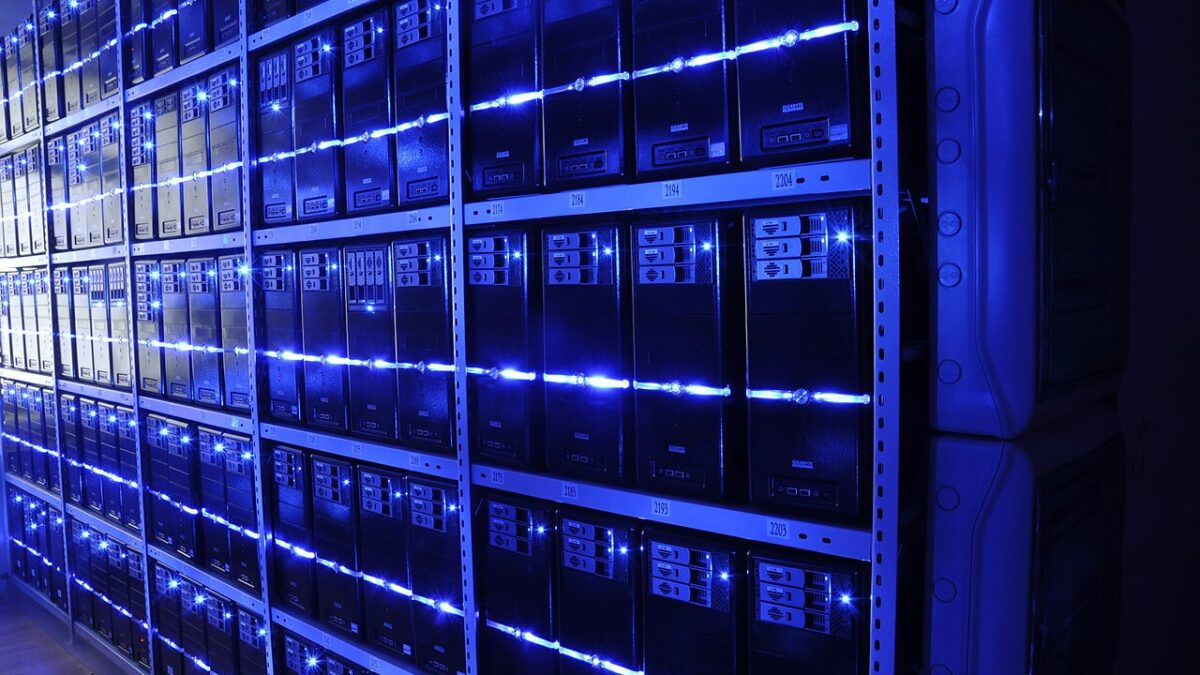
Every major AI company says it’s building toward smarter models. Watch where the actual money is going, and a different picture shows up: they’re building landlords, not just labs. In the last month alone, Meta has partnered with BlackRock on a $14 billion data center, Anthropic has opened talks with Samsung to design its own chip, and Verizon signed a billion-dollar deal handing Google dark fiber capacity. None of that is model research. It’s infrastructure ownership, and it’s happening at every layer where AI compute gets bottlenecked — chips, power, and now the wires connecting it all. That’s not a side effect of the AI boom. It’s the actual strategy, and it’s the correct one, even if the price tag makes it look reckless.
Layer One: Nobody Wants to Rent the Chip Anymore
Anthropic’s situation is the clearest example. The company has spent the last two years renting compute — Amazon’s Trainium chips, Google’s TPUs, Nvidia GPUs wherever it could get allocation — and reporting in early July indicated it’s now in early talks with Samsung to manufacture a custom AI chip on a 2nm process. Nothing is finalized. But the direction is unmistakable: when your biggest cost line item is “compute you don’t control,” you start designing your own silicon, the same way Google did with TPUs years ago and Amazon did with Trainium. TSMC, reading the same tea leaves, raised its 2026 chip capex guidance to $64 billion. That’s not TSMC being optimistic. That’s TSMC responding to actual order books from companies that have decided owning the chip layer is no longer optional.
Layer Two: Data Centers, Financed So the Risk Isn’t Really Yours
The Meta/BlackRock deal announced July 28 is worth studying closely, because the structure tells you more than the headline number. BlackRock-managed funds own 80% of the new 1-gigawatt data center campus in El Paso, Texas, funded by roughly $4.9 billion in cash plus $12.5 billion in debt. Meta puts in land and construction assets for the remaining 20%. Meta gets the capacity it needs without the full $14 billion landing on its own balance sheet as debt. That’s not just infrastructure ownership — it’s infrastructure ownership engineered so someone else holds most of the leverage.
This matters because the numbers behind AI infrastructure spending are genuinely startling. Alphabet posted negative free cash flow in Q2 2026 for the first time, with long-term debt more than doubling to $98 billion in the first half of the year. Amazon’s long-term debt jumped 81% to $119 billion in a single quarter. Total big-tech AI capex for 2026 is now estimated around $725 billion — up from $610 billion just five months earlier. We’ve written before about the investor doubts swirling around this spending, and those doubts are legitimate. But the financing structures — JVs, off-balance-sheet debt, partners like BlackRock absorbing the bulk of the risk — suggest these companies know exactly how exposed this bet is, and are actively engineering around it rather than ignoring it.
Layer Three: The Quiet One — Fiber and Networking
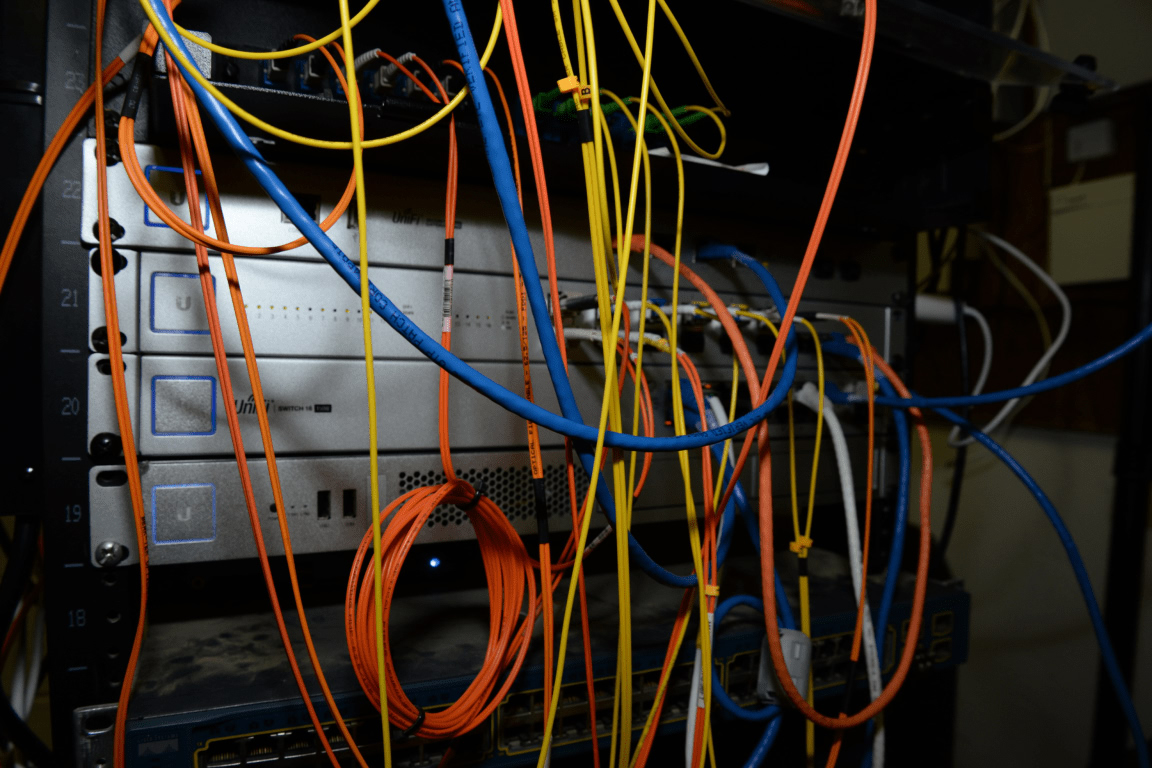
This is the layer nobody was talking about six months ago, and it’s arguably the most revealing. Verizon signed a deal in the last week of July worth more than $1 billion to hand Google dark fiber — unused, pre-laid optical cable — with Verizon’s CEO confirming more deals of this size are coming before the year is out. Separately, industry reporting suggests Nvidia has been quietly acquiring dark fiber capacity of its own, though that specific claim rests on thinner sourcing and deserves more skepticism than the Verizon deal.
Why does fiber matter at all? Because data centers built at gigawatt scale don’t fit in one city anymore — power and land constraints are pushing hyperscalers into distributed regional campuses, and those campuses are useless unless they’re networked together with enough bandwidth to move model weights and training data between them. If you’re building El Paso-sized facilities every few months, you eventually run out of existing network capacity to connect them, and you either lease years in advance or you don’t get to build at all. Fiber has multi-year lead times. Locking it in now isn’t paranoia. It’s the same logic that made Anthropic go talk to Samsung about chips — control the layer before someone else’s shortage becomes your problem.
The Case Against All of This — And Why It Doesn’t Hold Up
The skeptical case deserves a fair hearing, because it’s not a weak one. J.P. Morgan estimated the industry needs roughly $650 billion in new annual revenue just to earn a 10% return on the infrastructure currently being built — and OpenAI and Anthropic combined don’t clear $50 billion in annualized revenue today. Critics have called this outright bubble behavior: five years of normal infrastructure buildout compressed into two, guaranteeing a period of brutal overcapacity once the dust settles. We’ve also covered how Apple, Google, and Nvidia are quietly aligning on AI infrastructure instead of competing on it directly — which itself is a sign of how much every player fears getting the timing wrong.
Here’s why that argument, while fair, misses the actual bet being made. Nobody serious is claiming today’s revenue justifies today’s spending — they’re betting that whoever owns the chips, the data centers, and the network between them is the one left standing when demand does catch up, while everyone renting those layers gets squeezed on price and priority access. Owning the stack is expensive precisely because it’s supposed to be a moat, not a rounding error. And the financing structures — BlackRock absorbing 80% of El Paso’s risk, Samsung sharing chip development cost with Anthropic rather than Anthropic bearing it alone — show these companies aren’t spending recklessly. They’re spreading the exposure across partners who are equally convinced the bet is real. That’s not the behavior of an industry sleepwalking into a bubble. It’s the behavior of an industry that read the JPMorgan numbers, agreed with the risk, and decided the alternative — depending on someone else’s chips, someone else’s data center, someone else’s fiber — was the actually dangerous choice.
The Stack Is the Strategy
None of this is subtle anymore. Chips, data centers, and now fiber are being bought up by the same handful of companies for the same reason: whoever controls the physical layer controls the terms everyone else operates under. The AI race stopped being about who has the smartest model a while ago. It’s about who owns the ground the models run on — and by that measure, the vertical integration race isn’t a symptom of AI hype. It’s the most rational thing happening in the entire industry right now, even as the price tag keeps climbing past what any single balance sheet can comfortably hold.
Leave a Reply