Here’s a number that should stop you mid-scroll: Anthropic’s revenue grew roughly 80 times over in a single year. Not 80 percent — 80x. And in April 2026, that growth put Claude’s maker ahead of OpenAI on the one scoreboard that actually matters to investors: money. This is the story of how Anthropic overtakes OpenAI revenue-wise, why it just signed one of the largest compute deals in AI history to keep the streak alive, and why OpenAI isn’t nearly as worried as you’d expect.
The number that broke the curve
At the end of 2025, Anthropic’s annualized run-rate revenue sat at about $9 billion — already an enormous jump from where the company started. By April 2026, that figure had crossed $30 billion. Run-rate math is simple: take what you’re earning right now, this month, and multiply by twelve. It’s a snapshot, not an audited annual statement, and it’s worth keeping that caveat in your back pocket for later. But even as a snapshot, the trajectory is absurd: $87 million in January 2024, $1 billion by December 2024, $9 billion at the close of 2025, then $14 billion in February, $19 billion in March, and $30 billion in April 2026.
Put another way: Salesforce needed about two decades to reach $30 billion in annual revenue. Anthropic did it in under three years, starting from nothing.
Who’s actually paying for this
The engine behind that curve isn’t consumers chatting with a bot for fun — it’s businesses writing checks. Anthropic says the number of customers spending more than $1 million a year on its models more than doubled in under two months, crossing 1,000 companies by the time the April announcement went out. In February, that count was just over 500. That’s not a slow drip of enterprise adoption; that’s a queue forming.
A big piece of that queue is developers. Claude Code, Anthropic’s agentic coding tool, hit $1 billion in annualized revenue within six months of its public launch — reportedly the fastest-growing product in the company’s history. If you’ve followed our coverage of Claude Sonnet 5 and how developers have adopted it, this is the commercial payoff of that shift: coding assistants turned into a genuine revenue category almost overnight.
Here’s the honest truth about why this matters more than a flashy headline number: Anthropic built its business on the opposite bet from OpenAI. Roughly 85% of Anthropic’s revenue comes from enterprise and developer customers paying for API access. OpenAI’s revenue is roughly the mirror image — about 85% from ChatGPT consumer subscriptions. Two companies, same underlying technology, completely different customers writing the checks.
The compute deal that says “we believe our own numbers”
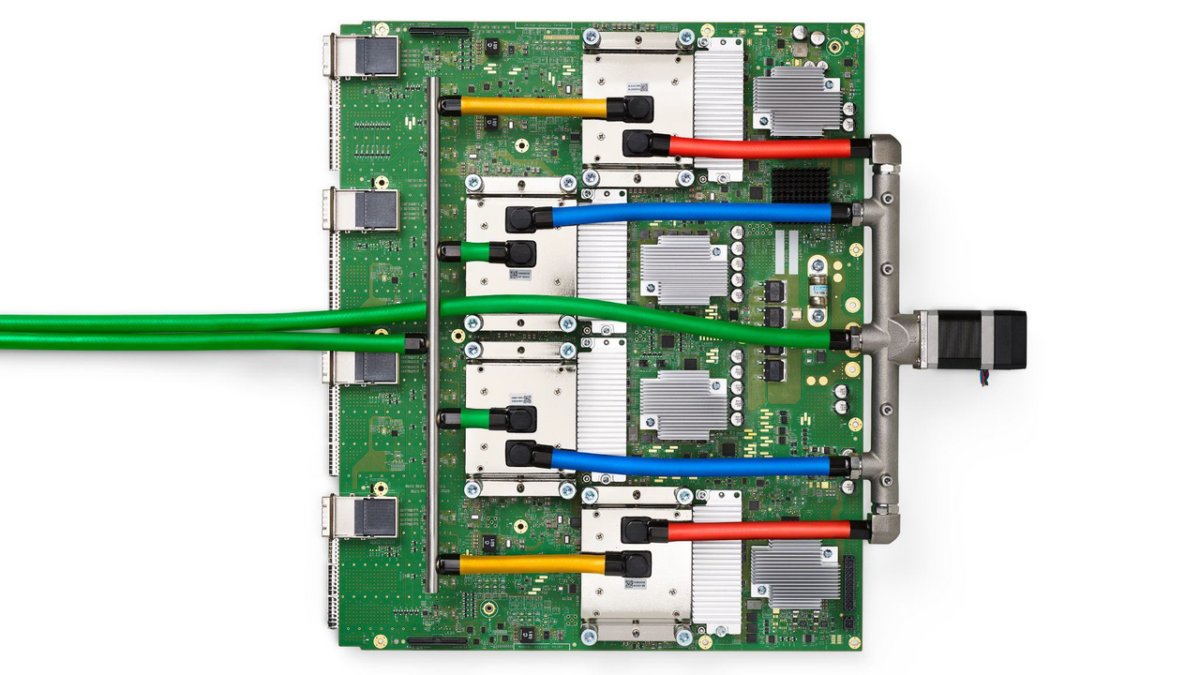
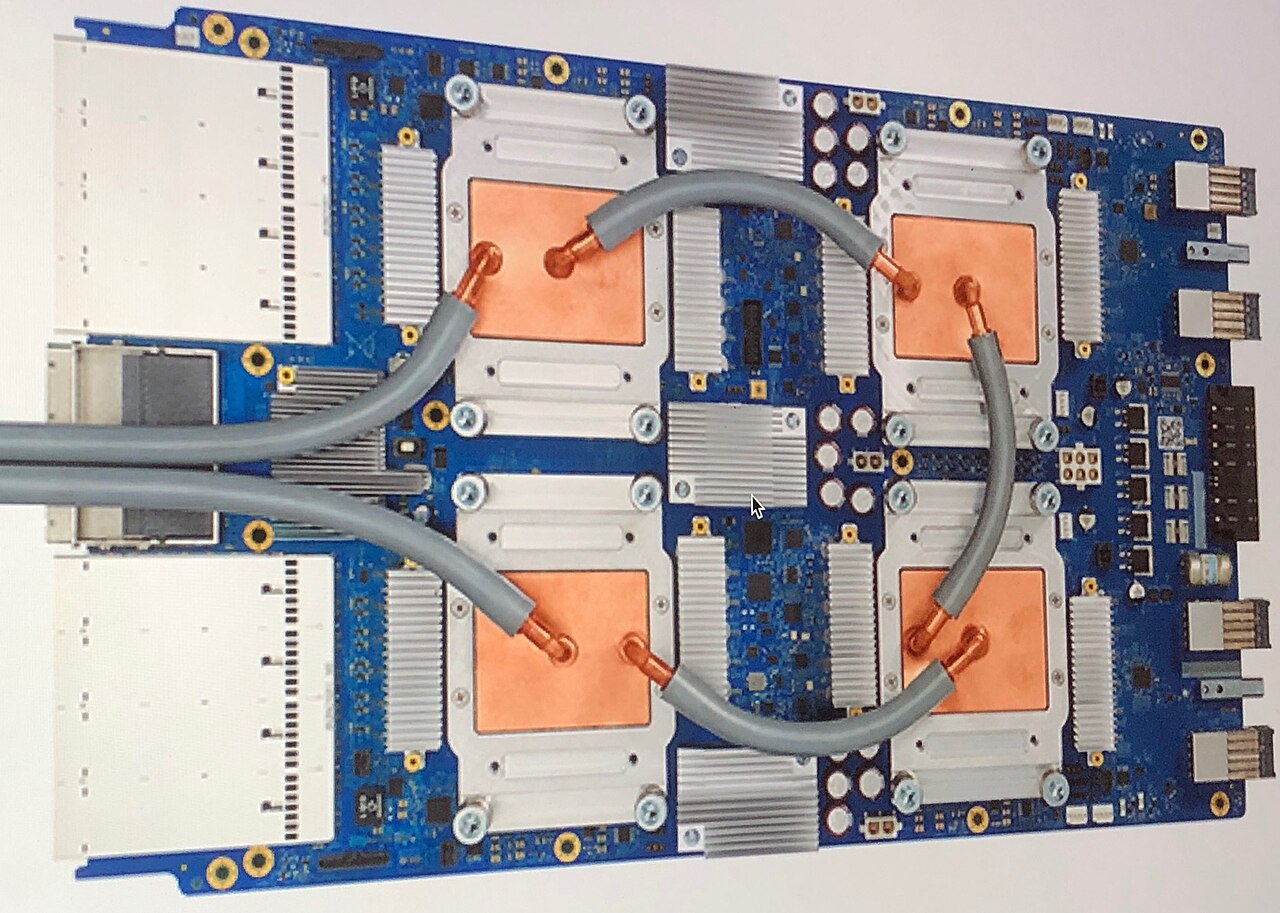
Money isn’t the only place Anthropic is putting its confidence. On the same day it disclosed the $30 billion run-rate, the company also announced an expanded partnership with Google and Broadcom for multiple gigawatts of next-generation compute — custom Google TPU capacity, delivered through Broadcom, expected to start coming online in 2027.
To make that number tangible: about 3.5 gigawatts of new capacity is on the way, on top of roughly 1 gigawatt already coming online in 2026. Put those together and Anthropic’s compute base is set to expand by something like 4.5x within eighteen months. For scale, one gigawatt sustained continuously was roughly Anthropic’s entire compute fleet at the start of 2026. This deal also builds on a $50 billion commitment to U.S. AI infrastructure that Anthropic announced back in November 2025 — the vast majority of the new capacity will sit on American soil.
Companies don’t pre-buy compute at that scale on a hunch. You do it because the demand curve you’re already living through tells you the next eighteen months will need it — and because your competitors are placing the same bet, so waiting means falling behind on capacity, not just revenue.
Interesting tangent: the “run-rate” trick everyone in AI is playing
Quick detour, because this matters for reading any AI revenue headline critically — including this one. A “run-rate” isn’t the same as annual revenue. It’s this month’s revenue times twelve. If a company has a huge month because of one large contract signing, that spike gets projected across an entire year that hasn’t happened yet. It’s not dishonest, exactly — it’s standard practice for fast-growing startups — but it does mean the number can move a lot from month to month. Anthropic’s own figures prove the point: barely a month after the $30 billion milestone made headlines, some reports had the run-rate already climbing toward $47 billion. That’s not Anthropic moving the goalposts; it’s just how fast this market is actually moving right now.
So did Anthropic really overtake OpenAI in revenue?
Here’s where it gets genuinely interesting, and where the “did Anthropic overtake OpenAI” question stops being a simple yes-or-no. On self-reported revenue trajectory, yes — Anthropic’s $30-47 billion range in 2026 sits ahead of OpenAI’s own most recently disclosed figure of $25-33 billion. But OpenAI isn’t just sitting still. It’s not confirmed to have lost the war; it’s confirmed to have lost one particular battle.
Where OpenAI still wins, decisively, is consumer scale. ChatGPT remains the household name — the app your relatives have actually heard of. But even that lead cracked in May 2026: according to data cited by a Deutsche Bank Research Institute analyst, monthly visits to ChatGPT fell below a majority share of generative-AI category traffic for the first time, and Anthropic overtook OpenAI in business subscriptions that same month, per data from Ramp. OpenAI’s answer arrived on July 9, 2026, with the broad rollout of its GPT-5.6 lineup — a family of three models (Sol, Terra, Luna) aimed squarely at keeping ChatGPT, Codex, and the API competitive on both capability and price.
Neither company is profitable yet, for what it’s worth. Anthropic has guided toward profitability in 2029 — a year ahead of OpenAI’s own stated timeline. So this isn’t a story about who’s making money in the accounting sense. It’s a story about who’s growing faster, and on whose business model.
The numbers, side by side
Anthropic run-rate: $9B (end of 2025) → $30B (April 2026) → ~$47B (May 2026)
OpenAI run-rate (most recent disclosed): $25-33B
Anthropic’s $1M+/year customers: 500+ (Feb 2026) → 1,000+ (April 2026)
New compute secured: ~3.5GW (Google TPUs via Broadcom), online from 2027
Why this is bigger than a leaderboard swap
It’s tempting to read all this as a scoreboard update — Anthropic up, OpenAI down, check back next quarter. But the more interesting story is underneath: two of the most important companies on Earth are running two different experiments on how AI actually gets monetized, and enterprise spending is currently winning the race against consumer subscriptions. That has consequences for everyone, including you, if you use any of these tools at work. Enterprise customers demand reliability, security, and support contracts — which is part of why Anthropic has also been aggressive about talent. Anthropic’s recent hiring spree reads very differently once you know the company is scaling revenue this fast: it’s not just poaching star researchers for bragging rights, it’s staffing up for a business that’s already several times bigger than it was twelve months ago.
It also explains the arms race in compute you keep hearing about. Every model upgrade, every new “reasoning” mode, every agentic coding tool — all of it runs on chips that take years to plan for and build. When Anthropic locks in a multi-gigawatt deal two years before it’s needed, that’s not caution. That’s a company telling you, in the clearest language a corporation can use, exactly how big it expects to be by 2027.
What to actually watch next
Keep an eye on three things over the next few months: whether Anthropic’s run-rate keeps climbing past the $47 billion mark or plateaus, whether OpenAI’s GPT-5.6 rollout meaningfully claws back business subscriptions, and whether either company says anything concrete about actual profitability rather than growth. Revenue races are exciting to watch, but in AI right now, the company that runs out of cash — or compute — first is the one that actually loses. For now, Anthropic has both a revenue lead and a multi-gigawatt insurance policy against running out of the second one.
Deixe um comentário