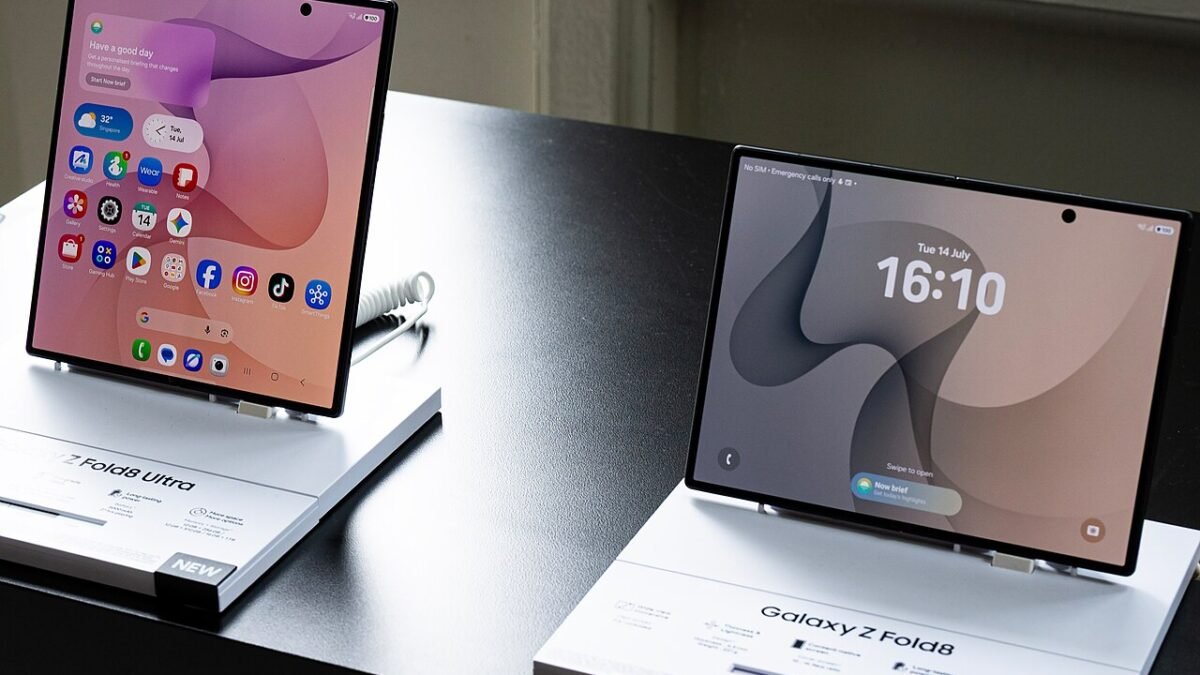
Samsung Galaxy Z Fold8
From $1,899.99- Wider, more usable cover screen than any previous Fold
- Same flagship chip and 120Hz display as the pricier Ultra
- $200 cheaper for nearly identical everyday performance
- Visible crease on the inner display, unlike the Ultra's Flex Titanium hinge
- No telephoto zoom lens
- Smaller 4,800mAh battery than the Ultra's 5,000mAh
Bottom line: The Galaxy Z Fold8 is the smarter buy for most people — same chip and screen tech as the Ultra, a genuinely more usable wide cover screen, and $200 saved by skipping a zoom lens most owners rarely use.
Samsung just handed you a genuinely hard choice. The Galaxy Z Fold8 and Galaxy Z Fold8 Ultra share the same processor, the same starting price bracket, and the same July 22 stage in Brooklyn — but they’re not built for the same person. One bets on a wider, squatter cover screen you can actually type on one-handed. The other bets on an inner display so smooth you’ll forget it folds at all. Preorders are open now, general availability lands August 7, and by the end of this you’ll know which “buy” button to click.
Disclosure: DecodeGear may earn a commission if you buy through links on this page. Specs and pricing below are verified against Samsung’s official spec sheets and live Amazon.com listings as of publication — see “How We Compared These Picks” below for our method.
Quick Verdict: Fold8 or Fold8 Ultra?
Our Pick for Most People: Galaxy Z Fold8
Same chip as the Ultra, a genuinely more usable wide cover screen, and $200 back in your pocket. Unless you specifically need the Ultra’s camera or near-crease-free hinge, this is the smarter buy.
Score: 8.6/10 | Price: from $1,899.99
| Spec | Galaxy Z Fold8 | Galaxy Z Fold8 Ultra |
|---|---|---|
| Starting price (256GB) | $1,899.99 | $2,099.99 |
| Chipset | Snapdragon 8 Elite Gen 5 for Galaxy | Snapdragon 8 Elite Gen 5 for Galaxy |
| Inner display crease | Visible, standard Flex hinge | Near crease-free (Flex Titanium) |
| Main camera | 50MP wide + 50MP ultra-wide | 200MP wide, 3x optical zoom tele |
| Battery | 4,800mAh | 5,000mAh |
| Charging | 45W wired, 15W wireless | 45W wired, 20W wireless, reverse wireless |
| Form factor | Wider, squatter cover screen (16:10-ish closed) | Taller, narrower — same silhouette as Fold7 |
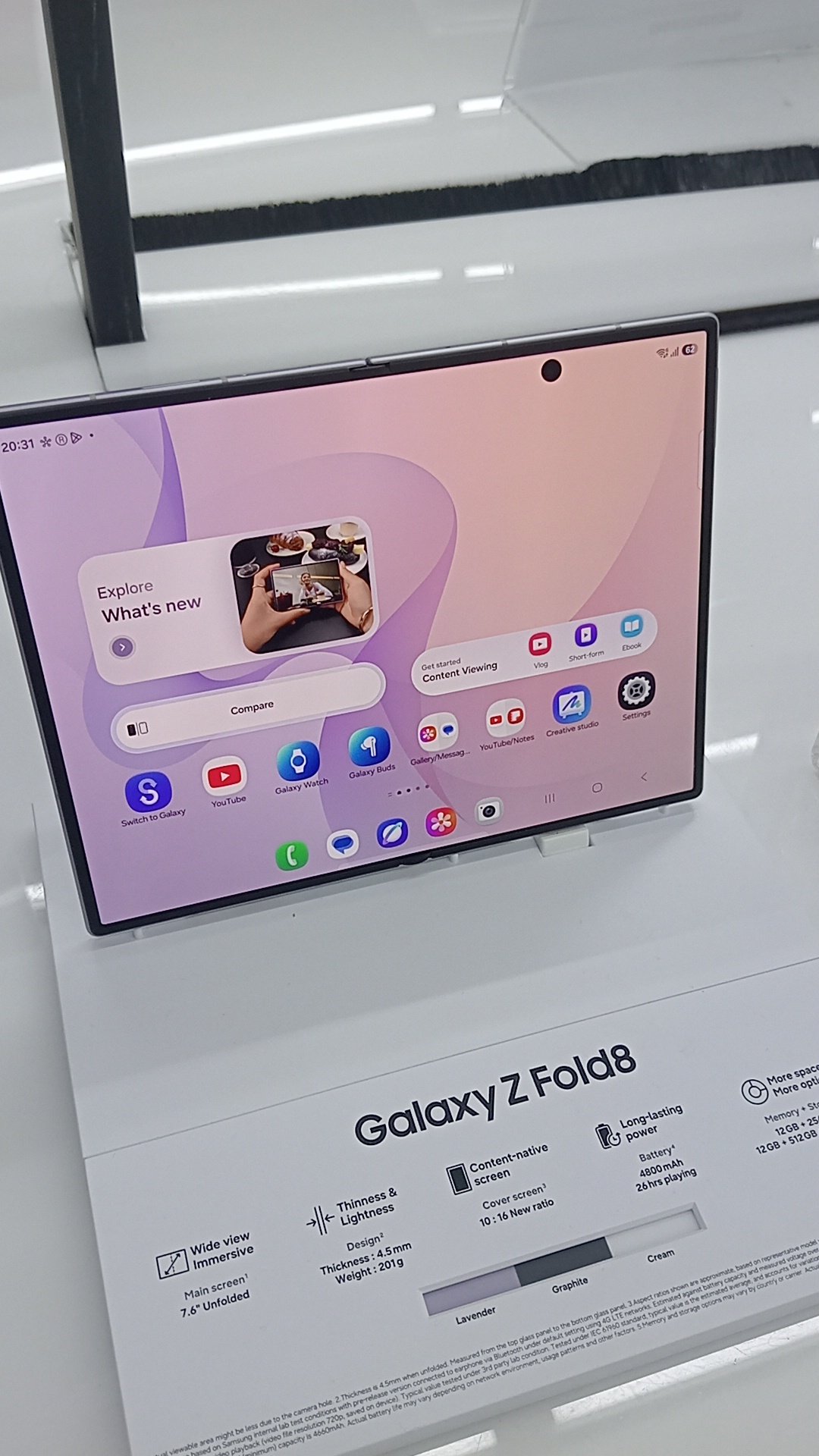
1. Samsung Galaxy Z Fold8 — The Smarter Buy for Most People (~$1,899.99)
This is the one Samsung actually redesigned. Every Fold since the original has closed into a tall, narrow slab that feels like using a candy bar phone stood on its side — fine for one-handed texting, awkward for almost everything else. The Fold8 throws that out. Its cover screen is now wide enough that typing, browsing, and replying to messages with the phone folded shut feels like using a normal phone, not a compromise you tolerate until you can unfold it.
Open it up and you get the same 3,000-nit, 120Hz Dynamic AMOLED 2X panel as the Ultra, the same Snapdragon 8 Elite Gen 5 for Galaxy chip, and a 50MP main plus 50MP ultra-wide camera pair that covers the basics well — sharp in daylight, competent but not spectacular after dark. The crease down the middle of the inner display is still there and still visible at an angle, which is the one place Samsung didn’t spend its engineering budget this generation.
At 4,800mAh, battery life lands solidly in “gets you through a busy day” territory rather than “forget about it for two.” Real-world use with the big inner screen lit up for video or split-screen work will have you reaching for the 45W charger by evening.
Best for: anyone who uses the cover screen constantly and doesn’t need flagship-tier zoom.
2. Samsung Galaxy Z Fold8 Ultra — The One Without Compromises, at a Cost (~$2,099.99)
The Ultra keeps the taller, narrower silhouette Fold owners already know — Samsung’s logic being that if you’re paying flagship-plus money, you don’t want a redesigned form factor, you want the familiar shape done better. And it is done better: the Flex Titanium hinge brings the inner-screen crease down to the point where GSMArena’s hands-on comparison and multiple other outlets describe it as “near crease-free” under normal lighting. Run your thumb across it and you’ll still feel a seam. Look at it head-on while reading, and it mostly disappears.
The camera is the other real upgrade: a 200MP main sensor paired with a 3x optical zoom telephoto, a genuine step up from the Fold8’s dual 50MP setup for anyone who actually zooms in on photos rather than just cropping later. Battery capacity grows to 5,000mAh, wireless charging jumps from 15W to 20W, and the Ultra adds reverse wireless charging — plug in your earbuds case on the back and top them off without hunting for a cable.
None of that is nothing. But it’s $200 more for a crease you’ll mostly stop noticing anyway and a zoom lens most people use a handful of times a month. The Ultra is the right call if photography or the smoothest possible fold matters to you specifically — not because it’s “the better phone” in some general sense.
Best for: photography-focused buyers and anyone who’s been bothered by the crease on past Fold models.
Which One Should You Actually Buy?
Strip away the marketing and this comes down to three questions, in order.
Do you photograph things you can’t walk closer to? Concerts, wildlife, kids’ sports games, anything where a 3x optical zoom actually gets used instead of sitting unused in the camera app — that’s the Ultra’s real advantage, and it’s not subtle. If you mostly shoot food, selfies, and screenshots of group chats, the Fold8’s dual 50MP setup covers you fine.
Does the crease actually bother you? Be honest with yourself here. Most Fold owners stop noticing their phone’s crease within a week of ownership — it’s a talking point in reviews more than a daily annoyance in practice. If you’re the rare person who genuinely can’t unsee it, the Ultra’s Flex Titanium hinge is worth the premium. If you’ve never owned a foldable and aren’t sure, save the $200 and find out on the cheaper phone first.
Do you actually use the cover screen as a primary screen? This is where the Fold8’s redesign quietly wins. If you’re the type who unfolds the phone for everything, the Ultra’s taller, narrower cover screen won’t bother you. If you want to leave it folded and still get real work done — messaging, maps, quick browsing — the Fold8’s wider cover screen is the better everyday tool, full stop.
If back-of-phone questions like these matter more to your buying decision than raw specs, we go deeper on foldable form factors in our Unpacked recap, which covers how both phones fit into Samsung’s broader July lineup alongside the Flip8 and Watch Ultra 2.
How We Compared These Picks
DecodeGear doesn’t physically test hardware before it ships — these phones aren’t in our hands yet, and neither is anyone else’s outside Samsung’s review program. What we did instead: cross-referenced Samsung’s official spec sheets against hands-on comparisons from GSMArena and Android Central (both of whom had early access at Unpacked), verified current pricing and preorder availability directly on Amazon.com, and pulled camera and display measurements from outlets that ran their own lab tests. Where a claim is Samsung’s marketing language rather than an independently verified measurement — like “near crease-free” — we’ve flagged it as such rather than stating it as settled fact. Our earlier coverage of the crease-leak dispute has more on how contested that specific claim was before launch.
Frequently Asked Questions
Is the Galaxy Z Fold8 Ultra actually crease-free?
Not literally — you can still feel a seam if you run a finger across the display. “Near crease-free” refers to visibility under normal lighting and viewing angles, where the Flex Titanium hinge genuinely reduces the shadow line compared to the standard Fold8 and previous generations.
Can I preorder either phone right now?
Yes. Both the Galaxy Z Fold8 and Z Fold8 Ultra are available for preorder following the July 22 Unpacked event, with general retail availability starting August 7.
Do the Fold8 and Fold8 Ultra use the same processor?
Yes — both ship with the Snapdragon 8 Elite Gen 5 for Galaxy, so raw performance is effectively identical. The differences are in display engineering, camera hardware, and battery/charging, not speed.
Is the extra $200 for the Ultra worth it?
Only if you specifically value the 3x optical zoom camera or have been bothered by the visible crease on past Fold models. For general use — messaging, browsing, apps, media — the standard Fold8’s wider cover screen arguably makes it the more practical daily phone, not just the cheaper one.
Leave a Reply