
Google’s AI division just lost its two most important names in the same week — and neither of them got fired. Jeff Dean, the engineer credited with laying the technical foundation for half of Google’s AI stack, walked out after 27 years to start his own company. Demis Hassabis, the face of Google DeepMind since the 2014 acquisition, stepped back from the CEO chair he’s held for over a decade. Alphabet’s stock dropped roughly 5% within hours. None of this was a leak — Google confirmed it directly, on friendly terms, and even said it’s investing in Dean’s new venture. That combination — a mass exit that isn’t a scandal, framed as a partnership — is exactly what makes this worth unpacking.
What Actually Happened This Week
On August 5, Google confirmed two changes at once. Jeff Dean, Google’s Chief Scientist, and Sanjay Ghemawat, one of his longtime engineering partners, announced they’re leaving the company to launch a new venture called Discovery Loop. Separately — but announced in the same news cycle — Demis Hassabis is stepping down as CEO of Google DeepMind. He isn’t leaving Alphabet. He’s moving up and sideways: Chair of Google DeepMind, Chief Scientist of Alphabet, and he keeps running Isomorphic Labs, the drug-discovery spinout he’s led since 2021. Koray Kavukcuoglu, previously DeepMind’s Chief AI Architect, becomes SVP and picks up the day-to-day operational load Hassabis is setting down.
Two departures, one promotion, one demotion-that-isn’t-really-a-demotion, all inside 48 hours. That’s the kind of reshuffle that normally signals a crisis. Google’s framing — and most of the reporting that followed — suggests something closer to a long-planned transition that simply landed on the same week.
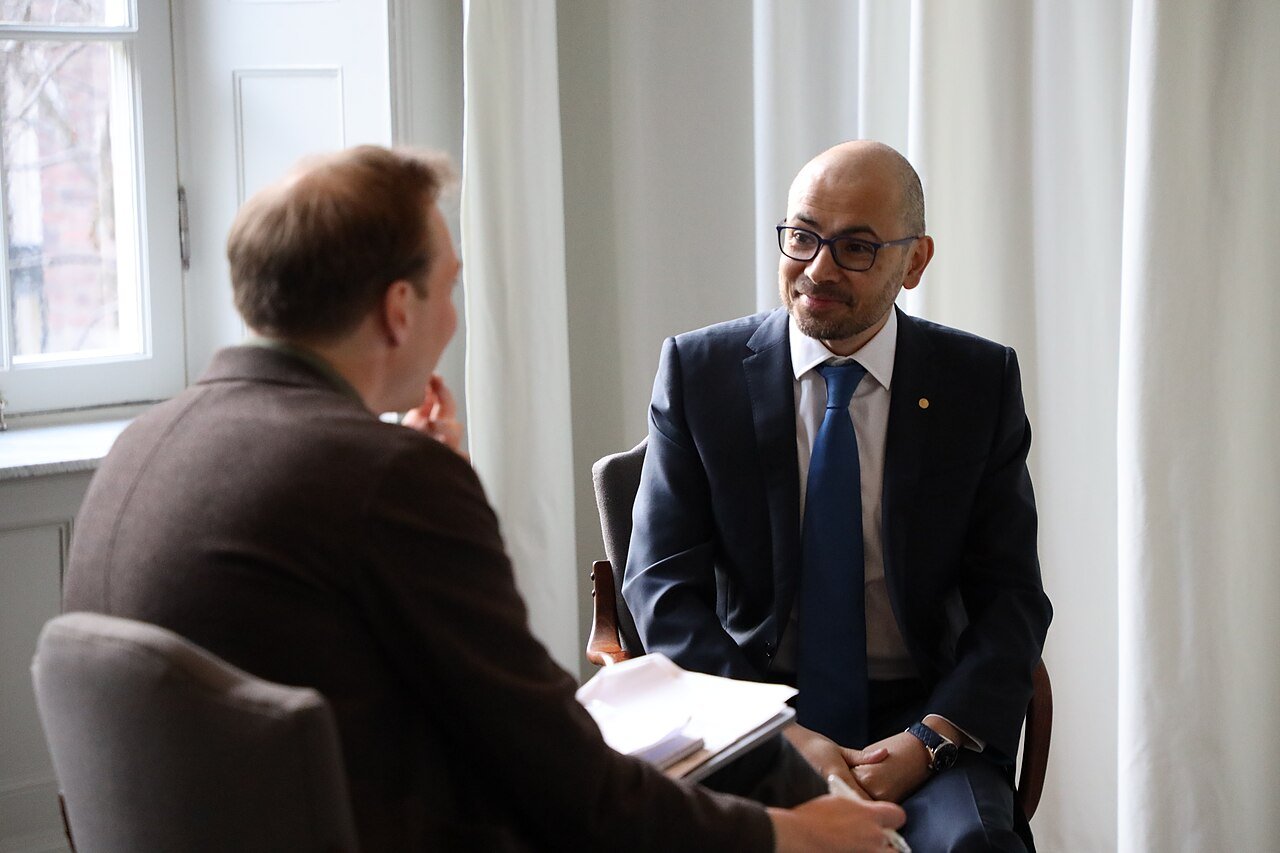
Who Is Jeff Dean, and Why Leaving Google DeepMind’s Orbit Is a Big Deal
If you’ve never heard the name outside AI circles, here’s the short version: Jeff Dean is one of the handful of engineers whose fingerprints are on almost every piece of infrastructure Google runs. MapReduce, Bigtable, TensorFlow, the distributed systems that let Google Search index the web at scale — Dean either built these or led the teams that did. He became Google’s Chief Scientist in 2023, effectively the technical authority sitting above individual product lines, including Search, Gemini, and DeepMind’s research output.
Losing an engineer like that isn’t the same as losing a VP. Dean wasn’t managing a roadmap — he was one of the people who could look across the entire AI stack and tell you where it was structurally weak. That’s a rare kind of judgment, and it doesn’t transfer with a handoff document.
Sanjay Ghemawat leaving alongside him amplifies the signal. The two have worked together since the early 2000s and are jointly credited on some of Google’s most cited systems papers. When two people with that much shared institutional memory walk out the door on the same day, it reads less like an individual career move and more like a team deciding, together, that it’s time.
Demis Hassabis Isn’t Leaving — He’s Stepping Back, Not Out
It’s worth being precise here, because the headlines compressed two very different moves into one story. Hassabis isn’t exiting Alphabet. He’s trading an operational CEO role — the one where you sit in headcount meetings and ship deadlines — for a Chair and Chief Scientist title, which is closer to setting research direction without owning the org chart underneath it. He also keeps Isomorphic Labs, which is arguably the highest-stakes project he’s running right now: using AlphaFold-derived models to design actual drugs, with pharma partnerships already in motion.
Read that way, Hassabis’s move looks like specialization, not retreat. Running day-to-day DeepMind operations and steering a drug-discovery company simultaneously was never a sustainable split of attention. Handing the operational half to Kavukcuoglu — someone who’s been inside DeepMind’s research architecture for years — is the kind of succession plan that companies usually announce quietly, not in the same week as a high-profile departure. The timing is what turned a sensible handoff into a headline.
Discovery Loop: What Jeff Dean’s New Company Is Trying to Build
Discovery Loop is structured as a public benefit corporation, not a standard startup — a legal signal that the founders want mission commitments baked into the charter, not just the pitch deck. The stated goal is automating machine learning, scientific, and engineering research itself: building systems that can run the loop of hypothesize, experiment, analyze, and iterate with less human bottlenecking at each step. Dean is joined by Oriol Vinyals and Quoc Le, both senior Google Brain/DeepMind researchers with their own deep publication records in areas like sequence modeling and neural architecture search.
That’s a meaningfully different bet than “another foundation-model lab.” Plenty of well-funded startups are racing to build bigger chatbots. Discovery Loop is aiming at something narrower and arguably harder: using AI to accelerate the research process that produces the next generation of AI and scientific breakthroughs, rather than shipping a consumer-facing product first.
Why Investors Reacted Badly (Alphabet Stock Fell ~5%)
The market’s reaction is the part that’s hardest to spin as routine succession planning. According to CNBC’s reporting on the announcement, Alphabet’s stock dropped roughly 5% the same day — on a leadership announcement rather than an earnings miss, which tells you Wall Street is pricing in something more than a scheduled handoff. Losing your Chief Scientist and your most senior AI-lab founder in the same 48-hour window — even on amicable terms — reads to investors as a talent-retention risk during the exact period when AI leadership is the thing propping up Big Tech valuations. Whether that reaction proves overblown depends entirely on how Kavukcuoglu’s DeepMind and the rest of Google’s AI org perform over the next two or three product cycles.
What This Says About the AI Talent War
This didn’t happen in a vacuum. We’ve already covered the broader AI talent war playing out across Google, Meta, and OpenAI — senior researchers cashing out equity, chasing smaller teams with more autonomy, or simply betting they can build something more focused than what a trillion-dollar org chart allows. Dean and Ghemawat’s move fits that pattern almost exactly: two people who’ve already built everything they can build inside Google’s structure, taking their reputational capital and going narrow instead of staying broad.
What makes this instance different is scale. This isn’t a mid-level researcher jumping to a rival lab — it’s the Chief Scientist and a DeepMind CEO transition landing simultaneously. If you’re tracking how competitive pressure across the AI industry is reshaping where talent actually wants to work, this week is as clean a data point as you’ll get: even the people who built Google’s AI advantage from the ground up are deciding the next interesting problem is easier to solve outside it.
Whether Discovery Loop ships anything that matters is an open question — plenty of well-credentialed spinouts fizzle. But the fact that Google is publicly investing in a company founded by the person it just lost tells you this wasn’t a clean break so much as a bet, on both sides, that the relationship works better as partners than as employer and employee.
Leave a Reply