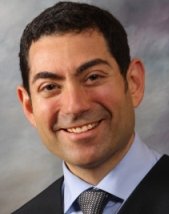
Anthropic’s press release called it a hire. It reads more like a defection. On August 4, the company announced that Mariano-Florentino “Tino” Cuéllar — a former justice of the California Supreme Court, the outgoing president of the Carnegie Endowment for International Peace, and a Stanford law professor — is walking away from all three of those jobs to become Anthropic’s first-ever Chief Global Affairs Officer.
The marketing says this is about “engaging policymakers.” The reality is that Anthropic just recruited someone whose entire résumé is built for negotiating with heads of state, not testifying in front of a congressional subcommittee. And the strange part is that this isn’t even the strangest global-affairs hire in AI right now — it’s just the latest data point in a pattern that started at a rival lab and is quietly reshaping what it means to run a frontier AI company.
The Hire — Who Tino Cuéllar Is, and What Anthropic Says He’ll Do
Cuéllar’s background doesn’t look like a typical Big Tech policy hire. He served on the California Supreme Court, ran the Carnegie Endowment for International Peace until this July, worked as a special assistant in the Obama White House, and sits on the Harvard Corporation. He’s also a senior fellow at Stanford’s Institute for Human-Centered Artificial Intelligence — meaning he was studying the societal effects of AI from the outside before Anthropic asked him to manage them from the inside.
According to Anthropic, Cuéllar will report directly to President Daniela Amodei and lead “policy, international engagement, and government relationships worldwide.” His framing of the mission, quoted in the company’s announcement, is blunt: “Democracies must set the terms on which this technology advances.” That’s not a sentence you write for a trade-association newsletter. It’s a sentence you write when you expect to be in rooms with prime ministers.
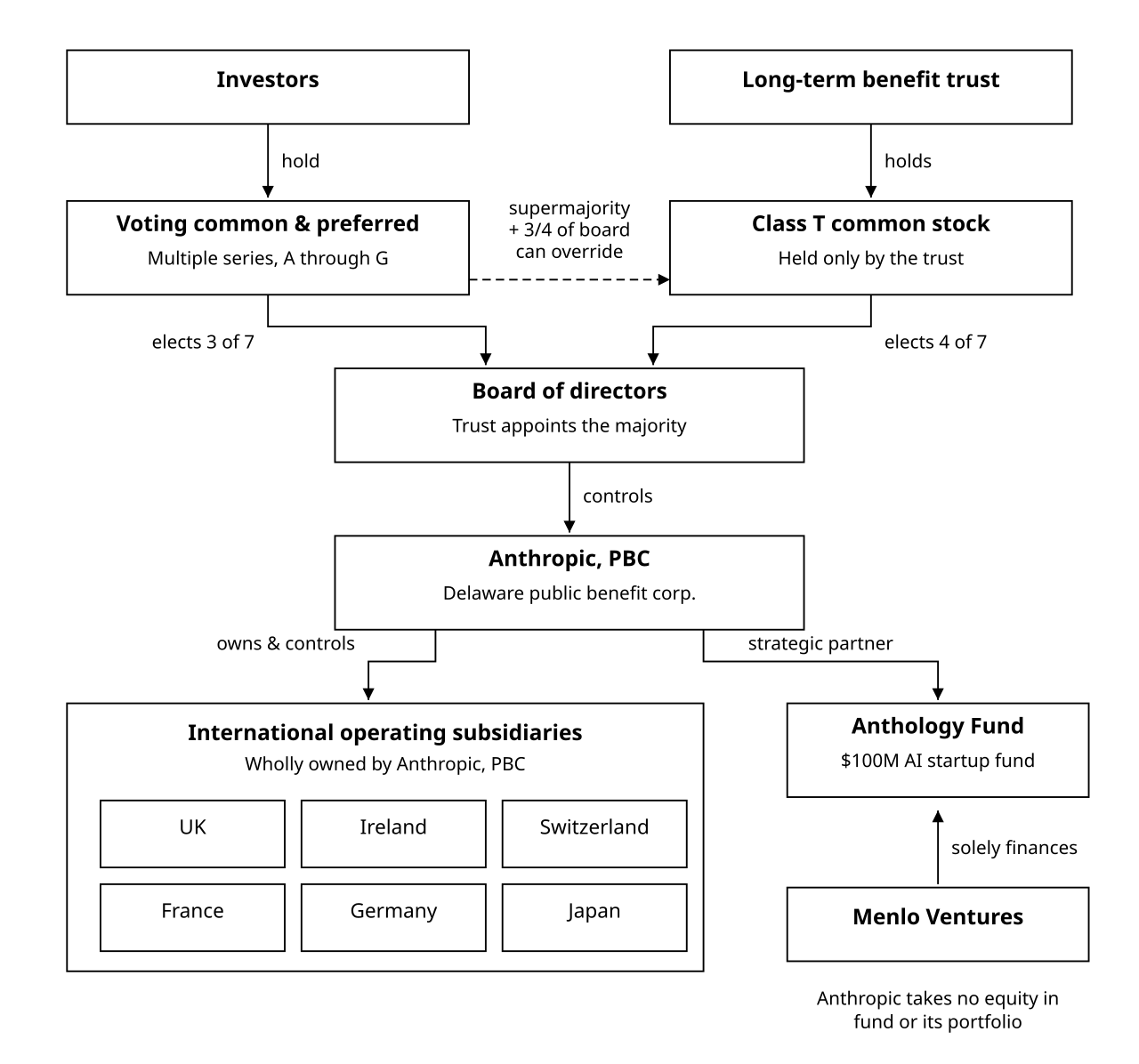
One detail makes the hire even more interesting: Cuéllar wasn’t a stranger walking in off the street. He’d already been serving as a trustee of Anthropic’s Long-Term Benefit Trust — the unusual governance structure the company set up to keep a board of outsiders with a say over its direction — since January. He stepped down from that seat to take the operating role. Anthropic didn’t just hire a statesman; it promoted one from inside its own oversight structure.
We covered Anthropic’s other recent build-out — a dedicated in-house AI chip team — and the pattern is the same: the company keeps insourcing capabilities that most tech firms would rather rent from consultants or contractors.
This Isn’t a One-Off — Every Major Lab Now Has One
If Anthropic’s hire feels familiar, that’s because OpenAI ran this play first. Chris Lehane — a veteran of the Clinton White House and, later, Airbnb’s global policy operation — has held the title of Chief Global Affairs Officer at OpenAI since 2024. Under his watch, OpenAI has built out an entire “National Industrial Policy” push: a coordinated effort to get AI-friendly rules translated into actual legislation across multiple governments, backed by initiatives like OpenAI Academies and its own economics forums.
Lehane’s operation and Cuéllar’s new one will look different in practice, and that difference is the actual story here. Lehane is a career political operative — someone who has spent decades inside campaigns, message discipline, and legislative deal-making. Cuéllar is a jurist and a diplomat’s diplomat — someone who has spent decades interpreting law and sitting on international bodies. OpenAI hired a operator who knows how a bill becomes a law. Anthropic hired a judge who has spent a career deciding what the law means.
Put those two hiring philosophies side by side and you get a genuine split in how the two most-watched AI labs think they’ll win the regulatory fight: through political capital, or through institutional legitimacy.
Why Judges and Diplomats, Not Just Lobbyists
Every large company has a government-relations department. What’s unusual here is the seniority and the framing. These aren’t VP-level lobbyists filing comment letters on proposed rules — they’re C-suite executives with titles that mirror a cabinet position, reporting to the president of the company, tasked with managing relationships with actual heads of state.
That’s a tell about how AI labs see their own regulatory exposure. Rules like the EU AI Act’s disclosure requirements, already in force as of this month, aren’t isolated incidents — they’re the first wave of a much larger regulatory buildout that every major government is racing to finish before frontier models get more capable and harder to govern retroactively. A traditional lobbyist optimizes for the next vote in one legislature. A global affairs chief with judicial and diplomatic credentials is built for something slower and bigger: shaping how multiple governments define AI liability, safety testing, and export control simultaneously, before those frameworks calcify.
Interesting Tangent — The Trust Connection Nobody’s Talking About
Anthropic’s Long-Term Benefit Trust is one of the more unusual pieces of corporate architecture in the AI industry — a panel of outside trustees with the power to influence board composition, explicitly designed to prevent commercial pressure from overriding safety judgment. Cuéllar sitting on that trust before taking an operating role is either a minor scheduling detail or a meaningful signal, depending on how cynical you want to be about it.
The generous read: Anthropic wanted someone who already understood its internal safety philosophy from the governance side, so the transition to running external policy would be seamless. The skeptical read: a company facing an increasingly hostile regulatory environment just moved one of its own watchdogs into a role that answers directly to the president rather than the trust. Both readings can be true at once, and Anthropic’s own announcement doesn’t really resolve the tension — it just states the mission and moves on.
What This Signals About Where AI Regulation Is Headed
Read together, the Lehane and Cuéllar hires say something the press releases won’t say directly: the AI labs no longer think they can out-lobby the regulatory wave coming at them. They think they need to help write it. That’s a different posture than the one the industry had even a year ago, when the dominant strategy was largely defensive — minimize scrutiny, slow-walk disclosure, argue for self-regulation.
Now the labs are staffing up with people whose entire careers were spent inside the machinery of government and international law, not fighting it from outside. We’ve written before about how aggressively AI labs compete for research talent — it turns out the arms race for policy talent is just as intense, it’s simply quieter, because nobody wants a bidding war for ex-Supreme Court justices to make headlines the way a $300 million researcher offer does.
Watch what happens the next time a government floats a new AI safety framework. If Anthropic and OpenAI show up not with lobbyists, but with a jurist and a policy operator each fluent in exactly the language that framework is written in, that won’t be a coincidence. That’s what this month’s hire was actually for.
Leave a Reply