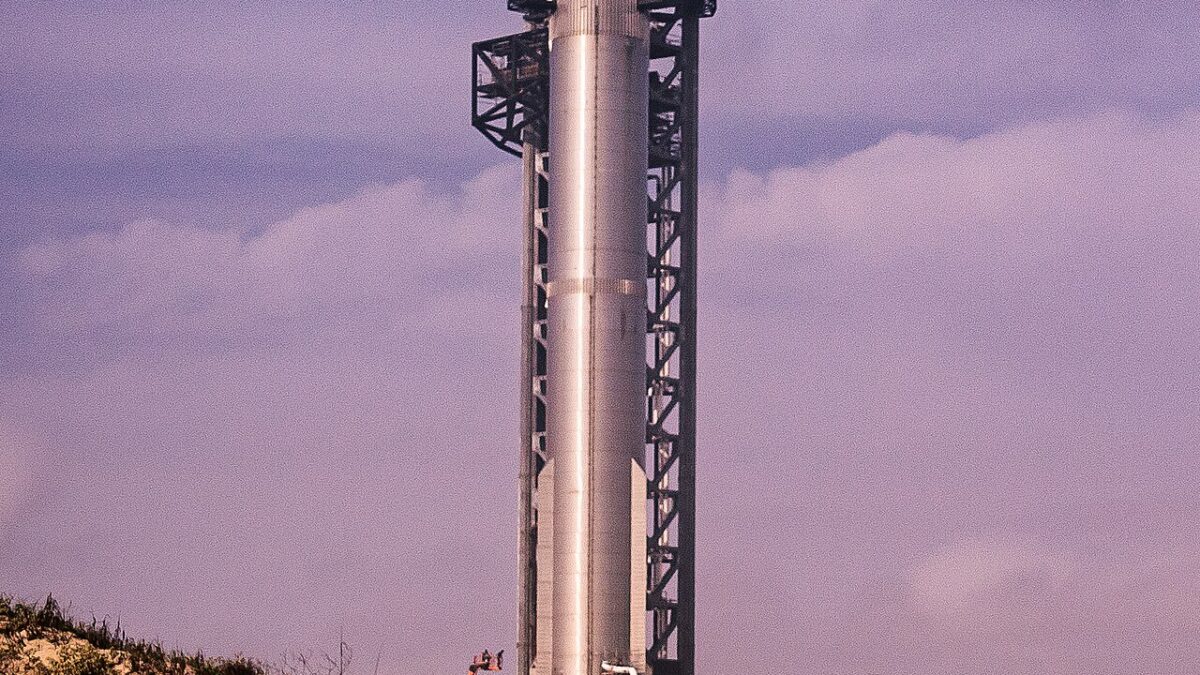
Eleven and a half million pounds of liquid methane and liquid oxygen, fully loaded into the largest rocket ever built, with the countdown clock reading zero — and then nothing. No fireball, no failure, just silence and a hold. That’s the moment SpaceX’s Starship Flight 13 lived through on Thursday, and the fact that “nothing happened” is precisely why it’s the most interesting abort in the program’s history.
What Actually Failed
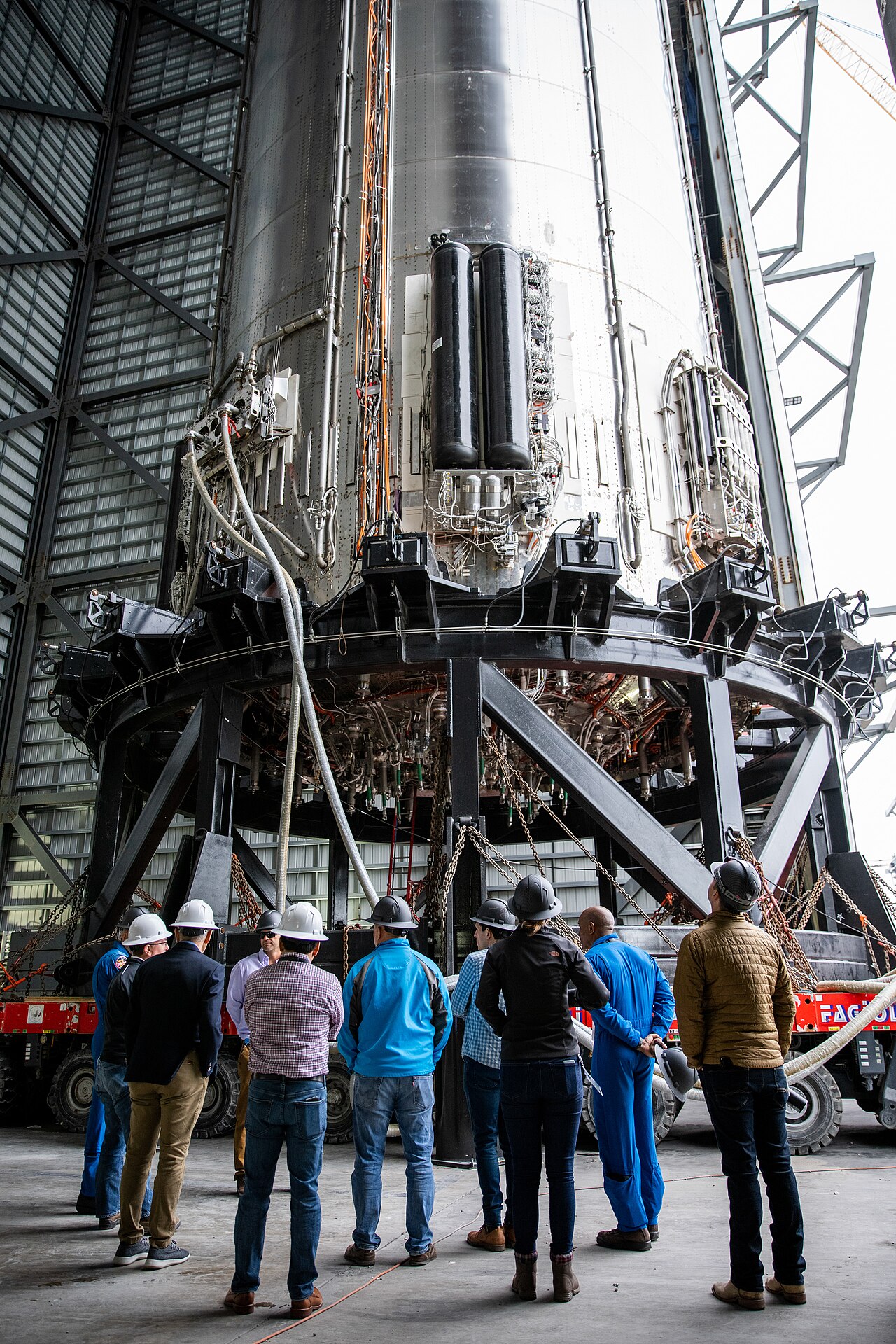
Super Heavy — the first-stage booster underneath Starship — runs 33 Raptor 3 engines in a dense ring at its base, a number that exists purely for redundancy: lose a few, and the vehicle should still make it to space. During Thursday’s ignition sequence, four of those 33 engines simply didn’t light. The flight computer caught it in the fraction of a second between “start commanded” and “clear to release,” and triggered an automatic abort before the vehicle left the pad. Elon Musk confirmed it directly: “Some of the engines didn’t start, triggering an automatic launch abort.” Two Raptors are being pulled and replaced. Musk’s stated timeline for the next attempt: “early next week.”
Why This Is the First of Its Kind
This is the first time a full-scale Starship has aborted this late in a countdown. Earlier failures in the program’s history — and there have been plenty across seven years of test flights — tended to happen mid-flight, post-separation, or during descent, where the vehicle is already committed to the mission and a failure becomes a very public explosion. A pad abort is almost the boring outcome by comparison: expensive, embarrassing, but not photogenic. That’s actually the point of the redundancy engineering. A rocket designed to tolerate losing a handful of engines mid-flight should, in theory, be even more conservative about launching at all if the numbers look wrong on the ground. Thursday’s abort is that design philosophy working as intended, even if it doesn’t look like a win from the outside.
Twelve Flights In, and This Is Still New Territory
Starship has flown twelve times before this attempt — seven successes, five failures, going back to the first test in April 2023, when the vehicle barely cleared the tower before tumbling and exploding over the Gulf of Mexico. The program’s arc since then has been a study in exactly which failure modes get solved and which keep resurfacing: Flight 2 lost the booster and upper stage separately; Flight 3 made it nearly to a full mission profile before disintegrating on reentry; Flight 4 nailed a controlled splashdown that had eluded every earlier attempt; Flight 5 introduced the now-famous “chopstick” booster catch at the tower. Each of those failures happened after liftoff, when the vehicle was already committed. A pad abort is a different category of problem entirely — it means the failure got caught before physics took over, which is either the redundancy engineering doing exactly its job, or a sign that ignition reliability on the newer Raptor 3 engines still has ground to cover. Probably both.
The Payload Nobody’s Talking About
Lost in the abort coverage: this flight was carrying 20 of SpaceX’s newest Starlink V3 satellites, meant to deploy during a planned hour-long suborbital hop halfway around the world. Starship’s core business case has always been Starlink deployment at a scale no other vehicle can match — a single flight carrying more satellite mass than most competitors launch in a year. Every scrub delays that math, and with a constellation this size, the schedule pressure compounds fast. It’s a reminder that Starship isn’t just a Mars vehicle in press conferences; week to week, it’s a satellite delivery truck first.
The Twist: This Wasn’t Just Another Test Flight
Here’s the detail that changes how this abort reads: it’s the first Starship launch attempt since SpaceX’s stock market debut in June. Starship scrubs have happened before without moving markets, because there was no stock to move. This time, shares dropped more than 3% in after-hours trading within minutes of the abort going public. A vehicle that used to fail (or succeed) purely on engineering terms is now also a quarterly-earnings-adjacent event — every hold, every scrub, every “nominal” or “off-nominal” call from mission control has a shareholder reading it in real time. That’s a genuinely new kind of pressure for a program that spent its first seven years answering only to NASA milestones and Musk’s own timelines — and it’s a pressure no other rocket program in history has had to operate under mid-development, let alone mid-abort.
The Musk-Altman rivalry has shown how differently the two biggest names in the industry handle public setbacks — our breakdown of that feud is worth reading if you want the fuller picture of how Musk narrates failure publicly versus how OpenAI has handled its own stumbles.
What Happens Next
Two Raptor 3 engines get swapped, the booster gets re-tested, and if nothing else surfaces in the meantime, Flight 13 tries again as soon as next week. That’s a fast turnaround by traditional aerospace standards — a legacy rocket program finding four dead engines on the pad would likely mean weeks of root-cause review before anyone touched the launch mount again. SpaceX’s iterate-fast approach treats this kind of failure as a data point to fix, not a program-halting crisis. Whether that philosophy ages well against public-market scrutiny — where a string of scrubs reads very differently to shareholders than it does to engineers — is the actual story to watch here, more than whichever two Raptors get pulled this week. For context, the gap between Flight 5 and Flight 6 in late 2024 was roughly a month; if Musk’s “early next week” estimate holds this time, that would be one of the fastest recovery turnarounds in the program’s history for any pad-level issue, redundant-engine or otherwise.
If you’re tracking how public listings are reshaping the biggest names in tech and aerospace, our coverage of OpenAI’s own IPO filing covers the other side of that same shift — engineering-first companies now also answering to quarterly expectations.
Deixe um comentário