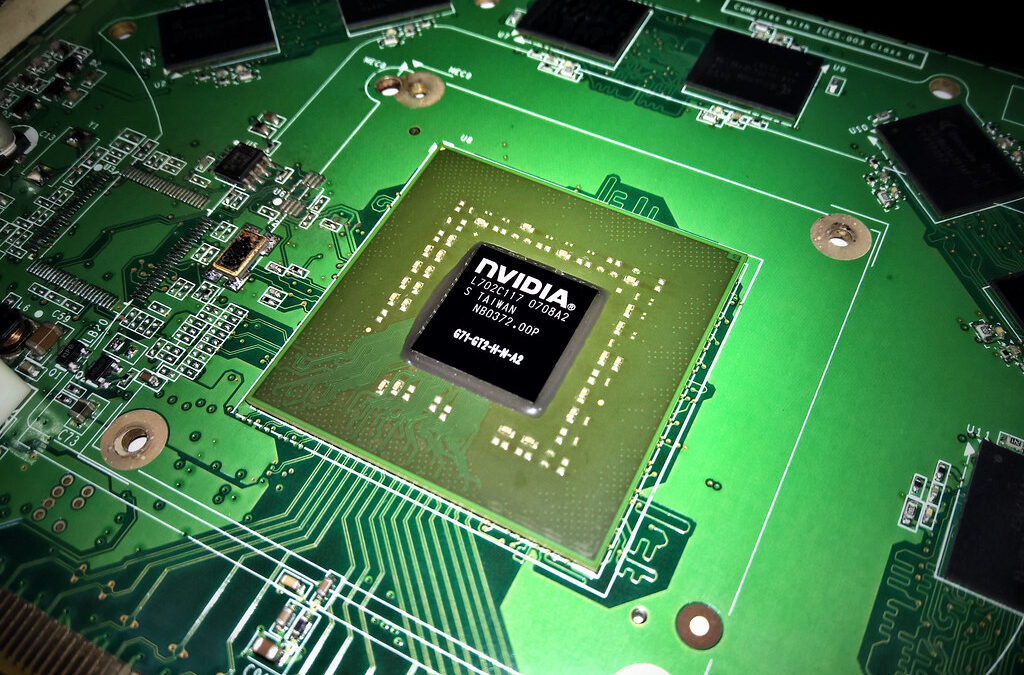
Here’s the part that doesn’t add up on the surface: GDDR memory isn’t hard to make. The factories that produce it haven’t broken. Nobody is short on sand, silicon, or the decades-old process technology behind it. And yet GDDR6 spot prices have roughly tripled in recent months, VRAM now eats over 80% of the bill of materials on some high-end graphics cards, and Nvidia has reportedly cut RTX 50-series production by as much as 30-40% on certain models. If the memory itself isn’t the bottleneck, what is?
The answer isn’t a shortage in the traditional sense. It’s an auction, and consumer GPUs are losing it.
The wafer that would rather be something else
Samsung, SK hynix, and Micron don’t manufacture GDDR because they’re loyal to gamers — they manufacture whatever earns the most money per silicon wafer, and right now that isn’t GDDR. It’s HBM: High Bandwidth Memory, the specialized chip stacks that go into the AI accelerators powering Nvidia and AMD’s datacenter GPUs. A gigabyte of HBM reportedly consumes 3 to 4 times the wafer capacity of an equivalent gigabyte of standard DRAM to produce, but hyperscalers building AI datacenters will pay whatever it costs to get it — nearly $700 billion in AI infrastructure spending is on the table for 2026 alone. Every wafer a fab diverts to HBM is a wafer that doesn’t become a GPU’s video memory.
IDC now estimates AI datacenters could consume roughly 70% of the world’s memory output in 2026 — up from somewhere around 20-30% back in 2022. That’s not a supply chain hiccup. That’s an entire category of demand that didn’t really exist five years ago, now large enough to reorder what memory manufacturers choose to build.
The 2016 comparison people keep reaching for — and why it’s not quite right
Anyone who’s followed hardware pricing for a while remembers the 2016-2018 DRAM “supercycle,” when prices nearly tripled as manufacturers shifted capacity toward 3D NAND to keep up with smartphone storage demand and early cloud buildout. It’s the obvious historical parallel, and analysts do draw the comparison — but the mechanism is different in a way that matters. That cycle was driven by broad, incremental growth across ordinary categories: more phones, more PCs, more standard servers. This one is driven by a single new category — AI accelerators — with functionally unlimited appetite and margins high enough to outbid everyone else for the same production lines. It’s less “the market grew” and more “one buyer showed up willing to pay far more than anyone else, for as much as you can make.”
There’s a second, less comfortable parallel worth knowing about: the 2020-2022 GPU shortage driven by crypto mining and pandemic demand. Prices spiked, eventually eased — but never fully returned to where they started. The market reset at a higher floor. More than one analyst tracking this cycle expects the same pattern here: relief eventually, but not a full rewind.
What GPU makers are actually doing about it
Nvidia has reportedly cut RTX 50-series production and appears to have shelved a rumored RTX 50 Super refresh indefinitely — some coverage frames 2026 as the first year in roughly three decades without a new Nvidia gaming GPU generation, which is a striking sentence to write about the company that basically defined the modern GPU release cycle. AMD held prices relatively steady through 2025 under older contracted memory-pricing agreements, but those expired in 2026 and exposed AMD to spot-market GDDR costs directly — its board partners have now seen roughly a 10% GDDR kit price hike, the second in about six months — we covered the mechanics of that specific hike in our report on AMD’s July price increase. Board partners like ASUS and MSI have largely passed the increase straight to shoppers rather than absorb it, with some custom card prices up 17.5% or more.
A representative from AMD board partner Sapphire put it plainly to Tom’s Hardware: the memory situation is comparable in uncertainty to tariff disruption, and while prices should “begin to stabilize in the next 6-8 months,” that stabilizing point “may not be the prices we want.” Translation, from someone actually inside the supply chain: this eases, it doesn’t reverse.
Is there actually relief coming?
Samsung and SK hynix are both expanding production capacity through 2026 specifically to meet AI demand — SK hynix is reportedly targeting roughly an 8x ramp in next-generation 1c DRAM output, and Samsung is pursuing around 50% more HBM capacity. New fabs take years to plan but capacity expansions on existing lines can come online faster, which is where the 6-8 month stabilization estimate comes from. The catch is that new capacity doesn’t automatically flow back to GDDR — if HBM demand keeps outbidding consumer memory for the same wafer starts, manufacturers have every financial incentive to fill new capacity with more HBM, not more GDDR.
If you’re shopping for a GPU or a new PC build right now, this is useful context for the sticker shock — it’s not a retailer markup or a temporary component shortage, it’s a structural reallocation that’s happening at the fab level, tied to how much money AI datacenters are willing to spend. We broke down the retail-side version of this squeeze — what it means for RAM and GPU shoppers specifically — in our piece on the chip stocks bear market, and if you’re wondering whether the record-high RTX 5090 pricing is really Nvidia’s doing or a symptom of this same squeeze, our honest look at the RTX 5090 price crisis covers that directly.
Frequently Asked Questions
Is this the same as the general “DRAM shortage” everyone’s talking about?
Related but distinct — it’s specifically a capacity-allocation story. Fabs are choosing to build HBM instead of GDDR because HBM is more profitable, not because raw manufacturing capacity is broken. GDDR gets squeezed out as a side effect.
Will GPU and RAM prices go back to normal?
Industry sources cited above expect prices to stabilize within 6-8 months of mid-2026, but most analysts expect the market to settle at a higher floor than before — similar to what happened after the 2020-2022 crypto/pandemic GPU shortage.
Why don’t manufacturers just build more GDDR since demand is high?
They could, but a wafer turned into HBM for an AI accelerator earns significantly more revenue than the same wafer turned into GDDR for a consumer GPU. As long as AI datacenter demand keeps paying a premium, expanding capacity tends to go toward HBM first.
Deixe um comentário