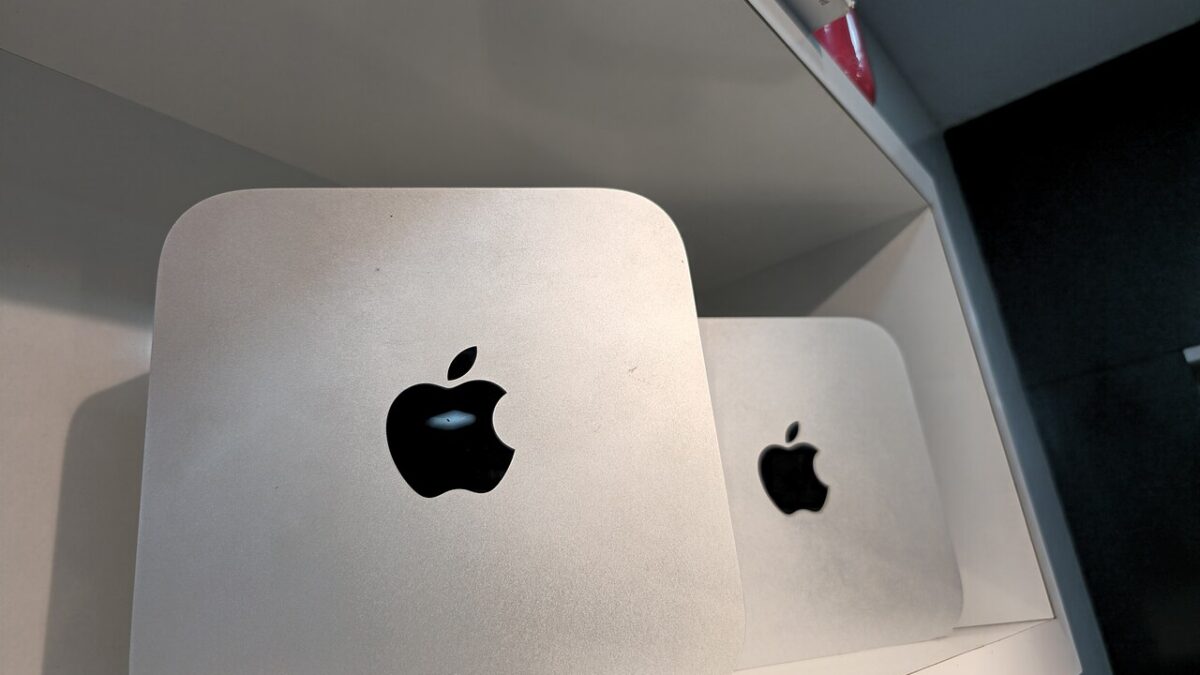
Here’s a weird fact about 2026: the same technology wave is making some gadgets shrink and others grow, and it’s not a contradiction — it’s the same trend wearing two different outfits. A five-inch box on your desk now outperforms towers that needed their own dedicated floor space a decade ago. Meanwhile, the handheld gaming PC in your bag is getting bigger, not smaller. Both are happening because of the exact same thing.
It started with a box you could hold in one hand
Blame — or credit — the Mac Mini. When Apple refreshed it in November 2024 with the M4 chip, it kept the same 5×5-inch footprint it’s had for years, but the performance inside made no sense for something that small. It ran silent under real workloads, chewed through single-threaded tasks faster than towers three times its size, and did it all without spinning up a fan you could hear from across the room. That one product is now widely credited with kicking off a visible, years-long arms race — call it the Mac Mini Effect.
Chinese manufacturers noticed first and moved fastest. Beelink built a reputation on thermal stability at mainstream prices. GMKtec became the budget king, undercutting on price while still fitting real desktop-class silicon into palm-sized shells. Minisforum went the enthusiast route — liquid metal cooling, discrete GPU options, the works — for buyers who wanted mini-PC portability without giving up gaming performance entirely. GEEKOM and AceMagic filled in around the edges. By early 2026, tech outlets were openly describing mini PCs as “stealing the spotlight from laptops” — not a niche curiosity anymore, a real category eating into segments that used to belong exclusively to full towers and even some laptops.
The market numbers back up the vibe
This isn’t just enthusiast hype. Market research pegs the mini PC category at somewhere around $25 billion in 2025, climbing toward $26.7 billion in 2026, with multiple forecasts agreeing on a roughly 6.6-7% annual growth rate through the early 2030s. That’s not explosive, meme-stock growth — it’s the steady, compounding kind that signals a genuine structural shift in how people buy computers, not a fad that evaporates in a year.
Interesting tangent: what actually shrank
The old excuse for big computers was heat. Cramming real performance into a small case used to mean thermal throttling within minutes — your “powerful” mini PC would slow itself down the moment it got warm, which defeated the entire point. That problem hasn’t vanished; reviewers still flag it as the industry’s unsolved, “managed not fixed” issue. But the baseline got so much better that a compromised mini PC today still outperforms what a full tower could do five years ago. The floor rose faster than the ceiling did, and that’s the part that’s easy to miss if you’re not paying attention model-generation to model-generation.
The surprising twist: not everything is shrinking
Here’s the part that breaks the tidy “everything is getting smaller” narrative: handheld gaming PCs are trending in the opposite direction. Lenovo’s Legion Go Gen 2 grew its display to 8.8 inches with a 144Hz panel and nearly double the battery life of its predecessor. The Legion Go Fold takes it further — a 7.7-inch screen that unfolds to 11.6 inches when you want it. If size were the whole story, handhelds should be shrinking right alongside mini PCs. They’re not.
What that actually reveals is that “small form factor” was never really the goal — efficient silicon was. The same chip-efficiency wave that let Apple and its imitators shrink a desktop down to a paperback book is simultaneously letting handheld makers spend that efficiency budget on bigger screens and batteries instead of a smaller chassis. Size became a design choice rather than a hard technical constraint, and different product categories are spending that new freedom in opposite directions depending on what their buyers actually want.
What you give up either way
None of this comes free. Apple Silicon’s soldered, non-upgradable RAM is the most-cited frustration among enthusiasts who’d rather open a case and add memory than buy a whole new machine two years later. Mini PCs broadly share that limitation — expansion slots are scarce compared to a real desktop tower. And the Chinese mini PC boom has real quality variance brand to brand; comparison coverage routinely splits vendors into “ones we trust and a few we don’t,” which is worth remembering before you buy on price alone. Handhelds have their own penalty: DRAM pricing pressure has been pushing the category more expensive, not less, right as it should be getting more accessible — a trend most coverage doesn’t expect to normalize before 2027.
Where this leaves the pioneer
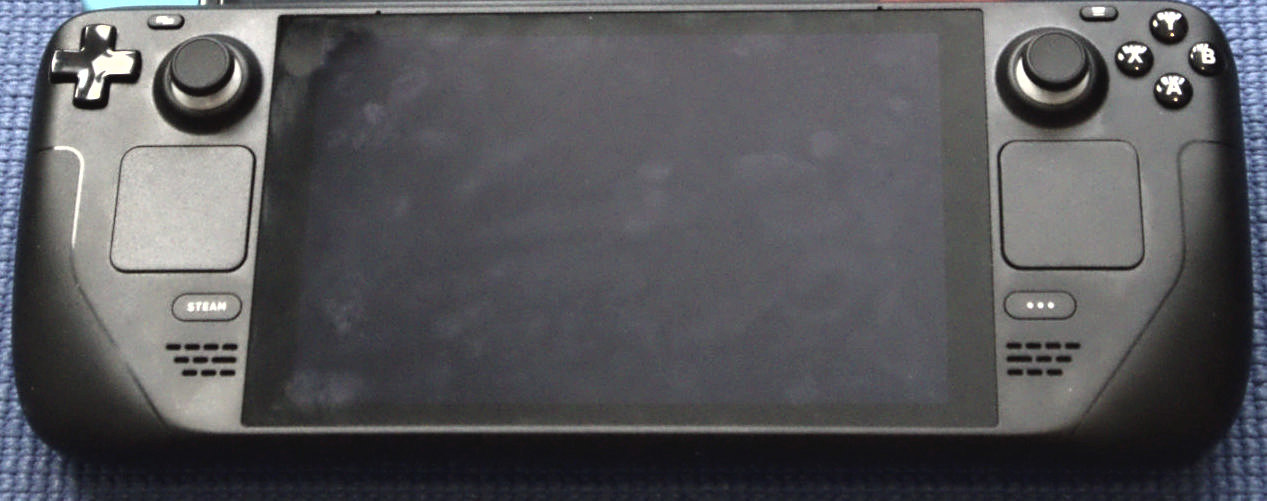
It’s worth noting that Valve, the company that arguably made handheld PC gaming mainstream with the original Steam Deck, has stayed conspicuously non-committal about a true hardware successor — leaning instead toward licensing SteamOS to partners like Lenovo rather than racing to build a bigger, better Deck itself. Even the company that started this particular fire isn’t sure exactly where to point it next, which says something about how unsettled “what should this form factor even look like” still is, four years into the handheld boom.
The part nobody’s marketing department wants to say out loud
Ask five different manufacturers why their box is small and you’ll get five different answers about “design philosophy” and “user-centric engineering.” The honest answer is simpler: five years ago, fitting real performance into a five-inch shell without it throttling into uselessness or sounding like a hair dryer just wasn’t possible at a price anyone would pay. Now it is, so companies build small because they finally can, not because customers were begging for tinier computers specifically. The demand was always there for “more capable without more desk space” — small form factor is just the shape that demand happens to take once the engineering catches up. That’s also why this doesn’t feel like a fad the way, say, curved monitors or foldable phones sometimes do — it’s not a gimmick layered on top of normal computing, it’s normal computing quietly getting more efficient and letting the packaging shrink as a side effect.
The next couple of years will be the real test. If mini PCs keep closing the performance gap with full towers while handhelds keep growing their screens without tanking battery life, 2026 won’t just be remembered as the year tiny gadgets got trendy — it’ll be the year “how big does a computer need to be” stopped having one obvious answer.
If a mini PC is what you’re actually shopping for, we rounded up the best mini PCs under $300 worth considering right now. And if portability matters more than raw desktop power, our budget laptop picks and external SSD roundup cover the rest of a compact setup without the compromises this piece just walked through.
Deixe um comentário