
Why TSMC and ASML’s Earnings Matter More Than Nvidia’s Stock Price
Nvidia’s stock chart is not the chip supply chain. It is a mood ring for people who trade Nvidia’s stock — and this quarter, the mood ring and the actual factories told two different stories. TSMC just posted the best quarter in its history and raised its 2026 spending plan by more than $10 billion. ASML, the company that makes the machines TSMC’s fabs cannot run without, is sitting near a $700 billion valuation on the back of orders it can’t fill fast enough. Neither headline moved the “AI trade” narrative the way a 3% dip in a GPU maker’s share price does.
That gap is the whole point of this piece: if you want to know whether chips — and the GPUs, laptops, and phones built from them — are getting easier or harder to buy in 2026, watch the foundry and the lithography supplier, not the company selling the finished card.
The claim from most tech coverage this year is simple: Nvidia’s stock is the barometer for the AI hardware boom. Up means the chip shortage is easing or demand is healthy; down means trouble. Here’s what we found when we looked one and two layers below Nvidia in the stack: the fundamentals are not ambiguous, and they don’t move in lockstep with any single product company’s share price at all.
TSMC’s Capex Is the Real Chip Supply Chain Signal
TSMC reported $40.2 billion in Q2 2026 revenue, up 36% year over year, with net profit surging 77% to a record high. That’s not a marketing claim — it’s an audited quarter. But the number that matters more for anyone trying to read the supply chain isn’t the beat itself. It’s what TSMC did immediately after: it raised its full-year 2026 capital expenditure guidance from a $52-56 billion range to $60-64 billion, a jump of more than 10%, and lifted its full-year revenue growth target to “above 40%.”
Capex guidance like that is not a press-release flourish. Building advanced fabs takes years and locks in billions of dollars against a specific bet about demand three, four, five years out. A company doesn’t casually add $10 billion to that bet on a whim — and TSMC allocated 70-80% of the new spending to advanced process nodes, with the rest split between specialty processes and advanced packaging, the exact bottleneck categories AI chip production depends on. When the foundry that manufactures nearly every leading-edge chip on the planet raises its multi-year spending plan mid-year, that’s a far more durable signal than one earnings call’s stock reaction.
ASML Is the Chokepoint Nvidia Can’t Route Around
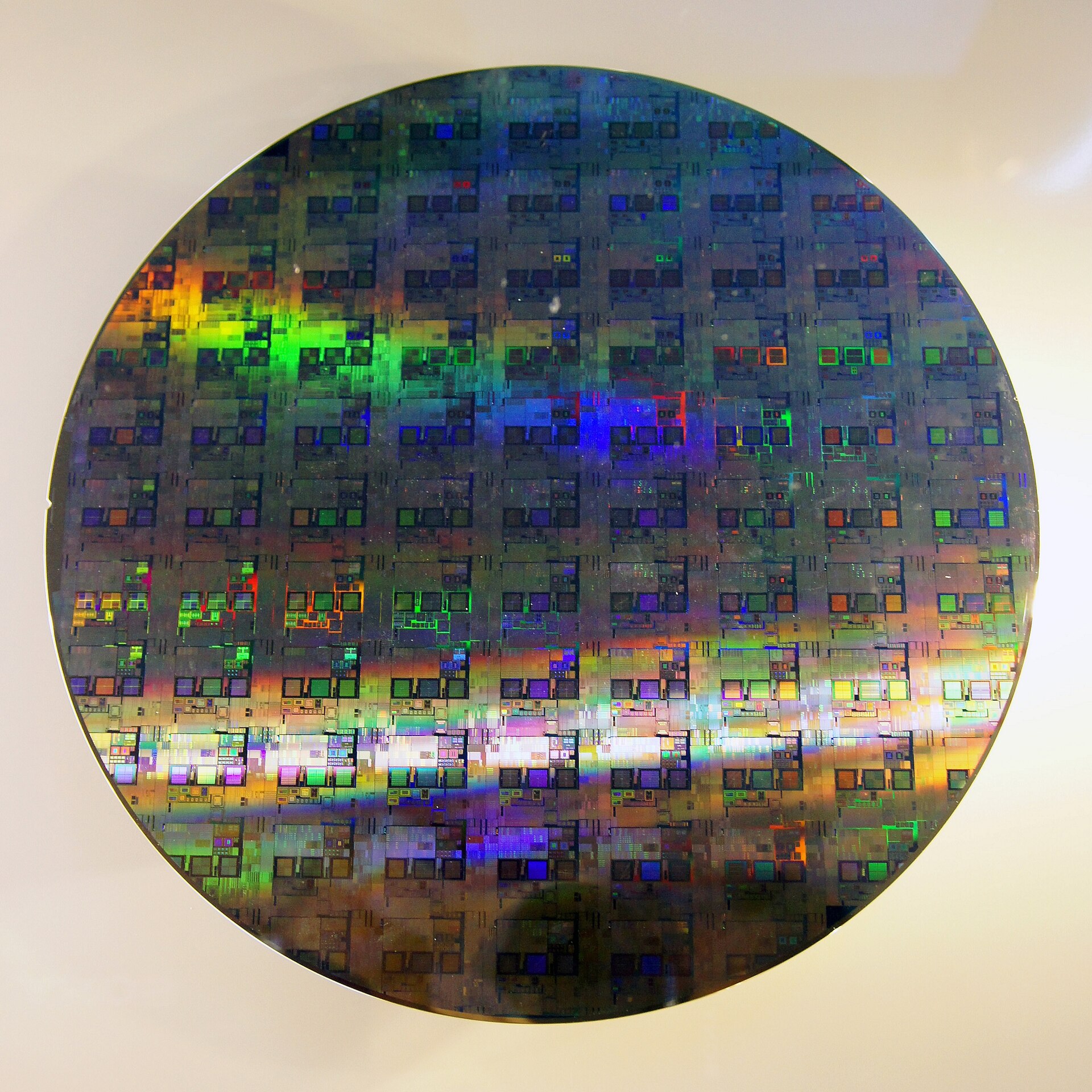
Here’s the part product-company stock prices can never capture: ASML is the sole global supplier of extreme ultraviolet (EUV) lithography machines, the tools required to print the smallest, most advanced chip features. Nobody else makes them. Not a competitor with a smaller market share — nobody. ASML’s roughly 90% share of the broader lithography market isn’t a moat in the usual competitive sense; it’s closer to a physical bottleneck built into the entire industry’s supply chain.
ASML shares are up 60% this year, pushing the company’s market capitalization toward $700 billion, and it raised its own 2026 revenue outlook from a €36-40 billion range to €43-45 billion, citing sustained AI-driven demand for advanced logic and memory chips. It’s also expanding EUV capacity — but by 30% for 2027, with another possible 30% increase under evaluation for 2028. Read that again: the company that sits at the literal chokepoint of chip manufacturing is telling you, in its own capacity roadmap, that the bottleneck doesn’t loosen meaningfully for at least another year, and possibly two. Nvidia’s quarterly stock swings tell you nothing about that timeline. ASML’s order book and capacity plan tell you almost everything.
The Disconnect Is the Evidence
The marketing narrative around AI hardware treats Nvidia’s share price as if it were a live readout of chip availability. The reality this past quarter argued the opposite. TSMC beat every metric analysts were watching and raised guidance across the board — and the broader AI-chip stock complex, Nvidia included, sold off anyway in the days that followed. The print was clean. The market’s reaction to it wasn’t rational in a way that tracked the underlying hardware story.
That’s not a random blip — it’s the clearest evidence available that a finished-product company’s stock price reflects sentiment, positioning, and narrative as much as it reflects physical supply. TSMC and ASML sit closer to the actual constraint: wafer starts, tool deliveries, capacity utilization, multi-year capex commitments. None of that is priced in real time by day traders reacting to a CEO’s tone on an earnings call.
Devil’s Advocate: Isn’t This Just Two Different Layers of the Same Hype Cycle?
The fair pushback here: TSMC and ASML are themselves publicly traded companies riding the same AI enthusiasm that inflates Nvidia’s valuation. If the entire AI capex cycle is overbuilt — and plenty of skeptics argue exactly that — then TSMC’s capex hike and ASML’s backlog are just as much a product of narrative-driven spending as anything happening on Wall Street. A capex guide can be revised down next quarter. A backlog can evaporate if hyperscalers pull back orders.
That’s a real risk, and worth taking seriously rather than waving away. But it doesn’t change the practical point of this piece: even if the AI capex cycle eventually cools, the mechanism through which that shows up first is fab utilization and equipment orders — not a single afternoon’s stock move in a chip designer’s share price. Capex commitments and lithography backlogs are slower, stickier, and harder to fake than sentiment. They’re a lagging-but-honest indicator, not a leading-but-noisy one. For anyone trying to understand whether chip supply is actually loosening, that trade-off favors watching the foundry and the toolmaker over the stock ticker.
What This Actually Means If You’re Buying Hardware, Not Trading Stocks
None of this is a reason to buy or sell any stock — that’s not what this analysis is for, and we’re not going to pretend otherwise. What it does tell you, as someone shopping for a GPU, laptop, or phone in 2026, is that the supply squeeze behind today’s prices is not a temporary blip that a good Nvidia earnings call will fix. TSMC’s capex build-out and ASML’s EUV backlog both point toward capacity relief that’s years, not months, away.
The most acute symptom right now isn’t even logic chips — it’s memory. DRAM prices reportedly jumped roughly 95% in the first quarter of 2026 alone, with DDR5 kits that cost $90-100 in early 2025 now running past $350. Data centers are estimated to consume around 70% of global memory output, and the three companies that dominate DRAM production have been reallocating capacity toward AI accelerator memory, leaving consumer-grade chips scarce.
Laptop prices are reportedly up 20-30% as a direct result, with memory now accounting for roughly a third of a laptop’s build cost instead of the historical 16-20%. If back-to-school laptop shopping or a GPU upgrade is on your radar, our decision framework for buying a GPU during the 2026 memory squeeze lays out the actual trade-offs instead of just telling you to wait indefinitely.
The honest timeline, per industry executives, is not encouraging for anyone hoping prices normalize soon — some estimates put meaningful relief as far out as 2028. That’s the real cost of the AI buildout for regular buyers: not a stock price swing, but a multi-year stretch where the same GPU or laptop configuration simply costs more than it used to. We’ve tracked this from the retail side too — AMD’s second GDDR-driven price hike in six months is one concrete example of the capex story above translating directly into a higher shelf price.
The Bottom Line for the Chip Supply Chain in 2026
Nvidia’s stock price is a useful gauge of how Wall Street feels about AI hype on any given day. It is not a useful gauge of whether chips are actually getting easier to make, ship, or buy. TSMC’s record quarter and its $60-64 billion capex commitment, plus ASML’s near-$700 billion valuation and multi-year EUV capacity roadmap, are the layers of the stack that actually determine how many advanced chips exist in the world and how fast that number can grow.
Watch those two companies’ earnings calls if you want to know where hardware prices are headed. The stock ticker for the company whose logo is on the box is, at best, a lagging and unreliable proxy — and this quarter’s sell-off after a blowout TSMC print is the cleanest recent proof of that gap. For a wider read on how that disconnect between chip-sector stock moves and actual hardware economics has been playing out all year, our earlier look at the chip stock bear market and what it meant for GPU and RAM prices covers the same pattern from a different angle.
This article is not investment advice. It does not recommend buying, selling, or holding any stock, including TSMC, ASML, or Nvidia. It’s an analysis of what corporate earnings and capacity data suggest about consumer hardware pricing and availability.
Deixe um comentário