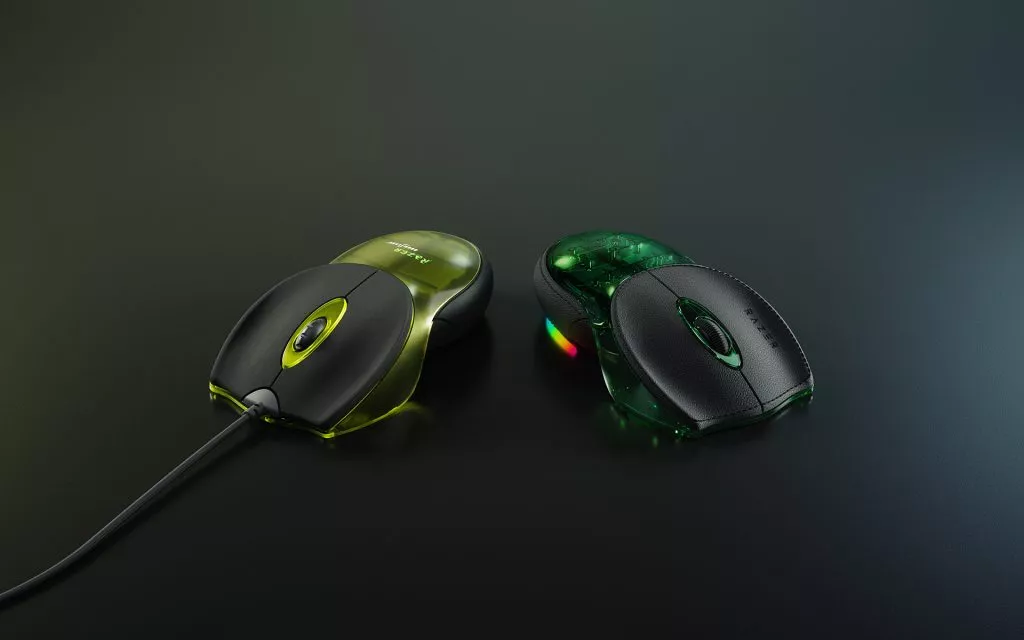
A mouse that sold for $1,337 sold out in six minutes. Then it started reselling for $2,000. If your first reaction is “for a mouse?”, you’re not wrong to ask — but the answer says more about gaming culture than about hardware, and it starts with a number most people under 30 have never had to type into a chat window unironically.
What $1,337 actually buys you
Razer capped the Boomslang 20th Anniversary Edition — marking 20 years since Razer Inc. itself was founded in 2005, not the Boomslang’s own 1999 debut, though the mouse predates the company name — at exactly 1,337 units, priced at exactly $1,337 each — a number that isn’t random, more on that in a second. Preorders opened in the US at 8 a.m. Pacific and were gone before most people finished their coffee. Europe and Asia followed the next day and sold out just as fast.
What you actually get isn’t just a mouse. It ships in a collector’s display frame with every internal component laid out disassembled, like a watchmaker’s case, alongside Razer’s Mouse Dock Pro for magnetic wireless charging. The mouse itself isn’t a nostalgia toy underneath the theatrics, either — it runs Razer’s Focus Pro 45K Optical Sensor Gen-2, jumping from the original’s 2,000 DPI to 45,000, with 8,000Hz wireless polling. It’s a genuinely modern flagship mouse wearing a 25-year-old shell.
Why 1999 is the part that matters
Here’s the layer most coverage skips: the original Boomslang wasn’t just an old mouse Razer decided to remake for a cash grab. It was, by most accounts, the first mouse ever built specifically for competitive gaming. Before it, everyone — professional Quake players included — was using the same office-grade mice sold for spreadsheet work. The Boomslang showed up with a physical trackball, 2,000 DPI at a time when 400 was the ceiling, and a feature nobody had bothered to build before: the ability to switch sensitivity instantly, mid-match, without digging through a settings menu.
That sounds quaint now, when every gaming mouse ships with on-the-fly DPI buttons as a baseline feature. In 1999, it didn’t exist anywhere else. The Boomslang effectively invented the category “gaming mouse” a full decade before esports became something you could major in at a university. It showed up in tournament photos, LAN café setups, and forum signatures for players who’d started taking competitive gaming seriously before there was a formal industry around doing so. For a lot of people who came up through that era, owning one wasn’t a hardware choice — it was closer to a rite of passage.
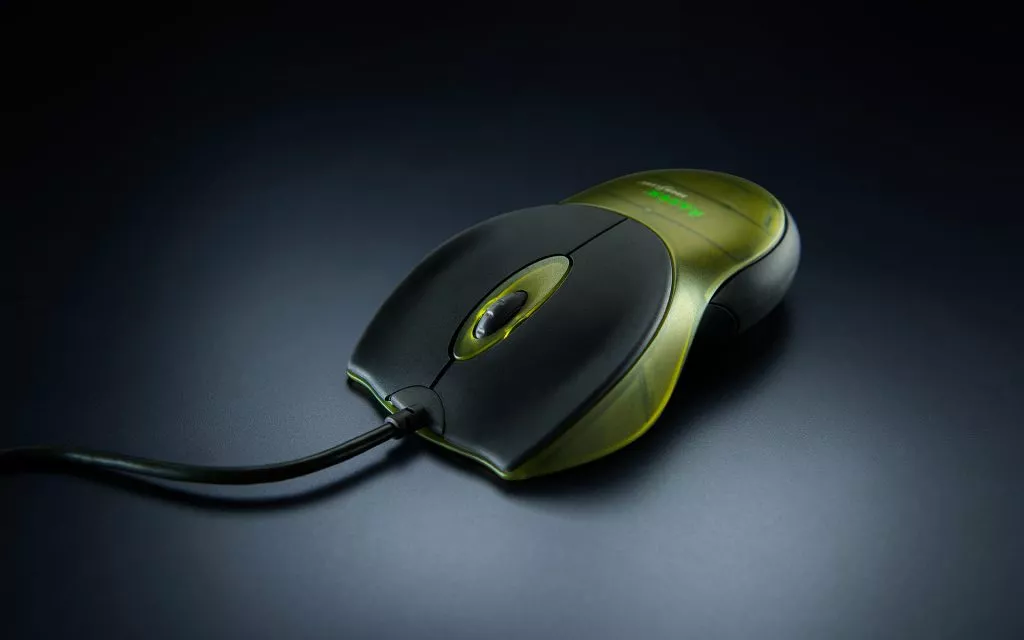
Part of what made it recognizable was how it looked, not just how it performed. The original shipped in a translucent shell at a time when most computer peripherals were beige or black, which made it visually distinct across every LAN café table it sat on — you could spot a Boomslang from across the room before you ever touched it. It was also ambidextrous, a small detail that mattered more than it sounds like it should: competitive gaming was still figuring out what “ergonomic for performance” even meant, and a shape that worked equally well for left- and right-handed players signaled that Razer was thinking about the player, not just the desk accessory market.
The interesting tangent: why 1337 specifically
The price and unit count aren’t a coincidence or a marketing accident — “1337” is leetspeak for “elite,” the internet-slang alphabet substitution that came out of 1990s hacker and gaming forums, where letters got swapped for visually similar numbers partly for style and partly to dodge early text filters. Calling yourself “l33t” was, at the time, a way of signaling you were plugged into a specific, insider-y corner of PC culture. Pricing a callback mouse at exactly $1,337 for exactly 1,337 units is Razer fluently speaking the dialect of the exact community it’s selling to — which is a big part of why this sold out in minutes while a random $1,300 peripheral from a brand with less cultural memory almost certainly wouldn’t.
Is this just nostalgia marketing?
The skeptical read is fair: Razer is a company, this is a limited drop designed to sell out and generate free press, and “cult classic returns” is one of the oldest marketing plays in any industry — sneakers, cars, video game consoles, all of it. None of that is wrong. Scarcity by design, a price built for headlines, and a resale market Razer surely anticipated are all textbook hype-cycle mechanics, and the $2,000 eBay flips prove the scarcity worked exactly as intended.
But that read alone doesn’t explain why THIS specific object, rather than any other Razer product from the same era. Razer has plenty of 20-plus-year-old products it could have revived. It picked the one that’s genuinely credited with starting the gaming peripheral industry, because the nostalgia only works if the original object actually mattered to the people being marketed to. You can’t manufacture that kind of cultural weight retroactively — either the Boomslang meant something to competitive PC gaming in 1999, or a $1,337 remake sells zero units regardless of how clever the pricing gag is. In this case, it clearly did mean something, which is the part actual hype-cycle cynicism tends to skip past.
What this says about where gaming mice have landed
If you’re shopping for something you can actually buy today rather than chase on the resale market, the current generation of gaming mice inherited almost everything the Boomslang pioneered — sensitivity switching, high DPI, ergonomic shapes built specifically for competitive play. Our best wireless gaming mouse roundup covers where that lineage has ended up in 2026, and if the keyboard side of your desk needs the same kind of upgrade, our guide to mechanical switch types breaks down the equivalent decision for keys instead of clicks. Even something as unglamorous as picking the right travel mouse traces back to the same idea the Boomslang introduced first: that a mouse isn’t just a mouse once you start asking it to perform under pressure.
Whether $1,337 for a mouse is absurd or entirely reasonable depends entirely on whether you were the kind of person typing “1337” unironically in 1999. For everyone else, it’s just further proof that the right object, sold to the right community, doesn’t need much convincing at all.
Deixe um comentário