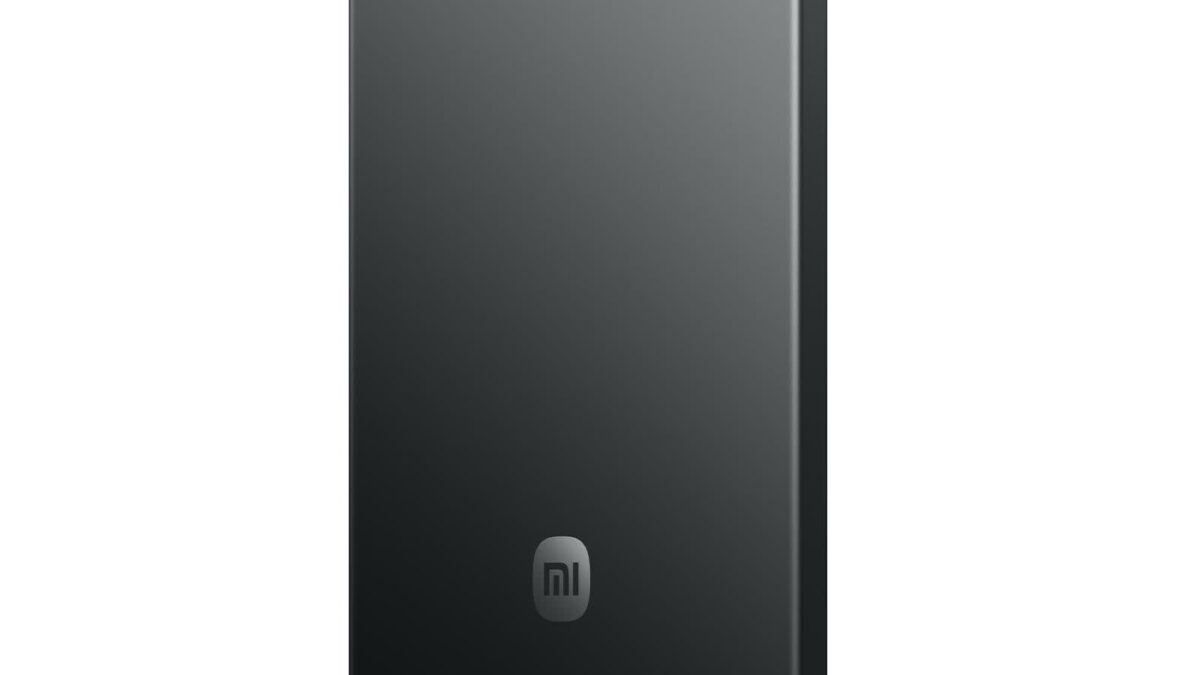
Xiaomi’s New Power Bank Is Just 6mm Thick — How Silicon-Carbon Batteries Made It Possible
Slide a credit card and a stack of five quarters together, and you’ve roughly matched the thickness of Xiaomi’s new UltraThin Magnetic Power Bank. At 6mm, it’s thinner than most phones it’s designed to charge — and the reason isn’t clever industrial design. It’s chemistry.
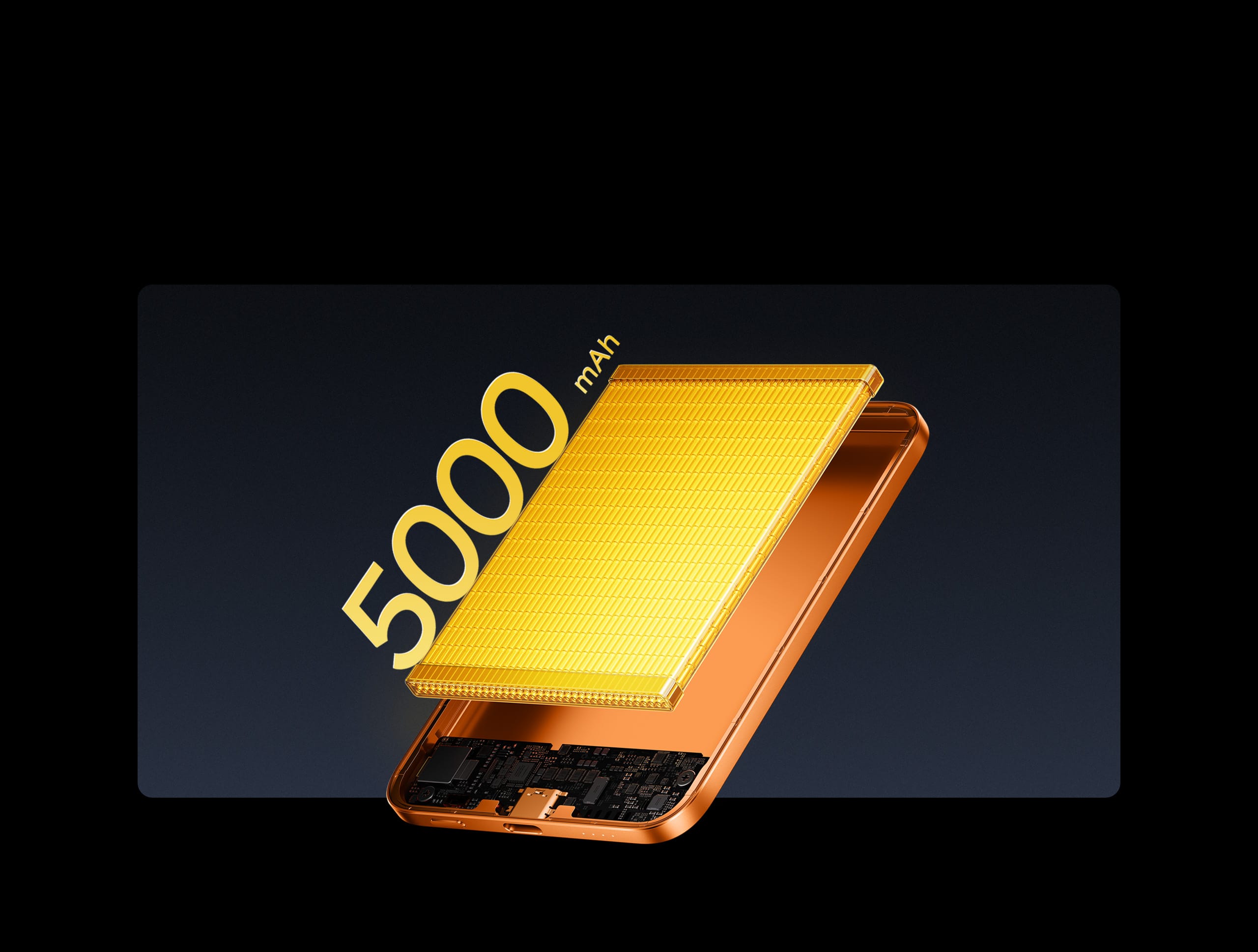
The 5,000mAh pack weighs 98 grams, snaps on with Qi2 magnets, pushes 15W wirelessly to Xiaomi 17 phones (7.5W on iPhone, capped by Apple’s MagSafe spec), and still has a USB-C port doing 22.5W wired for a second device. None of that is wildly new. What’s new is fitting a battery that size into a slab barely thicker than a AAA battery’s diameter, without it bulging, overheating, or exploding — the fear that’s haunted thin batteries since the first swollen-phone horror stories a decade ago.
The trick is swapping graphite for silicon
Every lithium-ion battery has an anode, and for twenty years that anode has been graphite — cheap, stable, and boring in the best way. The problem is graphite is also bulky relative to how much charge it can actually hold. Silicon can theoretically store about ten times more lithium in the same volume. Engineers have known this since roughly forever; the catch is that silicon swells nearly 300% as it charges and shrinks back down as it discharges, which cracks the material apart after a few dozen cycles.
The fix that’s finally shipping at scale is a silicon-carbon composite anode — blend a controlled amount of silicon into the carbon matrix instead of replacing it outright, and you get most of the density gain without the material falling apart. Xiaomi’s cell reportedly runs around 16% silicon content, rated at 18.58Wh in a package that would have needed roughly 20-40% more thickness with a conventional graphite anode to hold the same charge. That gap is the entire product.
This isn’t just a Xiaomi party trick
Here’s the part that makes this more than a one-off flex: Xiaomi isn’t alone, and that’s usually the signal a technology has actually crossed from lab curiosity to supply chain reality. CUKTECH’s 15 Power Bank Air packs a 15,000mAh silicon-carbon cell into a body just 2.1cm thick — triple the capacity of Xiaomi’s pack in a still-slim form factor. Nitecore’s NB10000 uses the same chemistry for an IPX7-rated brick aimed at outdoor use. When three companies chasing different customers all land on the same anode material within months of each other, it’s not a fad — it’s a manufacturing threshold that just got cheap enough to clear.
Commercial silicon-carbon cells are landing in the 300-400 Wh/kg range now, against roughly 200-250 Wh/kg for the graphite cells that have powered basically every phone and power bank sold in the last decade. That’s not an incremental bump. It’s the kind of jump that, historically, reshapes an entire product category — think of what happened to laptops when they went from spinning hard drives to SSDs.
The interesting tangent: your phone is quietly getting the same upgrade
This is where it gets genuinely strange. Silicon-carbon isn’t staying in accessories. Flagship phones are adopting the same anode chemistry specifically so they can pack more battery into a body that isn’t getting any thicker — which means the phone in your pocket is, in a real sense, starting to behave like it has a built-in power bank. The same material science solving Xiaomi’s 6mm problem is the reason recent flagships are quietly gaining battery life without gaining bulk. Nobody markets it that way because “silicon-carbon anode” doesn’t fit on a spec sheet bullet point next to “5G” and “120Hz,” but it’s arguably the single biggest hardware story in mobile batteries this year, and almost nobody outside enthusiast forums is talking about it.
What this actually changes for you
If you’ve avoided ultra-thin power banks in the past because “thin” has historically meant “low capacity” or “gets warm in your pocket,” that trade-off is loosening. Silicon-carbon cells don’t just save space — the composite structure also tends to run cooler under load than pure-graphite cells pushed to the same output, because there’s simply less material fighting the current. That’s part of why Xiaomi is comfortable rating this thing for 22.5W wired output despite the paper-thin shell.
The catch, and there’s always one: silicon-carbon cells are still meaningfully more expensive to manufacture than graphite, which is why you’re seeing this debut on premium accessories and flagship phones first, not the $15 power bank at the checkout counter. Xiaomi’s pack launched in Japan for roughly $50 and has since spread to Australia, Singapore, South Korea and parts of Europe — a rollout pattern that tells you the company is still testing demand before committing to a global, high-volume price. Expect that price to compress over the next couple of product cycles the way every battery advance eventually does — OLED was a luxury feature once too, and now it’s in $200 phones.
There’s also a safety story hiding under the marketing copy. Swollen-battery horror stories — the phone that puffs up and cracks its own screen, the power bank that gets warm enough to worry you on a nightstand — almost always trace back to graphite anodes being pushed past their comfortable charge rate to squeeze out more capacity. Silicon-carbon composites are more dimensionally stable under that same stress, which is part of why manufacturers are comfortable rating thin packs like this one for real wired output instead of throttling it down to a trickle. Thinner used to mean more fragile. That’s the assumption this generation of batteries is quietly breaking.
We’ve been tracking how fast wireless charging hardware is evolving on the accessory side too — if you’re shopping for something you can actually buy today rather than window-shop, our guide to the best wireless chargers of 2026 breaks down which pads and stands are worth it. And if battery anxiety is the real problem you’re trying to solve, we go deeper on the software and habit side of it in our guide to extending your phone’s battery life — chemistry helps, but how you charge matters just as much.
Xiaomi’s 6mm power bank isn’t going to be the cheapest thing in your bag. But it’s a genuinely useful preview of where every battery in your life — phone, laptop, earbuds case — is quietly headed over the next few years. The thickness number is the headline. The anode swap underneath it is the actual story.
Sources: Gizmochina, Techlicious, Chargerlab, Notebookcheck
Deixe um comentário