For two years, Wall Street let Big Tech spend almost whatever it wanted on AI infrastructure, on one unspoken condition: keep the revenue curve pointed up and nobody asks too many questions. That truce broke this week. Alphabet posted negative free cash flow for the first time since its 2004 IPO, nearly $800 billion evaporated from the “Magnificent Seven” in a single session on July 23, and by July 26 Bloomberg was openly describing “a market in revolt over AI spending.” Here’s my position, stated plainly before the numbers: this isn’t proof AI is a bubble, but the spending is currently outrunning the revenue that’s supposed to justify it, and pretending otherwise is getting harder by the earnings call. The math the industry has been avoiding since 2024 just got put in front of everyone at once.
The $730 Billion Question
Here’s the claim you’ll see repeated everywhere right now: Microsoft, Alphabet, Amazon, and Meta will spend roughly $700–730 billion combined on AI infrastructure in 2026, with some estimates (JPMorgan’s broader count) pushing closer to $870 billion once you include the rest of the ecosystem. None of these numbers are exact — they shift depending on who’s counting and what counts as “AI” spend versus ordinary cloud capex — but the direction is not in dispute. Amazon has guided to roughly $200 billion for AWS. Microsoft is around $190 billion. Meta sits at $125–145 billion. Alphabet, most tellingly, raised its own guidance from the $175–185 billion range in February to as high as $205 billion after its July 22–23 earnings call — an upward revision announced in the same week its stock had its worst single day in over a year.
My Position: The Spending Math Doesn’t Add Up Yet
I don’t think this is a bubble in the “the whole thing is fake” sense. I think it’s a timing mismatch that the market spent two years ignoring and is now pricing in all at once. Alphabet going free-cash-flow negative isn’t a rounding error — it’s a company that has been profitable every single quarter since going public suddenly telling investors that this quarter, the outflow was bigger than the inflow. That’s the kind of number that used to get a CFO fired. In 2026, it gets described as “aggressive AI investment” on the earnings call and a credit-spread widening on the bond desk the same afternoon.
That second part matters more than the stock drop. CNBC reported on July 24 that anxiety has spread into the bond market — investors demanding a bigger premium to lend Google, Amazon, and Meta money for data centers, because the AI rally has quietly stopped being an equity story and started being a debt story. Citi is modeling negative free cash flow at some of these companies persisting into 2027–2028. Some analysts are projecting the sector’s combined free cash flow could fall as much as 90% this year as capex outruns AI revenue growth. That’s not a hypothetical risk anymore. It’s what the last week of earnings calls actually showed.
Where the Money Is Actually Going
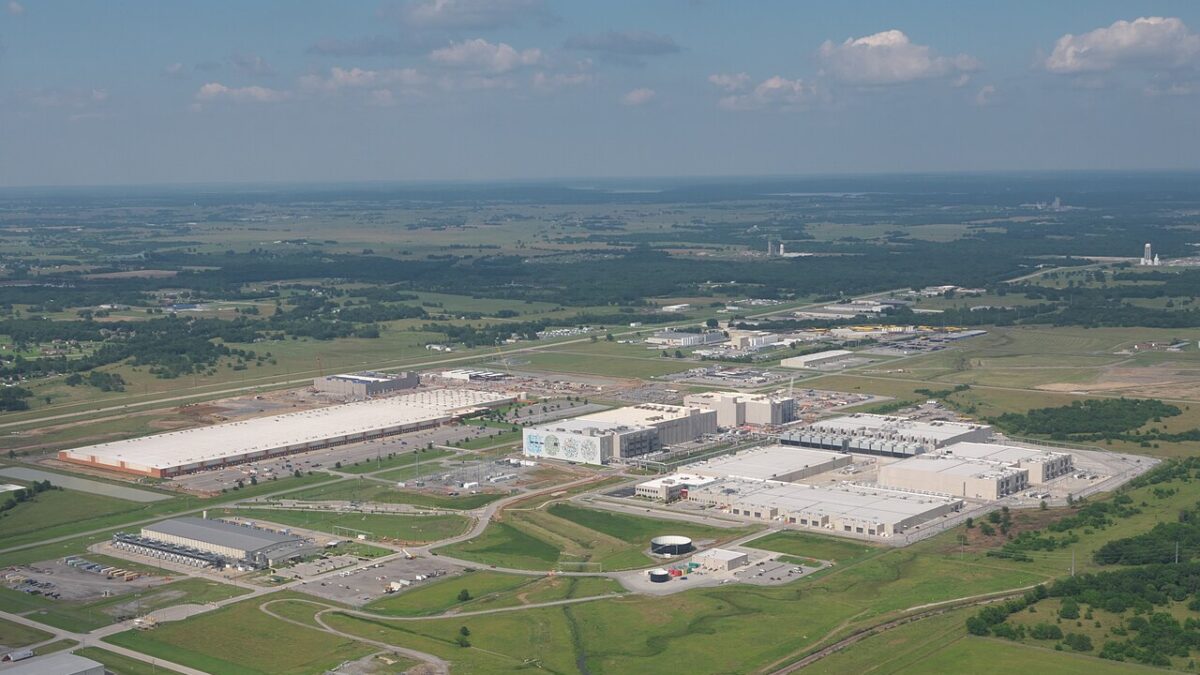
It’s worth being specific here, because “AI spending” gets used as a catch-all. The bulk of this capex is data centers, custom silicon, and — increasingly — long-term power contracts, not just GPUs sitting in racks. Utilities in states with heavy data center buildout are already renegotiating multi-decade power purchase agreements around hyperscaler demand, which means this spending doesn’t stop being a liability even if a company decided tomorrow to slow down — the contracts are already signed. Some of it is also showing up in arrangements that look less like straightforward capital investment and more like financial engineering: Nvidia reportedly guaranteeing a chunk of the debt behind OpenAI’s Ohio data center build is one recent example of just how circular this financing has gotten, with chipmakers effectively backstopping the debt of the companies buying their chips. When the industry needs its own suppliers to co-sign the loan, that’s usually a sign the math is getting stretched, not a sign of confidence. It also means the risk isn’t contained to Big Tech’s own balance sheets — it’s distributed across chipmakers, utilities, and now bondholders, which is exactly why a stock-market wobble this week showed up as a bond-market story by the following afternoon.

Steelmanning the Bulls — Why They Might Be Right
To be fair to the other side: the strongest bull argument isn’t “trust us,” it’s a supply constraint. Hyperscalers keep insisting the bottleneck is capacity, not demand — advanced chip packaging and HBM memory from Samsung, SK Hynix, and Micron simply can’t be produced fast enough to meet existing orders, meaning even $700 billion in committed spend can’t all be deployed the moment it’s approved. If that’s true, the risk isn’t overinvestment, it’s underinvestment relative to a demand curve that’s still climbing. OpenAI reportedly closed 2025 with around $20 billion in annualized revenue, roughly tripling year over year, which is real evidence that end demand for AI products exists beyond hyperscaler press releases. Goldman Sachs was already projecting AI investment north of $500 billion back at the start of the year — meaning, to bulls, none of this is a surprise. It’s a plan playing out on schedule, and the “crossover” point where revenue catches capex is supposed to be arriving now, not at the end of the decade.
What Would Actually Change My Mind
I’d take the bull case seriously if two things happened in the next two quarters: AI-specific revenue lines (not “cloud revenue” broadly, which mixes in non-AI workloads) growing fast enough to visibly close the gap with capex, and free cash flow at Alphabet, Meta, and the rest stabilizing rather than sliding further negative. If instead the pattern holds — guidance keeps climbing every earnings call, FCF keeps deteriorating, and credit spreads keep widening — then this stops being a debate about optimism versus caution and becomes a story about who runs out of runway first. Nobody sensible is calling for anyone to pull back on AI infrastructure entirely; the gap between compute supply and compute demand is real, and the semiconductor sector’s more-than-20%-off-its-peak slide this year suggests the market has already started pricing some of that constraint in on the supply side too. But “the bottleneck is supply, not demand” is a claim that needs to keep being true every quarter, not just this one — and this is the first quarter it’s been seriously tested in public, in front of an audience that just watched a company post its first negative free cash flow quarter in over two decades.
None of this is investment advice, and it shouldn’t be read as a signal to buy, sell, or hold anything — it’s an honest look at a spending pattern that’s about to get a lot harder to ignore. If you want more context on how tangled the financing behind this boom has gotten, our coverage of SpaceX’s own bet on AI compute is a good next read, and it’s worth remembering this is happening even as the models themselves keep racing ahead of whatever budget was supposed to fund them.
Deixe um comentário