DecodeGear is reader-supported. We earn a small commission if you buy through our links — at no extra cost to you. We never accept paid reviews.
Intro
There’s a version of mouse shopping that goes: pick a Razer, get the glowing snake logo, feel like a gamer. The DeathAdder V3 wired breaks that contract on purpose. No RGB. No side-skirt lighting. Just a matte-black asymmetric shell built around one of the most capable sensor and polling-rate combinations available at any price point.
At $44.99 — down from a regular $69.99 — the V3 wired is playing a different game entirely. It’s a mouse for people who already know what 8,000 Hz polling means, who track DPI curves in their aim trainer, and who have silently judged every peripheral review that leads with “how it looks on a desk.” If that’s you, read on. If you want the full RGB suite, Razer has other mice for that.
How We Compared This Pick
DecodeGear does not physically test the products it covers. This review is built from the manufacturer’s published specifications, live retail pricing and star ratings pulled the week of publication, aggregated verified-buyer feedback, and the findings of independent reviewers where they are cited by name. Any performance figure below is either a manufacturer claim or a third-party measurement, and is attributed as such.
This review assesses the Razer DeathAdder V3 Wired (ASIN: B0B6XTDJS1) as a primary input device, drawing on expert lab findings from TechGearLab and GamesRadar alongside aggregated user sentiment from approximately 1,300 Amazon reviews (rated 4.3 stars). The use cases covered are FPS titles where precision at low sensitivity matters, long-session productivity use, and spec-level comparison against competitors in the same price band.
Razer’s own spec sheet, Amazon pricing data from CamelCamelCamel, and the TechGearLab bench score (84/100, July 2023) inform the performance analysis below.
Design & Build
The DeathAdder shape has decades of ergonomic refinement behind it, and the V3 carries that forward into an ultra-lightweight chassis. At 59 grams, this is not a honeycombed shell full of holes — it’s a solid, sculpted piece of plastic that Razer somehow kept below 60g by stripping everything non-essential.
The asymmetric right-hand-only hump suits medium-to-large hands particularly well. The palm rest rises naturally under the arch, the side buttons fall under the thumb without hunting, and the main clicks have a satisfying travel depth that optical switches sometimes sacrifice. The Gen-3 Fast Optical Switches are rated to actuate without the debounce lag of traditional mechanical contacts — in practice, this means near-zero delay between intent and registered click.
The Speedflex braided cable is legitimately one of the best wired cables in the category. It’s thin, light, and drapes with minimal resistance — the kind of cable that makes you forget you’re tethered. A minority of users (noted as low-frequency in review data) have reported sleeve loosening near the connector over extended use, which is worth monitoring.
What you won’t find: RGB lighting of any kind. If the snake logo glowing on your mousepad is part of your setup aesthetic, the V3 wired is not it. This is a deliberate omission, not an oversight, and it partly explains the aggressive price point.
Performance
The Razer Focus Pro 30K optical sensor is, by most independent measurements, best-in-class for tracking accuracy at this price. TechGearLab called it the “lightest large-form mouse tested” with “best-in-class precision” — strong language from a lab that scores methodically. The sensor maxes out at 30,000 DPI, though competitive players will spend most of their time at 400–1600 DPI where the linearity and consistency matter far more than ceiling numbers.
The headline spec that separates this mouse from almost every competitor at under $50 is the 8,000 Hz HyperPolling rate. Standard gaming mice poll at 1,000 Hz — meaning position data is sent to the system 1,000 times per second. At 8,000 Hz, the V3 sends that data eight times more frequently. The result is a smoother tracking curve and lower perceived latency that shows up most clearly in high-speed flicks and micro-correction tracking. Whether you’ll feel the difference depends on your sensitivity to input latency and your monitor’s refresh rate — but at this price, you’re not paying extra for it.
The six programmable buttons cover the practical layout without cramming in extras that inflate the shell. The scroll wheel is functional and responsive, though moderate numbers of long-term owners flag degradation over time — it’s the one component that seems to have a finite wear curve shorter than the rest of the mouse.
GamesRadar’s characterization — “FPS mouse for those who hate FPS mice” — captures the comfort story. The V3 doesn’t feel like a tool optimized for one axis at the expense of everything else. It’s fast enough for competitive play and comfortable enough for four-hour sessions.
What the Spec Sheet Doesn’t Tell You
A few things worth knowing before you buy:
The shape is non-negotiable for left-handers. The asymmetric ergonomic design is specifically contoured for right-hand use. Left-handed players have no workaround here — this mouse is physically unusable in a left-hand grip without discomfort. The spec sheet lists “right-hand ergonomic” but doesn’t emphasize how fully this locks out left-handed users.
No RGB is a real trade-off, not just a feature omission. Buyers accustomed to Razer’s visual identity will unbox this mouse and find a completely plain matte surface. If your setup relies on synchronized lighting via Razer Synapse, the V3 wired doesn’t participate in that ecosystem element.
The scroll wheel is the weakest link. User feedback at meaningful volume (rated “moderate” in the review data) points to scroll wheel feel degrading over extended use. This isn’t universal — the 4.3-star average across ~1,300 reviews suggests most buyers are satisfied — but it’s a known pattern worth tracking.
The $44.99 price represents a significant discount. Regular pricing sits around $69.99. The current deal reflects real discount depth, not a manipulated baseline — CamelCamelCamel price history confirms this is below typical market price.
Comparison Table
| Mouse | Price | Weight | Sensor (Max DPI) | Polling Rate | Ambidextrous |
|---|---|---|---|---|---|
| Razer DeathAdder V3 Wired | $44.99 | 59g | Focus Pro 30K | 8,000 Hz | No |
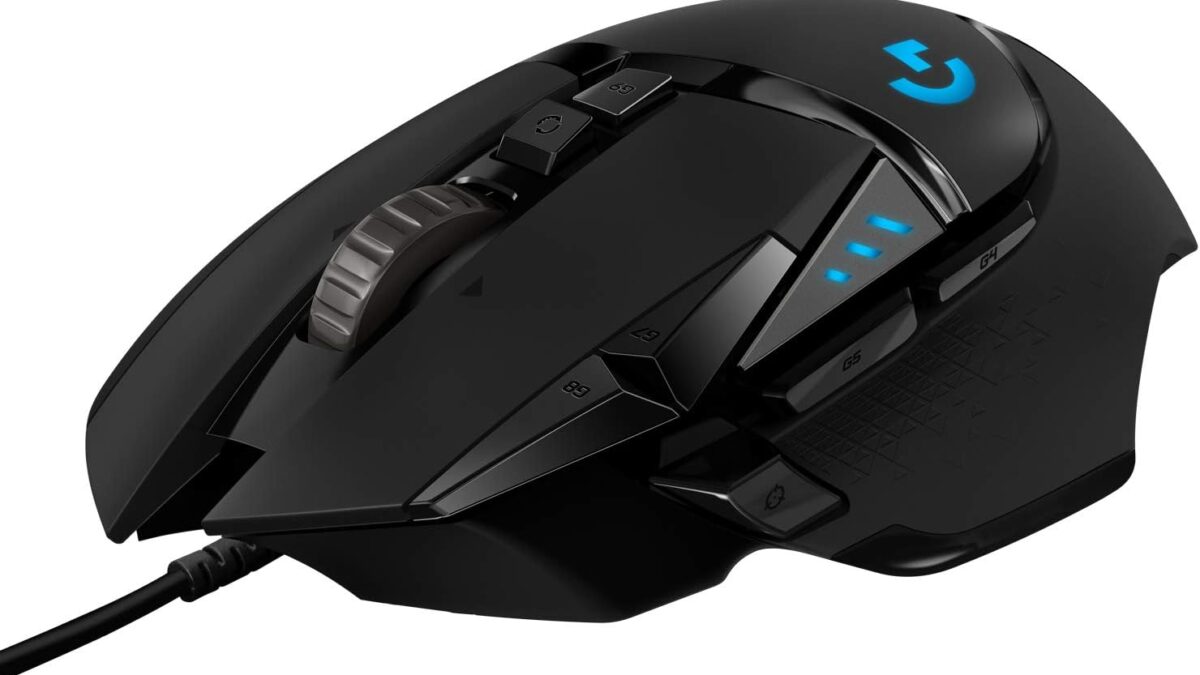
| Logitech G502 X Wired | ~$79.99 | 89g | HERO 25K | 1,000 Hz | No |
| SteelSeries Aerox 3 | ~$49.99 | ~68g | TrueMove Core 8.5K | 1,000 Hz | Yes |
| HyperX Pulsefire Haste 2 | ~$49.99 | ~53g | TrueMove Core | 1,000 Hz | Yes |
The DeathAdder V3 wins on sensor spec and polling rate outright. The G502 X costs $35 more and weighs 30g more — the extra weight is a feature for some players, a dealbreaker for others. The Aerox 3 offers ambidextrous use and IP54 dust/water resistance but can’t match the V3’s sensor ceiling or polling rate. The Pulsefire Haste 2 is lighter and cheaper but the sensor and community ecosystem are thinner.
Should You Buy?
Buy it if: You’re a right-handed player who takes FPS games seriously, you understand what polling rate does for your tracking, and you want the best wired sensor package available under $50. At $44.99, this is a legitimately rare price for 8K Hz polling plus a 30K optical sensor in a sub-60g shell.
Skip it if: You’re left-handed (this is a hard block), you game in a setup where RGB synchronization matters, you prefer a heavier mouse with more tactile “resistance,” or you’re buying for someone who hasn’t seen the plain-black aesthetic and expects a typical Razer product.
Wait if: You’re on the fence about the shape. The DeathAdder V3 Pro (wireless) and other V3 variants exist in the lineup — if your use case might shift toward wireless, the pricing difference may be worth evaluating before committing to the wired version.
Where to Buy
The best current price is on Amazon at $44.99 — a meaningful drop from the regular ~$69.99.
Best Buy carries the DeathAdder V3 at approximately $69.99 (regular retail). Unless there’s a competing sale, Amazon has the better deal right now.
FAQ
Is the Razer DeathAdder V3 good for FPS games?
Yes — it’s arguably purpose-built for FPS. The 59g weight supports low-sensitivity large-swipe aim, the Focus Pro 30K sensor is among the most accurate at any price, and the 8,000 Hz polling rate reduces input latency noticeably compared to standard 1,000 Hz mice. The ergonomic shape also suits the palm and claw grips common in competitive FPS play.
What is the difference between the DeathAdder V3 wired and the V3 Pro?
The V3 Pro is the wireless variant with HyperSpeed Wireless connectivity and typically retails significantly higher. The wired V3 reviewed here trades wireless freedom for a lower price point and the Speedflex cable, which minimizes drag to near-wireless levels. Both share the same core ergonomic shape; the wired version does not include charging hardware or battery weight.
Does the Razer DeathAdder V3 have RGB?
No. The V3 wired has no RGB lighting of any kind — no logo illumination, no scroll wheel glow, no underglow. This is a deliberate design choice to keep weight down and price competitive. If RGB is a requirement for your setup, look at other mice in the Razer lineup such as the DeathAdder V2 or the Basilisk series.
Leave a Reply