Why Does Your Phone Have Three (or More) Cameras? The Real Reason Explained
TECH EXPLAINED
Think about that for a second: your smartphone has more individual camera lenses than most professional photographers owned twenty years ago. Open the camera app, flip the phone over, and you might count three, four, even five little circles staring back at you. So what’s actually going on back there? Is it a marketing gimmick, a genuine engineering solution, or both? The answer to why phones have multiple cameras comes down to a surprisingly elegant physics problem — and how engineers got creative to solve it.
The Fixed Focal Length Problem
Here’s the root of everything: every camera lens has a fixed focal length. Focal length determines how “zoomed in” a lens sees the world. A wide focal length captures a broad scene; a long focal length magnifies distant subjects. On a DSLR or mirrorless camera, you solve this by either swapping lenses or using a zoom lens — a mechanical tube that physically shifts glass elements back and forth to change the focal length on the fly.
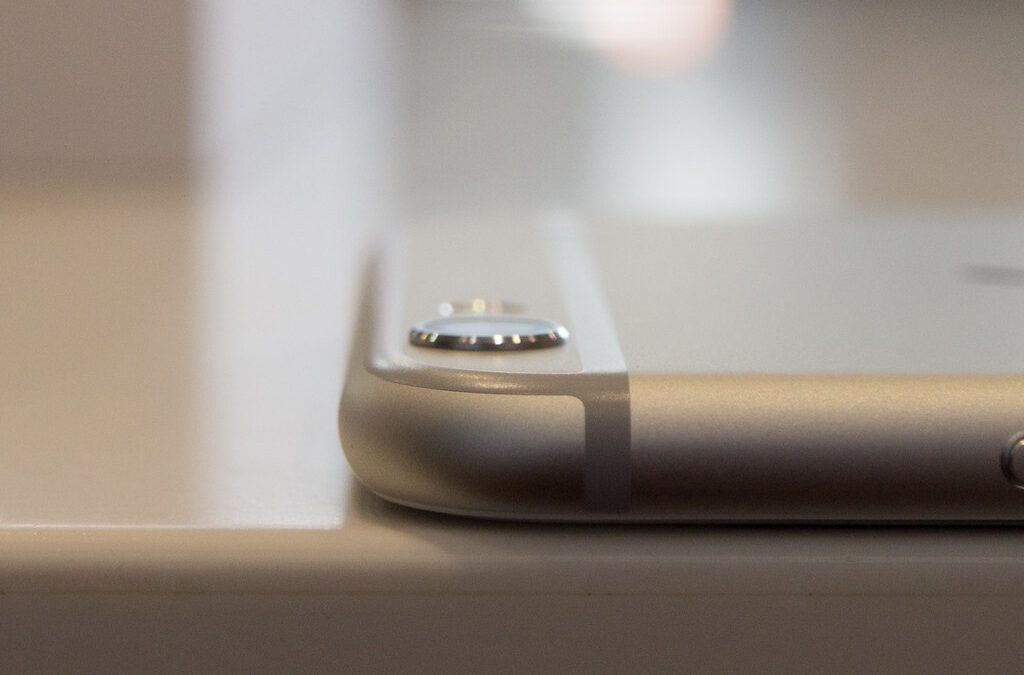
Your phone cannot do that. A true optical zoom mechanism, the kind that smoothly goes from wide to telephoto, requires those lens elements to travel a meaningful physical distance — we’re talking 30 to 50 millimeters for a decent zoom range. Your phone is maybe 8mm thick. There simply isn’t room for a moving lens barrel of that size, and even if there were, the mechanism would be fragile, slow, and battery-hungry.
So phone manufacturers arrived at a clever workaround: instead of one lens that moves, use several fixed lenses, each permanently set to a different focal length. Switching cameras is now a software problem, not a mechanical one — and software is something phones are very good at.
Meet the Camera Team
On a modern flagship, those lenses aren’t random. Each one has a specific job:
The Main Camera
This is the one doing most of the work. Typically equivalent to a 24mm lens on a full-frame camera, it strikes a balance between a wide enough field of view for everyday shots and enough reach to feel natural. It also gets the largest sensor — often a 1/1.28-inch or 1/1.5-inch chip — which means it gathers the most light. If you’re shooting in a dim restaurant or at night, this is the lens saving your photos. The iPhone 17 Pro packs a 48MP sensor here; the Samsung Galaxy S26 Ultra goes all the way to 200MP.
The Ultrawide Camera
Equivalent to roughly a 13–16mm lens, the ultrawide pulls back dramatically to fit landscapes, architecture, large group photos, or tight interior spaces into the frame. There is no way to achieve this field of view by digitally zooming out from the main lens — “zooming out” doesn’t exist in photography. You need a physically shorter focal length, which means a separate lens. This camera tends to have a smaller sensor and slightly softer edges, but for the right shot, it’s irreplaceable.
The Telephoto Camera
This is where things get genuinely impressive. A 3x, 5x, or even 10x optical telephoto lets you pull in distant subjects without the quality loss of digital zoom (which is really just cropping the main sensor). At a concert, a sports event, or on a safari, the telephoto is the difference between a recognizable photo and a blurry blob. The Google Pixel 10 Pro uses a 48MP sensor on its 5x telephoto specifically so it can crop further without quality degradation.
The Depth and Macro Lenses
Some phones include a dedicated depth or Time-of-Flight (ToF) sensor that measures the exact distance between the camera and every point in the scene. This data helps Portrait mode software draw a more accurate line between “subject to keep sharp” and “background to blur.” That said, computational photography has gotten so good at estimating depth from a single image that standalone depth sensors are quietly being phased out on many flagships. Macro lenses — found on some Android phones for extreme close-up shots — are useful in theory but often sport smaller sensors and lower quality, making them more of a checkbox than a genuinely great tool.

The Periscope Trick: How 10x Zoom Fits in a Flat Phone
If a standard zoom mechanism needs 40mm of length, how does Samsung fit a 10x optical zoom into a phone that’s barely 8mm thick? The answer is one of the cleverest pieces of engineering in consumer tech: the periscope telephoto.
A traditional telephoto lens is a long tube — light enters the front, travels down the barrel, and hits the sensor at the back. The periscope design bends that light path 90 degrees using a prism or mirror. Light enters through a small opening on the back of the phone, immediately gets redirected sideways, travels horizontally through the phone’s body, and then hits a sensor oriented along the phone’s length rather than its width.
The phone is thin, but it’s also wide and tall — and that horizontal space is exactly where the periscope hides its long focal length. Samsung has used periscope cameras since the Galaxy S20 Ultra; Apple adopted the design with the iPhone 15 Pro Max’s 5x camera, and the iPhone 17 Pro lineup extends it further. It’s a genuinely elegant solution to a genuine physics constraint.
The Software Making It All Work
Here’s where the story gets even more interesting: the cameras don’t just operate independently. They collaborate constantly, and software is doing an enormous amount of heavy lifting behind the scenes.
When you tap the shutter, your phone may be combining data from multiple lenses simultaneously. Google’s “Super Res Zoom” technology captures multiple slightly offset frames and merges them into a single higher-resolution image — essentially using the physics of how the sensor moves slightly between shots to extract detail that no single frame contained. Apple’s Portrait mode uses machine learning trained on millions of images to separate subjects from backgrounds with accuracy that rivals a dedicated depth sensor. Samsung fuses data from its main and telephoto cameras in real time to improve sharpness at intermediate zoom levels.
This collaboration between optics and computation is why “how many cameras” is only half the story. A phone with great hardware and mediocre software will often lose to a phone with slightly simpler hardware and exceptional image processing — which is why Google Pixels routinely punch above their sensor specs.
Do You Actually Need All of Them?
Honestly? Probably not all of them. Usage data consistently shows that most people shoot primarily with the main camera and occasionally the ultrawide for group shots. The telephoto gets used on trips and at events — real utility there. But the fourth and fifth cameras? Those often exist to justify a higher price tier or fill out a spec sheet.
That doesn’t mean the multi-camera system isn’t genuinely useful. Even if you never consciously switch to your telephoto, your phone is using data from multiple lenses to improve every photo you take. The depth information bleeds into Portrait mode quality; the telephoto sensor helps sharpen images at 2x zoom even when you haven’t explicitly switched lenses.
If you’re curious about what’s coming next, Samsung’s upcoming Galaxy Z Fold 8 Ultra is expected to push the multi-camera concept even further, integrating a refined periscope system into a foldable form factor — a genuinely difficult engineering challenge. And whatever phone you end up with, make sure you back up your phone photos regularly; all those lenses are only as good as the memories they preserve.
The short answer to why phones have multiple cameras is this: physics won’t let one lens do everything, periscope engineering solves the thickness problem, and software ties it all together. It’s less a marketing trick than a genuine collaboration between optics, mechanics, and machine learning — and the results, in 2026, are nothing short of remarkable.
Deixe um comentário