Are Samsung’s New AI Glasses Actually Worth $499?
Samsung wants you to believe its first pair of smart glasses will out-Meta Meta. The leaked specs suggest something more modest: a familiar shape, a borrowed chip, and a price that Samsung itself hasn’t even confirmed yet. The marketing push hasn’t started, and the hype already has.
Here’s our position on whether Samsung Galaxy Glasses are worth it, stated plainly before the July 22 reveal: Galaxy Glasses, expected to land between $379 and $499, make sense as a foot-in-the-door product — a way for Samsung to get its Gemini-powered AI onto your face before it’s ready to compete on hardware. They do not make sense as a device worth camping out for on day one. If you want smart glasses that actually work right now, the incumbent still wins. If you’re willing to bet on Samsung finishing what it starts — a bet the company’s own track record makes hard to place — Galaxy Glasses might be worth the wait until reviews land in the fall.
The reveal itself happens at Galaxy Unpacked in London on July 22, alongside the Z Fold 8. That timing matters: Samsung is bundling its most unproven hardware bet with its most reliable one, which is exactly what a company does when it wants a shaky product to ride the coattails of a safe one.
What Samsung Galaxy Glasses Actually Offer
Strip away the Unpacked-week anticipation and here’s what’s reportedly in the box. Galaxy Glasses run on a Snapdragon AR1 chip — the same chip family reportedly used in Meta’s own Ray-Ban Display glasses — paired with Google’s Gemini as the built-in assistant instead of Meta’s Llama-based one. That’s a real differentiator on paper: Gemini has a stronger track record on multi-step reasoning and visual context than Meta’s assistant, and tying it directly into a wearable camera is a genuinely interesting pitch for hands-free lookups, translation, and reminders.
The price, though, is still a leak, not a confirmation. Multiple outlets have independently landed on a $379-$499 range, which is why we’re treating it as reliable-but-not-official — Samsung’s own newsroom has only confirmed a reveal date and a “this fall” availability window, not a checkout page or a price. Reporting also points to a two-tier strategy: a no-display model (codenamed “Jinju”) launching first, with a premium display version (“Haean”) arriving in 2027 at a steeper $600-900. That mirrors exactly what Meta already did with its own Ray-Ban lineup, and it’s worth noting Samsung is following, not leading, on product structure here.
Where This Genuinely Helps
We’re not dismissing this outright. A Gemini-native pair of glasses solves a real annoyance: pulling out your phone to ask a question, translate a menu, or check a fact mid-conversation. Baking that into eyewear you’re already wearing is a legitimate quality-of-life upgrade, and Samsung’s design partnerships — previewed at Google I/O in May with Warby Parker and Gentle Monster — suggest the company knows the previous generation of smart glasses failed as much on style as on function.
There’s also a case for the lower price doing real work. If Galaxy Glasses land at $379, that undercuts the base Ray-Ban Meta (which starts around $299 without a display, but climbs fast once you want the camera-forward model) enough to matter for buyers who’ve been priced out of the category entirely. Cheaper hardware paired with a genuinely capable assistant is how you get skeptics to try a category, even if it’s not how you get enthusiasts to switch.
Devil’s Advocate: The Case for Buying Day One
Let’s steelman it. Samsung doesn’t actually need to beat Meta on day one — it just needs to be good enough, because Meta hasn’t run away with this category either. Ray-Ban Meta owners report real limitations: four hours of battery life “was on par with what was promised, but not enough for a full day out,” and the display model has been clocked dropping 40% of its charge after 90 minutes of podcast use. That’s not a high bar to clear. If Gemini’s reasoning is noticeably sharper than Meta’s assistant in daily use — and early comparisons suggest it might be — Samsung could win on software quality alone, regardless of who copied whose frame design first.
There’s also the ecosystem argument: if you’re already deep in Samsung’s phone and watch lineup, glasses that hand off seamlessly to a Galaxy phone have a functional edge no amount of Meta polish can replicate. That’s a real reason to consider buying in, not just marketing spin.
Why We’re Still Skeptical About Samsung Galaxy Glasses
The claim doesn’t survive contact with Samsung’s own history. Gear VR launched in 2015 with genuine ambition and was quietly abandoned by 2020 — five years of software support before Samsung moved on. Buyers considering Galaxy Glasses today have no answer on repair support, software-update commitment, or how long Samsung intends to keep updating Gemini integration once the next shiny wearable ships. That’s not a hypothetical concern for a $499 device you’re expected to wear daily; it’s the exact failure mode Samsung has already demonstrated once.
There’s also a coverage split worth flagging honestly. Some outlets are framing Galaxy Glasses as a serious Meta challenger on the strength of the Gemini integration alone. Others argue the opposite — that Samsung’s glasses “might not have to do much, thanks to Meta,” since the entire smart-glasses category is still small enough that no one has a runaway lead. We land closer to the second camp: a low bar to clear isn’t the same as a compelling reason to buy, especially at a price point that’s still unofficial.
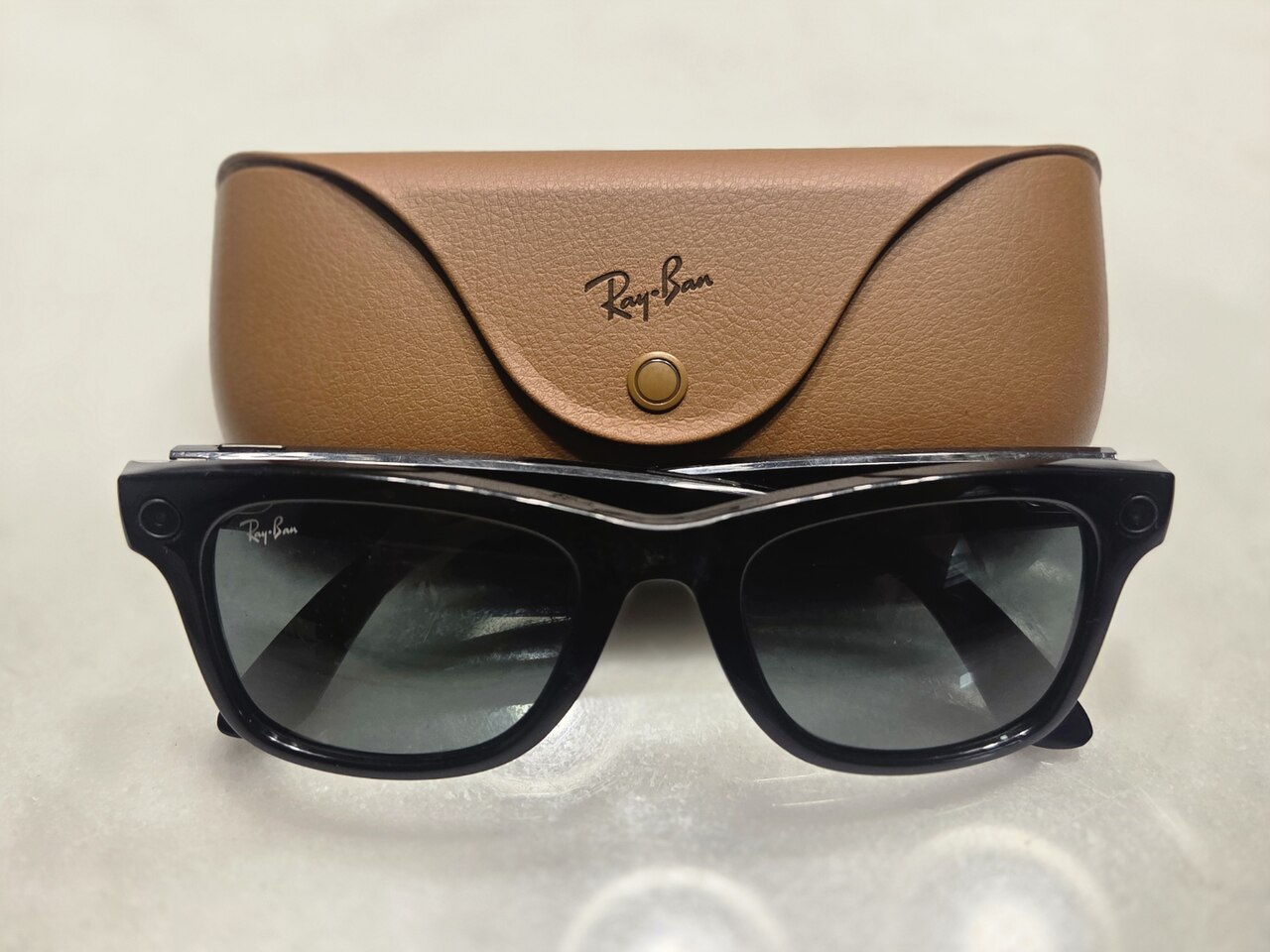
Design skepticism compounds it. Analysts at Android Police and PCQuest have both noted that Galaxy Glasses “look suspiciously like Ray-Ban Meta Gen 2” — which means Samsung isn’t just competing on specs, it’s visually announcing that Meta got there first and set the template. When your flagship differentiator is a better AI assistant bolted onto someone else’s silhouette, the burden of proof is higher, not lower.
If you’re weighing wearables more broadly and want a lower-stakes upgrade while you wait for Galaxy Glasses reviews, our picks for affordable wearable audio cover a category that’s already mature and proven, without the first-generation risk. And if on-device AI is the part that actually excites you, it’s worth seeing how Apple is approaching on-device AI for a contrasting philosophy — privacy-first and slower to ship, versus Samsung’s faster, cloud-leaning Gemini bet.
Our Verdict
The marketing will say Galaxy Glasses are a Meta-killer. What we found: a company with an unproven wearables track record, shipping a device that visually and architecturally follows Meta’s lead, priced low enough to matter but not low enough to erase the risk. That’s not nothing — it’s a credible second option, not a reason to abandon the category leader.
If you want smart glasses today, not this fall, the Ray-Ban Meta is the safer buy — it has two generations of software support behind it and a proven track record Samsung hasn’t earned yet. 🛒 Check Ray-Ban Meta Prices on Amazon
Samsung has one more chance to change our mind on July 22, when Galaxy Glasses shares the stage with the Z Fold 8 — and there’s everything else Samsung has coming this Unpacked worth tracking alongside it. Until Samsung backs the price leaks with an actual announcement and commits publicly to long-term software support, our position stands: interesting hardware, unproven commitment, and a price that’s still a rumor dressed up as a fact.
Deixe um comentário