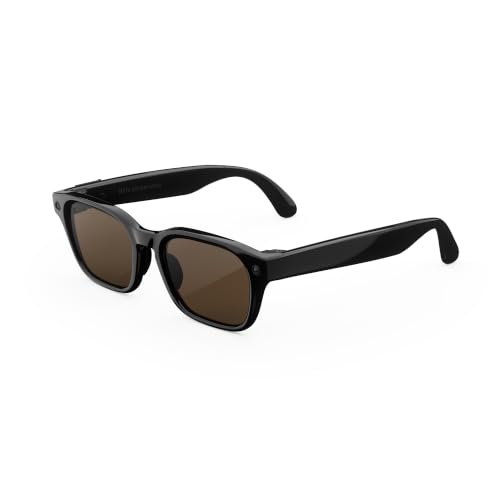
Meta AI Glasses
$299- Identical core hardware (12MP/3K camera, 5-mic array, 8hr/40hr battery) to the pricier $379 Ray-Ban Meta Gen 2
- Two genuinely distinct styles (Adventurer, Fury) plus 26 color/lens combos at the same $299 price
- Newer on-device Muse Spark AI model with live translation across 20 languages
- Feels heavy after about 30 minutes of continuous wear, per multiple hands-on reviews
- Narrower prescription range (-6.00 to +2.25) and no interchangeable nose pads vs. the Ray-Ban line
- Meta's July 7 privacy FAQ update is widely viewed by reviewers as damage control, not a real fix, amid an ongoing Texas AG investigation
Bottom line: The $299 Meta AI Glasses match the $379 Ray-Ban Meta Gen 2 on camera, mics, and battery, making them the smarter buy unless you need a wider prescription range or are wary of Meta's still-unresolved privacy track record.
Meta AI Glasses Review — Are the $299 Glasses Worth It vs Ray-Ban Meta?
You don’t need to pay the Ray-Ban tax to get Meta’s best AI glasses hardware. That’s the blunt pitch behind the $299 Meta AI Glasses, and unlike most budget-tier marketing claims, this one actually holds up: the same 12MP/3K camera, five-mic array, and 8-hour battery that ship in the $379 Ray-Ban Meta Gen 2 are sitting inside a frame that costs $80 less. No borrowed branding, no watered-down chip — just the familiar shape swapped for something EssilorLuxottica calls the Adventurer or the Fury, depending on how boxy you like your face gear.
We went through the wave of hands-on coverage that hit right after the June 23 launch — days ahead of Apple’s rumored entry into the category — and cross-referenced Meta’s own privacy claims against what reporters actually found when they wore these for weeks, not minutes. The short version: this is a genuinely good deal on paper, with two real asterisks — comfort and privacy — that the marketing conveniently glosses over.
Quick disclosure before the links start: DecodeGear is an Amazon Associate, and purchases made through the buttons below earn us a small commission at no extra cost to you. It doesn’t change what we say here — it just keeps this site running.
Our Verdict: Meta AI Glasses ($299)
Same core hardware as the $379 Ray-Ban Meta Gen 2 — camera, mic array, and battery are identical — for $80 less. The tradeoffs are real: they get heavy after long wear, the prescription range is narrower than Meta’s Ray-Ban line, and Meta’s privacy fixes are more damage control than resolution. For most casual buyers chasing the price-to-spec ratio, this is still the smarter $299 vs. $379 math.
Score: 7.8/10 | Price: $299 (both Adventurer and Fury)
| Spec | Meta AI Glasses ($299) | Ray-Ban Meta Gen 2 ($379) |
|---|---|---|
| Camera | 12MP / 3K HDR | 12MP / 3K HDR |
| Mic array | 5-mic | 5-mic |
| Battery | 8+ hr (40 hr with case) | 8+ hr (40 hr with case) |
| On-device AI | Muse Spark | Llama 4-based Meta AI |
| Branding | Meta only, no Ray-Ban | Ray-Ban Meta |
| Price | $299 | $379 |
Same Camera, Same Mics, Same Battery — For $80 Less
Here’s the part Meta wants you to notice: this $299 review pair isn’t a stripped-down version of the Ray-Ban Meta Gen 2. It’s the same 12MP/3K HDR camera. The same 5-mic array for calls and video capture. The same 8-plus-hour battery, stretching to roughly 40 hours with the charging case. The 60-gram frame is EssilorLuxottica-made, same as the Ray-Ban line, and Meta’s own product page lists 26 color and lens combinations across the two models — so “budget” here doesn’t mean “limited,” at least on paper.
What’s actually new is the software. The Meta AI Glasses run Muse Spark, a fresh on-device AI model that handles voice commands, real-time visual understanding, and live translation across 20 languages without leaning as hard on the cloud. The Ray-Ban Meta Gen 2, by comparison, runs on a Llama 4-based Meta AI stack. Reviewers at Gizmodo, TechTimes, and Engadget all converged on the same read: same core tech, no Ray-Ban tax. Gizmodo went further, calling it “arguably Meta’s best AI glasses yet” — a notable line from a review that spent most of its length criticizing the company behind them.
Adventurer vs. Fury: Two Shapes, Same $299 Price
Both models cost exactly $299 in their standard combos (premium lens options run higher, though Meta hasn’t published the exact deltas). The difference is entirely in the shape. The Adventurer sticks closer to a thin, Wayfarer-adjacent silhouette — the safer pick if you want something that reads as “regular sunglasses” in a meeting. The Fury goes boxier and more overtly techy, aimed at buyers who don’t mind their glasses looking like they do something.
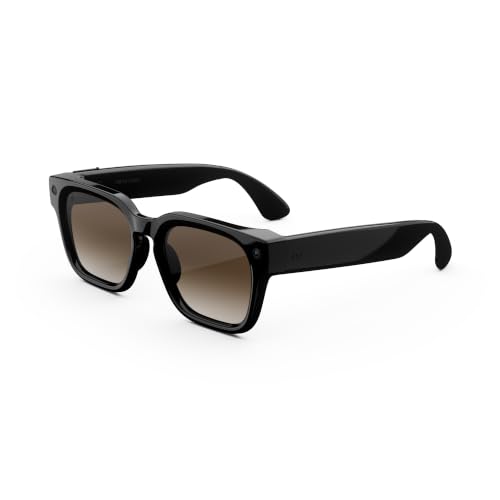
Neither is objectively better — it’s a style call, not a spec call, since the internals are identical between them. If you’re torn, think about where you’ll actually wear these: the Adventurer disappears more easily into an office setting, while the Fury reads as a statement piece.
🛒 Check Meta Adventurer Price on Amazon 🛒 Check Meta Fury Price on Amazon
The Real Weak Spot: Comfort Over Long Sessions
This is the part the spec sheet won’t tell you, and it’s the honest weakness worth flagging before you buy. Multiple hands-on reviews — Android Central and Yahoo Tech among them — independently reported the same thing: these glasses start to feel heavy after about 30 minutes of continuous wear. That’s not a dealbreaker for someone who puts them on for a walk or a quick video call, but it matters if you were picturing all-day use.
There’s a second fit issue worth knowing about if you wear prescription lenses. The Meta AI Glasses support a narrower prescription range than Meta’s own Ray-Ban line — roughly -6.00 to +2.25, compared to -6.00 to +6.00 on the Ray-Ban/Oakley models. There’s also no interchangeable nose pad system here, which the pricier line does offer. If you have a stronger prescription or a fit that needs adjusting, this isn’t the pair for you — full stop.
Privacy: A Real Weakness Meta Hasn’t Actually Fixed
On July 7, Meta updated its FAQ to note that the camera disables itself if the recording LED is tampered with — framed by the company as a meaningful privacy safeguard. Reviewers weren’t buying it as a fix. Tom’s Guide, after wearing the glasses for a month, wrote that they were “still not convinced,” and TechCrunch was blunter: Meta “wants to seem less creepy,” but its broader AI strategy suggests otherwise. Treat the July 7 update as damage control, not resolution — that’s how the people who actually tested it read it.
The backdrop here is bigger than one FAQ page. Fast Company and TechCrunch have both reported allegations that workers were required to review graphic footage captured by Meta’s glasses cameras as part of AI training pipelines. Separately, the Texas Attorney General opened an investigation on May 21, 2026, into how biometric data capture and bystander recording on these devices are handled — an inquiry that’s still ongoing and unresolved as of this writing. None of this is unique to the $299 model specifically; it’s an industry-level privacy story attached to the whole Meta AI Glasses lineup. But it’s a genuine reason for caution, not a footnote to skip past.
Who Should Buy the $299 Meta AI Glasses vs. the $379 Ray-Ban Meta Gen 2
If your prescription falls within range, you don’t wear these for hours at a stretch, and you’re comfortable with the current state of Meta’s privacy practices, the $299 Meta AI Glasses are the better buy — you’re getting identical core hardware to the $379 option for $80 less, and that’s real money back in your pocket. Go with the Adventurer if you want the glasses to blend in, or the Fury if you want them to look like tech.
The $379 Ray-Ban Meta Gen 2 makes more sense if you need the wider -6.00 to +6.00 prescription range, want interchangeable nose pads for a better long-wear fit, or specifically want the Ray-Ban name on the frame. If you’re also eyeing Samsung’s answer to this category, our take on Samsung’s competing Galaxy Glasses breaks down whether that alternative buys you anything Meta doesn’t already offer for less.
And if you’re not ready to commit to a full smart-glasses purchase at all, our picks for affordable wearable audio cover a cheaper way to get always-on convenience without strapping a camera to your face. More broadly, if you’re budgeting for tech upgrades in general this year, it’s worth weighing a $299 purchase like this against where else that money could go before you commit.
FAQ
Are the Meta Adventurer and Fury both $299?
Yes. Both models launch at $299 for their standard color and lens combinations. Premium lens options cost more, though Meta hasn’t published exact pricing for every combo across the 26 available variants.
How uncomfortable are they, really, after long wear?
Hands-on testers from Android Central and Yahoo Tech both reported the glasses starting to feel heavy after roughly 30 minutes of continuous wear. Fine for spot use — calls, quick capture, short walks — less fine if you wanted an all-day pair.
Has Meta actually fixed the privacy concerns around these glasses?
Not according to the reviewers who tested the July 7 FAQ update (camera disables if the recording LED is tampered with) over time. Tom’s Guide and TechCrunch both characterized it as reassurance rhetoric rather than a real fix, especially against the backdrop of an ongoing Texas Attorney General investigation into biometric data handling.
Can I get prescription lenses for the $299 Meta AI Glasses?
Yes, within a range of roughly -6.00 to +2.25 — narrower than the -6.00 to +6.00 range supported on Meta’s Ray-Ban line. There’s also no interchangeable nose pad system, so check your prescription against that range before buying.
Deixe um comentário