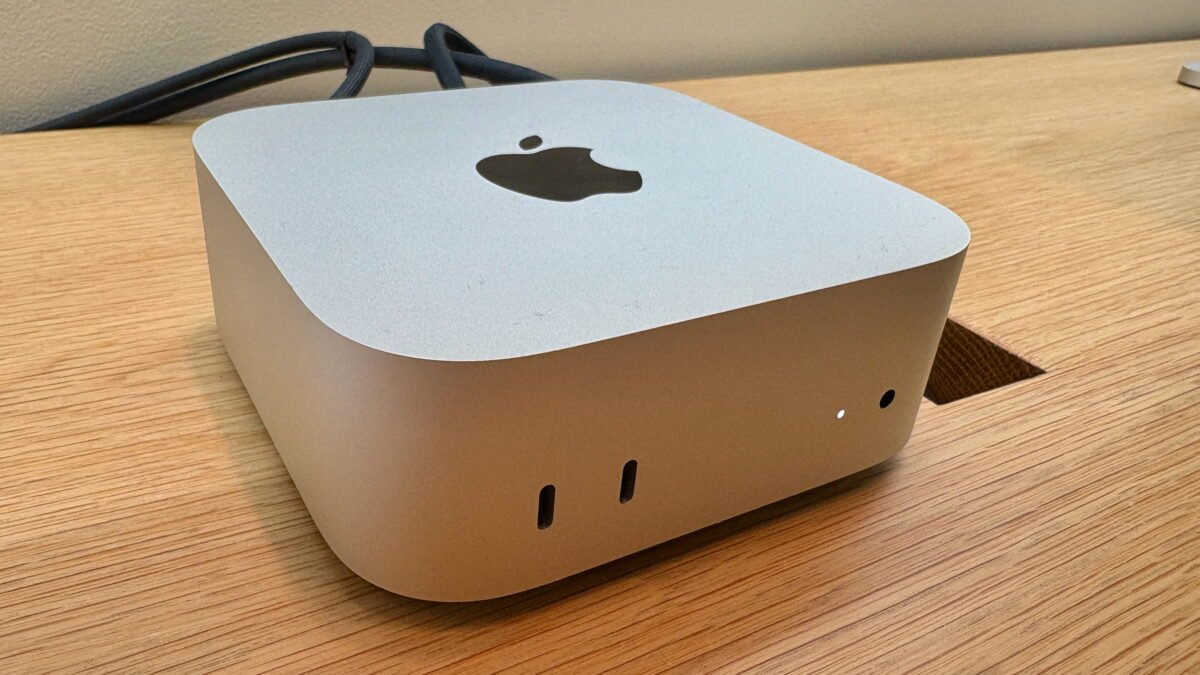
Apple just refreshed the Mac mini, and the headline number isn’t the chip — it’s the price. The new model starts at $899, a flat $300 jump over the outgoing M4 version, and Apple is framing the whole redesign around one idea: running AI models locally, on your desk, without sending anything to the cloud.
The base Mac mini now ships with Apple’s new M6 chip, the company’s first processor built on a 2nm manufacturing process. It packs a 12-core CPU (two more cores than the M4 generation), a 12-core GPU, and — the part Apple spent most of its announcement on — a dual 16-core Neural Engine paired with dedicated Neural Accelerators on every CPU and GPU core. Apple says that combination delivers up to 4x faster on-device AI performance and 2x faster graphics than the M4 it replaces.
What you actually get for the extra $300
The base configuration comes with 16GB of unified memory, configurable up to 32GB. That’s the same starting RAM as before, so the price increase isn’t buying more memory — it’s buying the new silicon and, according to Apple, meaningfully faster AI inference for tasks like on-device transcription, image generation, and running local language models without a subscription.
Step up to the Mac mini with the M5 Pro chip and the price jumps to $1,699 (also $300 more than its predecessor), with 24GB of unified memory and 512GB of storage as the new baseline. The M5 Pro ships with a 15-core CPU and 16-core GPU, and both are configurable higher — up to an 18-core CPU and 20-core GPU — for buyers who want the mini to double as a compact workstation rather than just a media-center box.
• M6 Mac mini: $899, 16GB RAM (up to 32GB), 12-core CPU/GPU
• M5 Pro Mac mini: $1,699, 24GB RAM, 512GB storage, 15-core CPU/16-core GPU
• Both ship September 22, 2026 with macOS 27 and Siri AI
• Design and port layout carry over from the previous generation
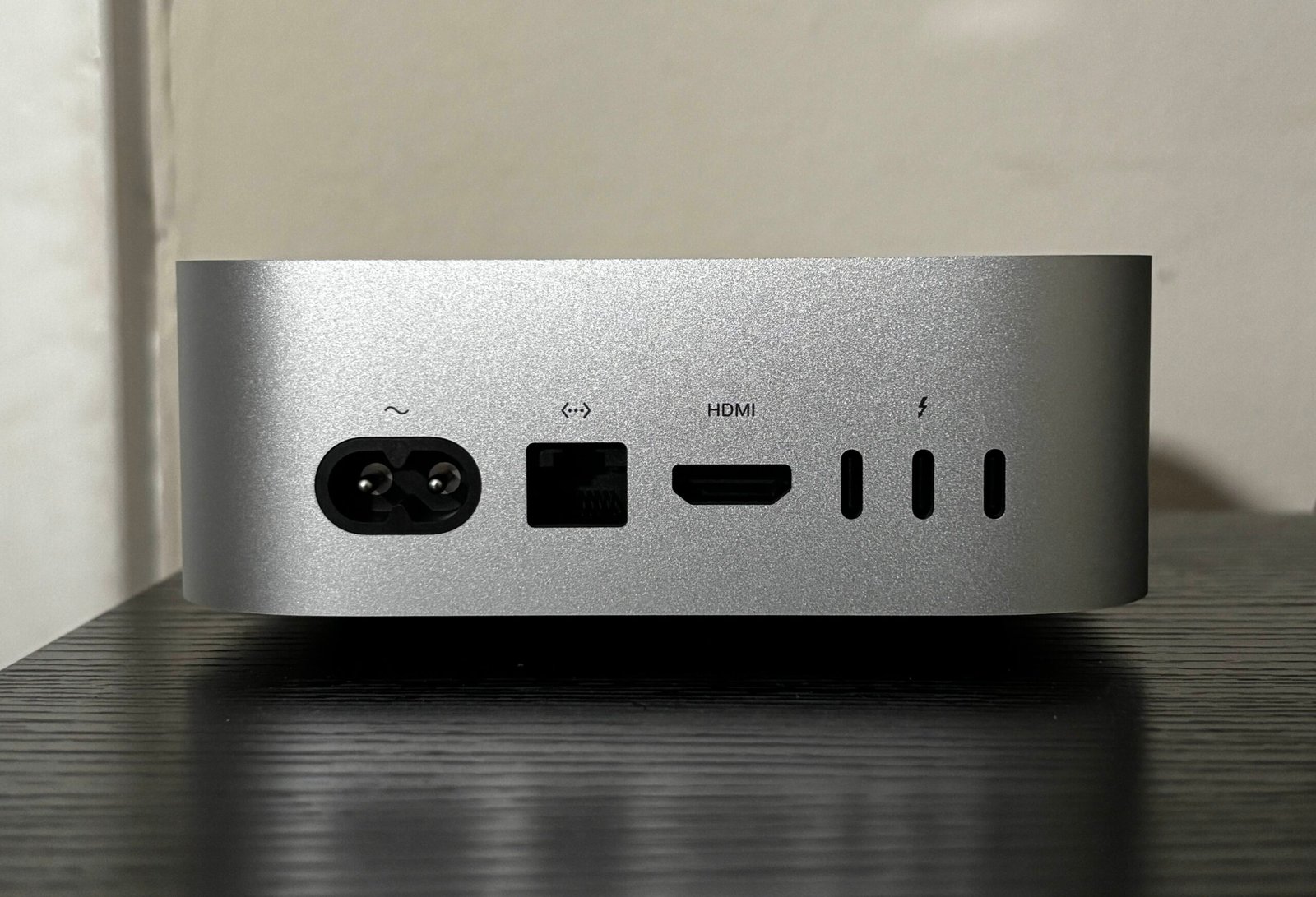
The port layout on the previous-generation Mac mini. Apple hasn’t changed the external design for this refresh — the story here is entirely what’s inside.
Why “agentic computing” is doing so much marketing work
Apple’s own language for the new mini is “the leading desktop computer for always-on, deskside agentic computing” — corporate phrasing for a simple pitch: a small, quiet, always-on box that can run AI assistants and automation tasks locally instead of depending on a data center. It’s the same logic behind the broader shift toward small, powerful desktop hardware that’s been reshaping the category all year — buyers increasingly want compute density, not a tower under the desk.
The AI framing also explains the timing. The new Mac mini launches alongside macOS 27 and a rebuilt Siri that leans harder on on-device processing than any previous version. Apple wants the hardware and software story to land together: better chip, smarter assistant, less reliance on the cloud.
Is the price hike worth it?
$300 is not a small increase on a machine that used to be Apple’s budget entry point into the Mac lineup. If your workload is browsing, office apps, and streaming, the outgoing M4 mini already handled that comfortably, and it will likely stick around at a lower price while stock lasts. The M6 jump mostly matters if you specifically want faster local AI processing — image generation, on-device transcription, or running open-weight language models without a monthly fee. For everyone else, this is a spec bump with an AI story attached, not a fundamentally different machine.
Buyers weighing a desktop upgrade around AI performance more broadly should also look at how GPU choice affects the equation on the Windows side — we cover that trade-off in our guide to choosing a graphics card in 2026.
What’s next
Both new Mac mini configurations are available to order now and ship starting September 22, 2026. Apple also refreshed the Mac Studio the same day with M6 and M5 Ultra options, continuing the same on-device AI push across its desktop lineup — details on that update are still emerging as reviewers get hands-on units ahead of launch.
Sources: Apple Newsroom; reporting from TechCrunch, 9to5Mac, and Forbes, August 25, 2026.
Leave a Reply