AI Chip Startup Etched Just Hit a $21 Billion Valuation — Here’s What It Actually Makes
Eight months ago, investors were calling Etched’s pitch “wild, if not wacky”: a chip that only runs one type of AI model, betting the entire company on a single architecture staying dominant forever. This week, that same pitch got priced at $21 billion — the second valuation jump the startup has pulled off in under a month. If you’ve never heard of Etched, you’re not alone. But the bet it’s making, and who’s suddenly willing to fund it, says a lot about where the AI hardware race actually is in mid-2026.
Etched closed a fresh $700 million round around August 18, 2026, led by trading giant Jane Street — which isn’t just writing a check, it’s also becoming a customer. Kleiner Perkins, Sequoia, Andreessen Horowitz, Tiger Global, Bain Capital Ventures, and half a dozen other funds piled in alongside. That single round took the company from a $10.3 billion valuation to $21 billion. Rewind further and the climb gets steeper: Etched was valued at roughly $5 billion in December 2025. Eight months and two funding rounds later, it’s worth more than four times that. Most hardware startups don’t move this fast because chips take years to design, fab, and validate. Etched moved fast because, for a narrow slice of the AI market, its numbers are genuinely startling — on paper, at least.
What Sohu Actually Is
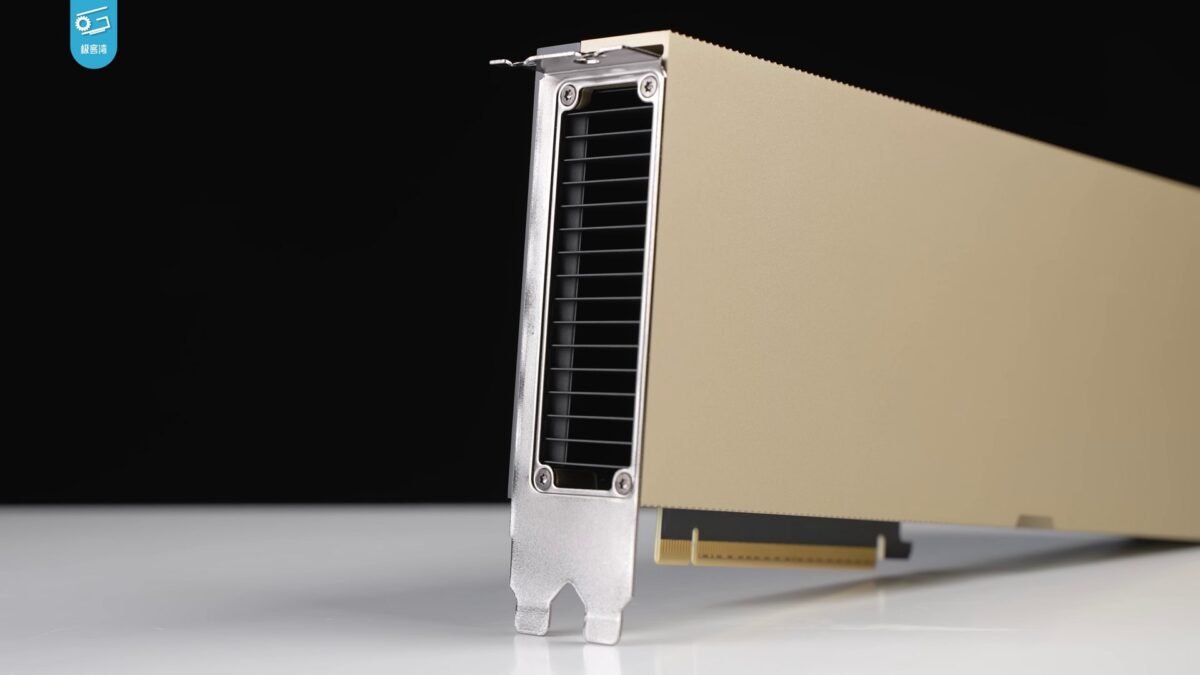
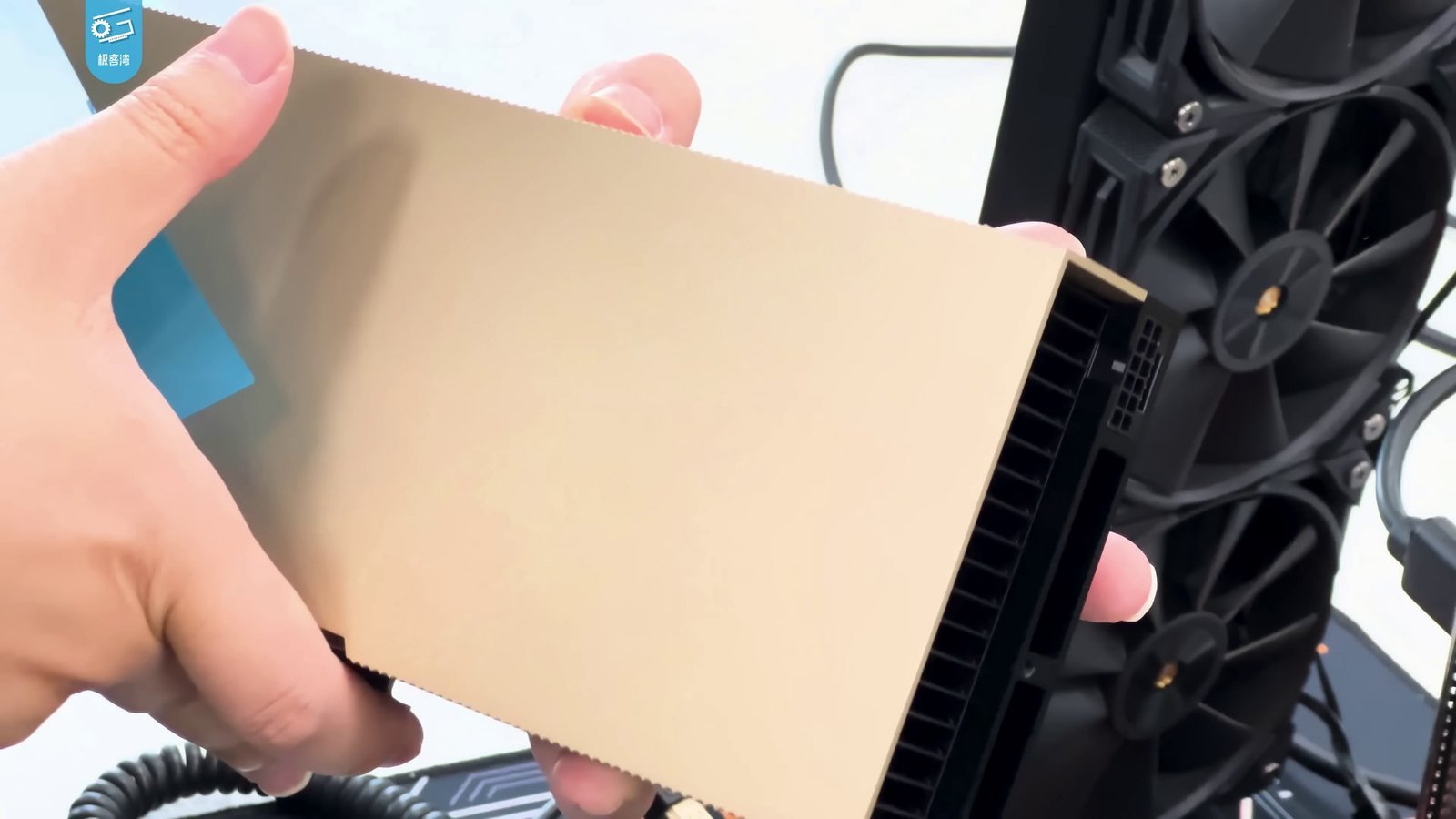
Etched’s product is a chip called Sohu, fabbed on TSMC’s N4P process and sold as complete server systems rather than standalone silicon you’d drop into an existing rack. The core idea is that Sohu is a transformer-specific ASIC — an application-specific chip, the same category of hardware Bitcoin mining rigs and video encoders use, except here it’s hard-wired for the transformer architecture that underpins basically every major language model since GPT-2.
A general-purpose GPU like Nvidia’s H100 spends a meaningful chunk of its silicon and power budget on flexibility: matrix math units, memory controllers, scheduling logic that can pivot between graphics rendering, physics simulation, or any of a hundred different neural network shapes. Etched’s argument is that if you know, with high confidence, that the workload will always be a transformer, you can rip out that flexibility and dedicate the freed-up transistors to raw attention-mechanism throughput. Fixed-function circuits instead of general-purpose compute cores. It’s the same tradeoff ASIC miners made against general-purpose CPUs and GPUs a decade ago — enormous efficiency gains for one job, and a chip that’s close to useless for anything else.
The Numbers Etched Is Selling
The headline claim is roughly 20x the throughput of an Nvidia H100 on transformer inference, with the company saying Sohu sustains around 80% of its theoretical peak FLOP utilization — a genuinely unusual number, since real-world GPU workloads typically run at a fraction of their rated peak. More concretely, Etched claims an 8-chip Sohu server pushes past 500,000 tokens per second running Llama-70B, against roughly 23,000 to 25,000 tokens per second for an equivalent 8x H100 setup. By that math, the company argues one 8xSohu box does the work of about 160 H100 GPUs.
Here’s the part worth sitting with, though: every one of those figures is company-reported. No independent lab has published third-party benchmarks on production Sohu hardware as of this week. Access to running systems has mostly been limited to investors and a handful of early customers — which is normal for a hardware startup at this stage, but it also means the 20x number is still, functionally, a claim in a pitch deck rather than a result anyone outside Etched’s building has reproduced.
The Bet That Could Break It
The obvious objection to a transformer-only chip is architectural risk: what happens when something other than a transformer wins? State-space models like Mamba have been circling as a potential successor for a couple of years now, and if the industry ever pivots away from transformer attention at scale, a chip literally etched (hence the name) around that one mechanism becomes very expensive scrap silicon.
Etched’s COO, Robert Wachen, pushes back on the narrow-bet framing directly, saying Sohu systems already run “any AI model, including Mixture of Experts models like DeepSeek and Qwen,” and that the architecture has headroom for non-transformer designs too. Maybe. But that claim, like the performance numbers, is still coming from the company making the chip, not from a customer who ported a production Mamba model over and published the results.
Sequoia’s Sonya Huang reportedly referenced an old rule of thumb in chip investing — “don’t back the kids in chips,” a reminder that semiconductor bets are capital-intensive, slow to pay off, and littered with well-funded failures. Sequoia backed Etched anyway. That’s either a sign the fundamentals are unusually strong, or a sign that FOMO in AI infrastructure funding has gotten loud enough to override institutional caution. Probably some of both.
Why Investors Are Piling In Anyway
Two things are pulling money toward Etched beyond the raw performance pitch. First, the company has been recruiting hard from inside Nvidia itself — roughly 15% of its roughly 400-person headcount is ex-Nvidia, including a systems engineer with 23 years at the company who reportedly helped recruit a dozen more former colleagues. That’s a meaningful signal: people who spent their careers building the thing you’re trying to out-compete are betting their next few years on your approach instead.
Second, the inference market itself is genuinely exploding, separately from any single vendor’s claims. Industry estimates put the combined AI training-plus-inference hardware market at roughly $251 billion in 2025, climbing toward $672 billion by 2029 — and inference, not training, is the segment growing more than twice as fast. That matters because inference is exactly the workload Sohu is built for: not training new models from scratch, but running already-trained transformers as cheaply and quickly as possible at scale. If Nvidia’s own massive financing moves are any indication, the entire industry is positioning for inference demand to dwarf training demand within a few years — which is exactly the bet Etched is making with a much narrower, riskier tool.
Etched isn’t alone chasing that slice, either, and it isn’t alone in how fast its number is climbing — AI chip valuations have been climbing across the board in 2026, not just at Etched. Groq is valued around $20 billion doing something architecturally similar. Cerebras is reportedly eyeing a $35 billion IPO. SambaNova, Tenstorrent, d-Matrix, Positron AI, and MatX are all circling the same inference-chip opportunity, alongside Google’s in-house TPUs and, of course, Nvidia — which still dominates by volume even as its incumbency gets tested from every direction. Some of that broader AI infrastructure enthusiasm is starting to draw real scrutiny too; not every analyst is convinced the spending is sustainable, and investor doubts about AI infrastructure spending have been building in parallel with the funding rounds.
Where This Leaves Nvidia — For Now
None of this dethrones Nvidia this year. H100s and their successors remain the default choice precisely because of the flexibility Sohu deliberately throws away — one GPU generation can train a model, fine-tune it, run inference, and render a video game, all without a hardware redesign. What Etched and its inference-ASIC peers are really arguing is narrower: that once a workload is locked in and running at massive scale, paying for that flexibility stops making economic sense. It’s the same logic that pushed crypto mining from CPUs to GPUs to dedicated ASICs, just playing out a generation later in AI. Whether Sohu ends up as the inference-era equivalent of that shift, or an expensive lesson in why GPUs stayed general-purpose, depends on numbers nobody outside Etched’s investor deck has independently verified yet.
Frequently Asked Questions
What is Etched’s Sohu chip?
Sohu is a transformer-specific ASIC — a chip hard-wired to run transformer-based AI models (the architecture behind most modern LLMs) instead of general-purpose compute like a GPU. It’s fabbed on TSMC’s N4P process and sold as complete server systems.
Is Etched’s 20x performance claim over Nvidia H100 verified?
Not independently. As of August 2026, the throughput figures — including the claim of 500,000+ tokens per second on Llama-70B for an 8-chip system — come from Etched itself. No third-party lab has published benchmarks on production hardware yet.
What’s the risk in Etched’s business model?
Sohu is architecturally locked to transformer models. If a different architecture, such as state-space models like Mamba, displaces transformers at scale, Sohu’s specialization becomes a liability instead of an advantage. The company disputes that it’s this narrow, but the claim is unverified outside Etched.
Who are Etched’s main competitors?
Groq (around a $20 billion valuation) and Cerebras (reportedly targeting a $35 billion IPO) are the closest comparable AI inference-chip startups, alongside SambaNova, Tenstorrent, d-Matrix, Positron AI, MatX, Google’s TPUs, and incumbent Nvidia.
Strip away the funding-round drama and Etched is really just placing a very expensive bet on a single question: does the transformer stay the architecture that matters? Every ex-Nvidia hire, every dollar of that $21 billion, and every one of those unverified 20x claims only pays off if the answer stays yes long enough for Sohu chips to actually ship at scale. Right now, nobody outside the company can tell you the odds — which is either the most interesting part of this story or the biggest red flag in it, depending on how much you trust a pitch deck.
Leave a Reply