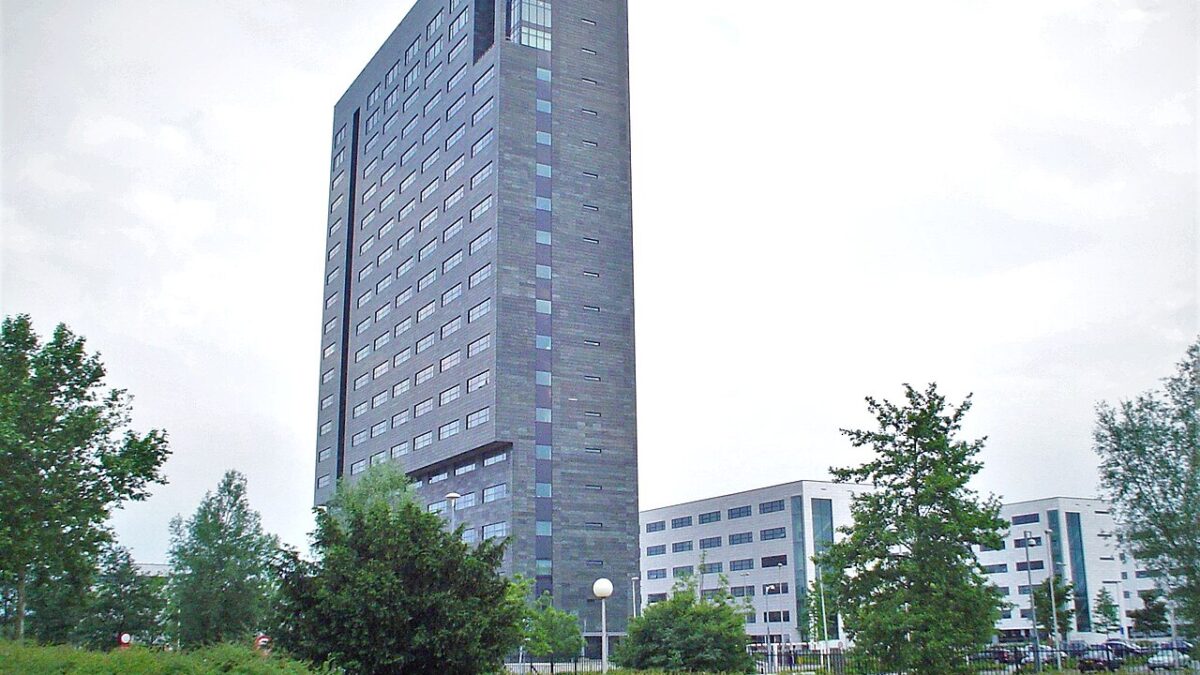
Ask ten people to name the most important company in the AI boom and you’ll get Nvidia nine times, maybe TSMC once. Almost nobody says ASML — a Dutch company most people have never heard of that just crossed $700 billion in market value. And here’s the part that should actually bother the other nine: without ASML, neither Nvidia nor TSMC can make a single advanced chip. Not one.
The Company Everyone Depends On and Nobody Recognizes
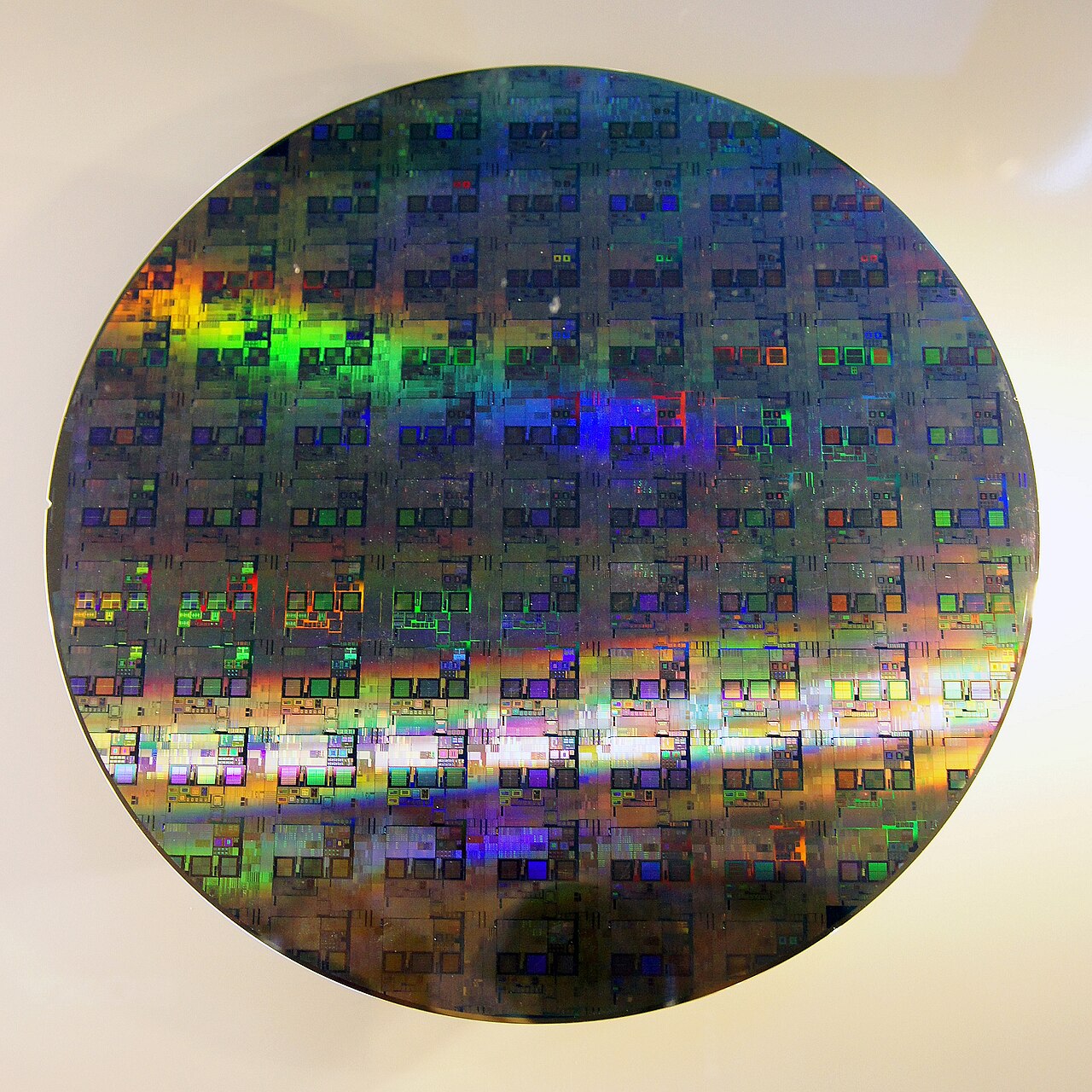
ASML makes extreme ultraviolet (EUV) lithography machines — the tools that etch circuit patterns onto silicon wafers small enough to build modern chips. That’s it. That’s the whole business, more or less. Except it’s not a business anyone else can enter: ASML is the only company on Earth that makes EUV lithography equipment. Nikon, the obvious competitor with decades of optics and semiconductor experience, tried for nearly 20 years to build a rival system and eventually gave up. Not “fell behind” — gave up entirely. There is no plan B supplier if ASML ever had a production problem, which is a genuinely uncomfortable fact once you sit with it for a second.
Every advanced chip that TSMC, Samsung, or Intel fabricates for Nvidia, Apple, AMD, or anyone else building cutting-edge silicon passes through an ASML machine at some point. That’s not an exaggeration for effect — it’s structurally true. There is no back door around it.
Why the Valuation Is Climbing Right Now
ASML crossed the $700 billion market cap mark on June 9, 2026, becoming the first European company to do so, and the stock is up roughly 63% year-to-date as of that milestone — driven almost entirely by the AI chip demand that’s also been pushing up numbers we’ve covered before at TSMC and Nvidia. ASML has raised its own 2026 revenue guidance twice this year already, now sitting at €43-45 billion, based on binding commitments from its three biggest customers: TSMC, Samsung, and Intel. When your three customers are contractually locking in bigger orders, that’s about as solid a signal as a stock market gets.
Here’s a genuinely fun detail buried in that number: a single one of ASML’s newest High-NA EUV machines costs somewhere between €350 and €410 million. Each one. Chipmakers are buying these things the way you’d buy a car, except each “car” costs more than most companies are worth, and there’s a years-long waiting list.
A Quick Tangent: How Do You Even Build Something Like This?
The short version is: very, very slowly, and not alone. ASML didn’t invent EUV lithography in isolation — the underlying light-source technology traces back to research partnerships stretching across roughly two decades, including specialized optics from Germany’s Zeiss (whose mirrors have to be polished to a smoothness where, scaled up to the size of Germany, the tallest bump would be under a millimeter) and plasma light sources refined over years of iteration. The physics alone is absurd: EUV light gets generated by blasting microscopic droplets of molten tin with a laser, twice, in rapid succession, tens of thousands of times per second, to create a plasma that emits light at a wavelength of just 13.5 nanometers — short enough to etch features far finer than a human hair could ever be split.
Getting that process reliable enough for 24/7 factory use took so long that, for years, industry insiders openly doubted EUV would ever become commercially viable at all. It did, eventually — and once it did, it turned out nobody else had built the two decades of accumulated engineering needed to catch up. That’s the real story behind the monopoly: it’s not that competitors chose not to compete, it’s that the head start became functionally insurmountable.
An Interesting Wrinkle: Not Everyone’s Buying at the Same Speed
You’d assume every major chipmaker is racing to grab the newest, most expensive ASML machines as fast as possible — but TSMC, ASML’s single biggest customer, is actually delaying adoption of the most advanced High-NA EUV systems until around 2029, largely over that eye-watering per-machine cost. Intel, meanwhile, jumped ahead and shipped its first logic chip using High-NA EUV back in mid-July 2026, beating TSMC to that particular milestone despite TSMC being the larger, more dominant foundry overall. It’s a small but telling role reversal in an industry where Intel has mostly been playing catch-up for the better part of a decade.
The Number That Should Give You Pause
Here’s the part that’s easy to gloss over: ASML sells its most advanced equipment to a grand total of five companies worldwide. Five. TSMC, Samsung, and Intel alone account for roughly 84% of ASML’s entire business. That means the physical machines required to make essentially every leading-edge AI chip on the planet are produced by one company, for a customer list you could fit at a dinner table. If you’ve ever wondered why chip shortages ripple through the entire tech industry so violently whenever something goes wrong upstream, this is a big part of the answer — the bottleneck isn’t spread across dozens of suppliers, it’s concentrated in one facility in Veldhoven, Netherlands.
None of this is investment advice, and ASML’s own valuation multiple — trading well above its five-year historical average by some measures — reflects a market that’s already pricing in a lot of future growth, not a sure thing. But as a piece of the AI story that rarely gets told alongside Nvidia and TSMC, ASML’s climb to $700 billion is arguably the most important number in tech that most people can’t place on a map.
Why This Actually Matters Beyond the Stock Ticker
The next time a headline says a country is “racing to build its own chip industry” or a company claims it’s “years away from matching” TSMC, ASML is almost always the quiet reason why. You can build a fab. You can hire engineers. You cannot simply decide to build EUV lithography machines from scratch — the technology represents roughly two decades of accumulated engineering that nobody else has replicated, export-control politics notwithstanding. That’s the real moat, and it’s a big part of why chip geopolitics keeps circling back to one small Dutch city that most of the world has never heard of.
If you want the fuller supply-chain picture, we broke down TSMC’s $64 billion capex increase and what it means for GPU and phone prices, and separately looked at why TSMC and ASML’s earnings matter more than Nvidia’s stock price if you want the investor-facing angle rather than the “what does this company actually do” angle covered here. And if the chip shortage conversation has you wondering whether now’s a smart time to buy a GPU at all, our look at the RTX 5090’s ongoing price crisis covers that from the buyer’s side.
Deixe um comentário