The HBM4 Paradox: Why Samsung’s Breakthrough Chip Is Making the RAM Shortage Worse, Not Better
Samsung just hit a genuine industry first — mass shipping HBM4, the fastest memory chip ever built, months ahead of its biggest rival. Normally a headline like that comes with a side of relief for anyone who’s priced out DDR5 lately. It doesn’t. If anything, the opposite is happening, and the reason why is one of the stranger stories in tech supply chains right now.
What Samsung Actually Shipped
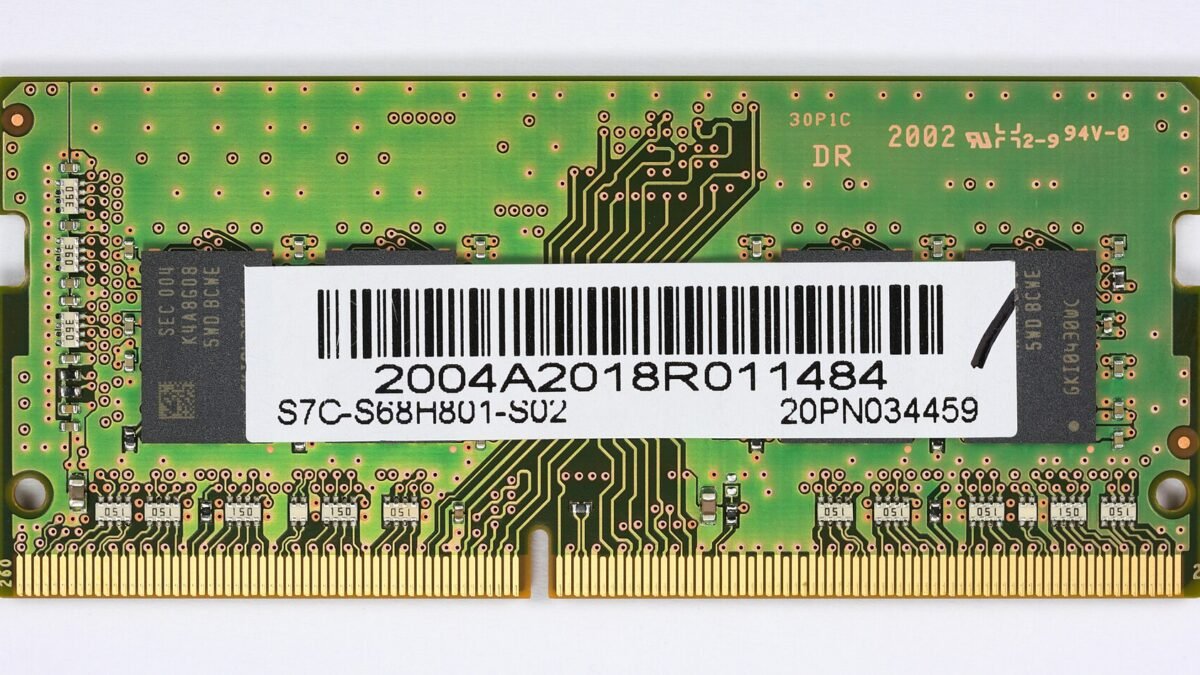
In February 2026, Samsung began mass production and customer shipments of HBM4 — High Bandwidth Memory, generation four — beating SK Hynix to commercial delivery despite SK Hynix still holding the larger overall HBM market share (around 62%, with Micron the fastest share-gainer of the three). The chip itself is a real leap: roughly 2TB/s of bandwidth per stack, running at 11.7Gbps and up to 13Gbps, built on a 4nm logic base die with a 1024-bit-wide stacked interface. Compare that to GDDR7, the memory in your graphics card, which tops out around 1.5TB/s, or the DDR5 in a typical laptop, which pushes data through a comparatively narrow 64-bit bus.
HBM4’s first big customer is Nvidia’s next-generation “Rubin” AI accelerator platform, launching in the second half of 2026. Samsung’s advantage here is structural: it’s the only one of the three major memory makers that also owns its own foundry and packaging operations, letting it move faster end-to-end than SK Hynix or Micron, both of whom lean on TSMC for HBM4’s base dies.
Why “More Memory” Doesn’t Mean Cheaper Memory
Here’s the part that trips people up: HBM4 and the DDR5 stick in your desktop aren’t competing products fighting for shelf space. They’re different products entirely, made for different markets — but they’re built in the same three factories. Samsung, SK Hynix, and Micron control more than 95% of global DRAM output between them, and every wafer that goes into an HBM4 stack is a wafer that didn’t go into consumer memory. The math makes it worse, not neutral: HBM manufacturing consumes roughly three to four times the wafer capacity per bit that standard DDR5 does, thanks to the stacking and packaging complexity. Tom’s Hardware put it bluntly in a piece literally titled “HBM is eating your RAM” — manufacturers are shifting capacity toward HBM and server products, leaving less available for consumer memory even as PC and smartphone demand itself has softened.
The scale of AI’s pull on that shared supply is hard to overstate. By one widely cited estimate, OpenAI’s Stargate project alone consumes something like 40% of global DRAM output — around 900,000 wafers a month. That’s not a rounding error against consumer demand. That’s the tail wagging the dog.
Interesting tangent: the $700 billion reason this won’t self-correct
If you’re hoping market forces just sort this out once AI companies have “enough” memory, here’s the wrinkle: they’ve already locked in years of it. Nvidia and SK Hynix reportedly struck a supply agreement worth around $500 billion in future HBM commitments, and Samsung and Broadcom have a separate deal in the neighborhood of $200 billion. These aren’t spot-market purchases that ebb and flow with demand — they’re multi-year reservations that guarantee AI accelerator makers priority allocation at Samsung, SK Hynix, and Micron for the foreseeable future. Consumer memory isn’t losing a fair fight for factory time; it’s queued behind commitments that were signed years in advance.
The numbers hitting your wallet right now
None of this is abstract if you’ve shopped for a PC lately. 32GB of DDR5 now runs $375 at minimum in some listings — a price that would have looked like a mistake eighteen months ago. DDR5 prices reportedly rose 172% through 2025 alone, and by the first quarter of 2026, memory had climbed to roughly 35% of a PC’s total bill of materials. Laptop and phone makers are responding the way you’d expect: passing the cost to buyers and quietly trimming production plans rather than eating the margin hit. The RAM shortage isn’t just a line item anymore — it’s starting to show up as fewer models and higher device prices across the board.
It’s worth separating the GPU story from the RAM story here too, because they’re not identical. Graphics card memory (GDDR7) shares the same three-fab bottleneck as DDR5, but demand for GDDR7 specifically has actually come in softer than expected — Nvidia’s RTX PRO 6000 line hasn’t driven the volume analysts predicted. That means the “AI ate all the memory” narrative is directionally true but not a clean one-to-one story for every product category. Some of the GPU price pain is HBM-driven capacity competition; some of it is just manufacturers holding prices up while overall PC demand stays soft.
So when does this actually get better?
The honest answer: not soon, and the estimates vary by years depending on who you ask. Micron’s CEO said in June 2026 that the shortage persists through 2027, with gradual improvement arriving by 2028. SK Group’s chairman and a separate analysis from Kearney both put full normalization as far out as 2030. Samsung is targeting about 250,000 wafers per month in HBM4 capacity by the end of 2026 — a 47% jump from today’s roughly 170,000 — and that new capacity, not falling demand, is the mechanism the industry actually points to for eventual relief.
There is one genuinely encouraging data point: TrendForce’s Q3 2026 report shows price increases decelerating, up 13-18% quarter-over-quarter versus roughly 60% in Q2. But read the fine print before celebrating — analysts attribute that slowdown to buyers hitting an affordability ceiling and simply purchasing less, not to supply catching up. Prices are still rising. They’re just rising more slowly, which is a different thing than getting better.
We’ve tracked this fight from the start — our breakdown of the antitrust lawsuit against Samsung, SK Hynix, and Micron digs into whether the shortage is even fully organic, or whether the same three companies squeezing supply are also facing price-fixing allegations over how they’re doing it. And if you’re trying to decide whether to just wait this out, our deep dive on why RAM prices won’t normalize until 2028 lays out the production timeline in more detail than we have room for here. It’s part of a broader fab-building race, too — see our coverage of the new Tesla and SpaceX chip plant in Texas for more on where the industry is racing to add capacity next.
The irony, in one sentence
The chip that just broke a manufacturing record is the same one straining your next PC build’s budget. Whether that resolves in 2027 or drags out to 2030 depends less on how good HBM4 turns out to be and more on how fast three companies can pour concrete for new fabs faster than the world invents new reasons to buy every gigabyte they produce.
Leave a Reply