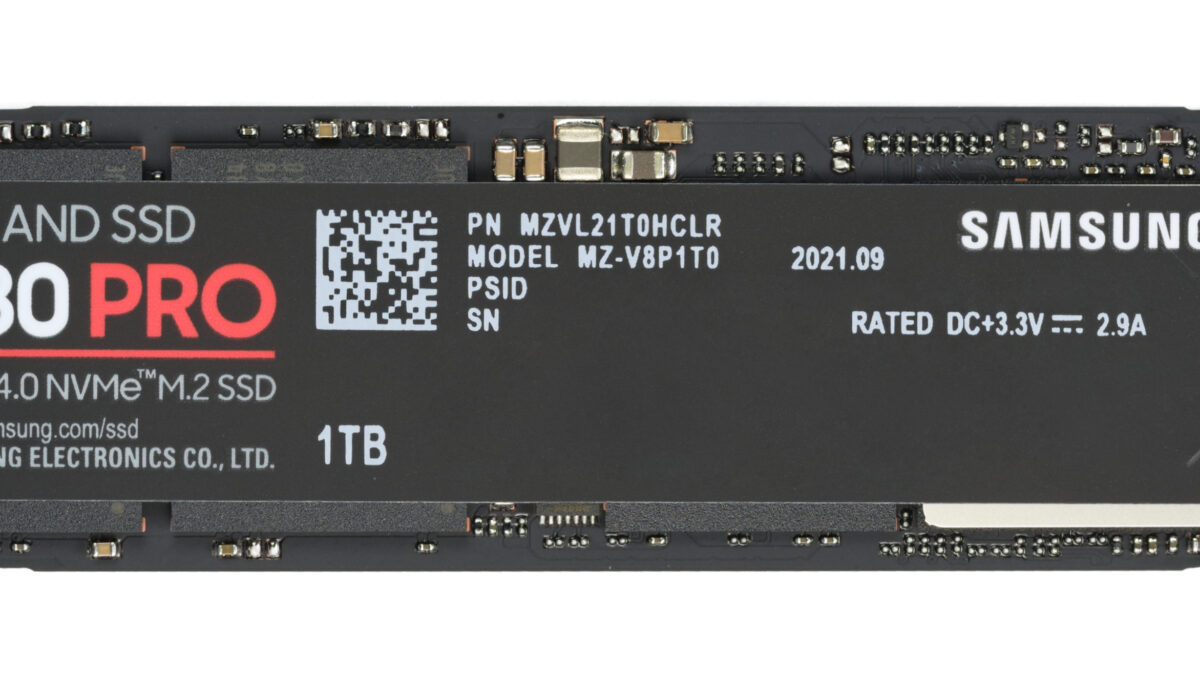
Why SSDs Keep Getting Cheaper While RAM Gets More Expensive
TECH EXPLAINED
Here’s a puzzle that’s been playing out in the tech market for the past two years: the same companies — Samsung, SK Hynix, Micron — are manufacturing both SSDs and RAM. Yet the price of SSDs keeps falling while RAM prices keep climbing. A 1TB SSD that cost $90 in 2022 now sells for under $55. Meanwhile, a 16GB RAM kit that cost $40 back then might run you $60 or more today. Same manufacturers, opposite directions. If you’ve been wondering why SSDs are getting cheaper in 2026 while your RAM upgrade costs more than expected, the answer is a fascinating collision of supply chains, AI infrastructure, and two fundamentally different types of memory technology.
NAND Flash and DRAM: Same Word, Completely Different Worlds
The word “memory” gets thrown around loosely, but SSDs and RAM are about as related as oil and natural gas — they come from similar geological territory but they’re processed differently, used differently, and traded in entirely separate markets.
SSDs use NAND flash memory. NAND stores data by trapping electrons in a cell, and it keeps that data even when the power is off — that’s why your SSD doesn’t forget everything the moment you shut your PC down. It’s built for persistence, high capacity, and relatively affordable density.
DRAM (Dynamic Random Access Memory) is what your RAM sticks are made of. It works completely differently — each bit of data is stored as a tiny electric charge in a capacitor, and that charge leaks away constantly, which is why DRAM needs to be “refreshed” thousands of times per second to hold its data. It’s fast, volatile, and expensive to manufacture at scale. NAND and DRAM require different fabrication processes, different fab equipment, and follow completely different market dynamics.
Understanding that distinction is the key to understanding why their prices are diverging so dramatically right now.
The Great NAND Oversupply: When Manufacturers Bet Too Big
Between 2020 and 2022, the world was in a buying frenzy. PCs, laptops, smartphones — demand surged during the pandemic. NAND manufacturers responded the way manufacturers always do when demand spikes: they started building more capacity. Samsung, SK Hynix, Micron, Western Digital, and Kioxia all ramped up NAND production aggressively, betting that the good times would keep rolling.
They didn’t. The PC and smartphone markets contracted sharply in 2022 and 2023. Consumers who had bought new laptops during the pandemic weren’t buying again so soon. Suddenly, there was a massive glut of NAND flash sitting in warehouses with nowhere to go. Supply had wildly outpaced demand.
When supply overwhelms demand in any commodity market, prices collapse. And collapse they did. A 4TB SSD that would have set you back $300 in 2022 now sells for under $150. The manufacturers have been locked in a price war, each trying to move inventory while their competitors do the same.
QLC NAND: Packing More Bits, Pushing Prices Even Lower
The oversupply story alone would explain falling SSD prices, but there’s a second force accelerating the drop: a technology shift to QLC NAND.
NAND cells can store different amounts of data depending on how many voltage levels they use. Older SLC (Single-Level Cell) stored 1 bit per cell — fast, but expensive. MLC stored 2 bits, TLC stored 3. QLC stores 4 bits per cell, which sounds like a small change but has a dramatic effect: the same wafer of silicon that used to produce, say, 4TB of TLC NAND can now produce 5–6TB of QLC NAND. More gigabytes per wafer means lower cost per gigabyte.
QLC has become mainstream in consumer SSDs over the past two years. The drives are slightly slower under sustained writes compared to TLC (there are tradeoffs with denser packing), but for everyday PC use, gaming, and general storage, the real-world difference is nearly invisible. What’s very visible is the price: QLC is a big reason why upgrading your laptop’s storage has become so affordable in 2026.
AI Is Hungry — But Not for NAND
Here’s where the story gets even more interesting. The AI boom that’s dominated tech headlines since 2023 has been reshaping the memory market — but only one side of it.
Training and running large AI models requires enormous amounts of fast, low-latency memory that can sit right next to the processor and feed it data at extreme speeds. The technology that does this is called HBM (High Bandwidth Memory) — a specialized form of DRAM stacked directly on the GPU die. An Nvidia H100 GPU needs 80GB of HBM3e. The newer H200 and B200 need even more. Every AI data center in the world is ordering these chips by the thousands, and every one of those chips needs a huge pile of premium DRAM.
So what did Samsung, SK Hynix, and Micron do? They started converting their DRAM fabrication lines to produce HBM instead of standard consumer DRAM. HBM commands much higher margins — it’s basically a money printer for the DRAM divisions of these companies. But the side effect is that less consumer DRAM is being produced, which tightens supply and drives up the price of regular RAM sticks.
This is exactly the dynamic covered in our companion piece on why RAM is getting more expensive right now — if you want the full picture on the DRAM side, that’s a great read alongside this one.
The critical point for SSDs: AI doesn’t need NAND flash. Data centers use some storage SSDs for less latency-critical workloads, but AI training and inference is fundamentally a DRAM and HBM story. The AI boom that’s siphoning manufacturing capacity away from consumer RAM isn’t doing anything to relieve the NAND oversupply. NAND sits in its own corner of the market, prices falling while the DRAM business next door prints cash for HBM contracts.
The Strange Position of Samsung and SK Hynix
This creates a genuinely odd situation inside the biggest memory manufacturers. Take SK Hynix: their HBM3e business is booming, commanding extraordinary margins from Nvidia and other AI chip buyers. Meanwhile, their NAND division is fighting a grinding price war where the margins have been razor-thin or outright negative for stretches of the past two years.
It’s the equivalent of a company that owns both a hot downtown restaurant and a grocery store in an oversaturated suburb. One side of the business is thriving; the other is discounting to survive. The profits from HBM have effectively been subsidizing the NAND price war — which, perversely, is great news for anyone looking to buy storage.
What This Means for Your Next Upgrade
Let’s bring this back to something practical, because the market dynamics right now create a clear buying opportunity — and a clear warning.
SSDs: buy now. This is as good as prices have ever been. A 2TB PCIe 4.0 SSD for your desktop or a PS5 storage upgrade is sitting under $80 from reputable brands. A 4TB drive for under $150 would have seemed impossible three years ago. Analysts expect NAND prices to normalize upward somewhat in late 2026 as manufacturers cut production to stop the bleeding, but a return to 2022 pricing isn’t coming. Still — if you’ve been putting off a storage upgrade, there’s no strategic reason to wait.
RAM: be strategic. With consumer DRAM supply tight and HBM eating into fab capacity, RAM prices are elevated and likely to remain so through 2026 into 2027. If you’re building a new PC, prioritize getting the SSD configuration right — that’s where the value is right now. Buy enough RAM for your needs, but don’t over-spec expecting great deals.
The memory market has always been cyclical — boom, bust, correction, repeat. The NAND bust has been particularly severe because the AI boom arrived at exactly the wrong moment to help. But for consumers, a bad time for NAND manufacturers is a very good time to fill up your storage. The tech world rarely hands you a clear window to get more for less. Right now, with SSDs, it has.
Wondering why SSDs are getting cheaper in 2026 while RAM costs more? NAND oversupply, QLC tech, and AI’s demand for DRAM — not flash — explain the paradox.
Deixe um comentário