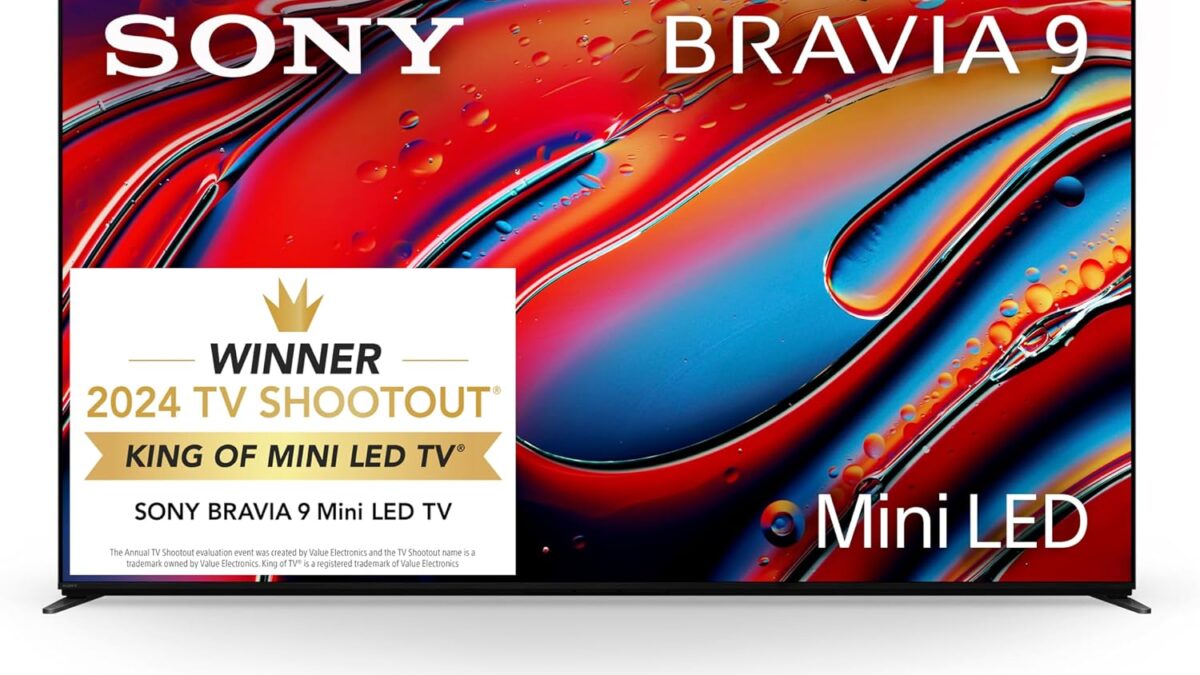
Sony Bravia 9 (2024, K-75XR90 / K-85XR90)
From $2,899.99- Exceptional peak HDR brightness for a non-OLED panel
- X-Wide Angle tech holds color/contrast well off-center, better than most Mini LED rivals
- Full PS5-optimized HDMI 2.1 gaming feature set
- OLED still wins on absolute black levels in a fully dark room
- No confirmed price yet on the newer Bravia 9 II makes long-term value harder to judge
- Built-in speakers are serviceable at best — budget for a soundbar
Bottom line: The Sony Bravia 9 is still one of the brightest, widest-viewing-angle Mini LED TVs available, and a genuine $700 price drop makes it a smarter buy than waiting for the unproven, unpriced Bravia 9 II.
Sony just gave every Bravia 9 owner-to-be a gift they didn’t ask for: a price cut. The 2024 flagship Mini LED TV dropped from $3,998 to $3,299.99 on its 85-inch model the same week Sony detailed the Bravia 9 II’s RGB backlight upgrade — and that’s not a coincidence, it’s how TV pricing works when a successor shows up. The question worth answering isn’t “should I wait for the II,” it’s whether the outgoing Bravia 9 is still good enough to buy today at $700 off.
Disclosure: DecodeGear may earn a commission from qualifying Amazon purchases made through links in this article, at no extra cost to you. We don’t physically test every product we cover — see “How We Compared These Picks” below for our method.
Quick Verdict: Sony Bravia 9 (2024)
Still one of the brightest, widest-viewing-angle Mini LED TVs you can buy — and now $500-700 cheaper than launch price. The catch: OLED still beats it on pure black-level contrast in a dark room.
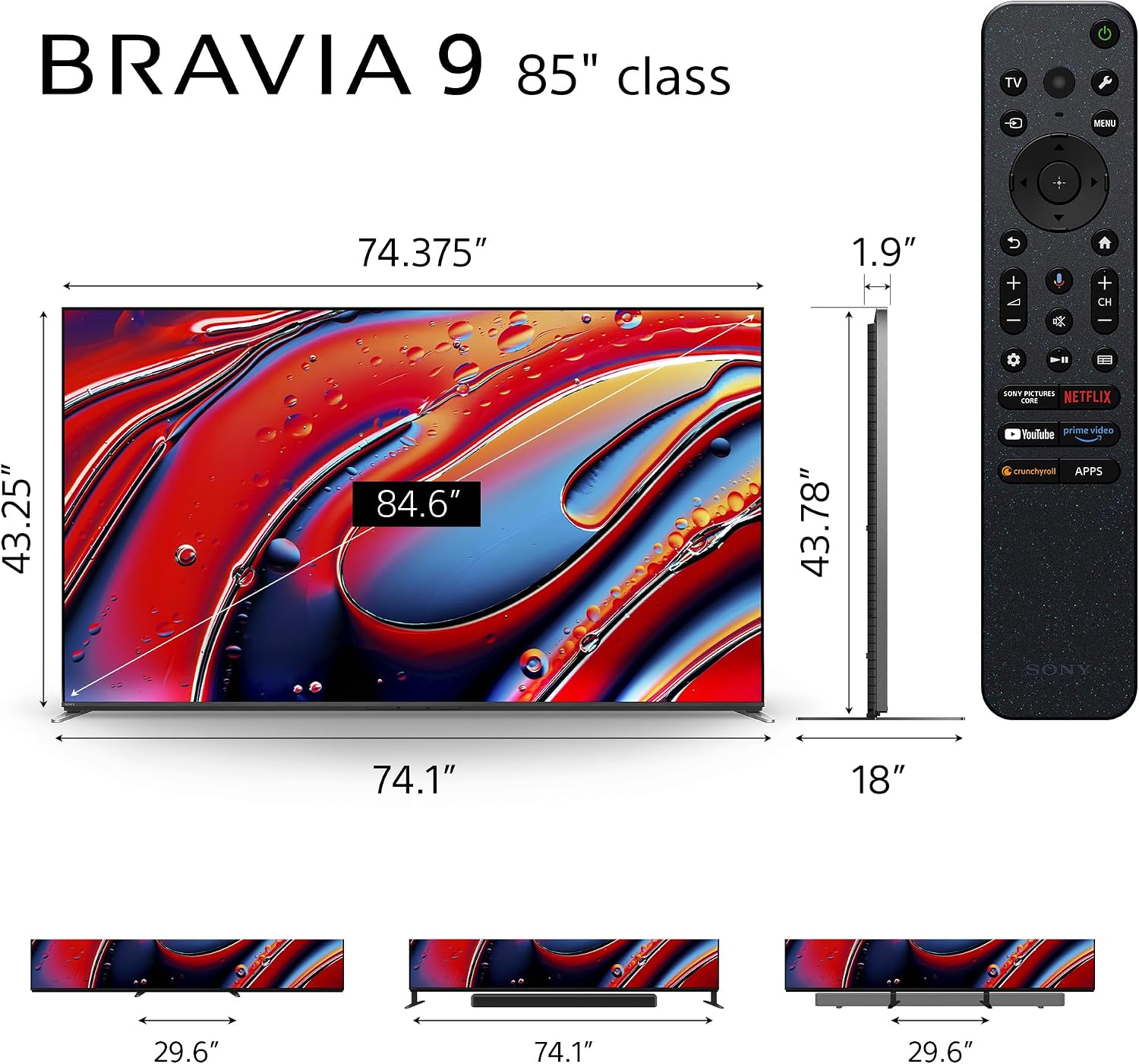
75″ (K-75XR90): $2,899.99 (was $3,398) | 4.2/5 (326 ratings)
85″ (K-85XR90): $3,299.99 (was $3,998) | 4.2/5 (191 ratings)
What the Bravia 9 Actually Is
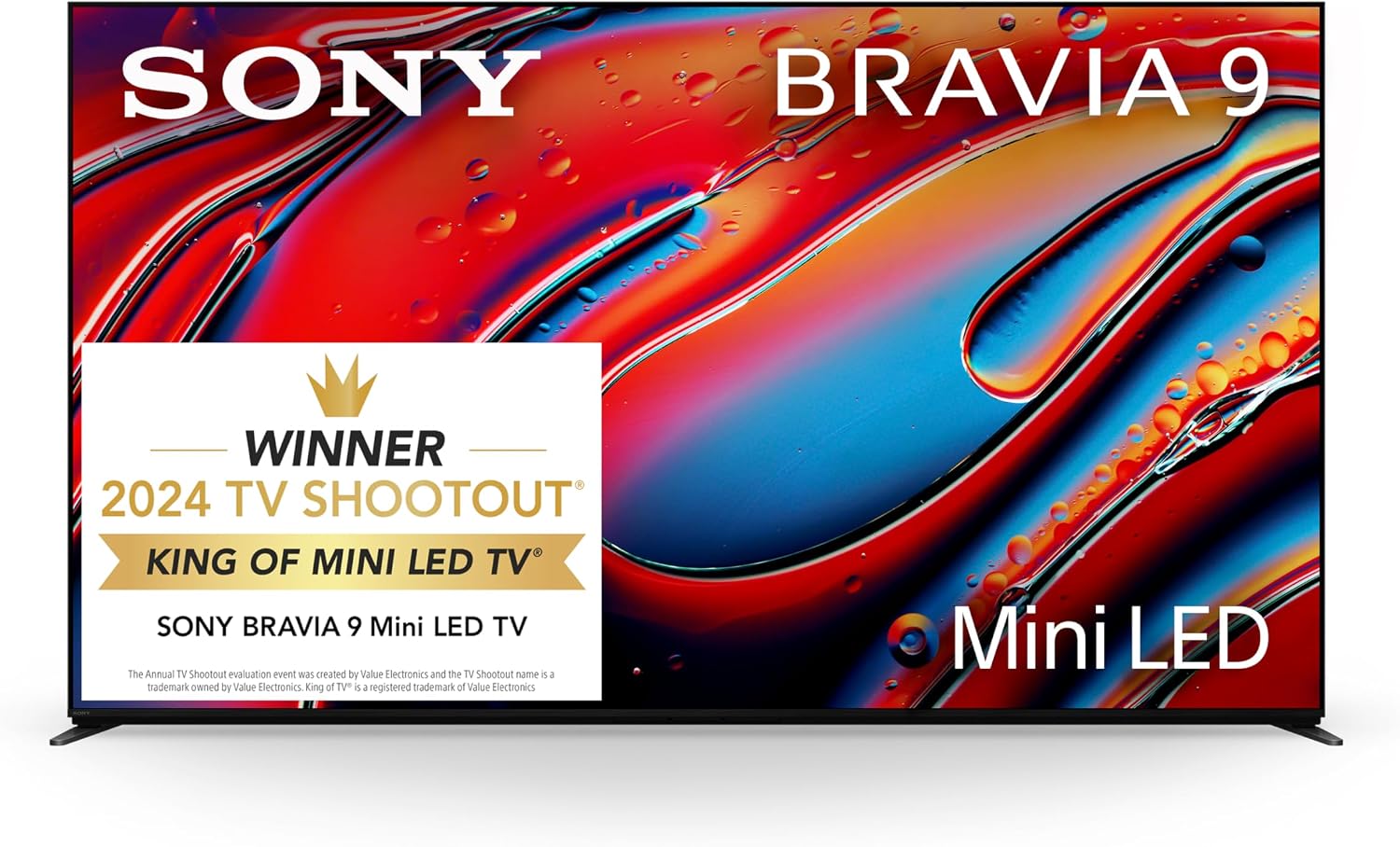
The Bravia 9 is Sony’s Mini LED flagship — the TV that sits below OLED in Sony’s lineup on paper, but tries to beat it where Mini LED has a structural advantage: peak brightness. It uses Sony’s XR Backlight Master Drive, a densely packed Mini LED array paired with the same XR processor found in Sony’s OLED sets, and it’s built around Sony’s X-Wide Angle panel technology — the feature that actually matters most if your living room isn’t a dedicated home theater with one perfect seat.
That last point deserves more attention than TV marketing usually gives it. Most Mini LED TVs — including several class-leading Samsung Neo QLED models — lose contrast and color fast once you’re more than 20-30 degrees off-center. Sony’s panel holds up noticeably better off-axis, which matters if your TV is the centerpiece of a family room instead of a screening room.
Specs That Matter
- Panel: Mini LED with XR Backlight Master Drive, X-Wide Angle, X-Anti Reflection coating
- Sizes tested here: 75″ (K-75XR90) and 85″ (K-85XR90) — a 65″ also exists in the line
- HDR: Dolby Vision, HDR10, HLG
- Gaming: HDMI 2.1 with 4K/120Hz, VRR, ALLM — Sony markets specific “PS5 features” like Auto HDR Tone Mapping
- Audio: Dolby Atmos built-in, though as with nearly every flat-panel TV, a soundbar is worth adding
- Smart platform: Google TV with Gemini built in, 10,000+ apps and games
The Google TV integration is worth a specific callout because it’s not just a launcher with more ads — Gemini handles voice search well enough that you can ask it something as vague as “find me a mystery show with a strong female lead” and get a usable answer, instead of the keyword-matching search boxes most smart TV platforms still ship with. It’s a small thing until you’re the one holding the remote at 9pm with no idea what to watch.
Where It Wins, Where It Doesn’t
Sony’s own marketing calls this the “king of RGB TVs” territory, and third-party hands-on coverage has generally backed the brightness and viewing-angle claims — this is a genuinely bright panel that holds HDR highlights well and doesn’t wash out laterally the way cheaper Mini LED sets do. Buyers on Amazon rate it 4.2/5 across both sizes, which is solid but not spotless for a $3,000+ TV.
The recurring criticism, and it’s a fair one: in a fully dark room, with the lights off and a dim scene on screen, OLED still edges it out on true black levels. Mini LED — even Sony’s best implementation of it — has to dim zones rather than switch pixels off individually, so very demanding dark-scene content can show subtle blooming around bright objects. If you watch primarily in a lit living room, this basically never matters. If you’re building a dedicated dark-room theater and contrast is your top priority, that’s the one scenario where we’d point you toward Sony’s own Bravia 8 II OLED instead.
How We Compared These Picks
DecodeGear doesn’t run TVs through a lab — we aggregate verified specs and live pricing directly from Sony and Amazon.com (both prices and ratings above were confirmed via Amazon on July 27, 2026), cross-reference them against professional measurement outlets that do run controlled brightness and contrast tests, and factor in verified buyer ratings. Where a claim in this piece isn’t something we measured ourselves, we’ve flagged it as third-party or aggregate buyer sentiment rather than presenting it as our own hands-on finding. Full spec sheets are available directly on Sony’s official TV lineup page if you want to cross-reference anything here.
Buy Now or Wait for the Bravia 9 II?
Sony’s newly detailed Bravia 9 II swaps the Mini LED backlight for individually driven RGB LEDs — no blue-LED-plus-phosphor conversion — which on paper should tighten color volume and reduce blooming further. It’s not listed for sale on Amazon yet, and Sony hasn’t published a confirmed retail price, so right now it exists mostly as a spec sheet and a reason retailers are discounting the outgoing model.
If you want the newest backlight tech and don’t mind paying a launch premium once it actually reaches store shelves, waiting is reasonable. If you want a proven, heavily-reviewed flagship at a real, live discount today, the 2024 Bravia 9 is not a compromise buy — it’s the same panel technology that earned Sony’s flagship reputation, just cheaper because the calendar moved on. For most living rooms, buying now is the better trade.
If your setup is more about desk space than living room square footage, our best gaming and work-from-home monitors piece covers the Mini LED and OLED options built for that instead. And since no TV — Sony’s included — has speakers that do a big Mini LED panel justice, our best soundbars under $300 roundup is worth a look before you plug this one in.
FAQ
Is the Sony Bravia 9 good for gaming?
Yes — it supports 4K at 120Hz with VRR and ALLM over HDMI 2.1, plus Sony’s PS5-specific tone-mapping features, making it one of the stronger console-gaming TVs in its class.
Is Mini LED as good as OLED?
Not in every scenario. Mini LED like the Bravia 9 gets brighter and holds up better in rooms with ambient light. OLED still wins on absolute black levels in a fully dark room. Neither is universally “better” — it depends on your room.
Should I buy the Bravia 9 or wait for the Bravia 9 II?
If you need a TV now and want a proven flagship at a real discount, buy the Bravia 9. If cutting-edge RGB backlight tech and you’re willing to pay launch pricing whenever it actually ships, wait.
Which size should I get, 75″ or 85″?
As a rough guide, sit roughly 1-1.5x the diagonal size away from the screen for immersive 4K viewing without seeing pixel structure. If your room comfortably fits an 85″ (typically 10+ feet of viewing distance), the price-per-inch value is actually slightly better on the larger size.
Do I need a soundbar with the Bravia 9?
Yes, if you care about sound quality at all. Built-in Dolby Atmos support is real, but the physics of a thin panel mean no flagship TV’s internal speakers compete with even a budget dedicated soundbar for bass and clarity.
Deixe um comentário