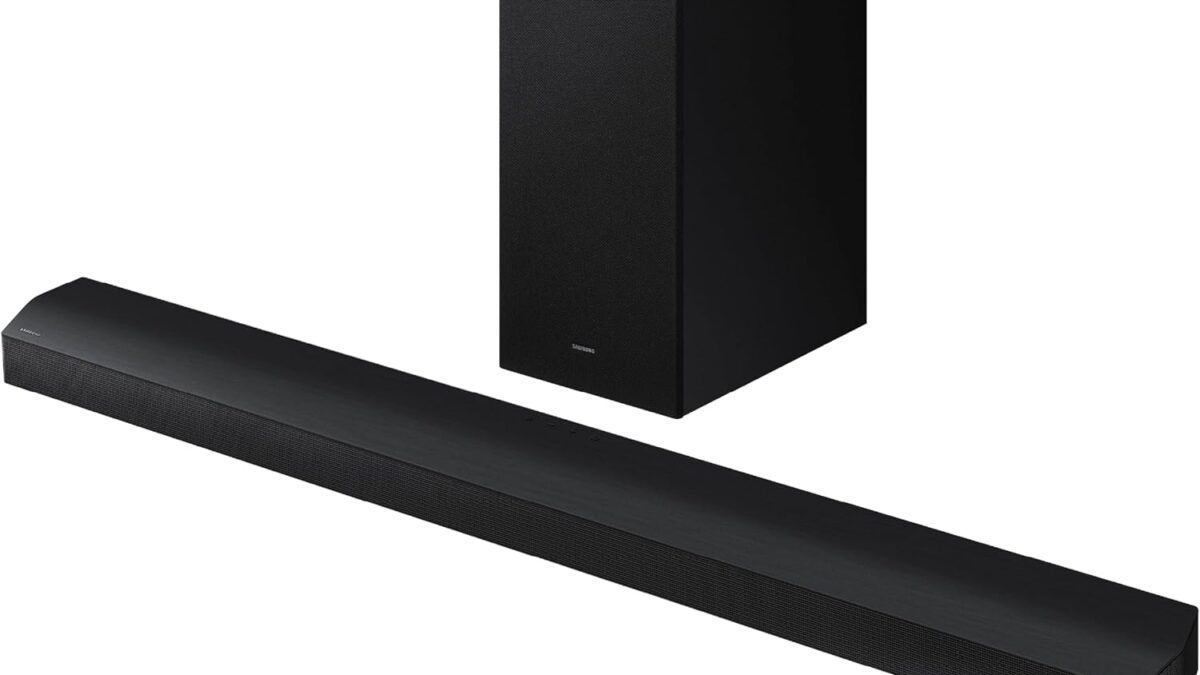
A soundbar under $300 used to mean picking your compromise — bass with no dialogue clarity, or clear voices with no low end. That’s less true in 2026. Dolby Atmos decoding, dedicated dialogue modes, and wireless subwoofers have all trickled down from $600+ flagships into this price bracket, so the real question isn’t “can I get good sound for under $300” anymore, it’s “which compromise fits my room.” We checked live Amazon pricing on five of the most-recommended soundbars right now, from a $159 5.1 bundle to a $288 system with a proper wireless sub, and broke down exactly who each one is for.
Disclosure: decodegear.com may earn a commission from qualifying purchases made through the Amazon links in this article, at no extra cost to you.
How We Picked These Five
We deliberately avoided listing five near-identical 2.0 bars. Each pick here solves a different problem: one is the cheapest way into real surround sound, one disappears visually under a TV, one exists purely to fix mumbled dialogue, one is a no-subwoofer-needed all-in-one, and one is the closest thing to a “just buy this” default. Channel count, dialogue processing, HDMI-eARC support, and wireless subwoofer inclusion all factored in, and every price below was checked live against current Amazon listings rather than MSRP — soundbar pricing moves 15-20% around sales events.
Quick Verdict
Best for: Best overall → Samsung HW-B750D. Tightest budget → Vizio V51x-J6. Small apartment → Sonos Ray. Mumbled TV dialogue → Bose TV Speaker. No room for a subwoofer → Yamaha SR-B20A.
| Soundbar | Price | Config | Best For |
|---|---|---|---|
| Samsung HW-B750D | $287.95 | 5.1, wireless sub | Best overall |
| Vizio V51x-J6 | $159.00 | 5.1, wireless sub + rears | Best budget |
| Sonos Ray | $219.00 | 2.0, no sub | Small rooms / Sonos ecosystem |
| Bose TV Speaker | $279.00 | 2.0, no sub | Dialogue clarity |
| Yamaha SR-B20A | $219.95 | 2.1, built-in subs | All-in-one, no external sub |
1. Samsung HW-B750D — Best Overall
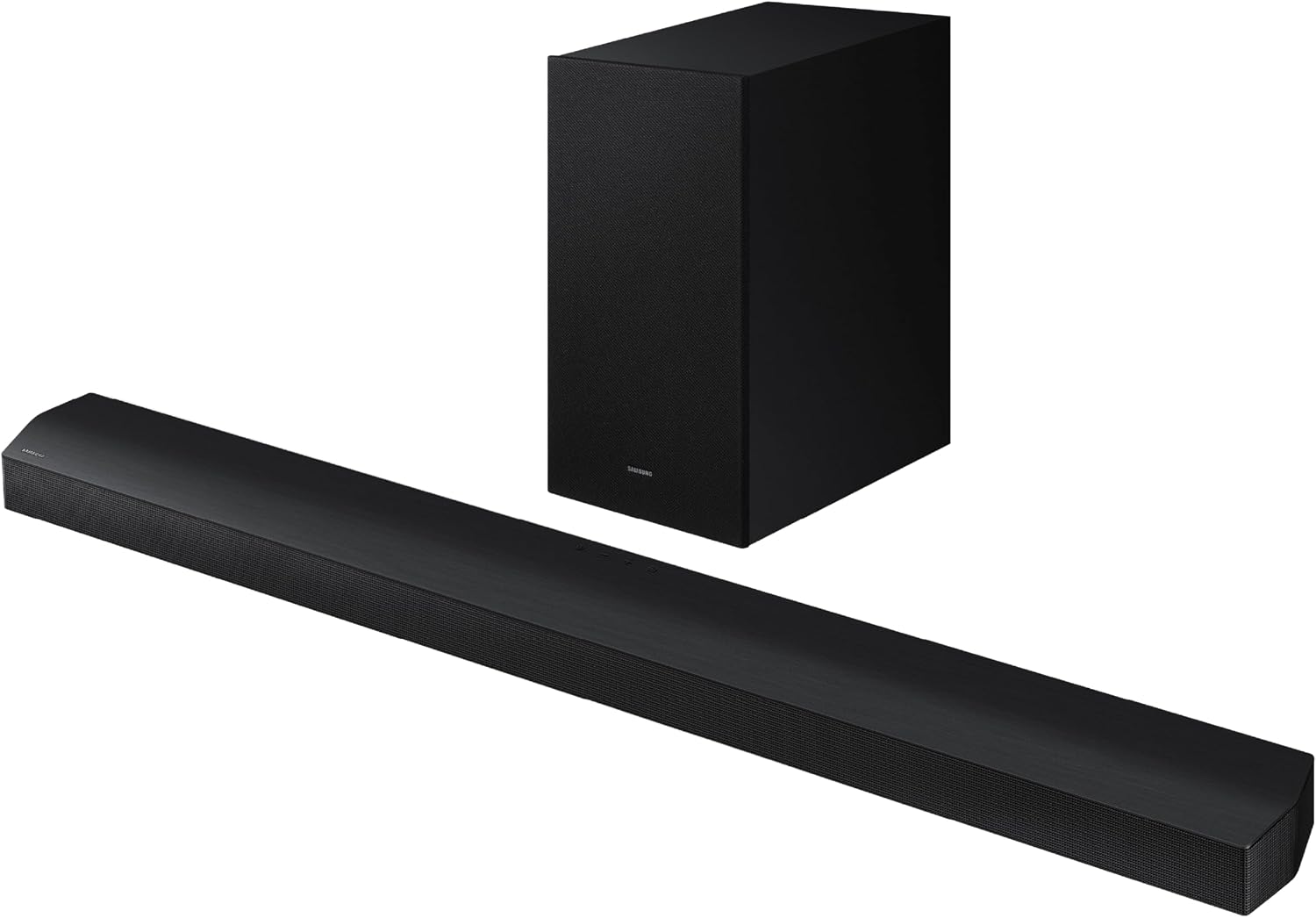
This is the soundbar we’d point most people toward without a follow-up question. It’s a genuine 5.1-channel system — center channel, wireless subwoofer included in the box, not sold separately — with DTS Virtual:X adding a convincing sense of height even without physical up-firing drivers. Adaptive Sound adjusts EQ in real time based on content, so it doesn’t need constant manual tweaking between a movie and a football game. At $287.95 it’s the most expensive bar here, but it’s also the only one that ships with a real subwoofer AND leaves room to add Samsung’s optional rear speaker kit later without replacing the whole system.
Pros: True 5.1 with included wireless sub, Adaptive Sound EQ, expandable with rear speakers later.
Cons: Priciest option here, no up-firing Atmos drivers (virtual only), setup app occasionally loses Bluetooth pairing.
2. Vizio V51x-J6 — Best Budget Pick
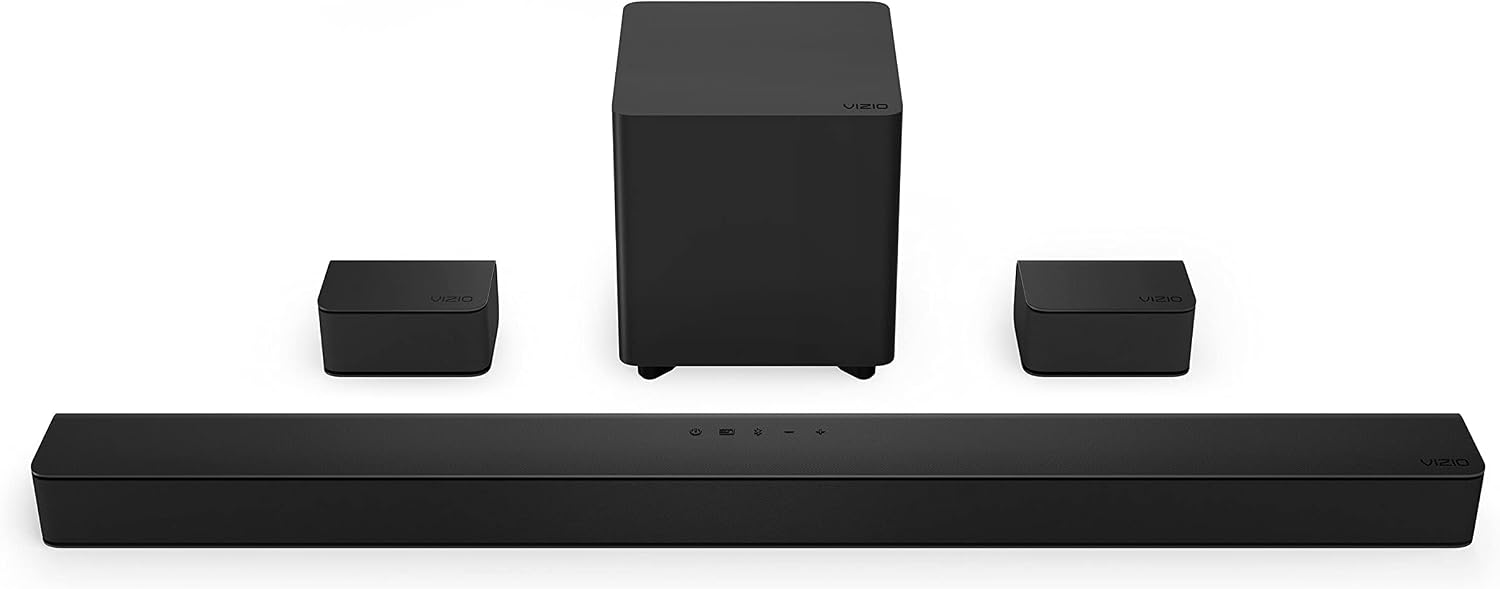
Nothing else under $300 gives you a subwoofer AND two rear satellite speakers for $159. That’s the whole pitch: Vizio cut corners on app polish and voice-assistant integration, not on the hardware that actually determines whether a movie sounds like a movie. Bass is noticeably boomier and less controlled than the Samsung’s, and the rear speakers need their own power outlets (they’re not battery-powered), which limits placement in some living rooms. But dollar-for-dollar, nothing else here gets you true surround sound with rear channels this cheap.
Pros: True 5.1 with rear satellites for $159, wireless sub, Bluetooth streaming.
Cons: Rear speakers need wall outlets, bass is loose at high volume, no HDMI-eARC on base model.
3. Sonos Ray — Best for Small Rooms
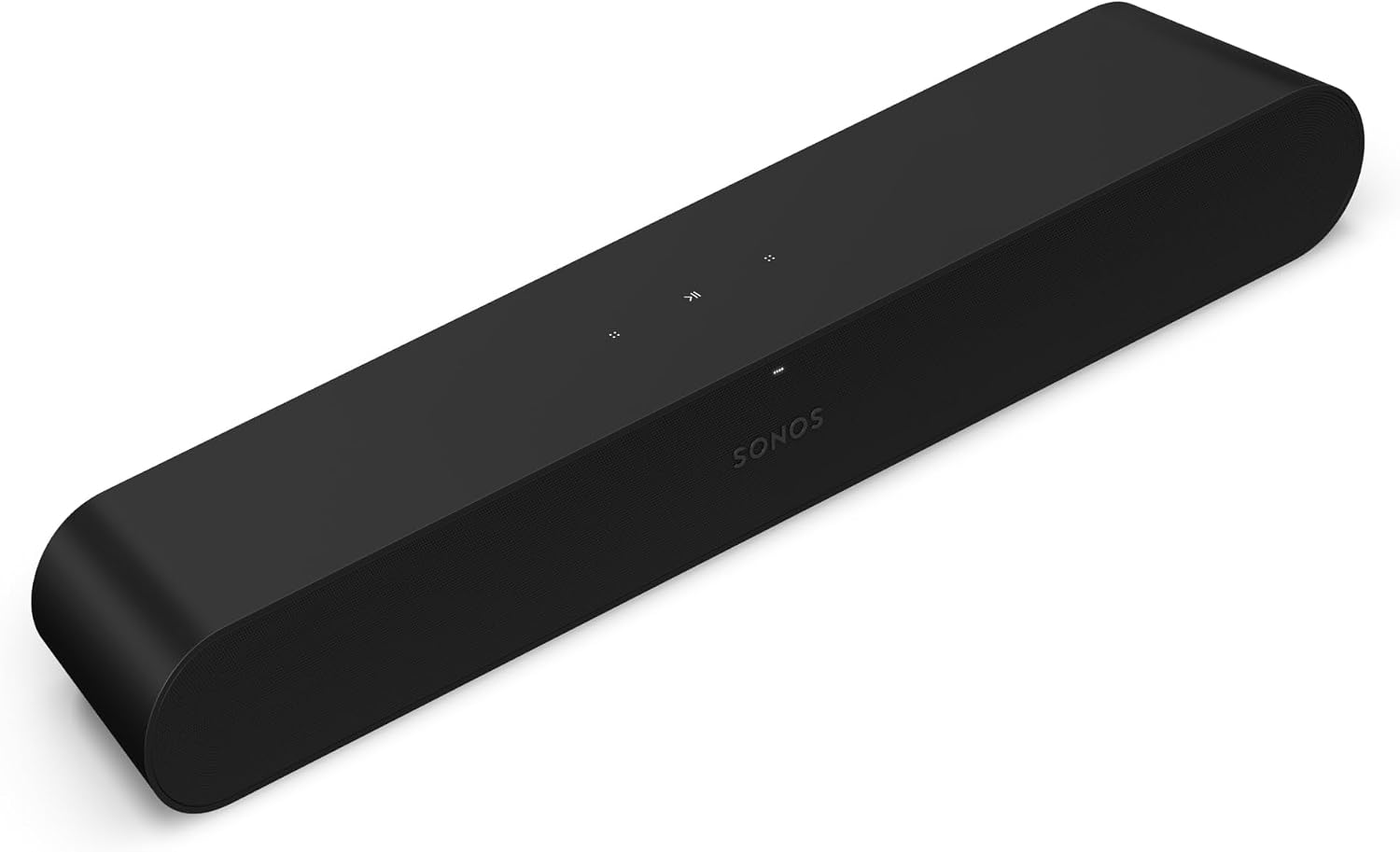
The Ray is Sonos’s entry-level bar, and it’s built for apartments and bedrooms rather than home theaters — there’s no subwoofer, no Atmos, and no HDMI (it connects via optical only). What you get instead is Sonos’s app polish: trueplay tuning, effortless multi-room grouping with other Sonos speakers, and sound that’s tuned to sound full without a sub in rooms under roughly 200 square feet. If you already own a Sonos speaker or plan to build a multi-room system over time, the Ray is the only bar on this list that plugs into that ecosystem natively. If you want a subwoofer eventually, know that adding a Sonos Sub later roughly doubles the system’s cost.
Pros: Best-in-class app and multi-room integration, compact footprint, punchy sound for its size.
Cons: Optical only (no HDMI-ARC), no subwoofer or Atmos, adding a Sonos Sub later is expensive.
4. Bose TV Speaker — Best for Dialogue Clarity
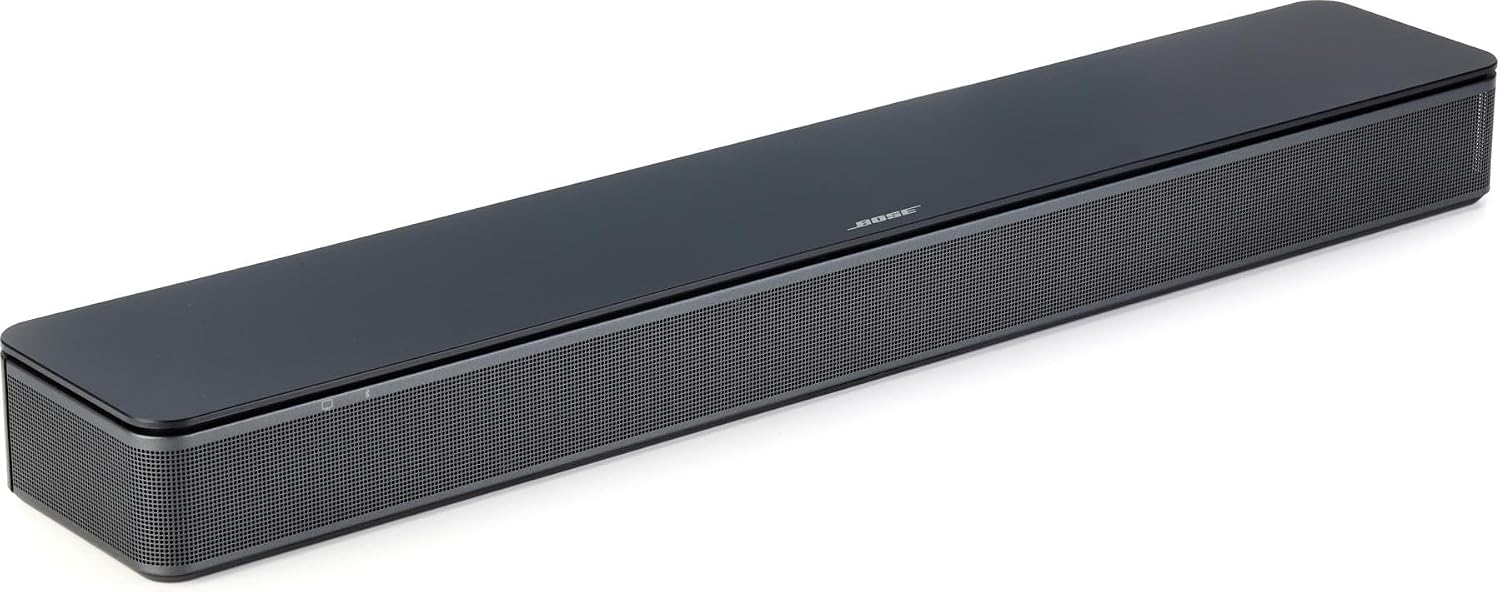
Bose built this one to solve exactly one problem: TV dialogue that gets buried under music and effects. Two angled full-range drivers push voices forward without artificially boosting treble across the whole mix, and a dedicated dialogue mode goes further than most competitors’ “voice boost” toggles, which tend to just add harshness. It doesn’t try to be a home-theater system — there’s no subwoofer option, no Atmos — but for the specific complaint of “I can hear the movie but not what anyone is saying,” this is the most targeted fix on the list. HDMI-ARC keeps setup to one cable and your existing remote.
Pros: Best-in-class dialogue clarity, one-cable HDMI-ARC setup, compact and simple.
Cons: No subwoofer or expansion path, no Atmos, Bluetooth range is shorter than rivals.
5. Yamaha SR-B20A — Best All-in-One
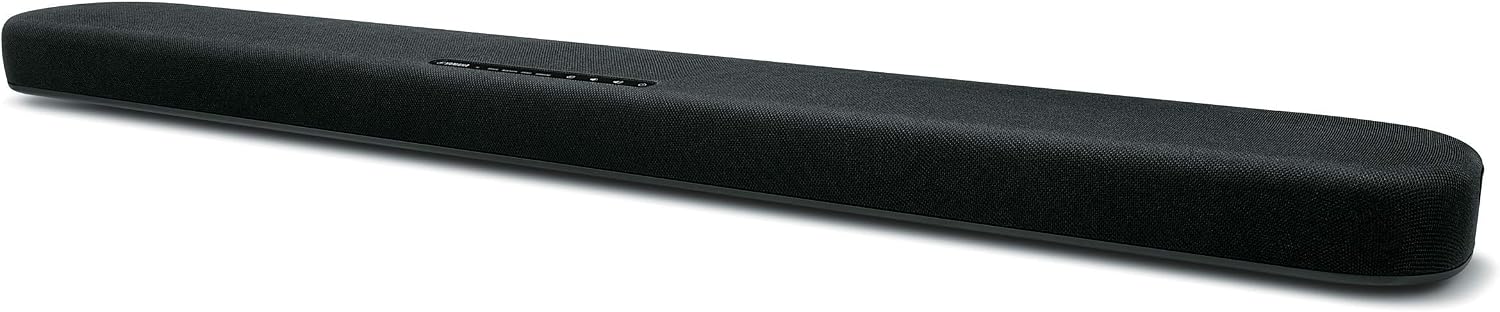
The SR-B20A packs dual built-in subwoofers into the bar itself, which makes it the pick for anyone who doesn’t have floor space, an extra outlet, or patience for pairing a separate subwoofer box. It’s genuinely surprising how much low end Yamaha squeezes out of a single enclosure — DTS Virtual:X adds a sense of width that makes the “no separate sub” tradeoff feel smaller than expected. At $219.95 it undercuts both the Samsung and Bose while beating the Sonos Ray on bass output. The tradeoff is ceiling: this will never hit as hard as a bar with a real 8-inch external subwoofer.
Pros: No separate subwoofer to place or wire, compact single-unit design, strong value at $219.95.
Cons: Bass ceiling lower than bars with external subs, Bluetooth-only wireless (no Wi-Fi/app ecosystem), basic remote.
Which One Should You Buy?
If you just want the safe, no-regrets pick, get the Samsung HW-B750D — it’s the only bar here that ships with a real subwoofer and still leaves an upgrade path. If $300 is a stretch and you want surround sound anyway, the Vizio V51x-J6 gets you rear speakers for barely more than half the price. Living in a small space or already own Sonos gear? The Ray is the obvious call. And if your actual complaint is “I can’t understand what people are saying,” skip bass entirely and get the Bose TV Speaker — it’s built for that one job. Still deciding between a soundbar and just upgrading the TV itself? Our OLED vs QLED vs Mini-LED guide covers the other half of that home-theater budget decision.
Pairing this with a new pair of cans for late-night viewing instead? See our picks in best noise-cancelling headphones.
Frequently Asked Questions
Do I need a subwoofer for a soundbar to sound good?
Not necessarily. Bars with built-in subwoofers, like the Yamaha SR-B20A, or dialogue-focused bars like the Bose TV Speaker, sound complete on their own for TV and casual listening. A separate subwoofer matters most for movies with heavy bass effects or if you want music to actually thump.
What’s the real difference between a 2.0 bar and a 5.1 system under $300?
A 2.1/2.0 bar (Sonos Ray, Bose TV Speaker) is one unit doing everything, which is simpler to set up and place. A 5.1 system (Samsung, Vizio) adds a separate subwoofer and rear speakers for actual directional surround sound — more setup, more cables, but a noticeably bigger jump in immersion for movies.
Does HDMI-eARC actually matter for a budget soundbar?
Yes, if your TV supports it. eARC passes higher-quality audio (including Dolby Atmos metadata) from streaming apps running on the TV itself, and lets you control volume with your TV remote. Optical-only bars like the Sonos Ray still sound good, but you lose that one-remote convenience and can’t pass lossless formats.
Will a soundbar under $300 support Dolby Atmos?
Most will support Dolby Atmos in some form, but usually “virtual” Atmos (like the Samsung’s DTS Virtual:X) rather than physical up-firing speakers that bounce sound off the ceiling. True hardware Atmos with height channels generally starts closer to $400-500.
Deixe um comentário