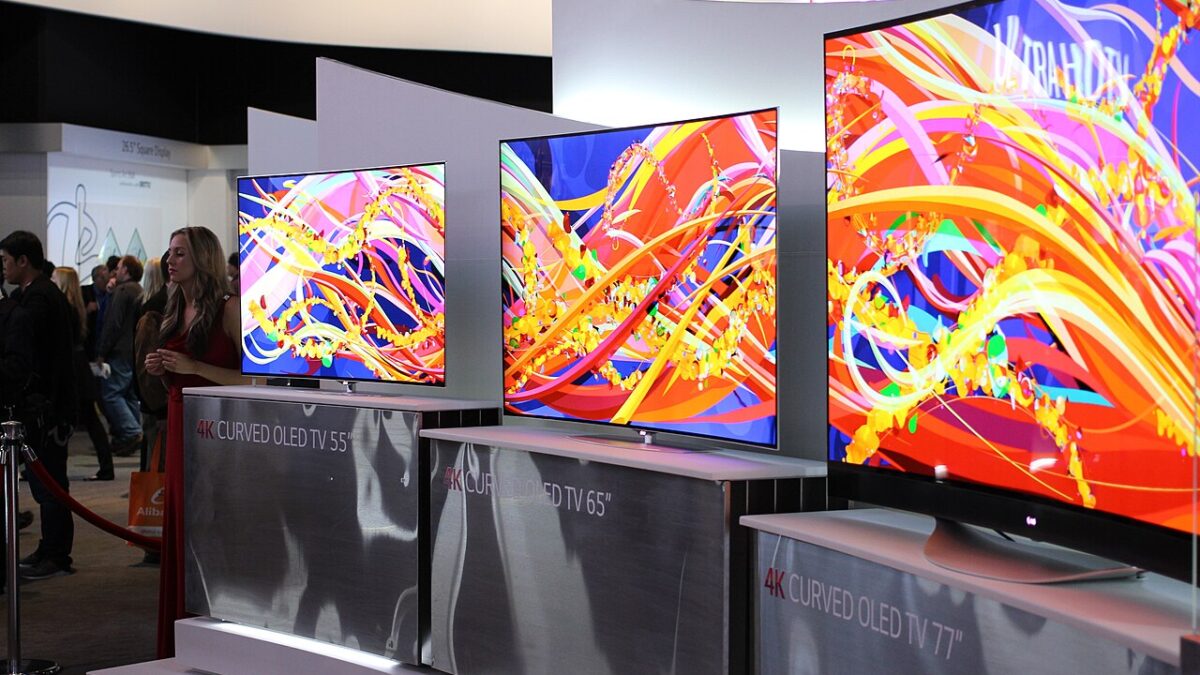
Walk into any electronics aisle and the TV wall throws three letters at you over and over: OLED, QLED, and Mini-LED. They sound like variations on the same thing, and the marketing does everything possible to blur the lines. But they represent genuinely different ways of making a picture — and the right one for you depends far more on your room than on which sticker sounds fanciest.
Here is how each one works and who should buy it, minus the jargon.
The key difference: who controls the light
Every TV picture comes down to one question: how does it produce light and darkness? That single distinction is what separates these technologies.
- OLED panels light up each individual pixel. When a pixel needs to be black, it simply turns off — producing perfect, true black with no glow.
- QLED and Mini-LED are both LCD screens with a separate backlight shining through them. They cannot switch off a single pixel; instead they dim zones of the backlight to approximate darkness.
Everything else — contrast, black levels, how good it looks in a dark room — flows from that one design choice.
OLED: the champion of dark rooms
Because every pixel is its own light source, OLED delivers the best contrast you can buy. Blacks are truly black, and a bright star sitting next to a dark night sky has no halo around it. Colors pop, viewing angles are excellent, and motion is superb.
The trade-offs are real, though. OLEDs are not as blindingly bright as the best LCDs, so in a sun-drenched room they can look washed out — a big reason TVs often look worse at home than in the store. They also cost more, and there is a small long-term risk of “burn-in” if you leave the same static logo on screen for thousands of hours. For most viewers that risk is overblown, but it is worth knowing.
QLED: bright, colorful, and affordable
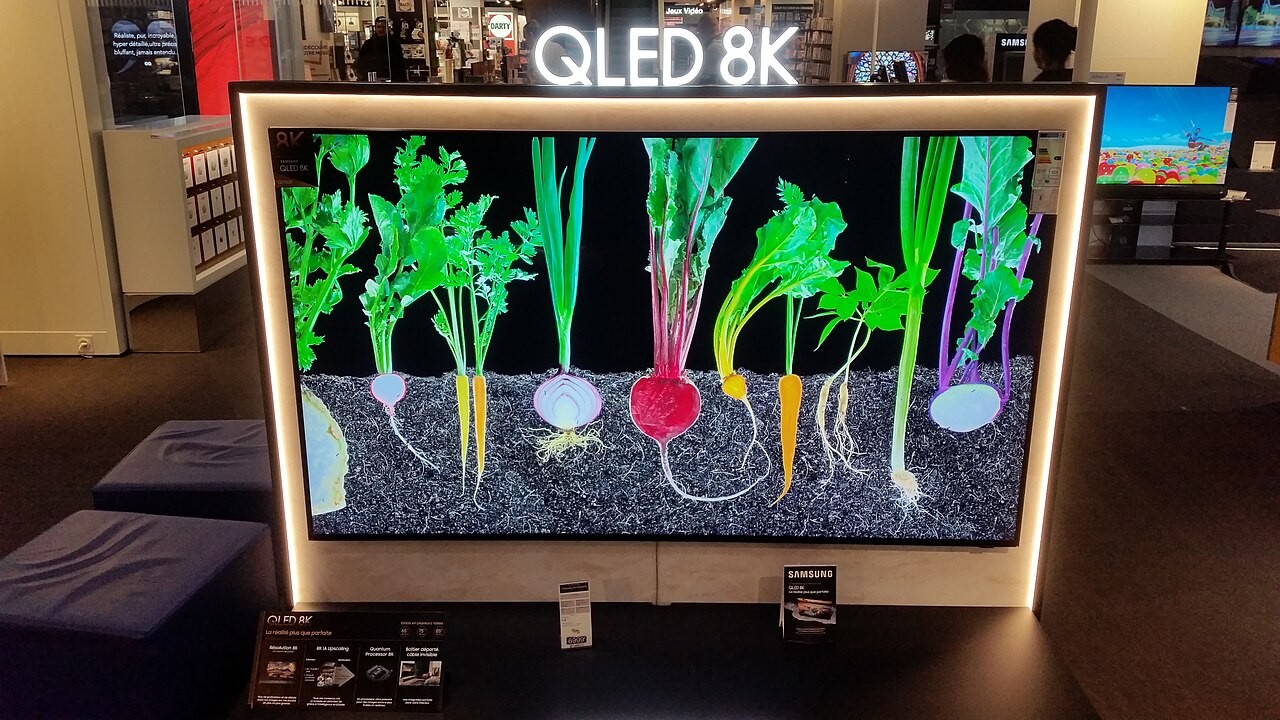
QLED is a regular LCD TV with a “quantum dot” layer that boosts color and, crucially, brightness. These sets get very bright, which makes them fantastic for living rooms with big windows and lots of daylight. They also tend to be cheaper than OLED at any given size, and there is no burn-in risk.
The compromise is black level. Because a QLED still uses a shared backlight, dark scenes can look slightly gray, and you may see a faint glow (“blooming”) around bright objects on a dark background. In a bright room you will rarely notice; in a dark home theater, you will.
Mini-LED: QLED’s smarter sibling
Mini-LED is the bridge between the two. It is still an LCD with a backlight — often with quantum dots too — but that backlight is broken into thousands of tiny zones that dim independently. More zones means darker blacks and far less blooming, getting much closer to OLED’s contrast while keeping LCD’s huge brightness advantage.
The result is arguably the best all-rounder: searing brightness for bright rooms and respectable black levels for movie night, with no burn-in worry. It is not quite OLED-perfect in a pitch-black room, but it is close, and it usually costs less than a comparable OLED.
So which should you buy?
- Dark room, movies and prestige TV, budget for the best picture: get an OLED. Nothing beats it for contrast in the dark.
- Bright living room, lots of daylight, or a nervous burn-in worrier: a bright Mini-LED is the sweet spot — punchy in daylight, strong contrast at night.
- Tight budget, or a TV for a kitchen, playroom, or guest room: a standard QLED gives you great color and brightness for less.
Beyond the panel: size, resolution, and motion
Once you have picked a panel type, three more specs shape your day-to-day experience — and getting these right matters more than chasing the last few percent of contrast.
Size is the upgrade people underestimate most. In a normal living room, going up a size or two is almost always more satisfying than a fancier panel at a smaller size. Sit a comfortable distance back and bigger simply feels more cinematic. As a rule of thumb, most people end up wishing they had bought larger, not smaller.
Resolution in 2026 effectively means 4K — it is the standard, and there is little reason to buy lower for a main TV. True 8K sets exist, but there is almost no 8K content to watch, so paying a premium for it makes little sense today. Put that money toward a bigger or better-quality 4K set instead.
Refresh rate and motion matter most if you game. A 120Hz panel makes fast action feel dramatically smoother than a standard 60Hz screen, and modern consoles and gaming PCs can take advantage of it. If you only watch movies and shows, 60Hz is perfectly fine — but gamers should treat 120Hz as a priority feature.
Gamers should also look for a few specific extras: HDMI 2.1 ports for full-bandwidth 4K gaming, variable refresh rate (VRR) to eliminate screen tearing, and low input lag. Most decent 2026 sets include these, but budget models sometimes cut corners — so if a console or gaming PC is your main use, check the spec sheet rather than assuming.
One more term worth knowing is HDR (high dynamic range), which lets a TV show brighter highlights and richer color in content that supports it. All three panel types handle HDR, just differently — bright QLED and Mini-LED sets make HDR highlights pop harder, while OLED renders HDR shadows with more nuance. It is less a deciding factor than a welcome bonus that modern sets all manage reasonably well.
Do not forget the fundamentals
Panel type matters, but it is not the whole story. Size, screen resolution, and picture processing all shape what you actually see — and a well-tuned mid-range set can outperform a poorly set up premium one. Getting the settings right matters too, since most TVs ship in an over-bright “store” mode.
If you want to go deeper before buying, our full guide to picking a smart TV walks through sizing and specs, and our roundup of the best TVs under $500 shows what solid value looks like right now.
The bottom line
OLED wins in the dark, QLED wins on brightness and price, and Mini-LED splits the difference better than either. Start with your room, not the acronym — match the panel to your lighting and budget, and you will be happy every night you turn it on.
Featured image: LG OLED TV by Maurizio Pesce, Wikimedia Commons (CC BY 2.0)
Deixe um comentário