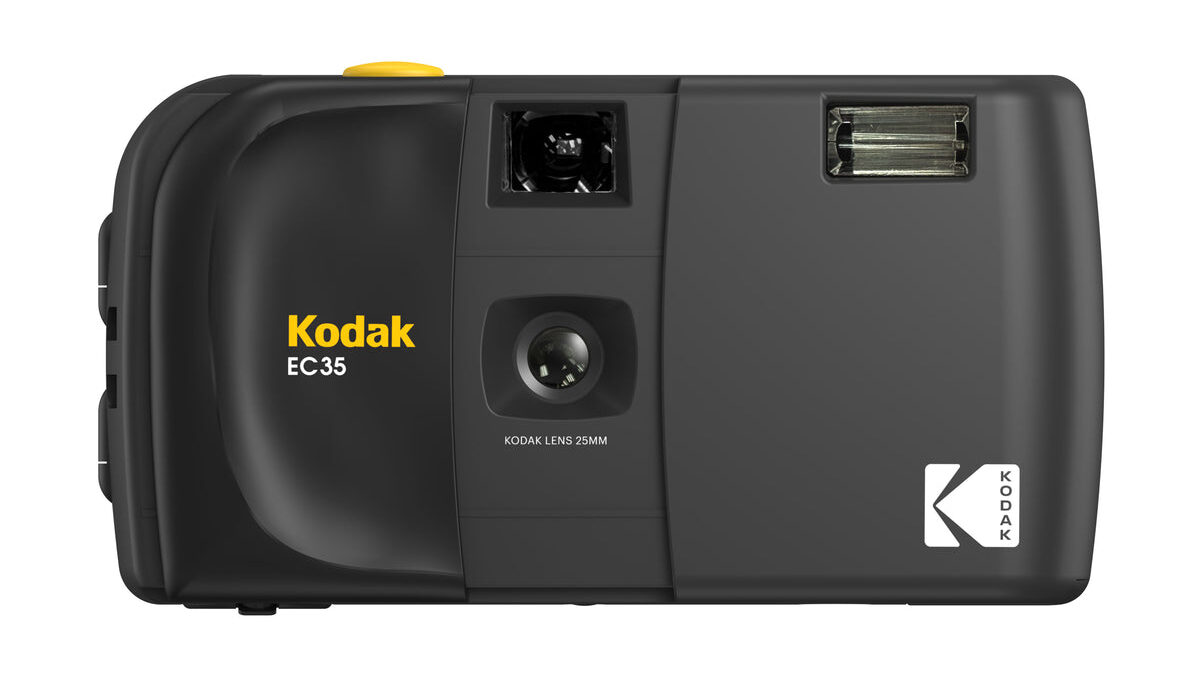
Here’s a strange fact: in a year when phones are shipping with 200-megapixel sensors and AI that can rescue a blurry night shot, one of the more talked-about cameras of the summer has a fixed-focus plastic lens, no screen, no autofocus, and tops out at roughly the resolution of a really nice postcard. It’s called the Kodak EC35, it costs $35, and it’s selling out in some colors within days of launch.
Nobody needs this camera. That’s kind of the point.
Wait — didn’t Kodak already do this?
Sort of. You may have seen the Kodak Charmera going viral earlier this year — the tiny digital keychain camera that turned taking a bad, grainy selfie into a whole aesthetic. The EC35 comes from the same company, Reto (a licensee that makes Kodak-branded film gear), and it’s priced identically. But it’s a completely different animal: the Charmera is digital. The EC35 shoots real, physical 35mm film.
That distinction matters more than it sounds like it should. A disposable camera gets used once and thrown in the trash with the film still inside — you hand the whole thing over at the pharmacy counter. The EC35 is built to be reloaded and used again and again, which quietly makes it one of the cheapest legitimate entry points into film photography that currently exists, disposable or not.
What you actually get for $35
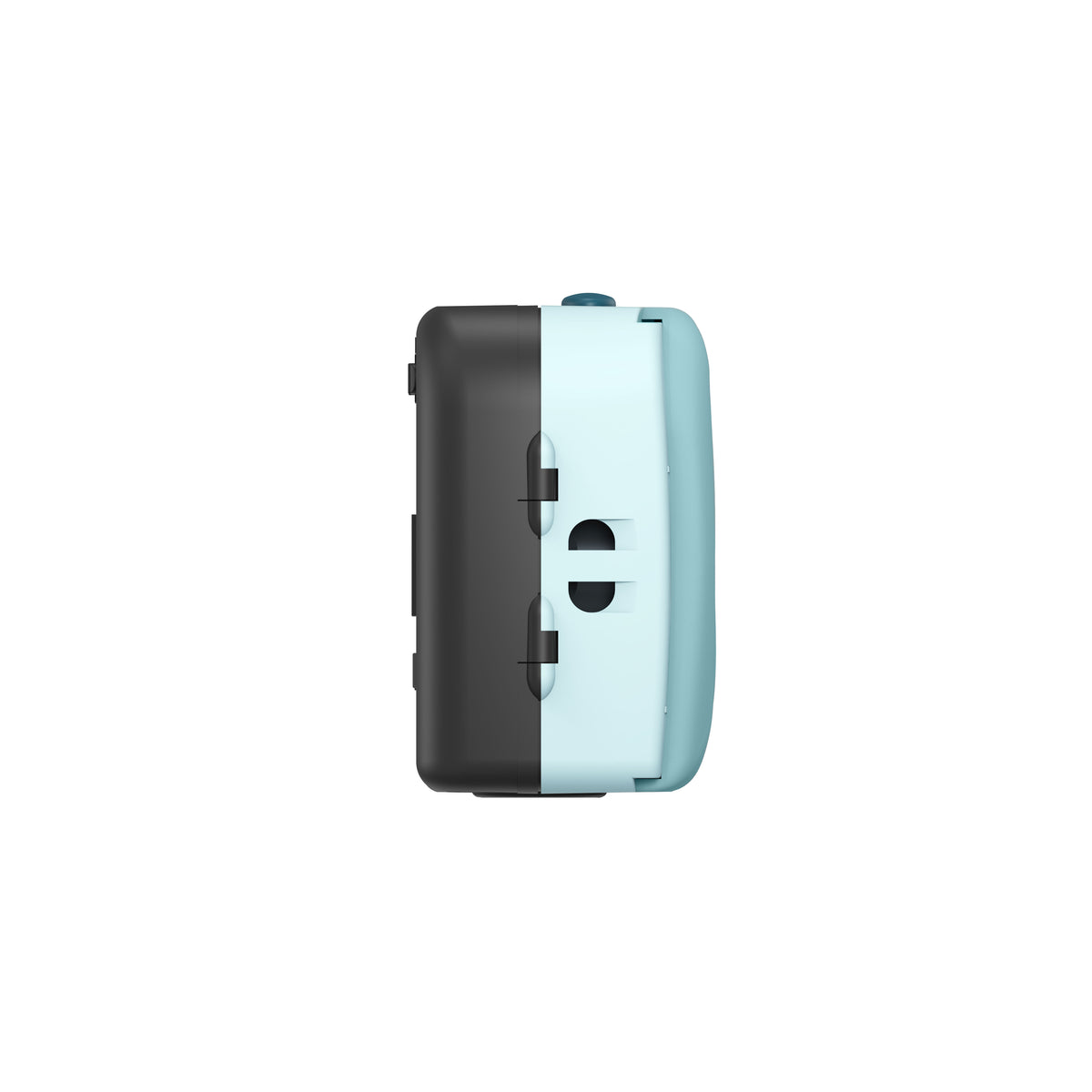
Don’t expect much engineering — that’s not a criticism, it’s the whole design brief. The EC35 has a 25mm f/10 fixed-focus acrylic lens, auto exposure with auto flash, and manual film winding (you advance the frame yourself with a thumb wheel, like it’s 1994). It weighs 102 grams and is under 42mm deep, so it disappears into a jacket pocket the way your phone never quite does.
The one design flourish that photography nerds are actually excited about is the slide-out lens cover — a direct callback to the Olympus Stylus Epic and the wave of “Mju-style” compacts that defined amateur film photography in the ’90s. Slide it shut, the lens is protected and the camera won’t fire; slide it open, you’re ready to shoot. It’s a satisfying, tactile little ritual that a smartphone simply can’t replicate no matter how good its camera app gets.
It ships in seven colorways — Midnight Black, Vanilla White, Butter Yellow, Lavender, Powder Blue, Blush Pink, and Avocado Green — and several of the pastel shades sold out within days of orders opening. For $45, Kodak/Reto will bundle in a roll of film and a wrist strap so you’re not stuck figuring out sourcing on day one.
The part that’s actually interesting: this isn’t a fluke
Here’s the surprising bit. Film camera sales have climbed 127% since 2020 — not a rounding error, a genuine trend. And it isn’t nostalgic boomers digging out old family cameras. Photographers under 25 now make up 41% of new film customers, meaning the fastest-growing segment of a “dead” medium is people who weren’t alive the last time film was the default.
That’s the same instinct behind the wave of retro handhelds we’ve been tracking lately — see our Anbernic RG35XXSP review for the gaming side of the same coin. A generation raised entirely on infinite, frictionless digital media appears to be actively seeking out formats with built-in limits: 24 or 36 shots per roll, no preview screen, no delete button, no filter stack. You get exactly what the light and the chemistry gave you, mistakes included.
Why the limits are the feature, not the bug
A fixed-focus f/10 lens sounds like a downgrade on paper. In practice, it removes almost every decision a phone camera normally throws at you — no tapping to focus, no choosing a filter, no second-guessing the shot in a live preview. You point, you wind, you shoot, and you don’t see the result for days or weeks, whenever the roll gets developed. That delay is doing real psychological work: it turns photography back into something you commit to in the moment rather than something you endlessly review and reshoot.
It also means the EC35 is a genuinely bad camera for anyone who wants control. If you care about sharpness, low light, or getting the shot right on the first try, a modern point-and-shoot or even your phone will beat it every time — we go into what actually matters in a serious camera purchase in our guide to choosing a superzoom camera, which is basically the opposite philosophy from everything the EC35 stands for.
The catch nobody mentions in the launch photos
Here’s what the glowing reviews tend to skip: the $35 sticker price is just the buy-in. Film isn’t free, and neither is developing it. A roll of 35mm color film generally runs somewhere in the $10–15 range these days thanks to the same demand spike driving the EC35’s popularity, and getting it developed and scanned at a lab typically adds another $10–20 on top. Shoot a few rolls a month and you’re looking at real, recurring costs — closer to a coffee habit than a one-time purchase.
That’s not a knock on the camera so much as a reality check on what “cheap” means here. The EC35 is cheap to buy and expensive to feed, which is exactly the opposite of a smartphone, where the camera is effectively free after the phone itself and every additional photo costs nothing. People buying into this trend know that trade-off going in — the cost and the wait are part of the appeal, not a hidden downside — but it’s worth saying plainly before anyone assumes $35 is the whole story.
Where this fits in the bigger picture
The EC35 is a small, cheap product, but it’s a useful signal. Camera makers spent two decades chasing more megapixels, more zoom, more computational everything — and that race is still very much alive, as anyone following the 360 camera boom knows. But there’s now a real, growing parallel market for cameras that do less on purpose, sold at a price where “buying it on a whim” isn’t a real financial decision. Kodak and Reto aren’t the only ones noticing; expect more of this in the next year, not less.
Whether the EC35 ends up in your bag or just in your Instagram feed for a week before it’s forgotten, it’s a fairly clean snapshot of where a meaningful slice of camera culture is headed right now: backward, on purpose, and loving it.
Leave a Reply