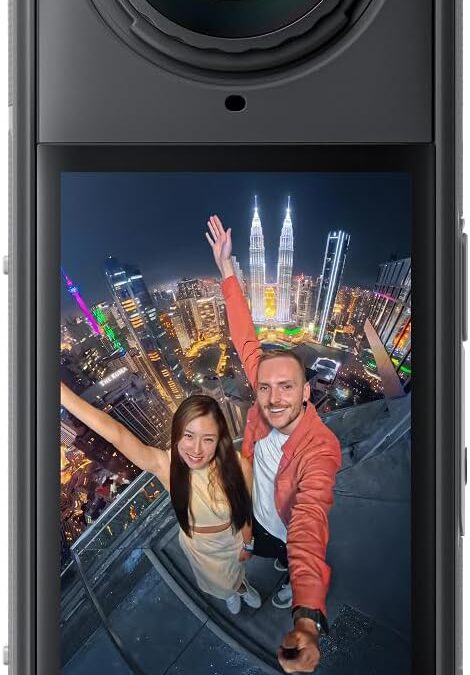
Insta360 X5
$549.00- Best overall image quality of the three tested
- Deepest waterproofing at 15m
- User-replaceable lens system
- $160 more expensive than the DJI Osmo 360
- Lower max frame rate (30fps vs Osmo's 50fps)
- Slower Wi-Fi 5 transfers vs Osmo's Wi-Fi 6
Bottom line: The Insta360 X5 is the best 360 camera in 2026 for buyers who prioritize image quality and repairability, while the DJI Osmo 360 is the smarter buy for action shooters watching their budget.
Three cameras actually matter in the 360-degree space right now, not ten. If you’re shopping this category, the decision comes down to Insta360 X5, DJI Osmo 360, or Insta360 X3 — and which one is right for you depends on exactly one question: what do you actually shoot, and how much do you care about squeezing out the last bit of image quality versus saving $160.
Disclosure: DecodeGear may earn a commission from qualifying purchases made through Amazon links in this article, at no extra cost to you.
Quick Verdict
Top Pick: Insta360 X5
Best overall image quality, 15m waterproofing, and user-replaceable lenses. If price is the deciding factor, the DJI Osmo 360 gives up little for $160 less.
Score: 8.8/10 | Price: $549.00
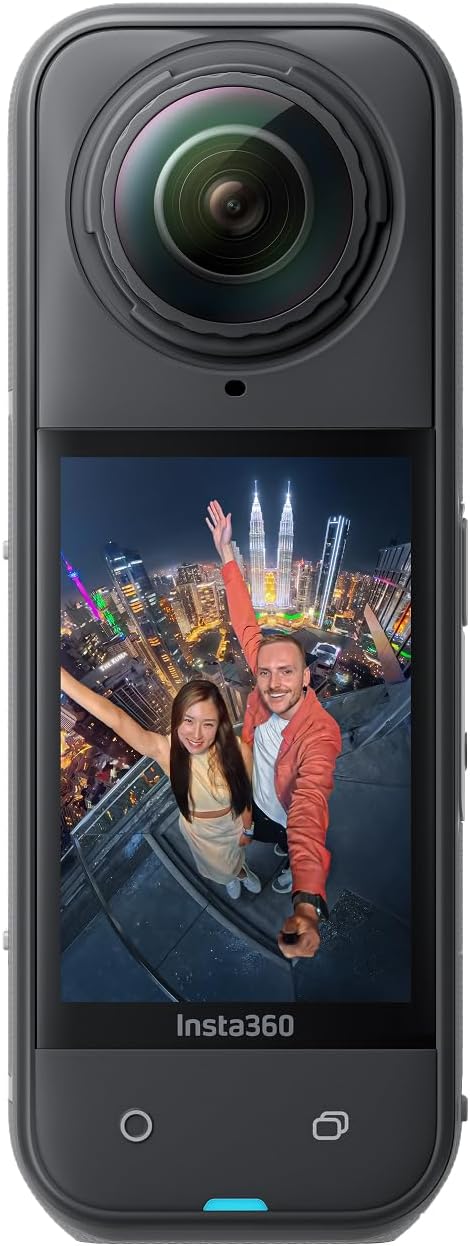
1. Insta360 X5 — The Image-Quality Pick (~$549)
The X5 wins the category most reviewers care about most: how the footage actually looks. Despite DJI’s larger 1-inch sensor spec sheet advantage on paper, TechRadar’s hands-on comparison still favors the X5 on overall image quality, crediting Insta360’s more mature color science built up over several camera generations. Add 15-meter waterproofing — deeper than any competitor here — and lenses you can actually replace yourself if you scratch or crack one, instead of needing a full camera swap, and the X5 earns its position as the default recommendation for anyone not price-constrained.
Specs
- Sensor: 1/1.28″, 1.2μm pixels, 8-bit
- Video: 8K/30fps 360, invisible selfie stick effect
- Waterproof to 15m, 3-hour battery
- User-replaceable lenses, Wi-Fi 5
Pros: Best image quality of the three. Deepest waterproofing. Repairable lens system saves money long-term.
Cons: $160 more than the Osmo 360. 30fps 360 video caps out below the Osmo’s 50fps for action footage. Wi-Fi 5 transfers slower than the Osmo’s Wi-Fi 6.
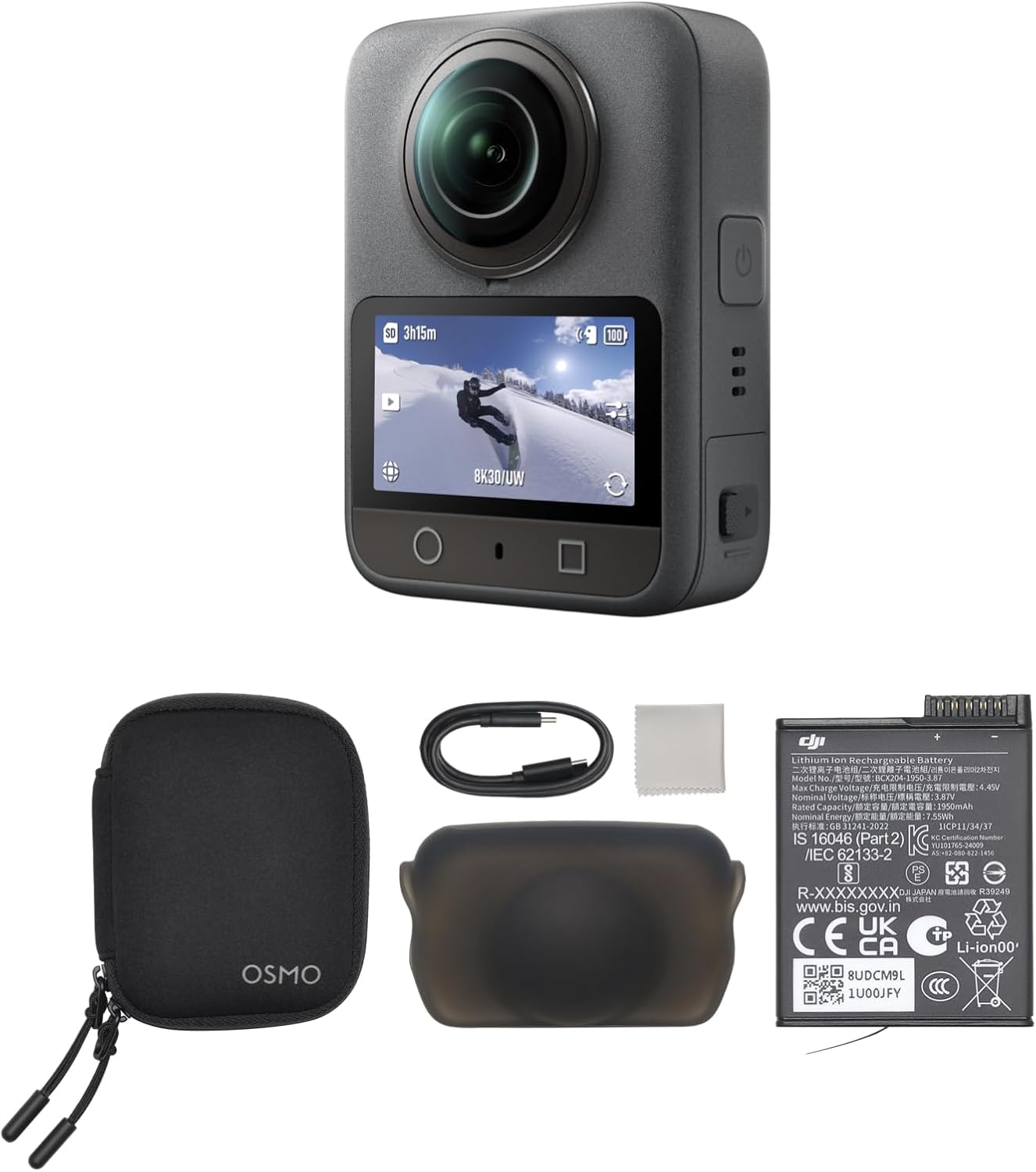
2. DJI Osmo 360 Standard Combo — The Value Pick (~$388)
If the X5’s image-quality edge isn’t worth $160 to you, the Osmo 360 is the one to buy instead, not a consolation prize. It actually beats the X5 on paper in two places that matter for action shooters: up to 50fps 360 video versus the X5’s 30fps, and a larger 1-inch, 10-bit sensor. Wi-Fi 6 also means faster footage transfers off the camera, which adds up fast when you’re offloading multiple 8K clips a day.
Specs
- Sensor: 1-inch, 2.4μm pixels, 10-bit
- Video: native 8K 360 up to 50fps, 4K/120fps boost mode
- Waterproof to 10m, Wi-Fi 6, 120MP 360 photo
Pros: $160 cheaper than the X5. Higher frame rate for fast action. Faster Wi-Fi transfers.
Cons: Lens isn’t user-replaceable — a scratch or crack means replacing the whole camera. Shallower waterproofing at 10m. Reviewer consensus still gives the edge to the X5 on overall image quality despite the bigger sensor.
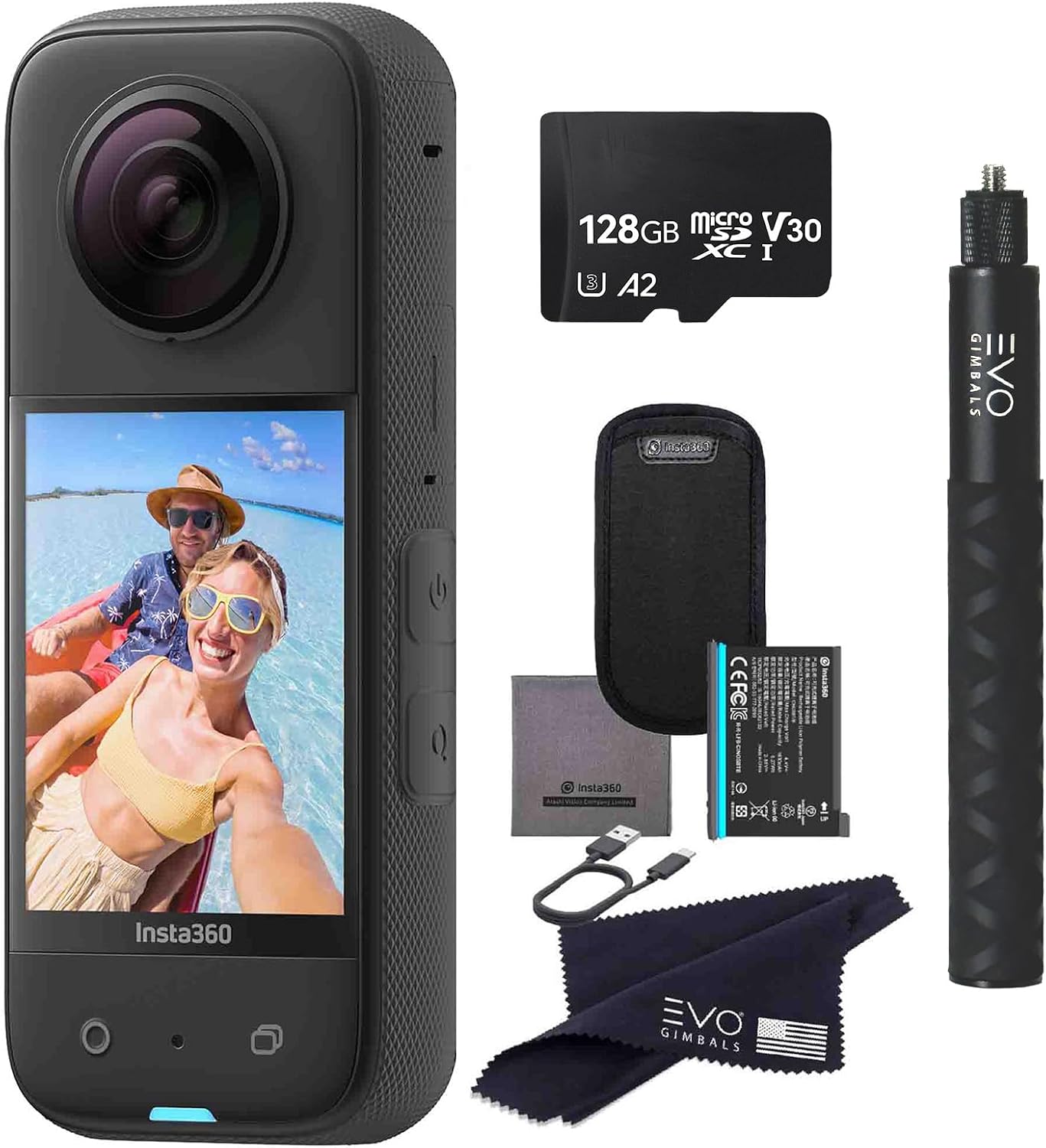
3. Insta360 X3 Bundle — The Entry Point (~$369)
The X3 is the previous generation, and it shows in the numbers: 5.7K instead of 8K, smaller sensors, no 10-bit option. What it offers instead is a lower barrier to entry for someone who’s never owned a 360 camera and isn’t sure yet whether the format is for them. This bundle throws in a selfie stick and a 128GB card, which are expenses you’d otherwise pay separately on top of either flagship above — bringing the effective gap between “budget” and “flagship” closer than the sticker prices suggest.
Specs
- Sensors: 1/2″, 48MP
- Video: 5.7K HDR 360, 4K single-lens at 60fps
- 2.29″ touchscreen, AI editing, bundle includes selfie stick + 128GB card
Pros: Bundle removes the “buy accessories separately” tax. Proven, mature app ecosystem. Genuinely capable for casual use.
Cons: No 8K. Older sensor tech means it falls behind in low light versus the X5 and Osmo 360. At $369 for the bundle, the price gap to the newer cameras is smaller than it looks.
Sensor Size vs Color Science — Why the Spec Sheet Doesn’t Settle It
On paper, the DJI Osmo 360 should win the image-quality argument outright — a 1-inch sensor with 2.4μm pixels and 10-bit color depth beats the X5’s 1/1.28-inch, 1.2μm, 8-bit setup on every number that fits in a spec table. Reviewers who’ve actually shot with both side by side don’t reach the same conclusion, and that gap is worth understanding before you let a spec sheet make the decision for you. Insta360 has spent several camera generations tuning its color science, HDR processing, and stabilization algorithms specifically for the 360 format, and TechRadar’s hands-on testing found that software-side maturity still edges out DJI’s hardware advantage in real shooting conditions — especially stitching, the process of blending the two lens feeds into one seamless sphere, which is where 360 cameras most often show visible seams or color mismatches.
That’s not a knock on the Osmo 360 — DJI’s stabilization and boost modes are genuinely strong, and the frame rate and sensor advantages are real for specific use cases like fast-motion sports capture. It’s a reminder that “bigger sensor” and “better photo” aren’t the same claim in a category this new, where processing software still does as much work as the hardware underneath it.
Which One Should You Buy?
If image quality is your top priority and $549 doesn’t scare you off, get the X5 — it’s the reviewer-consensus winner and the repairable lens system pays for itself the first time you scratch one. If you shoot action or sports content and care more about frame rate than the last percentage point of color accuracy, the Osmo 360’s 50fps and $160 lower price make it the smarter buy, not just the cheaper one. If you’ve genuinely never used a 360 camera before and aren’t ready to commit flagship money to a format you might not stick with, the X3 bundle removes the accessory tax and gets you shooting immediately, even if the specs are a generation behind.
If a fixed handheld camera isn’t quite what you’re after and a flying one sounds more interesting, our DJI Avata 360 review covers the drone version of this same 360-capture idea. And for creators building out a full kit rather than just a camera, our best webcams guide covers the desk-side half of the setup.
Frequently Asked Questions
Which is better, Insta360 X5 or DJI Osmo 360?
The X5 wins on overall image quality according to hands-on comparisons from outlets like TechRadar, plus deeper waterproofing and replaceable lenses. The Osmo 360 counters with a higher 50fps frame rate, a larger 10-bit sensor on paper, faster Wi-Fi 6 transfers, and a $160 lower price.
Is the Insta360 X3 still worth buying in 2026?
Yes, for first-time buyers. It caps out at 5.7K instead of 8K and uses older sensor tech, but bundled with a selfie stick and 128GB card, it removes the extra accessory costs that come with the newer flagships.
Can you replace the lens on a DJI Osmo 360?
No. Unlike the Insta360 X5, the Osmo 360’s lens isn’t user-replaceable — a scratched or shattered lens means replacing the entire camera rather than a low-cost lens swap.
What’s the difference between 8K and 5.7K 360 video?
8K captures roughly twice the resolution of 5.7K, which matters most when you’re reframing footage after the fact — a common workflow with 360 cameras — since you’re effectively cropping into a smaller portion of the full sphere and need the extra resolution to keep that crop sharp.
Deixe um comentário