Are Electric Protein Shakers Actually Worth It? (Honest Take for 2026)
Disclosure: This post contains affiliate links. If you buy through our links, we may earn a commission at no extra cost to you.
Most people who buy an electric protein shaker don’t need one. That’s the thesis. The marketing pitches a revolution — perfectly blended shakes, no clumps, no arm fatigue. The reality is that for the majority of gym-goers using a standard whey protein, a $5 shaker bottle with a wire ball does exactly the same job. But — and this matters — “most people” is not “all people.” There are specific, legitimate scenarios where an electric shaker earns its $26–$50 price tag. The problem is that the industry doesn’t tell you which camp you’re in. This piece does. We’ll look at what the marketing promises, what independent testing and real-world use actually shows, where the durability cliffs are, and who should save their money versus who should genuinely consider the upgrade. No hedging on the final call.
What Electric Shakers Promise
The pitch is consistent across every brand in this category. Electric protein shakers — also called USB-rechargeable blenders or motorized shaker bottles — claim to solve three problems:
- Lump elimination. Powered impellers promise silky-smooth shakes every time, even with difficult powders.
- Convenience and portability. No need for a full blender. Charge it via USB-C, blend in the bottle, drink from the bottle.
- Speed and consistency. Press a button, done in 30–60 seconds, uniform texture throughout.
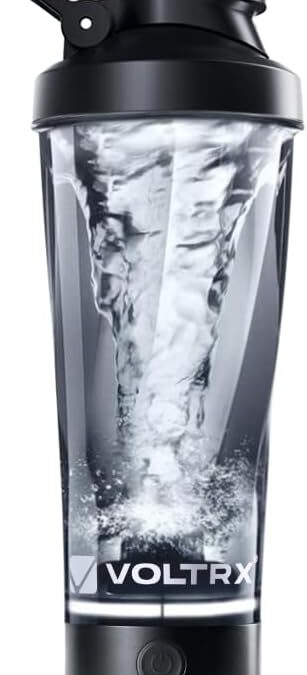
The category has grown substantially. The VOLTRX Premium Electric Shaker (ASIN B07QP13BJ9) sits at 4.6 stars across 16,000+ Amazon ratings. The BlendJet 2 competes at a higher price point (~$49–59) with a similar USB-C rechargeable design. Brands like PROMiXX have pushed the premium segment, with the MiiXR X7 retailing at $80–100. On paper, the value proposition looks reasonable. In practice, the story is more complicated.
What They Actually Deliver (vs. the Marketing)
Let’s run the claims against the evidence.
Lump elimination: Partially true, with conditions
This is where electric shakers have their strongest legitimate case — but only for specific powder types. For standard whey isolate or concentrate mixed with water or milk, a wire ball shaker eliminates lumps just as effectively. The motor provides no meaningful advantage here. The marketing says “perfect blends every time.” What they omit: perfect blends with easy powders were already achievable.
Where the motor actually earns its keep: casein protein, mass gainers, and high-carbohydrate blends that thicken aggressively when mixed. These powders genuinely resist manual shaking — the viscosity fights back against a wire ball. Electric impellers cut through that resistance. If your current shake routine involves casein or a mass gainer with dense carbohydrate matrices, the electric advantage is real and measurable.
The expert vs. consumer split
Garage Gym Reviews’ test — one of the more forensically rigorous fitness equipment testing outlets — concluded that electric shakers “don’t blend any better than a standard shaker” in their testing conditions. This conflicts with the consumer consensus on Amazon and Reddit, where users of thick powders consistently report noticeable improvement. The likely explanation: the Garage Gym Reviews assessment used standard whey in water, the easiest possible blending scenario. Consumer positive reviews skew toward casein, mass gainer, and pre-workout users. Both are telling the truth about different use cases.
Durability: The six-month cliff
This is the category’s worst-kept secret. The battery degradation curve on electric shakers is steep. After approximately six months of daily use, most units show significant reduction in motor speed and battery life. After 12 months, some units stop holding a charge at all. This isn’t speculation — it’s a recurring pattern in the one-year and two-year Amazon review updates across every brand in the category, including premium ones. The $40 unit you bought in January may be a $0 paperweight by August of the following year. For occasional users (3–4 times per week), the degradation is slower, but it’s still happening.
Cleaning: The real daily friction
The motor and impeller housing sits at the base of the bottle in most designs. This area is difficult to clean thoroughly — the motor mount creates crevices that trap dried protein. Anyone who has forgotten to clean a standard shaker for 24 hours knows the smell. With an electric shaker, the motor base makes proper cleaning more laborious, and the smell problem is amplified if the routine slips. This is not a theoretical concern. It’s the second most common complaint across the category in review analysis, after battery degradation.
The BlendJet 2 recall — context matters
The BlendJet 2 (ASIN B0D3VNXT2W) was subject to a January 2024 CPSC recall due to blade breakage and laceration risk. Current units sold under the same ASIN are post-recall compliant, but this history is worth knowing if you’re considering the premium BlendJet option. The resolved recall doesn’t make it a bad product — CPSC compliance processes exist for this reason — but buyers should verify unit manufacture date and confirm they’re receiving a post-recall unit.
The PROMiXX MiiXR X7 confusion
The PROMiXX MiiXR X7 (ASIN B08SM693K2, ~$80–100) is frequently grouped with electric protein shakers, but it is not a portable shaker. It’s a plug-in base unit — you fill the bottle, place it on the base, and blend via the magnetic drive. There’s no battery. It doesn’t go to the gym with you. Buyers searching for a portable electric shaker who end up with the MiiXR X7 are solving the wrong problem entirely. The Amazon listing doesn’t always make this distinction obvious. We’re flagging it directly: if portability is your goal, the PROMiXX MiiXR X7 is not your product.
The Real Use Cases — When It Makes Sense
Strip away the marketing and three genuine use cases emerge where an electric shaker provides real, not imagined, value.
1. Casein, mass gainers, and thick blends
As established above: if your daily shake involves casein protein, a high-calorie mass gainer, or any powder that thickens aggressively, the motor impeller provides a measurable quality improvement over a wire ball. The texture difference is real. If this describes your routine, the electric advantage is legitimate.
2. Wrist and joint issues
This is the accessibility argument, and it’s the strongest one. For people with wrist injuries, arthritis, carpal tunnel, or joint problems that make vigorous manual shaking painful or impossible, an electric shaker is a genuine functional solution. You press a button instead of shaking for 20–30 seconds. The motor does the mechanical work. This use case is often ignored in mainstream reviews because the reviewers don’t have the condition. For the relevant population, it’s not a luxury — it’s a practical accommodation.
3. Office or context-switching blending
If your workout nutrition happens at a desk, in a meeting between calls, or somewhere that vigorous manual shaking would be conspicuous or awkward, the press-and-blend format has a behavioral convenience advantage. It’s quieter than a full blender, more discreet than aggressive manual shaking. Minor use case, but real for some workflows.
If none of these three scenarios apply to you, you are in the majority who don’t need one. Save the money. A good protein powder mixed with a $5 shaker ball delivers identical results for standard use.
Devil’s Advocate — The Case FOR Buying One
That’s a fair steelman. Here’s where it partially breaks down.
The $26 entry price looks low, but the six-month battery degradation issue means the true annualized cost is higher than it appears. If you replace the unit yearly, you’re spending $26/year versus essentially $0/year for a wire ball shaker that lasts indefinitely. Over two years, that’s $52 spent to solve a problem that may not exist for your use case.
The 4.6-star aggregate is real, but the review distribution matters. Sort by one-star reviews at the 6–12 month mark and a consistent narrative emerges: battery failure, motor death, cleaning issues. The product satisfies in the short term. The durability question is the long-term caveat that aggregate star ratings obscure.
The consistency argument — that novelty drives compliance — is the weakest leg of the pro case. If the blending tool is the barrier to protein consistency, there’s a larger habit formation issue that a gadget won’t fix. The people who are consistent with protein intake are consistent because of the habit, not the hardware.
The Verdict — Who Should Buy and Who Should Skip
This is the honest math: $15 shaker ball vs. $40 electric shaker. For the majority of users, the $15 option produces identical results indefinitely. The electric option produces marginally better results for specific use cases and degrades in under a year of daily use.
Buy an electric protein shaker if:
- You use casein protein, mass gainers, or thick blends as your primary shake type — the lump elimination benefit is real for you.
- You have wrist pain, arthritis, or joint issues that make manual shaking physically difficult — this is the clearest legitimate reason.
- You use protein shakes 3–4 times per week or less (battery degrades slower, extending useful life).
- You have $25–40 to spend and want to experiment without significant financial risk.
Skip the electric shaker if:
- You use standard whey protein mixed with water or milk — a wire ball does this just as well.
- You shake daily and will be frustrated when the battery degrades in 6–12 months.
- You’re a disciplined cleaner but dislike fiddly cleaning jobs — the motor base is the weakest point in the daily cleaning routine.
- You’re considering the PROMiXX MiiXR X7 for gym portability — it’s a plug-in unit, not a portable shaker.
- You’re comparing it to a full portable blender — for actual blending power, the comparison doesn’t favor a shaker bottle motor.
The verdict on the BlendJet 2 specifically: post-recall units are safe, but at $49–59, you’re paying a significant premium over the VOLTRX for a product in the same functional category. If you’re going to spend that much, a compact portable blender gives you more versatility. The sweet spot in this category is the $25–30 range, where the VOLTRX sits.
The PROMiXX and premium segment above $60 are solving for aesthetics and brand prestige more than functional outcomes. The blending physics don’t improve proportionally to the price. Spend more if you want to spend more — just know what you’re buying.
If You’ve Decided — One Recommendation
If you fall into one of the legitimate use cases above and you’re buying, the VOLTRX Premium Electric Shaker is the evidence-backed choice at this price point. USB-C rechargeable. 4.6 stars across 16,000+ verified ratings. At ~$26, it’s the lowest-risk entry into the category. It won’t last forever, but it’s the most honest value proposition in the segment.

Deixe um comentário