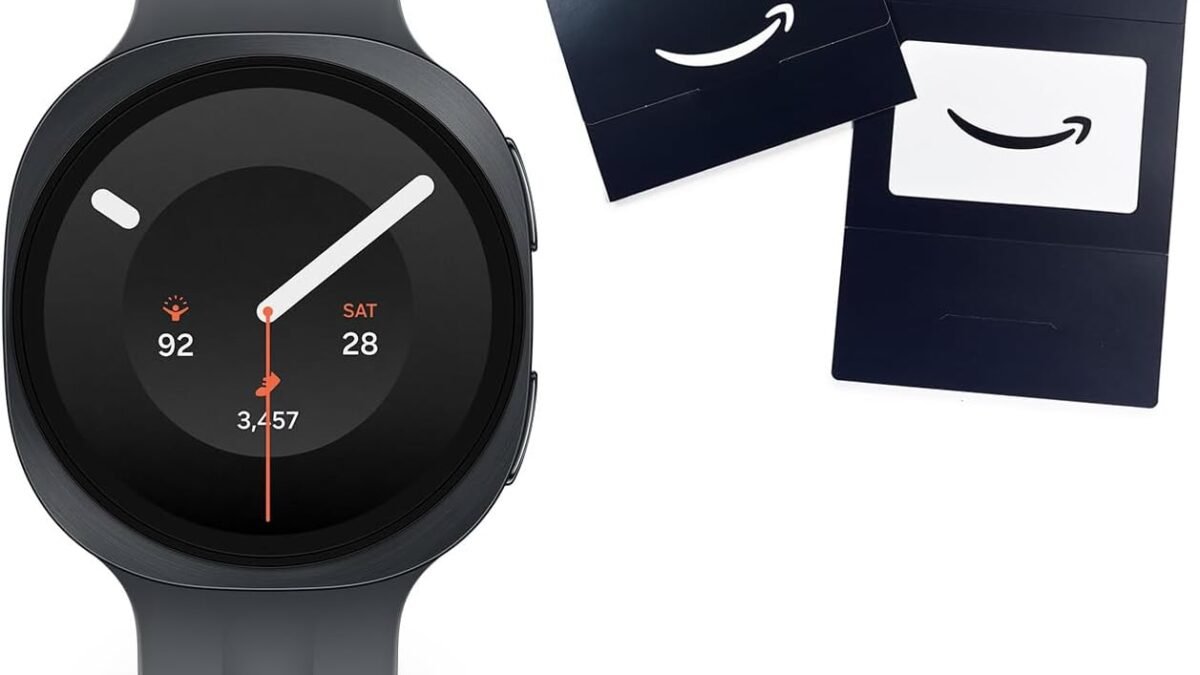
The Samsung Galaxy Watch9 is finally on sale, and if you’re still wearing a Galaxy Watch8, the upgrade decision isn’t obvious — the two watches look almost identical and share most of the same sensors. The real differences are inside: a new Snapdragon SW6100 chip, a meaningfully bigger battery on the 40mm model, and a handful of health metrics Samsung didn’t ship last year. Here’s what actually changed, what it costs, and who should (and shouldn’t) spend the money.
Disclosure: DecodeGear may earn a commission if you buy through links on this page. Pricing and specs below are verified against live Amazon.com listings and Samsung’s official spec sheets as of publication — see “How We Compared These Picks” below for our method.
Our Verdict
Best for: Samsung phone owners who want the longest battery life and newest health tracking in the current Galaxy Watch lineup.
What’s actually new in the Watch9
Samsung didn’t redesign the Galaxy Watch9 — it refined it. The display size, case dimensions, and durability rating are unchanged from the Watch8, so if you liked how last year’s watch looked and felt on your wrist, this one will feel identical. The changes that matter are underneath:
- Snapdragon SW6100 processor — a more power-efficient chip than the Watch8’s silicon, which is the main reason Samsung could push battery life up without making the watch thicker.
- Bigger battery on the 40mm model — up from 325mAh to 390mAh, a 20% jump. The 44mm model’s battery barely moved (435mAh to 445mAh), so the battery-life upgrade mostly benefits smaller-wrist buyers.
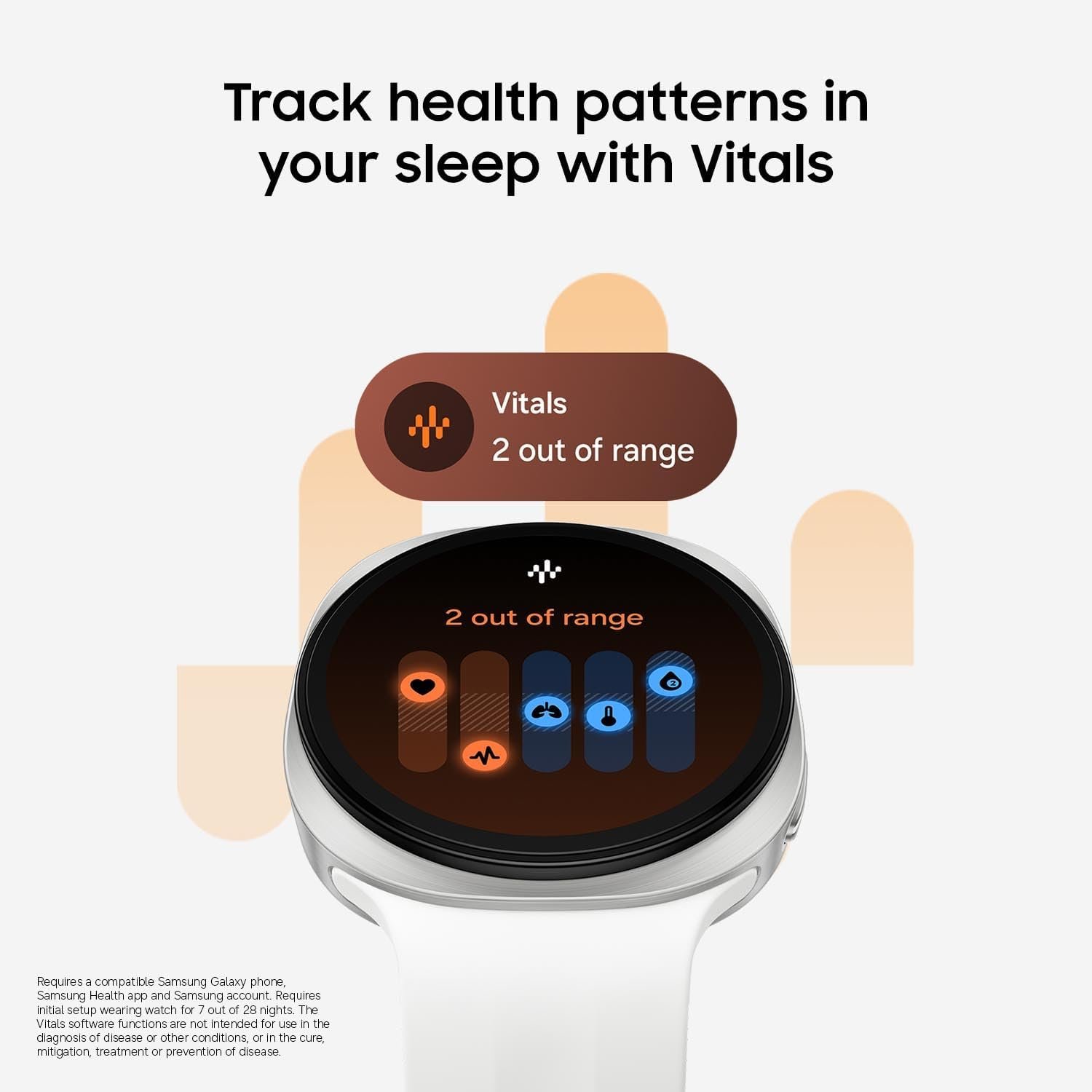
- New health metrics — Vitals, a Heart Health Score, Daily Cardio Load, and a Fitness Index that scores strength, endurance, cardio, and body composition together instead of showing them as separate numbers.
Everything else — the display panel, the sensor stack for heart rate and ECG, the water resistance rating, the storage capacity — carries over from the Watch8 largely unchanged. If you’re weighing this against a smaller-screen, budget-tier option instead, our best budget smartwatches under $100 roundup covers that end of the market, where you trade the health-metric depth here for a much lower price.
What the new health metrics actually measure
Samsung’s four new metrics sound like marketing filler until you see what feeds them:
- Vitals is an overnight snapshot — resting heart rate, skin temperature trend, respiratory rate, and blood oxygen pulled together into one morning card instead of four separate ones you’d have to check individually.
- Heart Health Score combines your resting heart rate trend, heart rate variability, and VO2 max estimate into a single 0-100 number Samsung says correlates with cardiovascular fitness over time — useful for tracking direction, less useful as a one-off reading.
- Daily Cardio Load estimates how much cardiovascular stress your workouts placed on your body that day, similar in spirit to what Garmin and Whoop have offered for years, and flags when you’re accumulating load faster than you’re recovering from it.
- Fitness Index is the broadest of the four, scoring strength, endurance, cardio fitness, and body composition together rather than as isolated stats — Samsung’s attempt at a single “how fit are you” number.
None of these require new hardware — they’re software layered on top of sensors the Watch8 already has, which is exactly why it’s plausible (though unconfirmed) that some version could reach older watches through a future update.
Software support and the accessory ecosystem
Samsung has been committing to longer software support windows on recent Galaxy Watches, which matters more than most buyers weigh it — a watch you keep for four years needs to still get security patches in year four. The Watch9 also drops into the same 40mm/44mm band ecosystem as the Watch8 and Watch7, so if you’re upgrading from either of those, your existing bands carry over and you’re not starting an accessory collection from zero.
The 44mm model is the pick if you want a larger display or you’re coming from a Watch Ultra-sized wrist experience without the Ultra’s price tag; it’s available at the same $50-gift-card bundle pricing structure as the 40mm.
Check Price on Amazon (44mm) →
Watch9 vs. Watch8: what actually moved
| Spec | Galaxy Watch8 | Galaxy Watch9 |
|---|---|---|
| Processor | Exynos W1000 | Snapdragon SW6100 |
| Battery (40mm) | 325mAh | 390mAh (+20%) |
| Battery (44mm) | 435mAh | 445mAh (+2.3%) |
| Health metrics | Standard heart rate, sleep, ECG | Adds Vitals, Heart Health Score, Daily Cardio Load, Fitness Index |
| Starting price (40mm) | $329.99 at launch | $379.99 (bundle includes $50 Amazon gift card) |
Should you actually upgrade from the Watch8?
For most Watch8 owners, no. You already have the same processor generation’s worth of features minus the SW6100’s efficiency gains, the same display, and the same core health sensors. The new Fitness Index and Heart Health Score are software-level additions that Samsung could plausibly bring to the Watch8 through a future One UI Watch update — Samsung hasn’t confirmed that, but it’s happened with past generations.
Where the upgrade makes more sense: if you own the 40mm size and battery anxiety is a real daily annoyance, the 20% capacity bump is the kind of change you’ll actually notice by day three. If you’re coming from a Watch6, Watch5, or an older Galaxy Watch — or switching from a different platform entirely — the Watch9 is simply the better watch to buy today, with no real reason to hunt for the outgoing Watch8 at a discount instead.
If you’re still deciding between form factors rather than generations, our Galaxy Z Fold8 vs. Fold8 Ultra breakdown covers the same “which one is actually worth the extra money” question for Samsung’s foldables this cycle.
How We Compared These Picks
DecodeGear doesn’t physically test wearables before publishing. This review is built from Samsung’s official spec sheets, live Amazon.com pricing and availability checks at time of publication, and a cross-check of independent teardown and comparison coverage (GSMArena, Android Central) for the battery and processor figures cited above. Health-tracking accuracy claims belong to Samsung’s own marketing until independently verified by a lab like RTINGS or DC Rainmaker — we haven’t seen third-party accuracy testing published yet for this generation.
Frequently Asked Questions
Is the Samsung Galaxy Watch9 worth buying in 2026?
Yes, if you’re buying a Galaxy Watch for the first time or upgrading from a Watch6 or older. If you already own a Watch8, the improvements are real but not big enough to justify replacing a working watch.
Does the Galaxy Watch9 work with iPhones?
No. Like every Galaxy Watch, it requires an Android phone (specifically a Samsung or Galaxy-compatible device) running the Galaxy Wearable app — it does not pair with iPhones.
What’s the battery life like on the Galaxy Watch9?
Samsung’s larger 40mm battery is the headline change this generation. Combined with the more efficient Snapdragon SW6100 chip, real-world battery life should land modestly ahead of the Watch8, though Samsung hasn’t published an official all-day-use benchmark change.
Should I buy the 40mm or 44mm Galaxy Watch9?
The 40mm model gets the bigger relative battery upgrade (+20% vs. +2.3% on the 44mm), so if wrist size isn’t a deciding factor either way, the 40mm is the better value pick this generation.
Leave a Reply