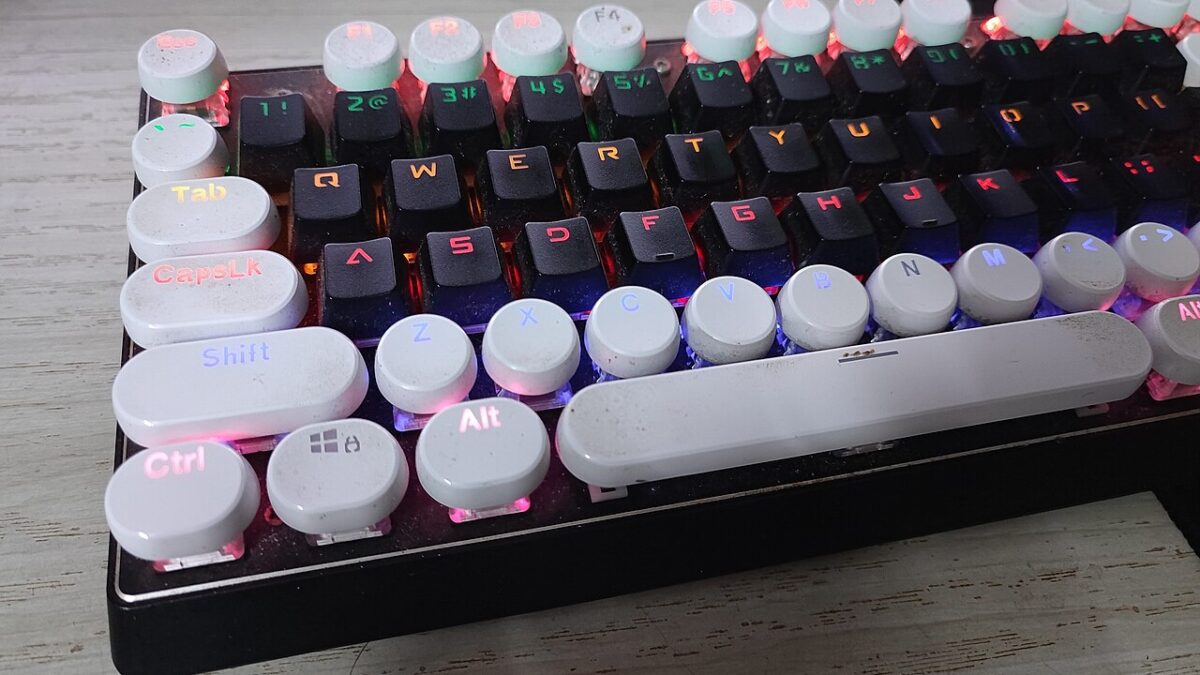
Once someone switches to a mechanical keyboard, they rarely go back — and often they fall down a rabbit hole they didn’t know existed. It looks like a simple upgrade, but there’s real psychology, engineering, and culture behind why these boards are so addictive. Here’s what’s actually going on.
The feedback loop your brain loves
Mechanical switches give a precise tactile bump and, on some, an audible click at the exact instant a keypress registers. That immediate, consistent feedback is deeply satisfying — the same reason a good pen, a solid car door, or a mechanical watch feels “right.” Membrane keyboards (the mushy ones in most laptops and cheap desktops) register keys somewhere in a vague squish; mechanical switches make every keystroke feel intentional and responsive, which both speeds up confident typists and simply feels good.
Switch types: the heart of the feel
There are three broad families, and picking one is the first real decision:
- Linear (often “red”): smooth top-to-bottom with no bump. Favored by gamers for fast, quiet actuation.
- Tactile (often “brown”): a noticeable bump when the key registers, without a loud click. The popular all-rounder for typing.
- Clicky (often “blue”): a tactile bump plus a sharp click. Immensely satisfying — and immensely annoying to anyone sharing your room.
Beyond color, switches vary in actuation force and travel, and modern “hot-swap” boards let you pull switches out and try different ones with no soldering — which is exactly where the tinkering begins.
Sound is a feature, not a side effect
Enthusiasts chase specific sounds described with a vocabulary all their own — “thocky,” “clacky,” “creamy,” “marble.” They get there by mixing switches, keycap material, case material, and sound-dampening foam. Two boards with the same switches can sound completely different depending on the case and mounting. It’s a sensory hobby disguised as a productivity tool, and the payoff is a typing sound you genuinely enjoy for hours a day.
The customization rabbit hole
This is where “addictive” becomes literal. Hot-swap sockets let you change switches on a whim. Keycaps — in PBT or ABS plastic, in endless colors and profiles — turn a keyboard into a personal object, and premium or “artisan” caps become collectibles. Gasket-mounted cases change the typing feel and sound. Custom firmware like QMK/VIA lets you remap every key and build layers, macros, and shortcuts tuned to exactly how you work. There is always one more tweak — which is precisely the appeal.
The community pulls you in deeper
A big part of the hobby is social. Communities like r/MechanicalKeyboards, “group buys” for limited-run boards and keycap sets, and a steady stream of new switches keep enthusiasts engaged. Half the fun is sharing sound tests and build photos. It’s less like buying a peripheral and more like joining a hobby with its own economy.
The genuine practical benefits
Beyond the fun, there are real reasons professionals use them. Mechanical switches are rated for tens of millions of presses, so a good board lasts many years. N-key rollover registers every simultaneous keypress accurately — useful for fast typists and gamers. And the right switch and keycap combination can be more comfortable over long sessions, reducing the bottoming-out fatigue of a mushy membrane board.
The honest downsides
They’re not for everyone or every situation. Good boards cost more than a membrane keyboard, clicky switches are genuinely disruptive in shared or open offices, and the boards are heavier and less portable. And the hobby itself can get expensive fast once keycaps and switches start calling.
How to start without going broke
You don’t need a $300 custom board to get the benefit. A well-reviewed hot-swappable keyboard in the budget-to-mid range lets you enjoy mechanical typing now and experiment with switches later without soldering. Pick tactile switches if you’re unsure — they’re the safe middle ground — and choose a quieter option if you work around other people. Start there, and let curiosity (and your wallet) decide how far down the rabbit hole you go.
Deixe um comentário