
Ever bought something you didn’t need just because it was “on sale”? You’re not weak-willed — you’re up against decades of retail psychology engineered to make you spend. Countdown timers, crossed-out prices, low-stock warnings: every one of them targets a specific, well-documented shortcut in your brain. Here’s how the tricks work, the research behind them, and how to beat them.
Scarcity and urgency: the oldest trick in the book
“Only 3 left.” “Ends tonight.” Countdown timers and low-stock warnings trigger a fear of missing out that short-circuits careful thinking. The clock, not the product, is doing the selling.
This isn’t a new discovery. In a classic 1975 experiment, psychologist Stephen Worchel asked people to rate cookies from a jar. When the jar held only two cookies instead of ten, participants rated the exact same cookies as more desirable and more valuable. Nothing about the product changed — only its apparent scarcity. Robert Cialdini later made scarcity one of his core principles of persuasion, and e-commerce turned it into an industry.
The problem is that much of the scarcity you see online is manufactured. A Princeton study that crawled roughly 11,000 shopping sites found deceptive design patterns — so-called “dark patterns” — on more than 1,200 of them, including countdown timers that quietly reset when they hit zero and “low stock” counters generated by a random number script. If a deal timer restarts every time you reload the page, the deadline was never real.
The anchoring trick
A crossed-out “was $199, now $99” makes the new price feel like a steal — even if the item was rarely sold at $199, or the “sale” price is the normal one. Your brain latches onto the first number it sees and judges everything against it.
Psychologists Amos Tversky and Daniel Kahneman documented this “anchoring” effect back in 1974: people’s estimates get dragged toward whatever number they saw first, even when that number is obviously arbitrary. Retailers exploit it with inflated list prices. Many products are assigned a manufacturer’s suggested retail price that almost nobody ever pays, precisely so the “discount” from it looks dramatic year-round.
Big shopping events lean on the same illusion. The UK consumer watchdog Which? has repeatedly tracked Black Friday promotions and found that nearly all of the “deals” it monitored were available at the same price or cheaper at other points in the year. The sale sticker changes; the actual price often doesn’t. That’s also why some of the smartest purchases happen outside the big events — our roundup of tech upgrades still worth buying year-round after Prime Day is built on exactly that idea.
Loss aversion: why FOMO hits so hard
Scarcity and deadlines work because of a deeper quirk called loss aversion. Kahneman and Tversky’s prospect theory showed that losses feel roughly twice as painful as equivalent gains feel good. Missing a $50 discount doesn’t register as “neutral, I just didn’t buy anything” — it registers as losing $50 you somehow already owned.
Marketers write copy to maximize that sting. “Don’t miss out” and “last chance” frame inaction as a loss, not a choice. Cart-abandonment emails (“your items are almost gone!”) weaponize the endowment effect: once something sits in your cart, your brain starts treating it as yours, and walking away feels like giving something up.
“I saved money by spending money”
The most seductive trap of all: framing a purchase as savings. Spending $99 you weren’t going to spend isn’t saving $100 — it’s spending $99. Retailers know that “you saved!” feels like a win.
Receipts that print “YOU SAVED $47.82 TODAY” exist for one reason: to convert an outflow of money into a feeling of accomplishment. The math only works if you would have bought the item at full price anyway. For everything else, the cheapest version of the product is the one you never bought.
The frictionless machine
Modern retail doesn’t just persuade you to buy — it removes every obstacle between impulse and checkout. Behavioral economists call the discomfort of handing over money the “pain of paying,” and research going back to MIT’s credit-card studies shows people spend noticeably more when payment feels abstract. Saved cards, one-click ordering, buy-now-pay-later installments, and same-day delivery all exist to numb that pain.
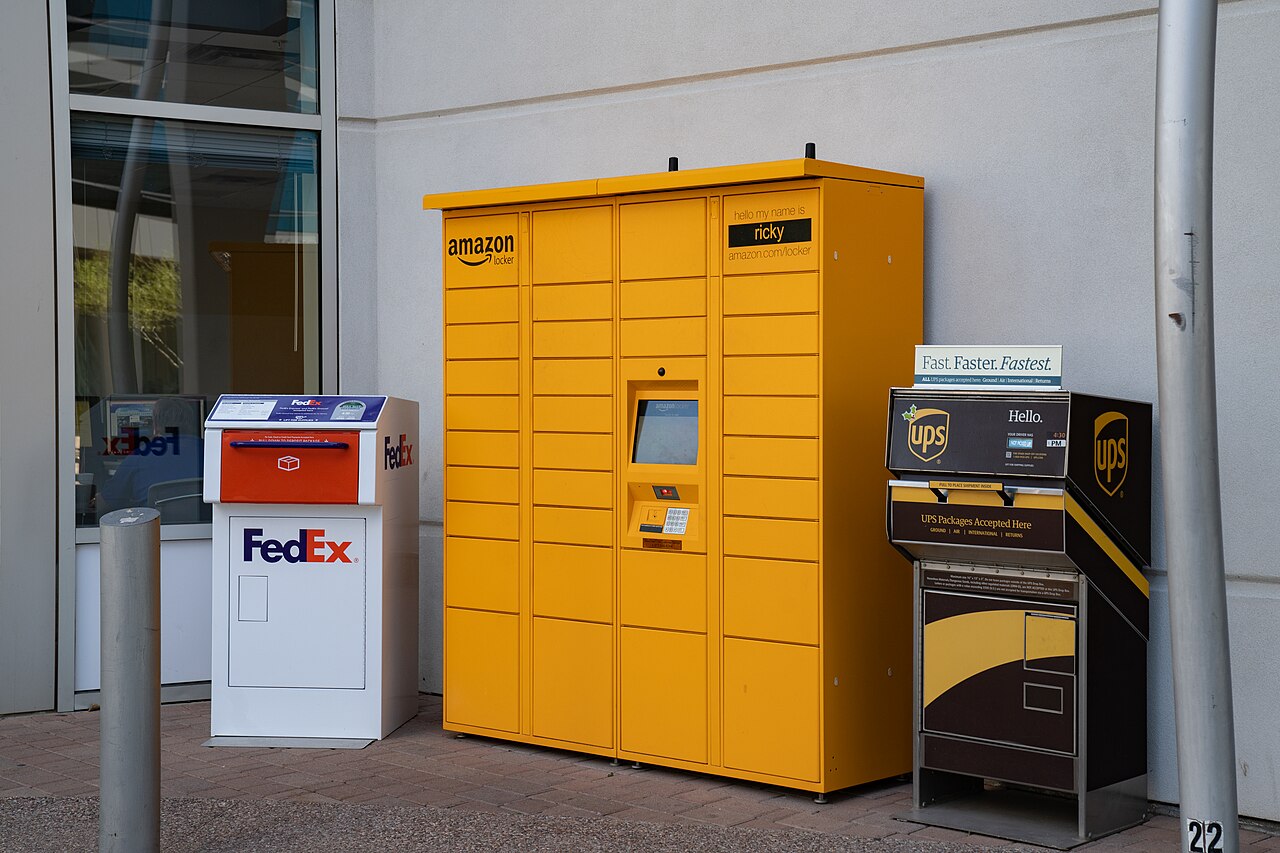
Amazon is the master class here: Lightning Deals with progress bars (“62% claimed”), Prime Day countdowns, and a logistics network of lockers and same-day vans that makes the gap between “I want it” and “it’s mine” almost zero. The easier the purchase, the less time your rational brain gets to object.
Physical stores play the same game with different tools — warm lighting, showroom-calibrated displays, and layouts that route you past impulse items. It’s the same reason 4K TVs look better in the store than in your living room: the environment is engineered for the sale, not for your reality.
How to actually beat it
You can’t switch off your psychology, but you can build guardrails around it:
- Check price history before trusting a discount. Free trackers like Keepa or CamelCamelCamel show what an Amazon product actually sold for over the past year. If the “was” price never really existed, you’ll see it in ten seconds.
- Apply a 24-hour rule for anything non-urgent. Most “limited” deals return, and many products cycle through sales every few weeks. If the urge survives a full day, it might be a real want rather than a manufactured one.
- Shop from a list, not a feed. Decide what you need before you see what’s discounted. A deal on something that wasn’t on your list isn’t a deal — it’s an ad that worked.
- Re-add friction on purpose. Delete saved cards, log out of shopping apps, and turn off deal notifications. Every extra step gives your slower, smarter thinking a chance to catch up.
- Translate prices into hours. A $120 impulse buy at a $25/hour wage is nearly five hours of work. Framing cost as time makes the trade-off concrete in a way dollar signs don’t.
The takeaway
Limited-time deals aren’t evil, and some are genuinely good — but the urgency around them is a sales tool, not a public service. Scarcity inflates perceived value, anchors distort what counts as cheap, and loss aversion turns a skipped purchase into imaginary pain. The defense is boring and effective: verify the price history, wait 24 hours, and only buy what was already on your list. A real deal is only a deal if you were going to buy the thing anyway.
Deixe um comentário