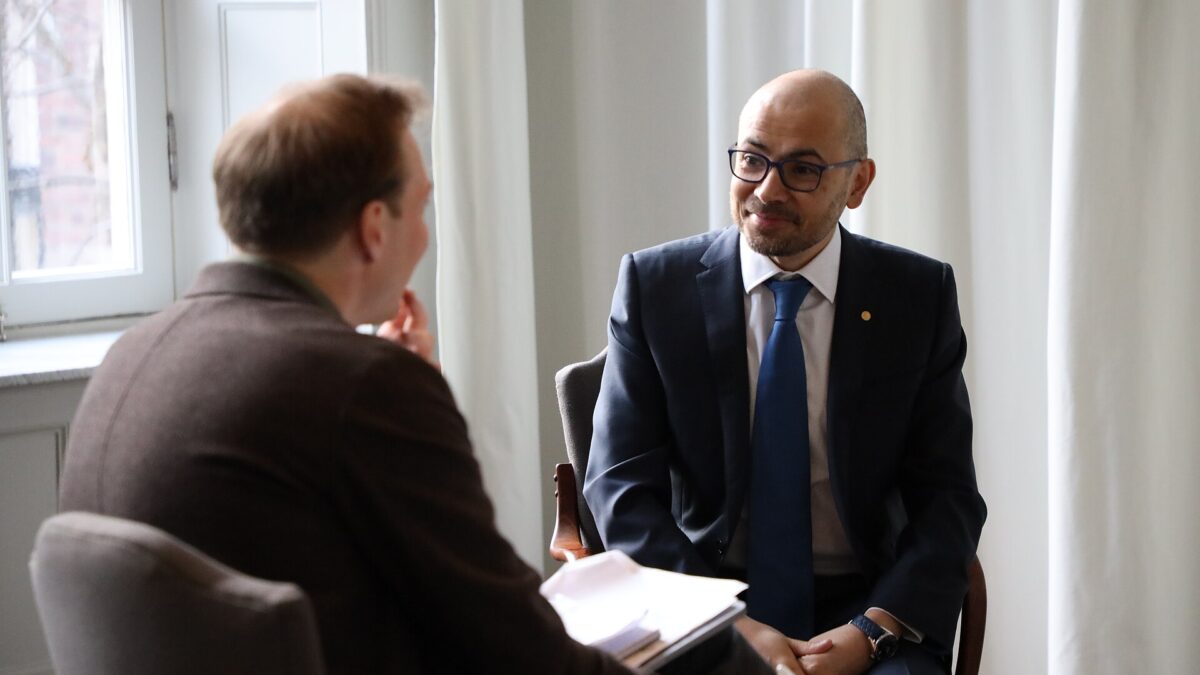
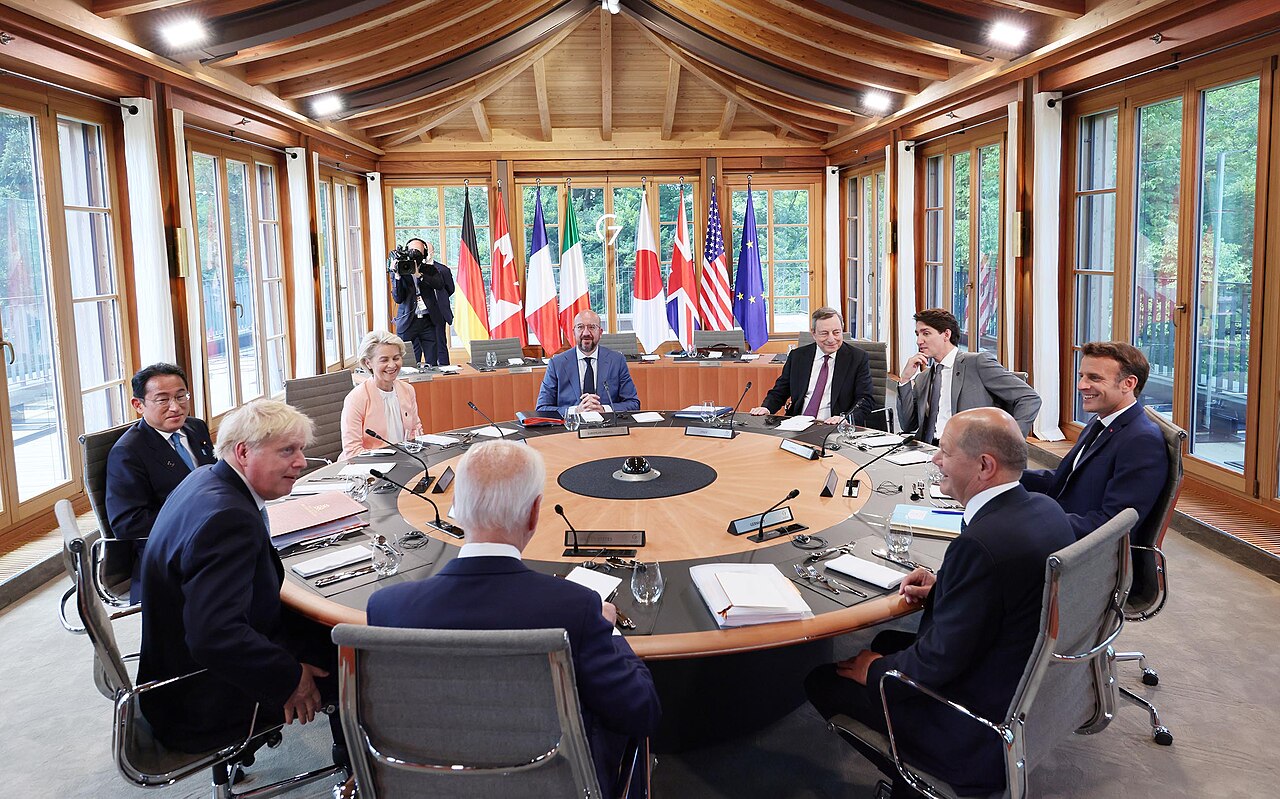
Three CEOs who sue each other, poach each other’s researchers, and burn billions competing for the same compute contracts just stood in front of G7 heads of state and asked for the same thing: one U.S.-led body to write the rules for all of them. Dario Amodei of Anthropic and Demis Hassabis of Google DeepMind made the pitch directly at a closed-door lunch in Évian-les-Bains this week, with Sam Altman’s OpenAI publicly aligned on nearly identical terms. The framing everywhere has been “AI’s biggest rivals finally agree on safety.” The more useful question is why now — and the honest answer looks a lot more like self-interest than sudden altruism.
The Convergence Is Real — and That’s Exactly the Point
Give credit where it’s due: this is a genuinely unusual moment. Anthropic, OpenAI, and Google DeepMind have spent the past two years suing, countersuing, and publicly sniping at each other. For their CEOs to independently publish near-identical regulatory blueprints within the same five-week window isn’t nothing. The shared framework is specific: independent testing before any frontier model reaches the public, one governing body modeled on legacy regulatory agencies with the power to certify compliance and restrict access to systems it deems too dangerous, and — this is the part that should raise an eyebrow — American control over a body with international reach.
The Timing Is the Tell
That five-week convergence happened in the exact window Washington intervened twice to restrict or delay frontier model access — once over Anthropic’s Fable and Mythos models, once over OpenAI’s GPT-5.6. Regulation was already coming for these companies, ad hoc and unpredictable, model by model. A single standards body that the three biggest labs helped design is a straight upgrade from that chaos, from their perspective: predictable rules, set once, by the people who already cleared the bar. That’s not a safety pitch. That’s a company doing what every dominant incumbent in a fast-regulating industry eventually does — asking to write the rulebook before someone less friendly writes it for them.
What a “Compliance Bar” Actually Does to Competition
Independent testing and a certifying body sound uncontroversial until you ask who can actually afford to clear them. Anthropic, OpenAI, and Google DeepMind can absorb the cost of compliance audits, dedicated safety teams, and certification processes as a line item. A well-funded startup training a genuinely competitive frontier model cannot — not at the same pace, not without the capital these three already have locked up in compute deals worth tens of billions. A regulatory framework designed by the incumbents, for an industry the incumbents already lead, tends to entrench exactly that leadership. That’s not a hypothetical; it’s the standard playbook in telecom, pharma, and finance — incumbents in all three industries have a long history of supporting “reasonable” safety and licensing regimes that happen to require capital only they have, then citing those same regimes as the reason a challenger can’t be trusted to operate. Nothing about frontier AI makes Anthropic, OpenAI, or Google DeepMind immune to running an identical playbook, and the fact that all three would benefit identically from it is precisely why their sudden agreement should read as strategic rather than purely principled.
Who Doesn’t Get a Seat at This Table
Notice who wasn’t at the Évian lunch: no representative from a smaller frontier lab, no academic AI safety researcher without a corporate affiliation, no delegate from a country outside the G7 that will nonetheless have to live under whatever standard gets set. A body built by the three companies with the most to lose from real competition, and blessed by the handful of governments those companies already have the deepest relationships with, is not a neutral referee — it’s the incumbents and their preferred regulators agreeing on terms in a room the rest of the industry doesn’t get to enter. That absence is doing as much work in this story as anything said out loud in Évian.
Devil’s Advocate: Maybe They Actually Mean It
It’s fair to steelman the other read. These are, genuinely, the three labs closest to building systems capable of real harm, and their researchers have been writing about existential and near-term AI risk with more specificity than almost anyone outside academia for years. Ad hoc, reactive regulation — a ban here, a delay there, model by model — is a legitimately bad way to govern a technology moving this fast, for the companies AND the public. A single, predictable, expert-informed standards body could plausibly produce better safety outcomes than three separate governments improvising crisis responses every few months. Self-interest and genuine caution aren’t mutually exclusive; it’s entirely possible these CEOs believe both things are true at once.
Where This Actually Lands
Believing both things at once doesn’t mean both deserve equal weight in how this gets built. If Amodei, Altman, and Hassabis get to co-design the body that decides who else gets to compete with them, the safety framing does a lot of work to make a competitive moat look like public interest. The fix isn’t rejecting oversight — it’s making sure the standards body includes voices with no stake in which three companies currently lead the frontier: academics, smaller labs, and regulators who answer to the public rather than a boardroom. Anything less, and “AI’s biggest rivals finally agree” reads less like a breakthrough and more like a cartel finding consensus on the entry fee for everyone who isn’t already inside.
The domestic side of this fight is just as tangled — our look at why these same three labs can’t agree on state vs. federal rules shows the alignment stops being so convenient once the jurisdiction is one where they don’t get to write the rules themselves.
It’s also worth remembering these are still fierce competitors everywhere else — Anthropic just overtook OpenAI in revenue, which makes a unified regulatory front between the two even more notable, and a little more convenient to look past.
Deixe um comentário