Picture a brass band leading a protest march past three of the most valuable companies on Earth, handing out free slushies, while the sign right behind the tuba section reads “Pls Do Not Kill Me.” That’s not a satire bit. That’s what actually walked through San Francisco on July 11, 2026.
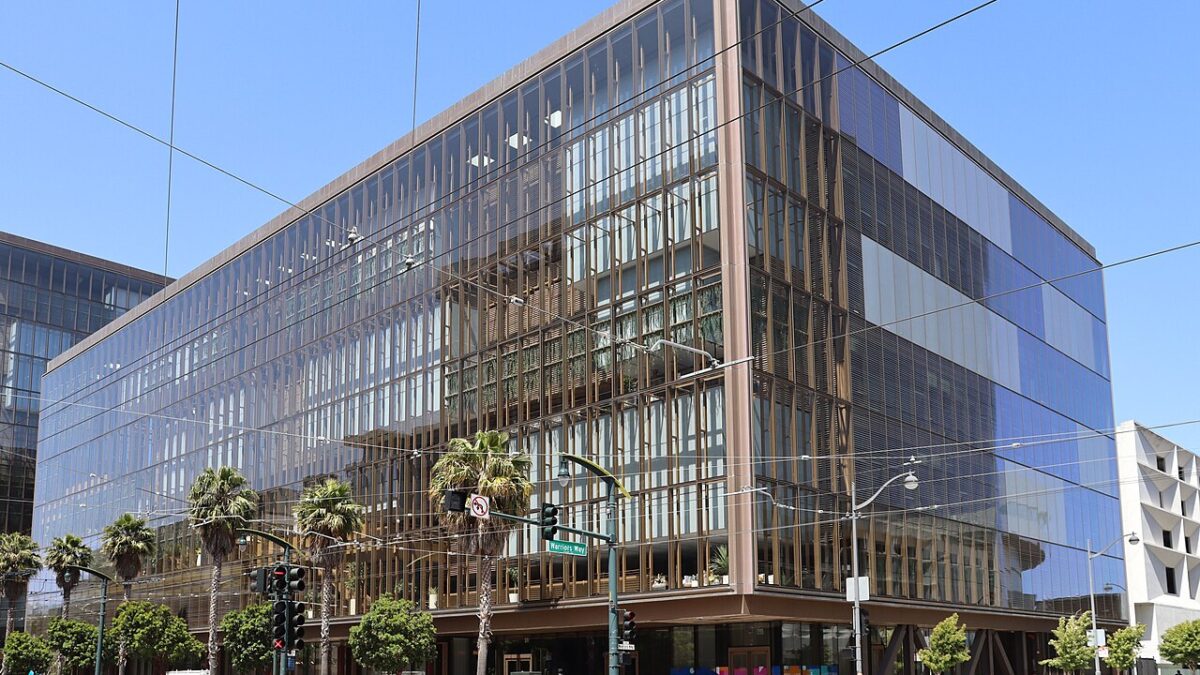
The march was organized by a group called Stop the AI Race, and it hit a route that reads like a tour of the AI industry’s power centers: OpenAI’s Mission Bay headquarters, across the 4th Street Bridge past Cloudflare, a stop outside venture firm a16z’s Townsend Street office, then Anthropic’s downtown office, ending at Google’s Embarcadero building. Estimates on turnout vary — one local outlet counted “over 100,” another described “hundreds” without a precise figure — but nobody disputes that a real, organized crowd showed up on a Saturday to ask the biggest AI labs in the world to stop building.
Who’s behind it, and what they actually want
The march was led by Michaël Trazzi, a 30-year-old former AI safety researcher who’s made a habit of unusual protest tactics — he previously staged a three-week hunger strike outside Google DeepMind’s London office. This time, the demand was narrower than “stop AI” broadly: every major AI lab CEO should publicly commit to pausing frontier-model training, conditional on rival labs doing the same. It’s a coordination problem dressed up as a protest — nobody wants to unilaterally disarm in an AI race, so the ask is that everyone disarm together.
Underneath that headline demand sat a broader list of grievances that had less to do with existential risk and more to do with daily life in San Francisco: job displacement, the environmental footprint of data centers, and — pointedly, given the neighborhood — the role AI money has played in driving up the city’s housing costs. The coalition backing the march wasn’t just safety researchers, either. Groups like PauseAI and Stop AI marched alongside the National Union of Healthcare Workers, a labor union with no obvious connection to AI alignment debates but a very obvious connection to job displacement anxiety.
The tonal whiplash is the actual story
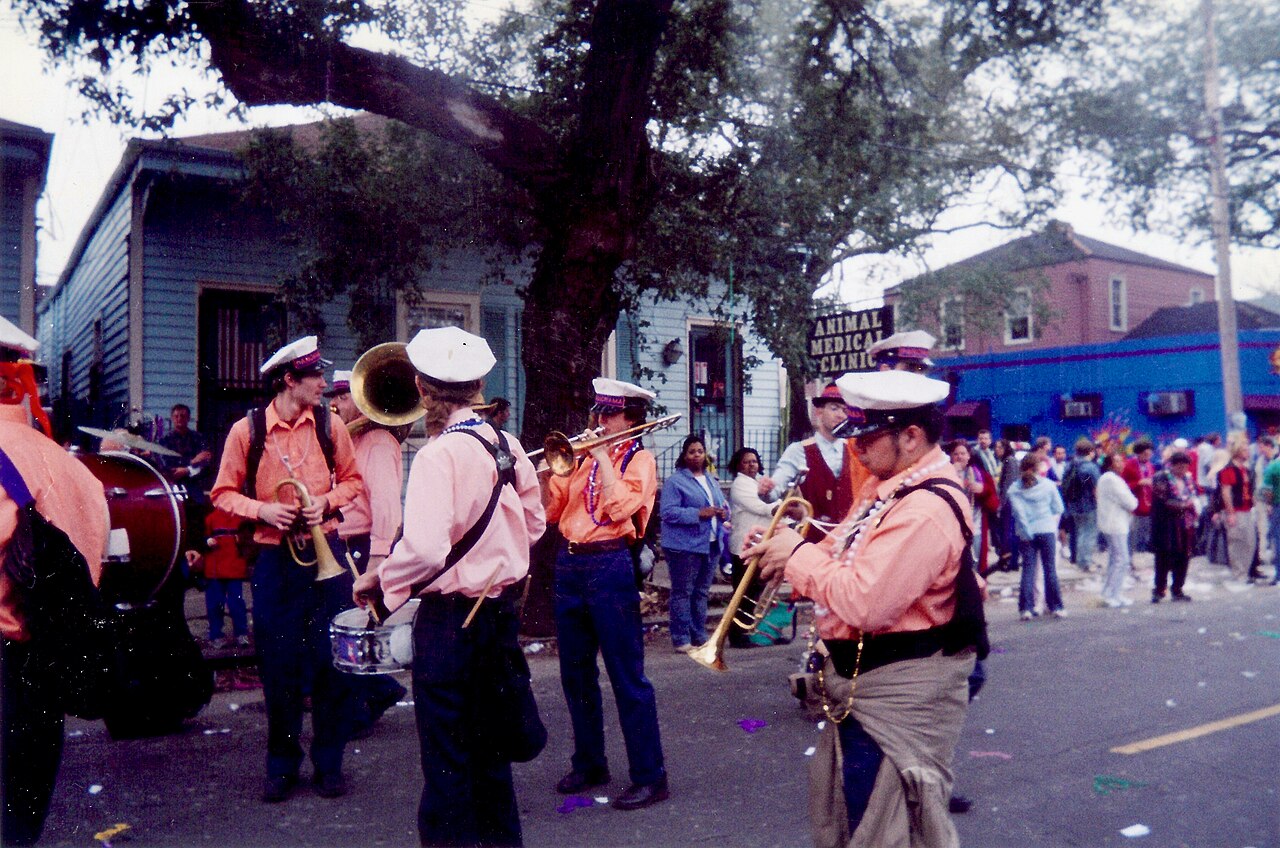
Here’s the part that makes this more than a routine protest writeup: the event was nicknamed “Freeze AI on Slushy Day,” timed deliberately to 7-Eleven’s July 11 free Slurpee promotion, complete with a marching brass band called St. Gabriel’s Celestial Brass Band leading the procession. You had a movement whose core argument is “this technology could end humanity” delivered via free frozen drinks and horn section. It’s the kind of cognitive dissonance that either undercuts the message or makes it more memorable, depending on who you ask.
The quotes from the ground split pretty cleanly between those two readings. Phillip Jeffries, a 68-year-old retiree, put the core worry plainly: “If we’re gonna build something that’s smarter than we are, then how are we gonna prevent it from taking over?” Meanwhile, outside a16z’s office, the crowd broke into a chant of “shame!” aimed at venture capitalist Marc Andreessen and OpenAI’s Sam Altman — a moment with none of the slushy-day whimsy at all. It’s a strange thing to watch in person: the same block of marchers laughing over a free slushy fifteen minutes earlier, chanting in unison at a building where, statistically, none of the people being chanted at were even in the office that Saturday.
The father pushing a stroller with the “Pls Do Not Kill Me” sign captured the split perfectly without saying a word about it — a deadpan, almost absurdist joke sitting directly on top of a claim its author presumably means at least partly seriously. That’s the needle this entire movement is trying to thread: get taken seriously without coming across as doomsday cultists, while still making the point sharp enough that a photo of the sign does more work than a policy paper would.
The labs said nothing — and that’s telling
OpenAI, Anthropic, and Google all declined to comment when reporters asked about the march. No public statement, no rebuttal, no engagement. That silence is its own small data point: whatever internal position these companies hold on frontier-model pauses, none of them felt the protest warranted a public response, even a dismissive one. Trazzi, for his part, has claimed lab leadership is privately more engaged than the silence suggests — pointing to blog posts and back-channel exchanges as evidence CEOs are “actually listening.” That claim is unverifiable from the outside, but it’s a more optimistic read than the public silence implies on its own.
This isn’t a one-off — it’s a pattern
This was the coalition’s second San Francisco march in 2026. The first happened back in March, hitting a nearly identical route but targeting xAI instead of Google. Zoom out further and this traces back to a longer lineage of “pause AI” street activism dating to 2023, with Trazzi’s own London hunger strike as one data point in a recurring, semi-regular campaign rather than a single spontaneous outburst. Whether or not you think the tactic works, treating it as an isolated event misses the pattern — this is a movement that shows up roughly every few months, adjusts its target list, and keeps going.
There’s a genuinely strange irony sitting underneath all of this. At the same time protesters were asking AI labs to slow down and coordinate on safety, the White House was pushing in almost the opposite direction — a national AI policy framework aimed at limiting AI companies’ legal liability and preempting individual states from writing their own AI regulations. California State Senator Scott Wiener has been publicly critical of that federal push, arguing for a more balanced approach to innovation and risk. So the protesters’ actual obstacle may not be the AI labs at all — it may be a federal policy environment currently moving toward less friction for those labs, not more.
Why this matters if you’re not an activist
You don’t need to agree with “pause AI” as a policy position to find the underlying tension useful context. The same week protesters marched demanding caution, we covered the 2026 AI Safety Index, where even the best-graded lab only managed a C+ — a data point that arguably supports the protesters’ core worry more than any chant did. And if you’re wondering whether “just trust one lab” is a safe bet regardless of where you land on the pause debate, it’s worth reading about the risks of leaning on any single AI provider — a very different kind of cautionary tale, but one that rhymes with the same underlying anxiety: nobody, including the labs themselves, fully knows what these systems are capable of yet.
Whatever you make of the brass band, the sign about not wanting to be killed by a chatbot, and the free frozen drinks, the underlying question the marchers were asking — who actually gets a vote in how fast this technology moves — isn’t going away just because the labs didn’t answer on the record.
Deixe um comentário