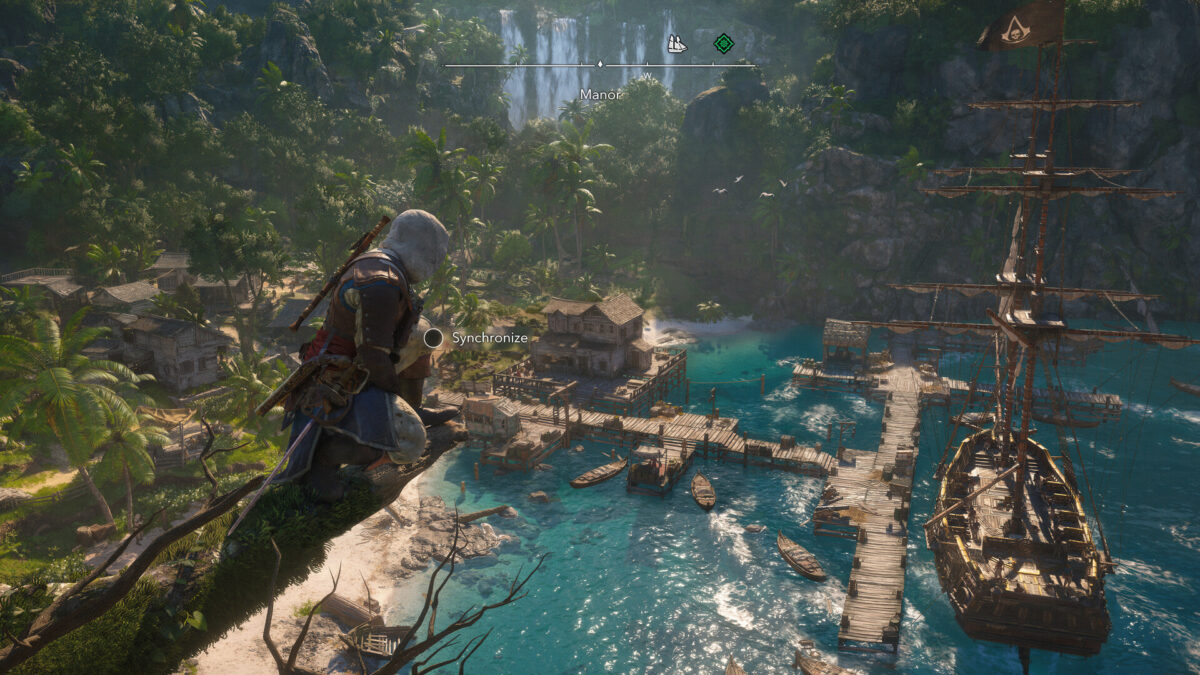
How Assassin’s Creed Black Flag Resynced Broke Steam and Became the Best-Reviewed AC Game in a Decade
9:14 a.m. Pacific on July 9, Steam’s top-sellers page did something Ubisoft hadn’t seen from an Assassin’s Creed launch in years: it stopped moving. Not because nothing was happening — because everything was. Assassin’s Creed Black Flag Resynced sat locked at the top of the charts, its concurrent-player counter climbing past the highest number any Assassin’s Creed game had ever posted on the platform, and it stayed there through the entire first day.
Eight days later, the shape of that launch is clear, and it’s a genuinely unusual one for this franchise: a remake outsold expectations, out-reviewed most of its modern siblings, and did it while explaining, mechanically and narratively, why remaking Edward Kenway’s story from scratch was worth the multi-year bet.
The Numbers Behind Black Flag Resynced’s Launch
Ubisoft confirmed in its official release that Black Flag Resynced sold more than two million copies within its first day on sale across PlayStation 5, Xbox Series X/S, and Windows (Ubisoft Store, Epic Games Store, and a Steam Deck-verified build on Steam). On Steam specifically, the game peaked at 99,451 concurrent players in its first 24 hours — the highest concurrent player count ever recorded for an Assassin’s Creed title on that storefront, confirmed independently by PC Gamer and Gematsu. It also took the number one spot on Twitch for the day.
Those are AAA-launch numbers for a franchise that, by 2026, had spent the better part of a decade being described as “reliable” rather than “explosive.” Martin Schelling, Head of the Assassin’s Creed Brand, put it plainly in Ubisoft’s own release: “Seeing so many players set sail on day one, along with the great reviews from critics, is the greatest reward we could have hoped for.” For a remake of a twelve-year-old game, that’s not a small statement — it’s an admission that the bet paid off exactly where it needed to.
Why “Resynced” Isn’t a Remaster
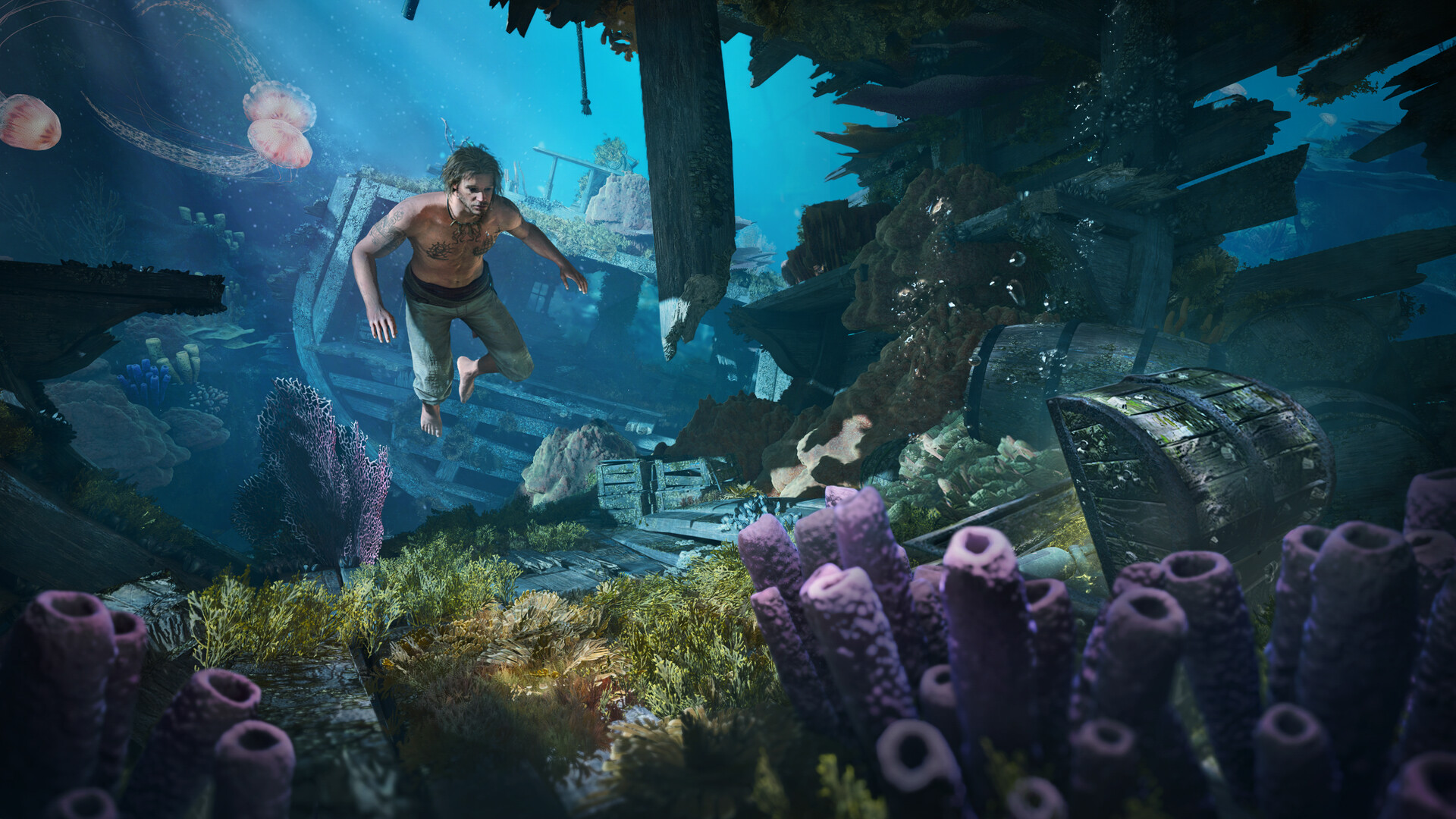
Ubisoft has been unusually firm on one point since the project was first teased: this is not a lick-of-paint remaster. Black Flag Resynced was rebuilt on the current iteration of the Anvil engine with, per Ubisoft’s own statements, zero code carried over from the 2013 original. That distinction matters more than marketing semantics — it’s why the water rendering, ship-to-ship naval combat, and Caribbean island density all had to be re-authored rather than upscaled.
We covered the reasoning behind that decision in detail back when the remake was first announced — our breakdown of why Ubisoft chose a full rebuild over a remaster is worth a read if you want the technical case Ubisoft made before a single review went live.
The mechanical changes are the part that will actually matter to anyone who logs fifty-plus hours as Edward Kenway again. Combat has been retuned around precise parries and shorter combo strings, closer in feel to the post-Origins entries than the button-mash cadence of the 2013 game. Stealth detection no longer auto-fails tailing and eavesdropping missions the instant you’re spotted — a change longtime players have wanted since roughly Black Flag’s original release. The Hidden Blade is now gated to stealth and contextual assassinations rather than a free-swing weapon. And notably, Freedom Cry — the standalone DLC that gave Adéwalé his own campaign in 2013 — isn’t part of this release. Darby McDevitt, lead writer on the original Black Flag, returned to write new narrative content, including modern-day “What if?” sequences that replace the old Abstergo facility segments and tie into the story arc Assassin’s Creed Shadows opened.
The Best-Reviewed Assassin’s Creed Game Since the Original
Critical reception backs up the sales chart. Black Flag Resynced landed at 85 on OpenCritic — “Mighty” tier, top 5% of all games tracked on the platform, with a 94% critic recommendation rate across 166 reviews. Metacritic settled at 84 on PC and PS5, 82 on Xbox Series X/S. IGN gave it a 9/10, and Digital Foundry’s technical breakdown called it “one of the most effective remakes we’ve ever seen.” Taken together, those numbers make it the highest-rated mainline Assassin’s Creed release since the 2013 original — a franchise that has shipped roughly a dozen entries since then without matching that ceiling.
What’s notable is where the reviews diverge, because it’s honest divergence rather than manufactured controversy. Critics are essentially unanimous that the Caribbean setting, naval exploration, and pirate fantasy still hold up — arguably better than ever, given the visual overhaul. Where opinion splits is on how far the remake leans into modern Assassin’s Creed conventions for combat and movement. Some reviewers welcomed the tighter, more deliberate parry system; others felt it sanded down the original’s messier, faster-paced swordplay in favor of a rhythm the 2013 game was never designed around. That’s a legitimate design trade-off, not a bug — and it’s the kind of nuance a straight remaster could never have introduced, for better or worse.
Fifteen Studios, One Launch
The scale of the effort behind this is easy to undersell. Black Flag Resynced was led by Ubisoft Singapore, not Ubisoft Montreal — the studio that built the 2013 original — with meaningful contributions credited to fifteen Ubisoft studios worldwide, including Ubisoft Philippines, whose work on environment and asset production has been specifically highlighted by outlets covering the game’s development pipeline. That’s a genuinely distributed, global-studio production model, and it’s part of why a “remake” of a twelve-year-old pirate game shipped with ray-traced lighting, physically-based rendering, and naval mechanics deep enough to stand next to Skull and Bones rather than embarrass itself beside it.
The Strike Behind the Scenes
The launch week wasn’t uncomplicated for Ubisoft internally. Ubisoft Barcelona — one of the studios that contributed to Black Flag Resynced — staged strike action on Tuesday and Thursday afternoons between June 30 and July 17, organized by the Spanish union CGT, over proposed layoffs affecting roughly 51 workers. The studio isn’t closing; it’s being restructured to focus solely on the Rainbow Six franchise going forward, following Ubisoft’s earlier closures of its Winnipeg and Belgrade studios in June. Multiple outlets, including Game Developer and Game Informer, explicitly noted the coincidence of the strike unfolding the same week as Black Flag Resynced’s record-breaking sales. It’s worth being precise here: this is a distinct labor dispute, specific to Ubisoft Barcelona’s restructuring, and unrelated to the separate ZeniMax Online Studios situation that made headlines around the same time. Two different companies, two different disputes — don’t let the timing overlap conflate them.
It’s a reminder that a record launch and a healthy studio aren’t automatically the same thing, and it’s context worth knowing if you’re following Ubisoft’s 2026 beyond the Steam charts. If labor disputes in the games industry are on your radar, our coverage of the potential GTA 6 developer strike covers a parallel situation brewing at Rockstar.
What Comes Next for Assassin’s Creed
Black Flag Resynced now sits as proof of concept for a strategy Ubisoft has been building toward since Assassin’s Creed Shadows: alternate between big modern-day narrative swings and full remakes of the franchise’s most beloved historical settings, using the remakes to both generate revenue and re-anchor the series’ identity. With the highest concurrent player count in franchise Steam history and the best review scores since 2013, Ubisoft now has a clear signal that this approach works — at least when the studio commits to a genuine rebuild instead of a shortcut. Whether that translates into future remakes of entries like Assassin’s Creed III or Unity remains speculation for now, but the commercial and critical math from this launch makes that conversation a lot easier for Ubisoft to have internally.
Further reading: Why Ubisoft rebuilt Black Flag from the ground up · GTA 6 and the state of labor disputes in gaming
Deixe um comentário