Disclosure: DecodeGear is reader-supported. We may earn a commission if you buy through links in this article, at no extra cost to you. We compare verified specs, live pricing, and aggregated buyer ratings — we don’t accept paid reviews.
Smart speakers range from a $50 puck that sets timers to a $477 unit that fills a living room with Dolby Atmos sound, and the gap between “good enough” and “genuinely worth it” comes down to what room it’s going in and what you actually want from it. We compared five current models across Amazon’s Alexa lineup, Google’s Assistant hardware, and Sonos’s premium line — using verified Amazon.com pricing, official specs, and aggregated buyer ratings — to find the right pick for five different needs.
Splurge pick: Sonos Era 300 if sound quality is the priority, not just voice commands.
Quick Comparison
| Speaker | Price | Rating | Best For |
|---|---|---|---|
| Amazon Echo Dot (5th Gen) | $49.99 | 4.7/5 (890) | Best overall value |
| Amazon Echo Show 5 | $89.99 | 4.2/5 (196,866) | Budget smart display |
| Sonos Era 100 | $187.99 | 4.4/5 (236) | Best sound for the price |
| Google Nest Hub Max | $299.98 | 3.8/5 (327) | Video calls, Google ecosystem |
| Sonos Era 300 | $477.00 | 4.2/5 (672) | Premium / Dolby Atmos |
Amazon Echo Dot (5th Gen) — Best Overall Value
At $49.99, the Echo Dot 5th Gen is still the easiest entry point into a smart home. It’s the same basic formula Amazon has refined for a decade: a compact speaker with far-field mics, full Alexa support, and enough punch for a bedroom, kitchen, or office desk. Buyer ratings sit at 4.7/5, the highest of any speaker in this roundup, and it’s consistently the unit people buy multiples of to cover every room in the house.
Pros: Cheapest way into Alexa, frequently discounted further, works as a hub for smart plugs/lights, compact enough to hide anywhere.
Cons: Thin bass, not a real music speaker, mic can misfire on wake word in noisy rooms.
Amazon Echo Show 5 — Best Budget Smart Display
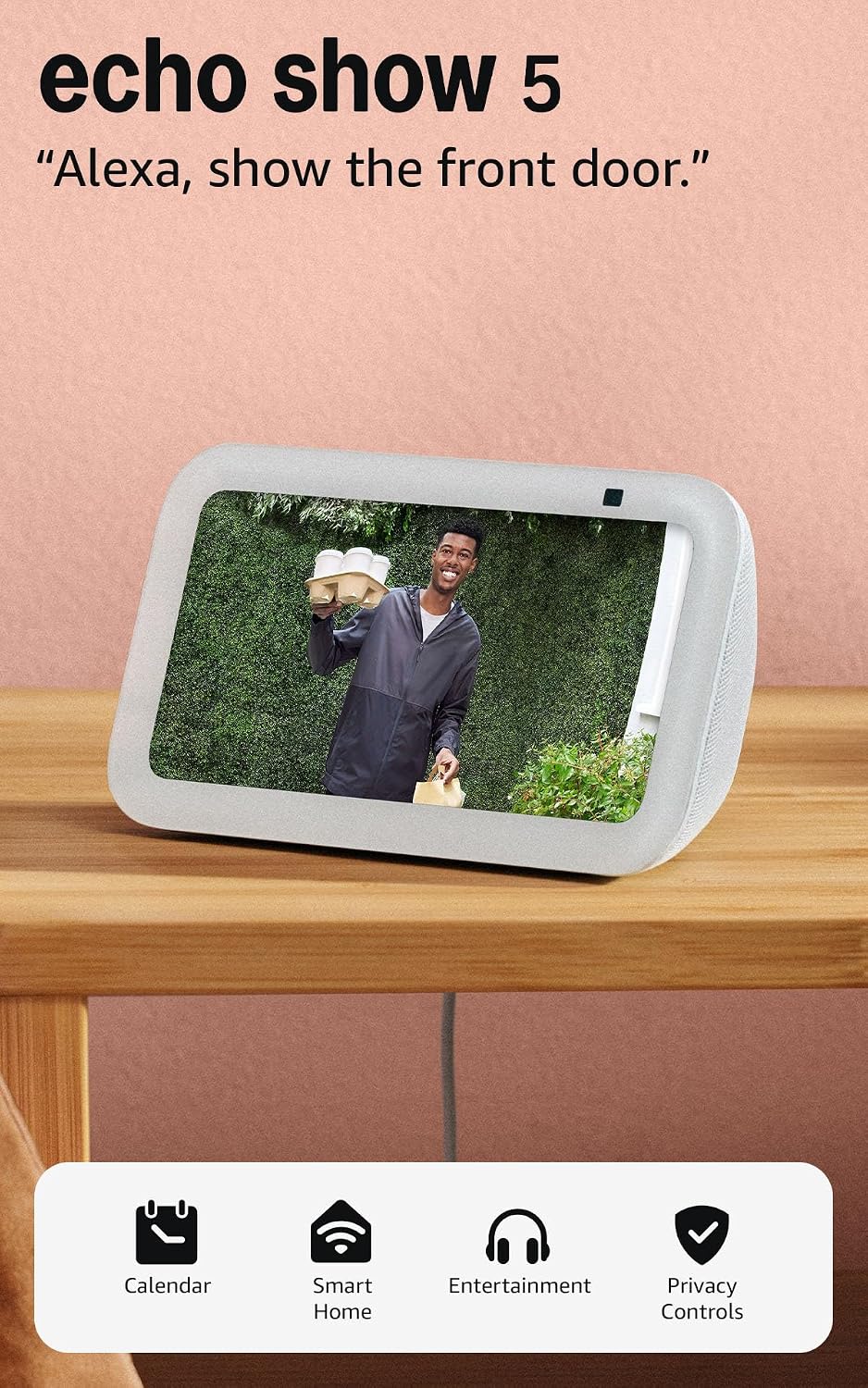
The Echo Show 5 adds a 5.5-inch screen to the Echo formula for $89.99, and with nearly 197,000 ratings at 4.2/5, it’s one of the most reviewed smart home devices sold anywhere. The screen turns it into a kitchen timer with a face, a video-call terminal, and a photo frame when idle — useful in rooms where you actually glance at the device instead of just talking to it.
Pros: Screen adds real utility (recipes, video calls, camera feeds), doubles the bass output of the previous generation, cheap enough to put in every room.
Cons: Screen is small for video content, camera is basic, speaker still isn’t a real music option.
Sonos Era 100 — Best Sound for the Price
The Era 100 is where this category stops being about voice commands and starts being about actually enjoying music. At $187.99, it’s a genuine stereo speaker with two tweeters and a mid-woofer, built-in Alexa or Sonos Voice Control, and the ability to join a wider Sonos multi-room system if you add more speakers later. Buyer ratings land at 4.4/5.
Pros: Real stereo separation from a single unit, works with Sonos’s app-based multi-room system, both Alexa and Sonos Voice Control supported.
Cons: No screen, setup requires the Sonos app rather than pure voice-only setup, pricier than a basic smart speaker.
Google Nest Hub Max — Best for Video Calls and Google Ecosystem
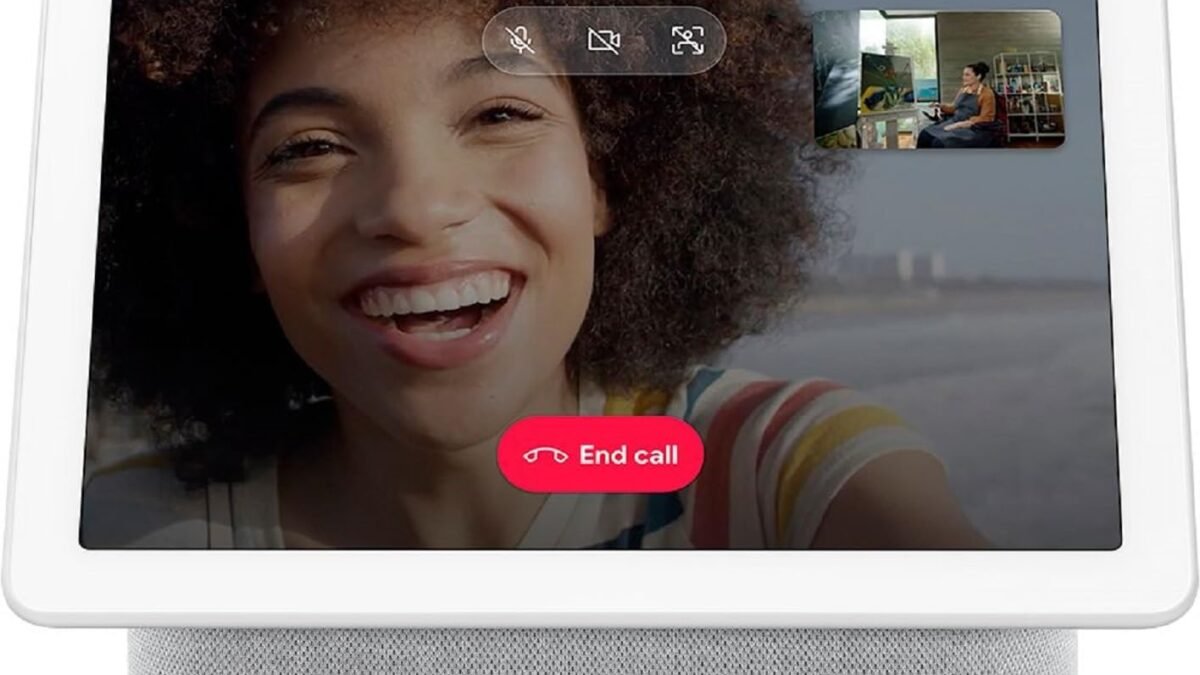
At $299.98, the Nest Hub Max is the pick for households already living in Google’s ecosystem — Google Photos, Google Calendar, and Google Assistant routines all feel native here. The 10-inch screen and wide-angle camera make it the strongest option in this list for video calls, and it doubles as a security camera when you’re away. Buyer ratings sit lower at 3.8/5, with the most common complaint being that Assistant’s capabilities have felt stagnant compared to Alexa’s more frequent feature updates.
Pros: Best screen size and camera for video calls, works as a home security camera, strong Google service integration.
Cons: Highest price for a display-only unit, Assistant has had fewer new features than Alexa recently, no battery backup.
Sonos Era 300 — Best Premium Pick (Dolby Atmos)
The Era 300 is the splurge option: $477 for a speaker built around spatial audio, with six drivers angled to bounce sound off walls and ceilings for a Dolby Atmos effect from a single unit. It supports Amazon Music, Apple Music, and other services with spatial mixes, and pairs with a Sonos soundbar as rear surrounds if you build out a home theater later. Buyer ratings sit at 4.2/5 across 672 reviews.
Pros: Genuinely spatial sound from one speaker, doubles as home theater surrounds later, strong build quality.
Cons: Expensive for a single speaker, spatial audio effect depends heavily on room shape, needs the Sonos app for full setup.
Which One Should You Buy?
If you just want a smart home hub that controls lights and answers questions, the Echo Dot 5th Gen at $49.99 covers 90% of what people actually use a smart speaker for, and its 4.7/5 rating is the strongest of anything here. If you want a screen for recipes and video calls without spending much more, the Echo Show 5 at $89.99 is the upgrade worth making. Once you care about how music actually sounds, skip straight to the Sonos Era 100 — it’s the clearest jump in audio quality per dollar in this list. The Nest Hub Max only makes sense if your household is already deep in Google’s ecosystem and wants the biggest screen and camera. And the Sonos Era 300 is for a specific buyer: someone who wants a smart speaker that’s also a legitimate home-theater component, not just a voice assistant with a speaker attached.
If you’re setting up a smart home from scratch, our guide to building a smart home in 2026 covers what to buy first beyond just the speaker. And if voice assistants specifically are what you’re trying to compare, we broke down what the Matter smart-home standard actually changes for cross-brand compatibility.
Frequently Asked Questions
Is a $50 smart speaker as good as a $300 one?
For voice commands, timers, and smart home control, yes — the Echo Dot handles the core use case just as reliably as pricier options. The price jump buys you sound quality, a screen, or a camera, not better voice recognition.
Do I need a screen on my smart speaker?
Only if you’ll actually use it — video calls, recipes, or as a photo frame. If you mostly want voice control for music and smart home devices, a screen adds cost without adding much daily value.
Alexa or Google Assistant — which should I pick?
Alexa has a larger third-party device compatibility list and more frequent feature updates. Google Assistant integrates more tightly with Gmail, Calendar, and Photos. Pick based on which ecosystem you’re already using on your phone.
Can smart speakers work without internet?
No. All five speakers in this list require an internet connection for voice processing and most smart home commands — local-only Bluetooth playback is the only function that survives an outage.
Leave a Reply