Twenty-five years ago, a laugh ruined a video game’s most serious romantic scene — and twenty-five years later, that same awkward laugh is still one of the most quoted moments in gaming history. Final Fantasy X turns 25 on July 19, and Square Enix is marking the occasion with more than a nostalgia post: a new HD Remaster port, a wave of collector merchandise, and a reminder of just how strange and ambitious this game was for its time.
What’s actually new for the anniversary
The headline release is the Final Fantasy X/X-2 HD Remaster arriving on Nintendo Switch 2, digitally on July 23 and in a physical edition following on August 27, 2026. It’s not a ground-up remake — Square Enix has been careful to frame it as a definitive port of the existing HD Remaster, the same version that’s been available on PS4, Xbox One, the original Switch, PS3, PS Vita, and Steam for years. What Switch 2 adds is the obvious stuff: sharper resolution, faster load times, and portable play on hardware that can actually push the remaster’s assets properly for the first time on a Nintendo console.
Alongside the game, Square Enix opened a dedicated 25th anniversary website and rolled out a genuinely large merchandise wave — plush toys of Tidus and Yuna, a vinyl soundtrack set called “Eternal Calm” with new box art, and an art book. If you were hoping for news of a full remake in the Final Fantasy VII Remake mold, this isn’t it. Square Enix appears to be treating the anniversary as a celebration lap for the HD Remaster rather than a launchpad for a ground-up rebuild — at least for now.
Why Final Fantasy X was such a big deal in 2001
It’s easy to forget how much of a gamble this game was. Development started in 1999 with a budget north of $32 million and a team of more than 100 people — enormous for the era. It was the first mainline Final Fantasy on the PlayStation 2, and the first to give every major character a full voice performance, in both Japanese and English. That’s a bigger deal than it sounds: up to that point, the series had leaned entirely on text boxes and portrait art to carry emotional scenes. Suddenly, the whole cast had to actually perform.
It was also the first mainline entry not scored entirely by series composer Nobuo Uematsu, who split duties with Masashi Hamauzu and Junya Nakano — a quiet handoff that nobody talks about as much as it deserves, given how much of Final Fantasy’s identity rides on its music.
Interesting tangent: the city that inspired Zanarkand
Spira, the game’s fantasy world, blends visual and cultural influences from the South Pacific, Thailand, and Japan — but the ruined city of Zanarkand, the emotional core of Tidus’ entire arc, borrows its name and mood from Samarkand, a real, ancient Silk Road city in Uzbekistan. It’s a small detail that a lot of players never clock, but once you know it, the game’s obsession with a beautiful civilization reduced to ruins hits a little differently.
The laugh that everyone remembers (whether they want to or not)
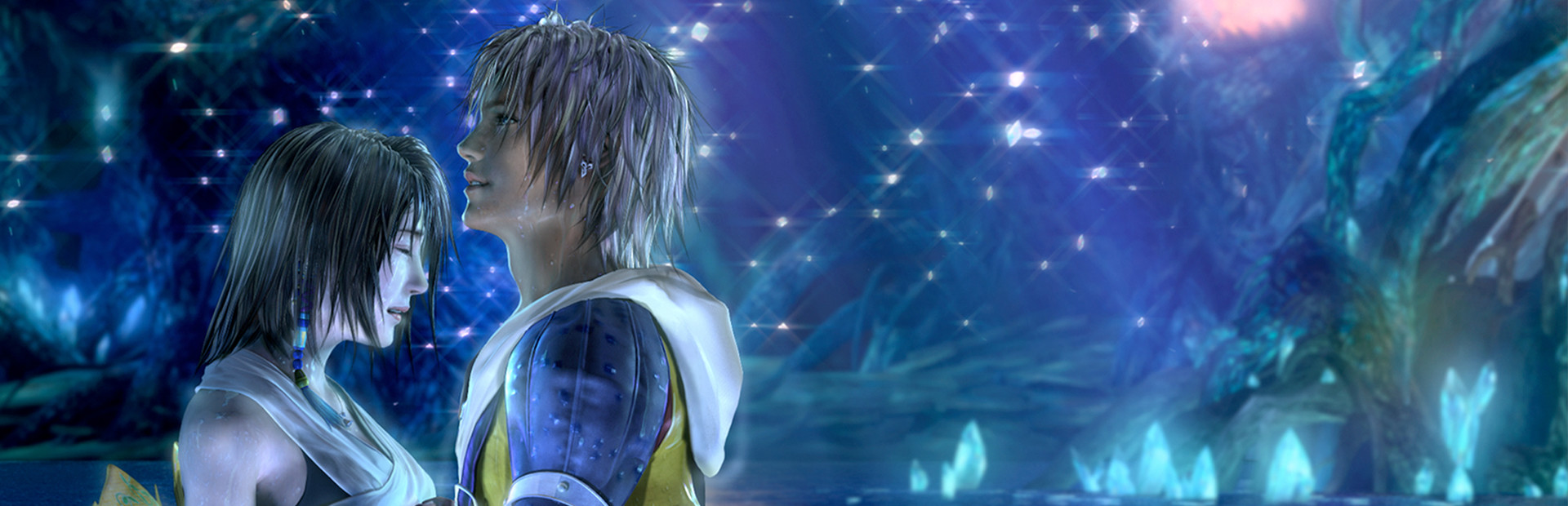
Here’s the surprising part: the infamous “Tidus and Yuna forced laughing scene” wasn’t a mistake, and it wasn’t bad direction. Writer Kazushige Nojima based the scene on an acting-class exercise involving deliberately forced, fake laughter — the idea being that two emotionally guarded characters finally let their guard down through an awkward, unconvincing laugh that turns real. English voice actor James Arnold Taylor, who spent three and a half months recording Tidus, has said in interviews that the scene reads as intentionally “awkward, goofy, and dumb” by design, even if the final cutscene’s stiff early-2000s facial animation undercut the intent and turned it into one of gaming’s most-mocked memes instead of the tender moment it was written to be.
That gap — between what a scene is trying to do and what 2001-era hardware could actually render — says a lot about why Final Fantasy X aged the way it did. The writing and voice work hold up. Some of the acting technology very much does not, and that mismatch is exactly why a remaster instead of a remake makes sense: the bones are good, the paint job needed work.
The numbers behind the legend
The scale of Final Fantasy X’s success is easy to lose track of a quarter-century later. It shipped more than 2.14 million copies in Japan on day one alone — a staggering number for a single-platform RPG in 2001. By 2004, Square Enix put worldwide sales at 6.6 million; by 2013, the X and X-2 combined series had crossed 14 million. Counting every re-release and remaster since, the series has sold more than 21 million units worldwide as of the most recent public figures. It also won Japan’s Game of the Year award for 2001–02 and picked up GameSpot’s “Best Story” and “Best Role-Playing Game” honors that year, though it lost the PS2 Game of the Year category at the Golden Joystick Awards to Grand Theft Auto III — a genuinely brutal year to compete in.
Mechanically, the game also took a real risk that paid off: it dropped the series’ long-running Active Time Battle system for a new turn-based structure and replaced traditional leveling with the Sphere Grid, a sprawling board-game-like web of stat nodes and abilities that let players shape each character’s growth by hand instead of following a fixed class path. It was a gamble on a beloved formula, and it’s part of why the game still gets brought up in “most innovative RPG systems” conversations two decades later.
Where this leaves Switch 2 owners
If you already own the HD Remaster on another platform, there’s no urgent reason to double-dip unless portability matters to you specifically. If you’ve never played it and only know Tidus through meme culture, the anniversary port is a legitimately good entry point — one of the most fully realized worlds the series ever built, laugh scene included. It’s part of a bigger wave of classic RPGs finding new life on Switch 2; we’ve been tracking similar catalog moves like Octopath Traveler I & II making the jump to Switch 2, and the platform is quickly becoming the place classic Square Enix catalog titles land first.
Curious what else is heading to the platform this month? We also covered Digimon Story: Time Stranger’s Switch 2 release, part of the same pattern of publishers using Nintendo’s new hardware to give older or niche RPGs a second life.
Twenty-five years on, Final Fantasy X’s real legacy isn’t the graphics or even the laugh — it’s that it proved a fully voiced, emotionally serious JRPG could sell tens of millions of copies. Every big-budget, fully-voiced RPG that came after owes it something, awkward laugh and all.
Deixe um comentário