Apple has reportedly told its suppliers to prepare roughly 10 million units of its first foldable iPhone — the rumored $2,500 “iPhone Ultra” — for late 2026, according to a supply-chain report from Nikkei Asia. Here’s why that number matters: it isn’t a sales forecast. It’s a production order, reportedly raised from an earlier plan of 7 to 8 million units, which means Apple is telling factories to build more of these things — not that 10 million buyers are guaranteed to show up.
And before we go any further, one honest disclaimer: Apple has confirmed exactly none of these iPhone Ultra price rumors. Every detail below comes from supply-chain reporting and analyst estimates, and the sources don’t all agree with each other. So let’s untangle who is actually saying what.
Where each piece of this rumor actually comes from
This story is really three separate reports stitched together, and it’s worth keeping them straight. The 10 million figure comes from Nikkei Asia, which reported that Apple asked suppliers to prepare around 10 million foldable iPhones this year — up from a prior forecast of 7 to 8 million, as relayed by MacRumors and 9to5Mac. The same report says Apple has ordered roughly 70 million iPhone 18 Pro and Pro Max units and is targeting about 220 million iPhones total for 2026, while locking in parts amid memory and storage shortages.
The $2,500 price? That’s not from Nikkei at all. It’s IDC’s estimated average selling price, with higher-storage configurations projected to reach $3,000. And the “iPhone Ultra” name traces back to Bloomberg’s Mark Gurman — it’s not official either. When Tom’s Guide framed this as “Apple expects 10 million people to buy a $2,500 iPhone Ultra,” that was commentary layered on top of a production number. Production prep and confirmed demand are very different things.
One more wrinkle: Korean outlet The Elec reportedly says initial manufacturing guidance was cut to around 3 million units. In other words, even the supply chain is sending conflicting signals right now.
So what would the iPhone Ultra actually be?
In these rumors, the Ultra is Apple’s first foldable iPhone — a new tier sitting above the Pro Max, not replacing it. Per MacRumors, citing Nikkei, Bloomberg, and analysts, the rumored hardware includes a 7.8-inch inner display, a 5.5-inch cover screen, Touch ID instead of Face ID, Apple’s A20 chip, and its in-house C2 modem. The unveil is expected in September 2026 alongside the iPhone 18 Pro, with limited initial shipments that ramp up later in the year — which is exactly why a “late 2026” production push makes sense.
The name has precedent, too. Apple used “Ultra” in 2022 for the Apple Watch Ultra, a $799 tier above its existing flagship watch — and that line stuck around. An iPhone Ultra would follow the same playbook: don’t replace the top model, build a new ceiling above it.
How $2,500 compares to what iPhones cost today
Here’s the context that makes IDC’s estimate land differently. The current lineup, launched in September 2025, runs $799 for the iPhone 17, $999 for the iPhone Air, $1,099 for the 17 Pro, and $1,199 for the 17 Pro Max. A $2,500 Ultra would cost more than twice as much as today’s most expensive iPhone — and more than many MacBook Pros.
It wouldn’t be alone up there, though. Samsung’s Galaxy Z Fold7 launched at about $1,999, so big foldables already live in this territory. Tom’s Guide also notes the Ultra’s rumored build cost has climbed roughly $500 in twelve months, driven by memory and storage prices — and per TechSpot, IDC expects Apple to grab around 29% of 2026 foldable display orders, just behind Samsung’s 31%. Apple isn’t dipping a toe here; it’s reportedly planning a cannonball.
Who actually pays $2,500 for a phone?
Honestly? More people than you’d think — early adopters who buy year one of everything, status buyers for whom the price is the point, and the phone-as-laptop crowd who’d happily fold a 7.8-inch screen into a pocket and skip the tablet entirely. There’s also a pricing-psychology layer: a $2,500 halo model makes a $1,199 Pro Max suddenly feel reasonable. We’ve seen this anchoring trick before — our piece on the psychology of sales and why limited-time deals make you overspend breaks down exactly how a big number at the top of the menu reshapes what you’ll pay below it.
And if $2,500 sounds absurd for your own next upgrade, it probably is — our no-nonsense guide to choosing a smartphone in 2026 is built for figuring out what you actually need before a launch-day hype cycle decides for you.
What’s next
If the September 2026 unveil rumor holds, Apple should show the Ultra alongside the iPhone 18 Pro, with volume arriving late in the year. Between now and then, watch whether the supplier numbers converge — 10 million from Nikkei and 3 million from The Elec can’t both be right. Until Apple says something on the record, treat every figure here as pencil, not ink.
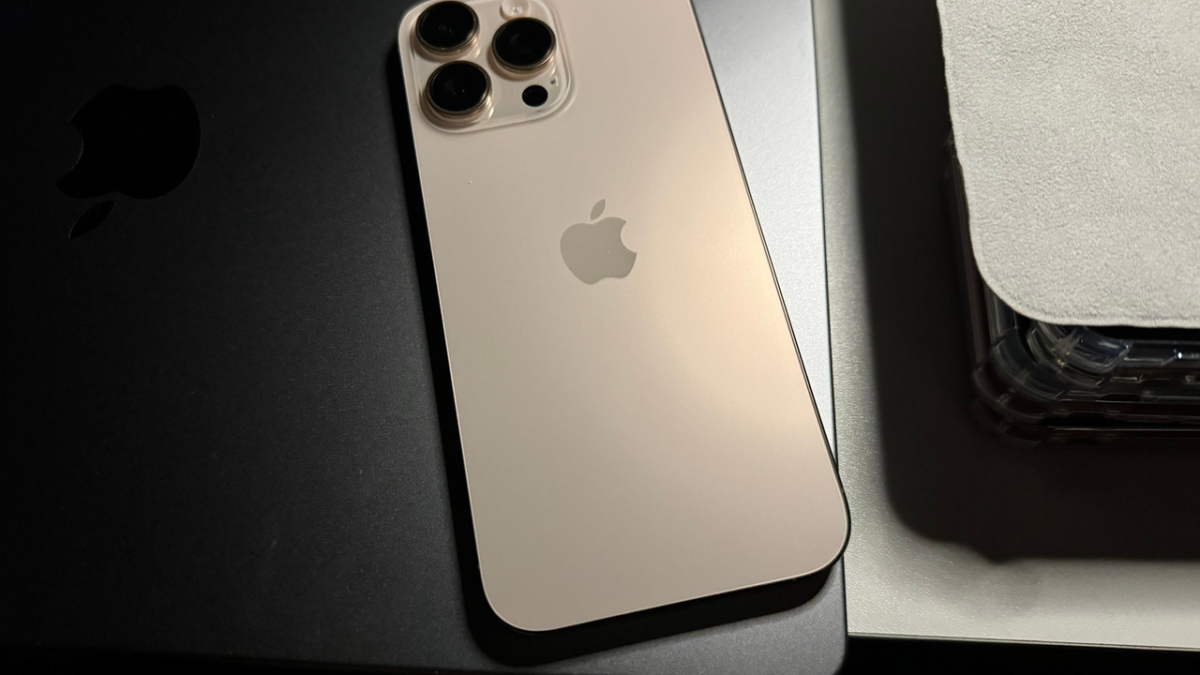
Featured image: iPhone 16 Pro Max by Padgriffin, Wikimedia Commons (CC BY 4.0)
Deixe um comentário