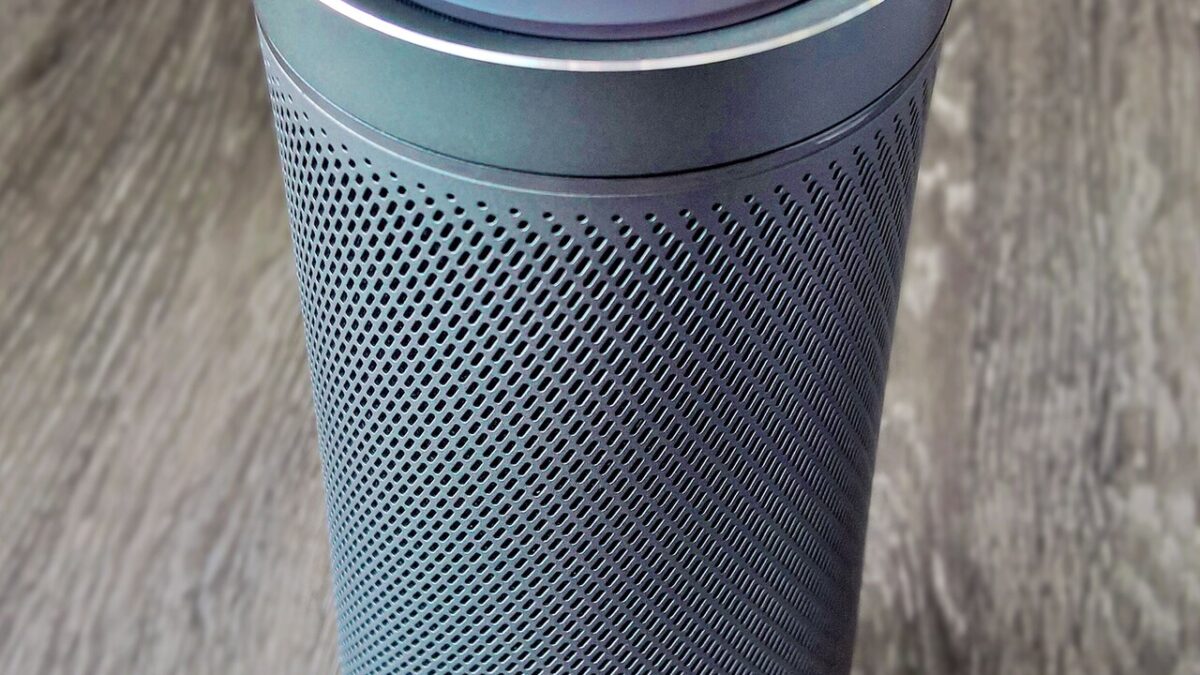
Forget everything you know about smart speakers for a second. OpenAI’s first hardware device — reportedly an AI companion speaker with no screen at all — is said to have mechanical parts that move on their own, according to a Bloomberg report published July 14, 2026 and since echoed by TechCrunch, 9to5Mac, and Fortune. Nobody at OpenAI has confirmed a single detail publicly. But the shape of what’s being described is strange enough that it’s worth taking seriously before it ever ships.
Here’s the honest truth about where this stands: everything below comes from anonymous sources cited by Bloomberg, not an OpenAI announcement. Treat the specifics as reported, not settled — but the pattern across multiple outlets is consistent enough that it’s not just noise.
What We Actually Know About OpenAI’s Hardware Device So Far
The device is described as a mobile, screenless smart speaker built to feel less like an appliance and more like — their words, not ours — “a physical manifestation of ChatGPT.” It runs on GPT-Live, an upgraded version of ChatGPT’s Voice Mode that OpenAI quietly shipped earlier this month, and it’s said to carry a rechargeable battery so it can move from the kitchen counter to the nightstand without being tethered to an outlet.
A few more reported specifics worth flagging: it reportedly includes a camera and additional sensors so it can perceive what’s happening around it — what’s on the table, who’s talking nearby — rather than just listening. One outlet (36Kr) claims it goes as far as facial-recognition checkout, letting you pay with a face scan; that detail is far less corroborated than the rest, so we’re flagging it as a single-source claim rather than fact.
Just as notable is who’s behind it. The device was reportedly built with help from former Apple engineers who worked on the iPhone and Mac, and the design partner is Jony Ive’s studio LoveFrom — which OpenAI acquired for roughly $6.5 billion, after the two sides had apparently been collaborating quietly for about two years before any of this became public.
Why Screenless — and Why It Moves
Here’s the tangent worth a minute of your time: Jony Ive’s entire career has been an argument against screens as the default interface. The iPod had a wheel, not a menu tree. The original iPhone reduced the interface to a single button. If LoveFrom really is steering this design, a screenless device isn’t an accident — it’s the thesis. A speaker with a display is just a phone that can’t fit in your pocket. A speaker with no display has to prove it’s useful through voice, presence, and — apparently — motion.
That’s where the moving mechanical parts come in, and it’s the detail that’s hardest to picture from a press report alone. OpenAI reportedly wants the device to “feel like a companion,” not a gadget you talk to. A static black cylinder on your counter (sound familiar?) doesn’t read as alive. Something that turns toward you, or shifts posture when it’s listening, does — even if the movement is purely cosmetic and does nothing functionally that a stationary mic array couldn’t. It’s a bet that personality sells better than specs, which is a very Ive kind of bet.
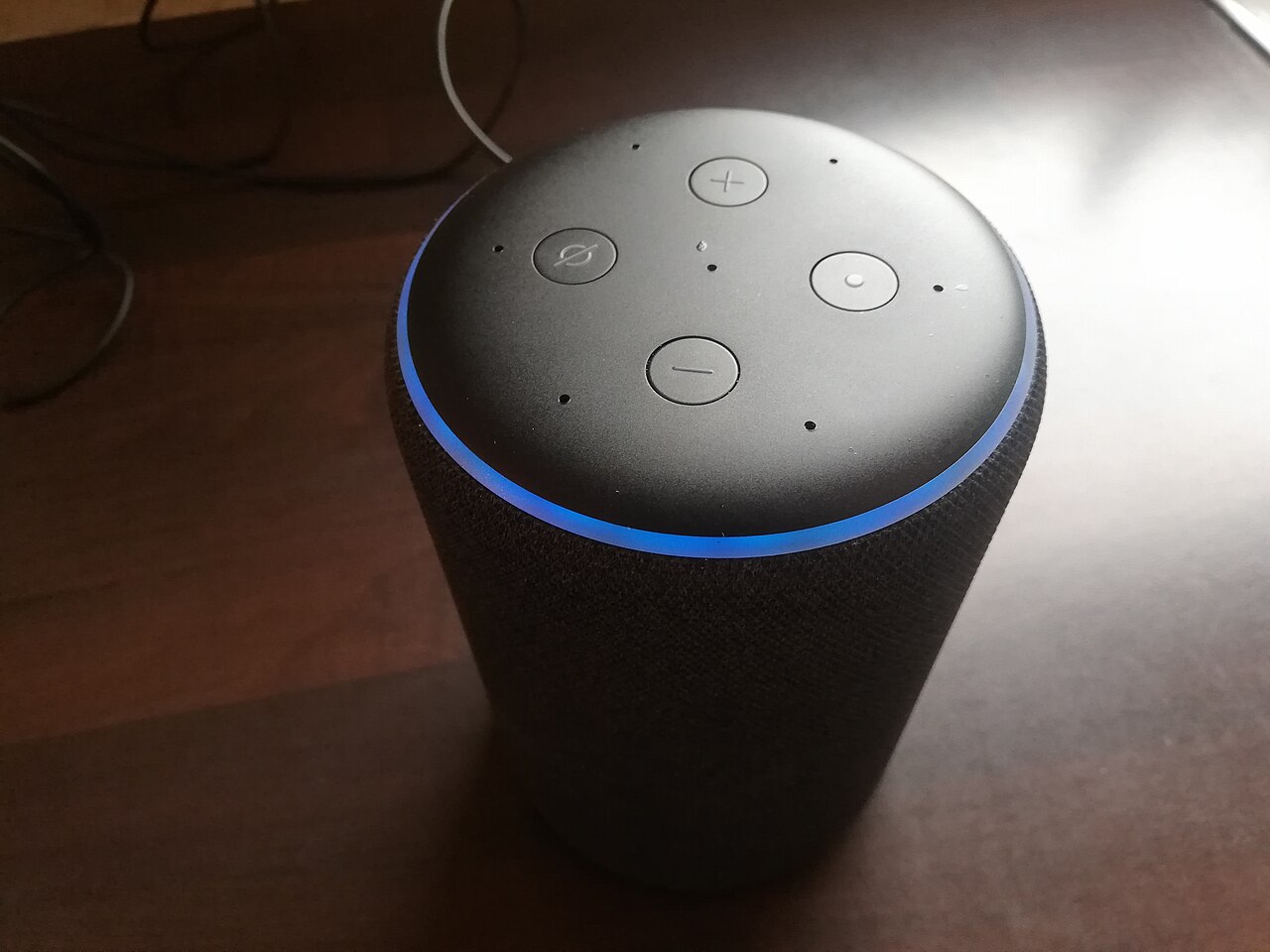
How an AI Companion Speaker Stacks Up Against Echo, HomePod, and Meta’s AI Glasses
The smart speaker category has been settled for almost a decade, which is exactly why this is interesting. Amazon’s Echo lineup only matches top-tier AI quality once you pay $19.99 a month for the Alexa+ upgrade. Apple’s HomePod runs Apple Intelligence through Siri, and by most accounts still trails on complex questions. Neither one moves, and neither one leaves the room it’s plugged into.
Google’s Nest speakers, running Gemini, are frequently cited as the best AI answers you get for free right now — which actually undercuts the idea that OpenAI’s device wins purely on brains. GPT-Live’s voice quality hasn’t been benchmarked against Gemini or Alexa+ in the wild yet, so on raw AI performance, this is not a guaranteed win. What nobody else in that lineup has is portability plus physical movement plus a battery. If you’re weighing whether a screen-free assistant even fits your home before OpenAI’s device exists, our guide to building a smart home on a budget covers what’s actually worth buying today, not what’s rumored.
It’s also worth separating this from Meta’s push into AI glasses. Ray-Ban Meta and its rivals are a wearable, camera-first bet — you carry the AI on your face, not on your counter. OpenAI’s device, if the reports hold up, is chasing a different slice of the same idea: ambient AI that lives in your physical space rather than on your body. They’re not really competing for the same purchase decision, even though both get lumped into “2026’s AI hardware wave” in headlines.
What to Expect in the Coming Months
Timing is the murkiest part of this whole story. OpenAI had previously said it wanted to reveal a first device sometime in the second half of 2026, but Chief Global Affairs Officer Chris Lehane has said that timing isn’t finalized, and shipments reportedly aren’t expected before 2027 at the earliest. In other words: don’t expect to buy one this year, and don’t be surprised if the reveal itself slips too.
There’s also a legal cloud hanging over the whole project that’s easy to miss if you only read the speaker headlines. Apple sued OpenAI and two former Apple employees — including Chief Hardware Officer Tang Tan, who used to lead iPhone product design — in federal court last week, alleging OpenAI leaned on misappropriated trade secrets to build its hardware team. Apple’s filing calls the hardware business “rotten to its core” by that alleged reliance; OpenAI’s response was a flat denial of interest in anyone else’s trade secrets. None of that changes what the device reportedly does, but it’s a real headwind for a company trying to launch its first physical product with a design team it’s being sued over.
If the personalization angle — a device that reads your email to guess what you need before you ask — has you thinking about how much of your home is already listening in some form, our breakdown of AI-powered kitchen appliances is a good look at how quietly this has already happened in rooms you don’t associate with AI at all. And if you’re more interested in the model doing the talking than the box it’s stuffed into, we’ve also covered what Anthropic’s Claude Sonnet 5 means for developers — a reminder that GPT-Live isn’t the only serious voice-and-reasoning stack getting an upgrade this year.
What’s actually confirmed today: nothing, officially. What’s consistent across five-plus independent reports: a screenless, mobile, battery-powered speaker with moving parts, built with Jony Ive’s studio and ex-Apple engineers, aimed at feeling less like a gadget and more like a presence in your home. Whether that becomes a real product in 2027 or quietly slips — the way plenty of ambitious hardware bets have before it — is the part nobody, including OpenAI, seems to have settled yet.
Deixe um comentário