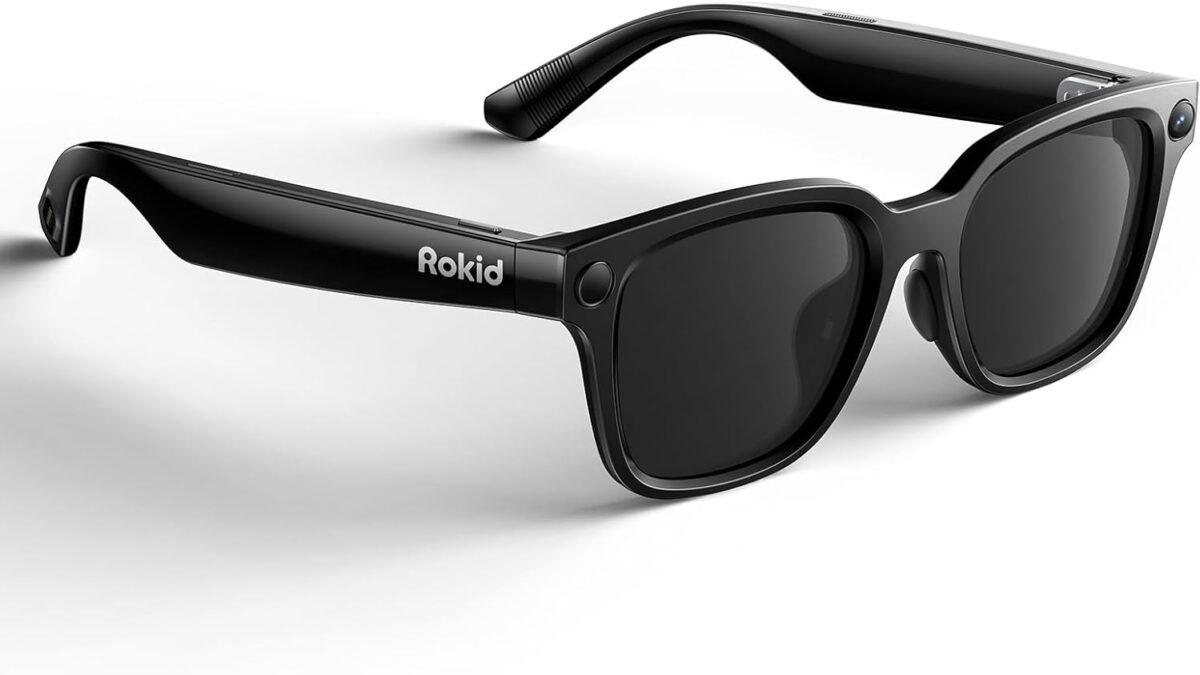
Rokid AI Glasses Style (Non-Display)
$299.99- Real-time translation works in practice, not just demos
- Lighter than the Meta Ray-Ban Gen 2
- All-day battery life
- No in-lens display for reading translations
- Design criticized as the weak point by reviewers
- 3.3/5 average rating on Amazon (39 reviews)
Bottom line: The Rokid AI Glasses Style delivers real-time translation that actually works at $299, but the design is the one thing holding it back from a stronger recommendation.
Landing in a country where you don’t speak the language used to mean squinting at a translation app while a shopkeeper waited. Rokid’s pitch is that the app disappears entirely — the translation shows up in your ear, or on the lens, before you’ve finished reaching for your phone. At $299, the Rokid AI Glasses Style is the cheaper of Rokid’s two 2026 models, and after going through the spec sheet, the reviews, and the actual numbers, it’s a genuinely good idea let down in one specific, fixable way.
Disclosure: DecodeGear may earn a commission from qualifying purchases made through Amazon links in this article, at no extra cost to you.

Quick Verdict
Rokid AI Glasses Style (Non-Display)
89-language real-time translation, a 12MP camera, and all-day battery in a 38.5g frame — lighter than Meta’s Ray-Ban Gen 2. The tradeoff: no in-lens display, and reviewers consistently flag the design as the weak point.
Score: 7.4/10 | Price: $299.99
1. Rokid AI Glasses Style — Translation That Actually Works (~$299)
The headline feature is real-time translation: 89 languages online, 6 offline, running through the Hi Rokid companion app with under one second of latency. In practice that means a two-way conversation — you talk, the other person hears (or reads) their language, and vice versa, without the stop-start rhythm of holding a phone between two people. It’s the same category Meta and Samsung are chasing with their own AI glasses, but Rokid ships the feature as the headline act rather than a demo-day extra.
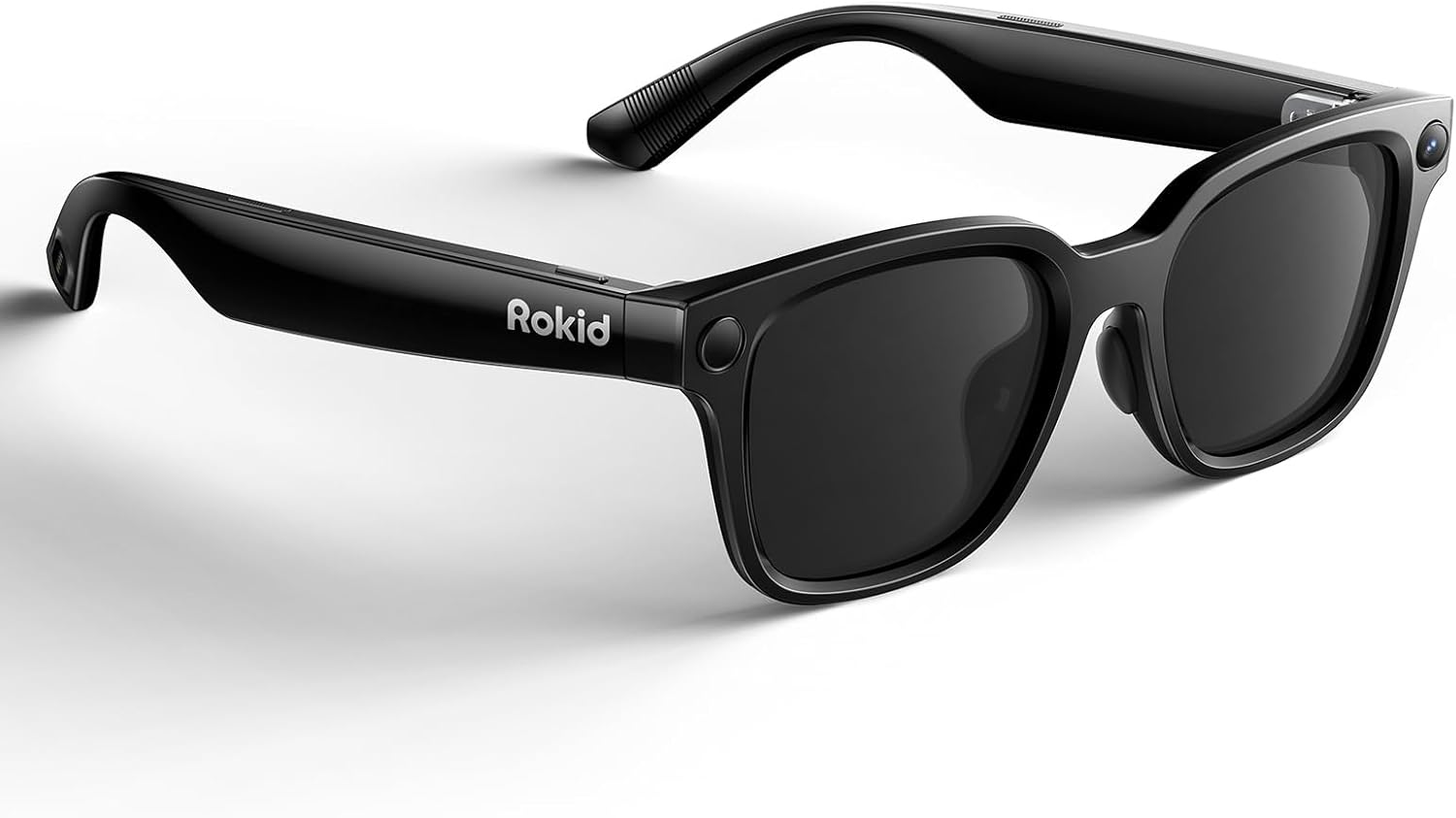
Weight is the other number worth sitting with: 38.5 grams for the frame alone, 45.5 grams with lenses installed. That’s lighter than the Meta Ray-Ban Gen 2 at 48 grams, and it matters more than it sounds — smart glasses that feel like glasses get worn; ones that feel like hardware end up in a drawer after week two. The 12MP Sony IMX681 sensor shoots a 109° field of view at F2.25, with HDR and stabilization baked in, so casual point-and-shoot video comes out usable rather than shaky.
Battery life claims are easy to make and hard to trust until you’ve traveled with the hardware — if all-day power away from an outlet is a recurring worry for your gear bag, our guide to portable power banks for travel covers the backup options worth packing alongside any AI wearable.
Technical specs
- Weight: 38.5g (frame) / 45.5g (with lenses)
- Camera: 12MP Sony IMX681, 109° FOV, F2.25, HDR + stabilization
- Translation: 89 languages online, 6 offline, <1s latency via Hi Rokid app
- Audio: open-ear speakers, hands-free calling
- AI assistant: ChatGPT and Gemini integration, voice-controlled
- Battery: rated for all-day use
- Price: $299.99
Pros & Cons
Pros: Translation feature genuinely works in real-world testing, not just demo conditions. Lighter than most direct competitors. Battery holds up across a full day. Camera quality is solid for the price tier.
Cons: No in-lens display — translated text stays in your ear, not your line of sight. Design draws consistent criticism; TechRadar spent a month with the Style and called it “not the budget smart glasses I’ve been waiting for,” pointing squarely at the looks rather than the function. Amazon buyers currently rate it 3.3 out of 5 across 39 reviews — a real number, not a marketing one, and worth weighing before you buy.
That 3.3 rating deserves a straight read rather than a footnote. It’s not that the glasses don’t do what they claim — Tom’s Guide independently called the Style “the best Meta Ray-Ban alternative out there,” which lines up with the translation and battery praise. The friction is aesthetic and, for some buyers, that’s disqualifying on its own. If you want the same translation tech with an actual on-screen overlay instead of audio-only, Rokid sells a $599 sibling with a monochrome micro-LED display — double the price for the ability to read the translation instead of hearing it.
How the Translation Actually Holds Up Day to Day
The number that matters most in Rokid’s spec sheet isn’t the language count — it’s the latency. Under one second is the difference between a translation feature you use and one you route around. Anything slower and a real conversation stalls: you say a sentence, wait, watch the other person wait, and the whole exchange starts to feel like a video call with lag instead of a conversation. Reviewers who spent real time with the Style — not a five-minute demo booth — reported the translation staying usable across ordering food, asking directions, and short transactional exchanges, which is the actual use case most buyers have in mind rather than translating a business meeting end to end.
Where it gets harder is background noise. Open-ear audio means the translation competes with whatever’s already loud around you — a market, a train platform, a crowded restaurant — and that’s true of every audio-first translation wearable, not just this one. It’s also the strongest argument for the $599 display sibling: reading a subtitle in a noisy room is more reliable than trying to hear one. For quieter one-on-one exchanges, though, the audio-only approach on the Style is the lighter, cheaper, and arguably less awkward option — nobody around you needs to know you’re wearing a translator.
The camera and ChatGPT/Gemini integration round out the pitch, but they’re secondary to what’s actually driving the $299 price tag. Voice-controlled hands-free calling and a 12MP sensor are nice inclusions rather than reasons to buy on their own — plenty of cheaper glasses and any recent phone already cover that ground. Buy the Style for the translation. Everything else is a bonus you’ll use occasionally.
Which One Should You Buy?
If you travel enough that a language barrier is a recurring problem, not a once-a-year vacation issue, the $299 Style earns its price on the translation feature alone — treat the camera and calling as a bonus. If you’re buying primarily to look good wearing AI hardware in public, the design criticism from TechRadar and the 3.3-star average are reasons to try a pair in person first, or wait for Rokid’s next revision. If seeing translated text matters more than hearing it — subtitled meetings, noisy environments — the $599 display model is the one to research next, not this one.
Sound is half the experience with any open-ear glasses like these — we go deeper on what to listen for in our best noise-cancelling headphones guide if audio quality matters as much to you as the translation trick.
Frequently Asked Questions
Does the Rokid AI Glasses Style have a display?
No. This is the non-display model — translated text and AI responses come through the open-ear speakers, not a lens overlay. Rokid’s $599 model adds the micro-LED display if you need to read rather than hear the output.
How many languages does it translate?
89 languages with an internet connection, 6 offline, through the Hi Rokid companion app, with translation latency under one second in Rokid’s testing.
Is the Rokid AI Glasses Style worth $299?
If real-time translation is the feature you actually need, yes — reviewers consistently confirm it works. If you’re buying mainly for looks or a display overlay, the 3.3/5 Amazon rating and design criticism from outlets like TechRadar suggest trying before you commit.
How does the weight compare to Meta Ray-Ban glasses?
At 38.5 grams (frame only) or 45.5 grams with lenses, the Rokid Style is lighter than the Meta Ray-Ban Gen 2, which weighs 48 grams.
Does the translation work without an internet connection?
Partially. The Style supports 6 languages offline versus 89 with an internet connection, so offline use is meant as a fallback for common languages, not a full replacement for the online mode.
Deixe um comentário