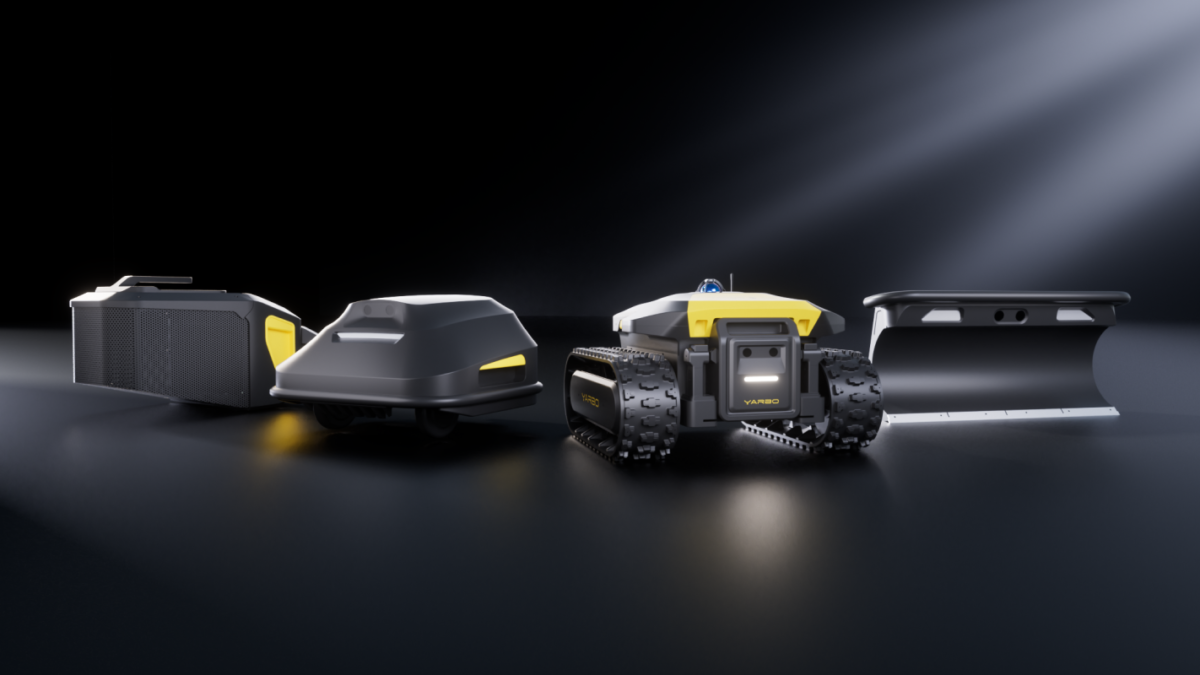
Here’s a claim that sounds like marketing copy until you check it: one robot that mows your lawn in summer, blows your leaves in fall, clears your snow in winter, and trims your edges whenever they need it — same machine, same brain, just a different attachment clicked on. That’s the actual pitch behind Yarbo’s M Series, and unlike most “does everything” gadgets, this one mostly delivers on it.
How the Modular System Actually Works
The M Series is built around a single tracked robot core — think a small all-terrain base, not a wheeled Roomba — that you swap attachments onto depending on the season. Yarbo sells six modules: a standard Lawn Mower, a Lawn Mower Pro, a Snow Blower, a Leaf Blower, a Trimmer, and a Smart Assist module. You buy the core once, then add whichever tools match your yard and climate. There are two core configurations: the M10, rated for up to 1 acre a day, and the beefier M20 (or M20i), rated for up to 1.5 acres and built around a bigger battery and stronger motors.
The M20i is the version worth paying attention to, because it adds 360° LiDAR on top of GPS-based positioning — the same sensor category self-driving cars use to build a 3D map of their surroundings in real time. Combined with cameras and bumper sensors, that lets the robot navigate shaded yards, dense tree cover, and low-light conditions well enough to run at night, which is exactly where GPS-only robot mowers tend to get confused.
What Makes This Different From “a Roomba for Your Lawn”
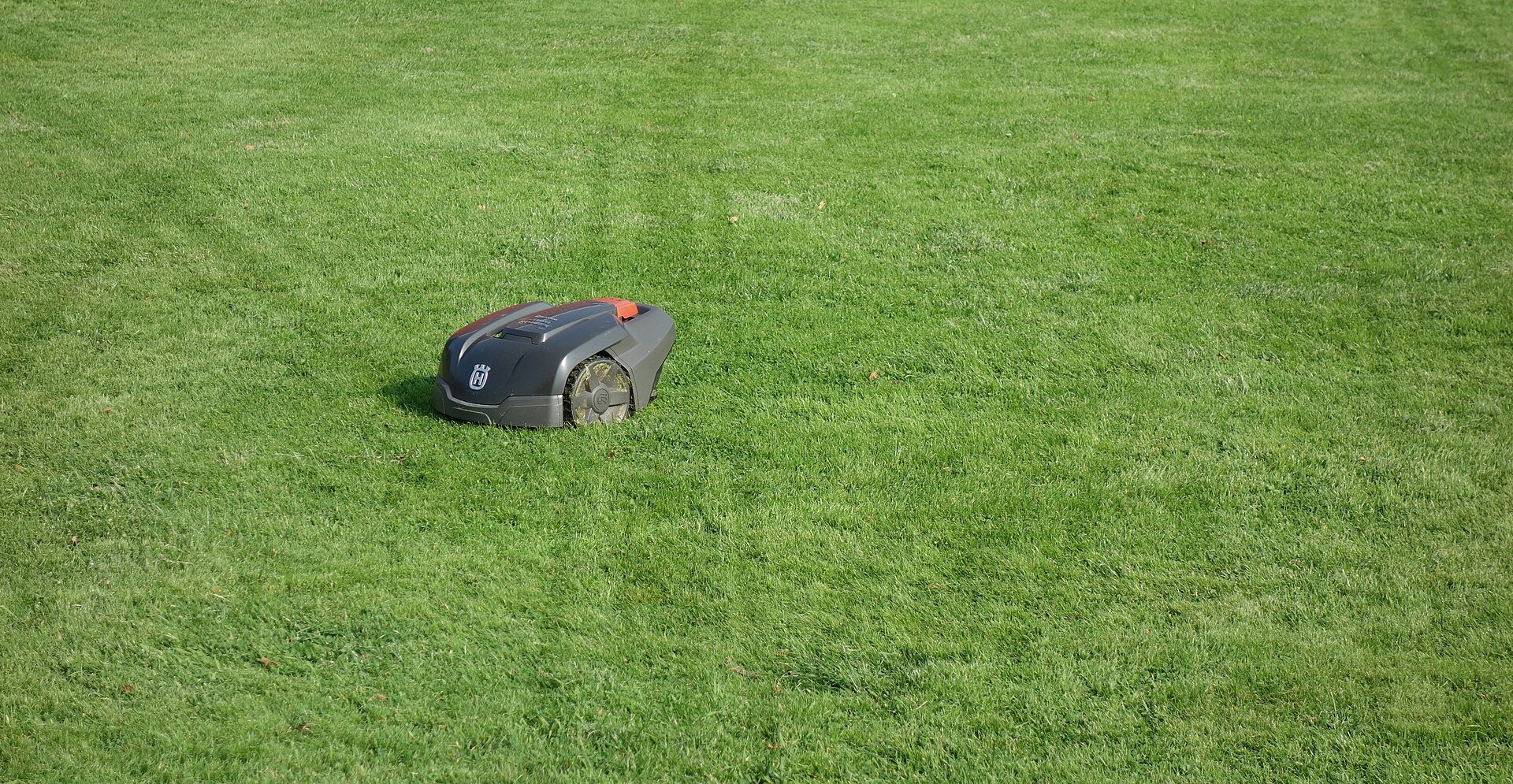
Most robot mowers already exist, and most of them are genuinely good at one job. What’s actually new here isn’t the mowing — it’s that the same $2,500-plus investment covers snow removal, leaf pickup, and trimming too, instead of you owning four separate single-purpose machines that each sit in the garage for 10 months a year. A robot mower does nothing useful in December. Yarbo’s core is doing snow-clearing work in December and mowing work in July, on the same chassis, the same battery platform, the same app.
Here’s the honest truth about why that matters more than it sounds: most households don’t actually need a robot that mows better than a human with a $400 push mower. What they need is fewer machines cluttering the garage, and fewer separate systems to charge, maintain, and relearn every season. That’s a genuinely different value proposition than “robot mower, but fancier.”
Run the math on what you’d otherwise own: a robot mower, a snow blower, a leaf blower or vacuum, and a string trimmer, bought separately, are each a one-season purchase that spends the other three seasons taking up space. Yarbo’s pitch is that the core — the motors, the battery platform, the navigation brain, the app — is the expensive part, and once you own it, each additional seasonal module is a comparatively small add-on rather than a whole new machine with its own charging routine and its own learning curve. Whether that math actually works out cheaper than four separate purchases depends heavily on how many modules you end up buying, but the garage-space argument holds regardless of the price comparison.
An Interesting Tangent: Why Nobody Built This Sooner
You’d think “one robot, swappable tools” would’ve happened years ago — it’s not a wildly exotic idea. The reason it didn’t is boring but real: wire-free, all-season yard navigation is a genuinely hard sensor-fusion problem, and doing it across four completely different tasks (mowing needs different terrain awareness than snow-blowing) used to require either buried boundary wire — which is why most robot mowers still use it — or an expensive RTK base station setup that only made sense to bundle with one single-purpose device. Yarbo’s M Series leans on a 6 TOPS on-device AI chip fusing LiDAR, cameras, and bumper sensors to build its own map with zero buried wire and no manual walk-the-perimeter setup step. That combination of processing power and sensor cost has only recently dropped low enough to make “one brain, four seasonal jobs” pencil out financially. A few years ago, the chip alone would have cost more than the entire robot does today.
The Catch
None of this is free of trade-offs. Pricing reported around CES ranged from roughly $2,500 up to $4,900 depending on which core and modules you configure — well above what you’d pay for a single-purpose robot lawn mower, some of which start under $1,000. And the M Series isn’t a mature retail product with years of reliability data behind it yet — it launched its crowdfunding campaign on Kickstarter on March 4, 2026, and while it raised over $1 million within two hours from more than 200 backers, that’s still early-adopter territory, not the kind of track record you get from a product that’s been through five hardware revisions on store shelves.
If you’ve ever gotten burned by a Kickstarter gadget that shipped late or underdelivered, that history is worth weighing against how genuinely clever the core idea is here.
Where This Fits in the Bigger Robotics Trend
This is really the same automation shift we’ve already tracked in robot vacuums — machines that used to be single-purpose getting smarter and more capable enough to justify a bigger upfront price — just applied to the yard instead of the living room floor. The interesting question isn’t really whether Yarbo specifically nails the execution. It’s whether “one robot core, seasonal attachments” becomes the standard shape of yard equipment the way robot vacuums became the standard shape of home cleaning. If it does, the M Series will be remembered as an early mover, whether or not it’s the version that wins.
Whether that future actually arrives probably depends less on the sensors than on something much less glamorous: whether Yarbo, or whoever follows, can make the swap-a-module experience as reliable in year three as it is in the demo video.
That’s usually where ambitious hardware ideas actually live or die — not in the keynote demo, but in whether a module still snaps on cleanly after two years of freeze-thaw cycles in your garage.
Deixe um comentário