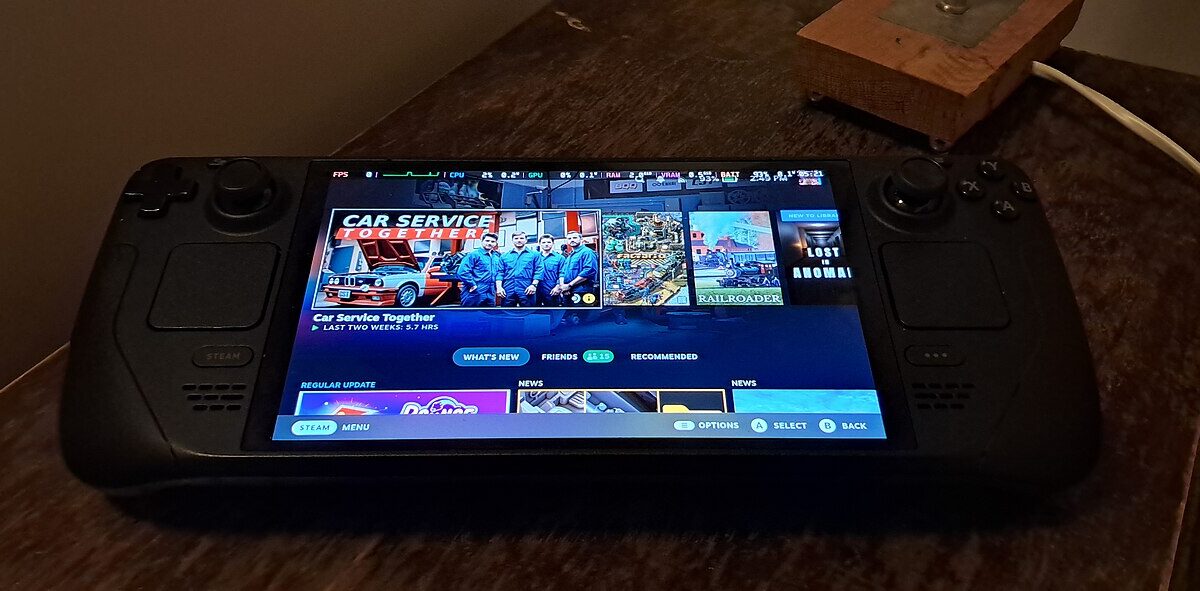
Valve has been saying some version of “Steam Deck 2 is coming” for nearly two years, so when engineer Pierre-Loup Griffais gave IGN a fresh update this month, the specific wording mattered more than the fact he said anything at all. Griffais told IGN Valve is “closer than we were the last time we talked.” He did not give a date. He did not name a chip. And when he was pushed on which chipmaker would build it, his answer was the kind of throwaway line that enthusiasts chew on for weeks: “not necessarily AMD!”
That’s the real story here. Not that Steam Deck 2 exists somewhere on a roadmap — everyone already assumed that — but that Valve is now openly hinting it might break from the AMD APU formula that defined the entire Steam Deck lineage. Combine that with what’s happening to the current hardware’s pricing right now, and “closer” starts to look like a more complicated word than it sounds.
What Valve Just Confirmed
Griffais’ comments came during press conversations tied to an AMD and Lenovo handheld gaming event — not exactly the venue you’d expect Valve to hint at chip diversification, which is part of why the line stuck. His core message, echoed across TweakTown, TechPowerUp, and GamingOnLinux’s coverage of the same interview, was consistent: Valve is “definitely getting there,” but there’s still no announcement, no reveal window, and no locked silicon. He reiterated a version of a stance he’s held for a while — that Valve isn’t interested in a modest bump. It wants a device that’s a clear generational leap over the original Steam Deck, not a mid-cycle refresh with slightly better benchmarks.
That’s a meaningfully different posture than a typical “sequel incoming” tease. Most companies confirm a successor once the hard problems are solved and the announcement is a formality. Valve is doing the opposite: confirming intent while openly admitting the enabling technology doesn’t exist yet in the shape it wants.
The Real Holdup: Power Efficiency, Not Price
Here’s the detail that separates this update from the usual “it’s coming eventually” non-answer: Valve has been unusually specific about why it’s stuck, and it isn’t the reason most people assume. HotHardware’s framing of the same comments put it bluntly — Steam Deck 2 hasn’t launched, “and it’s not pricing.”
According to Griffais, the newer laptop-class chips hitting the market this year are simply “still in power envelopes that are not quite the right segment that you’d want for a true handheld experience.” His explanation gets more specific than the usual corporate hedge: a lot of these chips are “low-end laptop chips or playing in that sort of form factor that are then repurposed for handhelds,” and repurposing them doesn’t deliver the power-to-battery-life trade Valve actually wants. In plain terms, Valve isn’t looking for a chip that’s simply faster. It’s looking for one that’s dramatically faster without pulling more watts than the original Steam Deck’s APU, because more watts means a smaller battery window, and battery life is half of what makes a handheld feel good to use.
Valve has reportedly told partners it wants silicon that natively runs below 10 watts without gutting performance — and as of mid-2026, nothing on the market threads that needle. That’s a stricter bar than “make a faster Deck,” and it’s why the wait has stretched well past what most enthusiasts expected back when the OLED refresh shipped. It’s also a useful reminder of a trend we’ve covered before: GPU pricing pressure and chip scarcity aren’t just squeezing desktop builders this year — they’re squeezing the exact segment Valve needs solved for a handheld to make sense.
“Not Necessarily AMD” — What That Actually Means
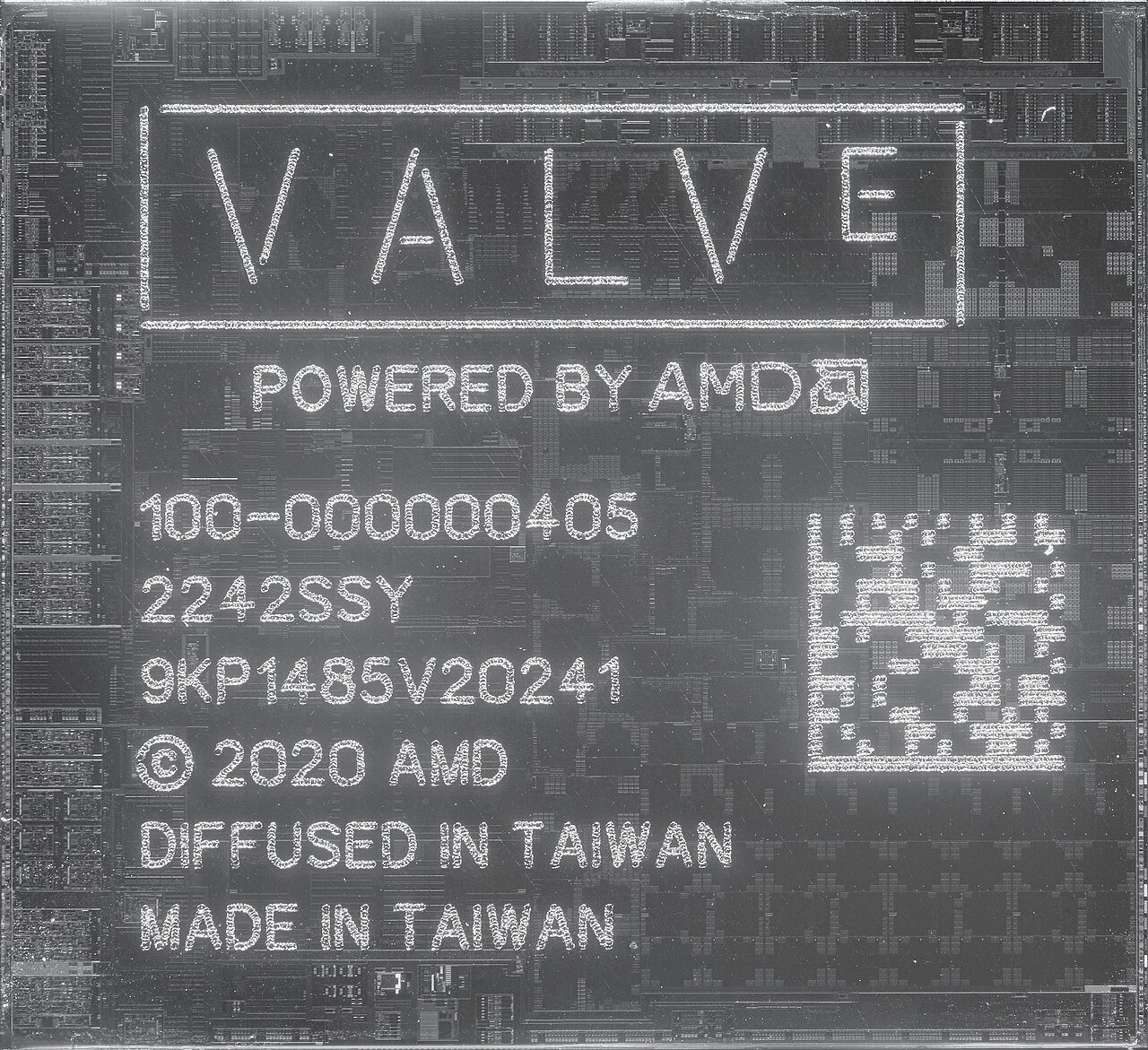
This is the line that should actually make longtime Steam Deck owners sit up. Every Steam Deck to date — LCD and OLED — has run on a custom AMD APU, and that partnership has been treated almost as a given in handheld gaming circles. So when Griffais was asked directly about the processor and answered “not necessarily AMD!” instead of reaffirming the obvious, it read less like a slip and more like a deliberate crack in the door.
To be clear about what this isn’t: it is not Valve confirming a switch to Intel, Qualcomm, or an ARM-based design. Coverage since the comment has floated all three as plausible alternatives, and AMD’s own rumored low-power “Bumblebee” architecture is still considered a live candidate internally — HotHardware’s reporting explicitly notes there’s “no confirmation Valve will use AMD again,” but also no confirmation it won’t. What the quote actually signals is that Valve is evaluating the field with genuinely open eyes rather than defaulting to its existing supplier out of loyalty or convenience. For a company that has leaned on AMD for SteamOS driver support, GPU architecture, and now the custom APU in every Deck sold, that’s a bigger statement than it first appears.
If Valve does end up shopping outside AMD, it wouldn’t be an isolated decision. It lines up with a broader shift we’ve tracked on the PC side too — Steam’s own hardware survey recently showed a laptop GPU outranking desktop cards for the first time, a sign that efficiency-per-watt is becoming the metric that matters most across the whole gaming hardware market, not just handhelds.
What’s Happening to the Current Steam Deck in the Meantime
While Valve waits on the right chip, the existing lineup has gotten noticeably less friendly to new buyers. On May 27, 2026, Valve raised prices across the Steam Deck OLED range on its own storefront, citing rising memory and storage costs — a Steam Deck price increase that landed with zero hardware changes to justify it. The 512GB OLED model went from $549 to $789 — a $240 jump. The 1TB model climbed from $649 to $949, up $300. Both increases land in the 43–46% range, which is a steep move for hardware that’s already two years into its life cycle.
It gets less forgiving at the entry level, too. The budget 256GB Steam Deck LCD — the $399 model that had been the affordable on-ramp into the ecosystem since 2022 — was quietly discontinued on December 19, 2025, once remaining stock sold through. That leaves the now-$789 512GB OLED as the cheapest new Steam Deck Valve sells. Anyone hoping to get into the ecosystem on a budget this year is out of luck; the “cheap Deck” era is over, at least until whatever comes next resets the lineup.
The timing is almost darkly funny: the same month-to-month window where Valve is teasing a next-gen device also happens to be the window where the current device got materially more expensive. None of that is Valve’s fault in isolation — memory and NAND flash prices have spiked across the entire industry, and PC prices climbing in 2026 is a story affecting laptops and desktops alike, not just handhelds. But it does mean the “should I buy now or wait” calculus for Steam Deck shoppers just got more complicated on both ends: the current hardware costs more, and the future hardware has no ETA.
Realistic Timeline: When Could It Actually Launch
Here’s where it’s important to be precise, because this is exactly the kind of story that gets flattened into a fake release date by the time it’s been reblogged five times. Valve has not confirmed a launch window for Steam Deck 2, and there is no official Steam Deck 2 release date. Full stop.
What reporting around the IGN interview does suggest is a sequencing problem: Valve’s near-term hardware roadmap is already occupied by the Steam Machine and the Steam Frame, both expected to ship later in 2026. Steam Deck 2 becoming a real internal priority, by most outlet analysis of Griffais’ comments, likely starts only after those two products are out the door and Valve can redirect engineering attention. Stacking that sequencing against the silicon problem described above, outside estimates — not Valve statements — put the earliest realistic window somewhere around late 2027, with plenty of room for it to slip further if the power-efficient chip Valve wants still doesn’t exist by then.
Treat any specific date you see attached to “Steam Deck 2” between now and an actual Valve announcement as speculation dressed up as reporting. The one thing that is verifiably true is this: Valve is closer than it was, the chip it needs might not wear an AMD logo, and the device you can actually buy today just got a lot more expensive while you wait to find out.
Deixe um comentário