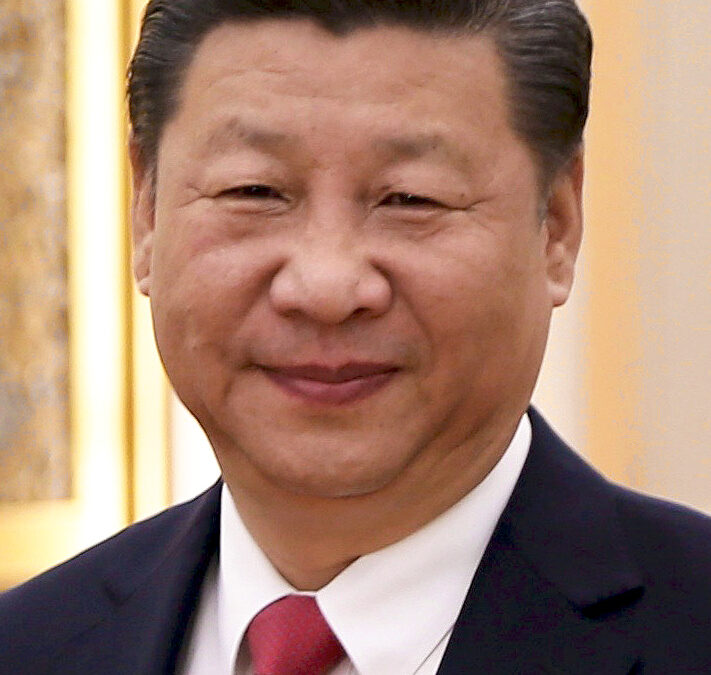
What if the next major AI governance body isn’t headquartered in San Francisco, Brussels, or Geneva — but in Shanghai? On July 17, 2026, that stopped being hypothetical. Chinese President Xi Jinping stood up at the World AI Conference and, for the first time since the event began in 2018, personally delivered the opening keynote. By the end of the day, 29 countries had signed on to a brand-new global AI body headquartered in his own backyard.
The line that was really aimed at Washington
Xi didn’t mention the United States by name. He didn’t have to. “The development of artificial intelligence should not be a solo performance by any single country,” he told the crowd, “but rather a symphony of global cooperation.” It’s a diplomatic sentence, but the subtext is hard to miss: while the US has spent the past two years tightening chip export controls aimed squarely at China, Beijing is now positioning itself as the country building bridges instead of walls.
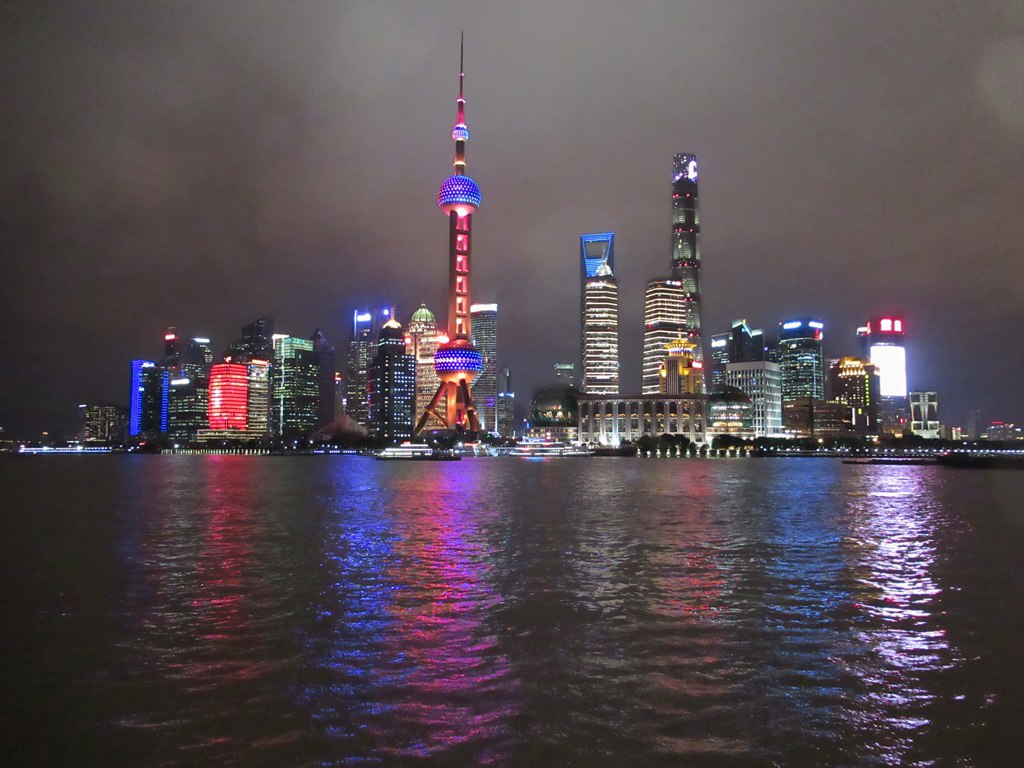
Whether that framing holds up to scrutiny is a fair question — China restricts foreign AI models domestically at least as tightly as the US restricts chip exports — but as a piece of public messaging aimed at the rest of the world, it landed with an audience that included UN Secretary-General António Guterres, who attended the high-level session in person.
What actually got announced: WAICO
The headline outcome was the launch of the World Artificial Intelligence Cooperation Organization, or WAICO — a new 29-country coalition headquartered in Shanghai. The founding member list is the interesting part: it’s not the usual G7 lineup. Brazil, Indonesia, Malaysia, South Africa, Senegal, Russia, and Pakistan are all founding members, which tells you exactly who this organization is courting. This isn’t an attempt to out-compete the US and EU’s existing AI governance frameworks head-on — it’s an attempt to become the default AI governance partner for the Global South, a huge swath of the world that neither Washington nor Brussels has spent much time courting directly on AI policy.
China backed the announcement with concrete commitments, not just a founding charter: 5,000 specialized AI training and workshop slots for developing countries over the next five years, plus a plan to deploy China’s “Mazu” meteorological early-warning system — an AI tool for predicting extreme weather — in 30 countries. That’s a deliberately practical pitch. Instead of leading with abstract governance principles, China is leading with “here’s a free AI tool that predicts the typhoon before it hits your coastline.”
The interesting tangent: why “AI diplomacy” is suddenly a real category
A few years ago, this kind of event would have been a trade show. Now it’s genuinely geopolitical, and the reason is simple: AI capability has become tightly coupled to chip access, and chip access has become a tool of foreign policy. Export controls determine which countries even can build frontier AI systems domestically, which means the countries that can’t are shopping for a patron — someone to partner with, train under, or buy tools from. China showing up with training slots and a working early-warning system for 30 countries isn’t charity; it’s building the same kind of soft-power relationships that infrastructure lending built over the past two decades, just with GPUs and models instead of railways and ports.
What this means next to everything else happening in AI right now
This announcement didn’t happen in a vacuum. The same week, Google’s Gemini 3.5 Pro was rebuilt from scratch rather than iterated on, Moonshot AI’s Kimi model kept climbing as a serious open-weight competitor out of China, and Anthropic overtook OpenAI in revenue on the back of aggressive infrastructure deals. Put together, the picture is an AI race that’s no longer just about which lab ships the smartest model — it’s about which country can offer the most attractive full-stack package: models, compute, training, and now, apparently, a seat at a new governance table.
It also lands right after a separate, US-led moment of alignment: OpenAI, Anthropic, and Google DeepMind recently found themselves agreeing that AI needs oversight, even while disagreeing sharply on whether that oversight should come from state or federal law. So in the same month, you have Western AI labs quietly agreeing they need more regulation of some kind, and China publicly launching an entirely separate international body to write different rules. Two very different visions of “AI governance” are now developing in parallel, and most people outside the industry haven’t noticed either one happening.
The surprising part: this is a talent and market play as much as a policy one
Here’s the detail that’s easy to miss under the diplomatic language: 5,000 training slots and an early-warning system deployed across 30 countries isn’t just goodwill — it’s a pipeline. Every developer trained on Chinese AI tooling, every government agency running Mazu, becomes more likely to keep using Chinese AI infrastructure as it scales up. Foreign aid modeled on hardware and infrastructure has followed this exact playbook for decades; this is the same strategy, just running on model weights and API calls instead of concrete and steel. Given how fiercely companies like Moonshot AI have been pushing open-weight models internationally, WAICO looks less like pure diplomacy and more like a distribution channel with a governance logo stapled on top.
Why you should care even if you don’t follow geopolitics
You probably don’t use a Chinese AI model day to day, and this announcement won’t change that tomorrow. But AI governance frameworks — whichever ones end up dominant — will eventually shape things that do touch you: what data an AI company can collect, how models get audited, what counts as an acceptable use case, and which countries’ AI products end up cheaper and more accessible because of favorable trade and training relationships. A 29-country bloc backed by one of the world’s largest economies is exactly the kind of thing that starts as a conference headline and ends up, a few years later, as the reason a product you use works differently depending on which country you’re in.
Nothing about WAICO changes what’s on your phone or your desk this week. But keep the name in the back of your mind — international AI governance bodies rarely stay this quiet for long.
Deixe um comentário