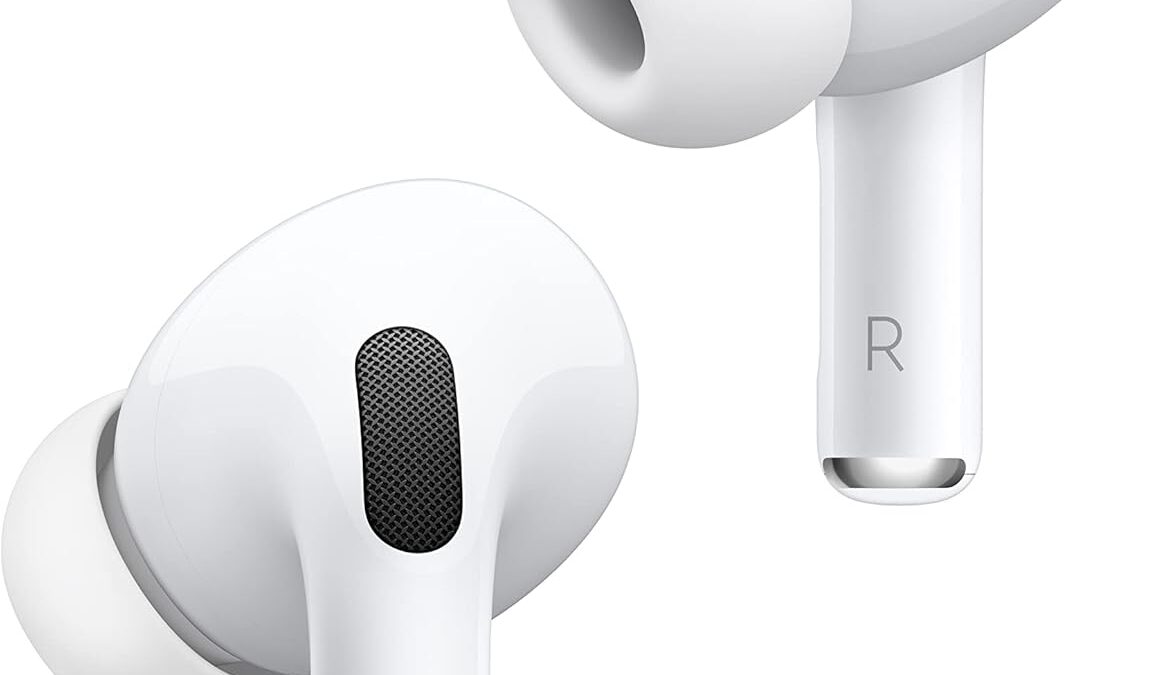
AirPods Pro 3
$249The AirPods Pro 3 are worth it – but only for a narrower slice of buyers than Apple’s marketing would have you believe. Apple wants $249 for earbuds that, in several measurable ways, sound worse than their predecessor. Let that sink in before we get to the part where the data actually justifies the price.
The Claim
Apple’s marketing for the AirPods Pro 3 leans hard on three pillars: industry-leading Active Noise Cancellation, a new Hearing Aid feature, and deeper health integration via a heart rate sensor. The pitch is a complete wellness and audio package, not just earbuds. Apple positions the Pro 3 as the pinnacle of personal audio – the product you buy when you refuse to compromise.
Sounds compelling. Now let’s look at what the tests actually say.
The Data
Apple says the ANC is better than ever. SoundGuys’ lab data backs that up – 90% average noise attenuation is the highest measured result for any in-ear earbud ever tested. It beats over-ear headphones. That number is not marketing fiction. It is genuinely remarkable for something that fits in your ear canal.
Battery life also clears Apple’s claims. With ANC active, SoundGuys measured 8 hours and 42 minutes – slightly above the advertised 8 hours. Real-world performance matching or beating spec sheets is rarer than it should be, so credit where it’s due.
The FDA-authorized Hearing Aid mode for mild-to-moderate hearing loss (ages 18+) is legitimate clinical functionality. That is not a gimmick. For users who need it, it turns a $249 purchase into something a standalone hearing aid would charge ten times more for.
IP57 protection on both the buds and the case – not just the buds – is a meaningful durability upgrade. Most competitors protect the earbuds and leave the case exposed.
The Hidden Catch
The sound quality is a regression. Headphones.com describes the Pro 3 signature as “V-shaped” with treble that reads as “sibilant and clenched” and bass that is “sluggish and muddy.” Those are not flattering adjectives, and they represent a step backward from the Pro 2 – which was widely praised for its tuning. If you are buying premium earbuds primarily for music, this matters.
The codec situation is hard to overlook. The AirPods Pro 3 support SBC and AAC only. No LDAC. No aptX. In 2026, at $249, that is a meaningful gap – AAC is lossy and Android handles it particularly poorly. There is also no manual EQ. You get Apple’s tuning decisions and nothing else.
The case battery is a regression. The Pro 2 offered 30 total hours with the case. The Pro 3 drops that to 24. That is a real-world downgrade Apple did not highlight on stage. If you travel frequently or charge infrequently, you will feel this.
The deeper nozzle design causes comfort issues for some users during extended wear – multiple independent reviewers flagged this. The stem controls are also prone to accidental triggers. Neither is a dealbreaker, but both are friction points that Apple’s product pages do not mention.
Android users get the least of this product. Personalized Spatial Audio, the Hearing Aid feature, and Live Translation all require Apple devices. On Android, you are buying a best-in-class ANC device with compromised codec support and a stripped feature set. That is a fundamentally different value proposition – and not a good one.
The Competition
The Sony WF-1000XM5 costs between $228 and $250 at frequent sale prices. Its ANC lands at 87% attenuation in lab conditions – genuinely close, but not equal to the Pro 3. Where Sony pulls ahead is everywhere else: 9 hours 32 minutes on a charge with ANC active, full LDAC support for high-resolution audio, and a parametric EQ that lets you actually tune the sound to your ears. For Android users, or anyone who considers audio quality a primary criterion rather than an afterthought, Sony wins this comparison and it is not particularly close.
If you’re not locked into Apple’s ecosystem, you’ll want to check out our roundup of the best noise-canceling headphones under $150 – several options there hit 80%+ ANC performance at half the price of the Pro 3.
At the budget end, the Soundcore Liberty 4 Pro at $129 delivers 7.5 hours of ANC battery and a 30-hour case – the same case capacity Apple quietly removed from its own premium product. For casual listeners who want ANC without the premium tax, it is a serious alternative. If price is your primary filter, the best wireless earbuds under $50 cover options that are genuinely capable for everyday use.
Who Should Actually Buy Them
There is a specific person for whom the AirPods Pro 3 are the obvious answer, and that person is an iPhone user living inside Apple’s ecosystem who needs the absolute best noise cancellation available – possibly with the Hearing Aid feature as a genuine medical consideration, not a marketing checkbox. For that person, the math works. Nothing else on the market combines this ANC performance with this level of Apple device integration.
Everyone else should pause before handing over $249. If you primarily listen on Android, you are paying full price for a product that will give you maybe 60% of its intended feature set. If you care about audio fidelity – accurate bass, clean treble, codec flexibility – the Pro 3 is a step backward from its own predecessor and a clear loss against Sony. If you relied on the Pro 2’s 30-hour case, that is simply gone now. And if you want to tune your EQ or push high-resolution audio, Apple has made the architectural decision that you do not get to do that.
The question is not whether the AirPods Pro 3 are good. They are. The question is whether they are good for you specifically – and for a significant portion of the people considering them, the honest answer is no.
Are AirPods Pro 3 Worth It? The Verdict
The AirPods Pro 3 are the best ANC earbuds ever made – technically. That single fact is not in dispute. But “best ANC” is doing enormous work to justify $249 when the sound signature took a step backward, the case battery shrank, codec support is frozen in 2019, and Android users get a product missing half its headline features.
This is a strong product for a narrow buyer: an iPhone user who needs maximum noise cancellation, possibly with the Hearing Aid feature as a genuine medical consideration. For that person, the AirPods Pro 3 are legitimately the right choice – nothing else delivers this combination of ANC performance and Apple ecosystem integration.
For everyone else, the honest recommendation is to look at what Sony and others are doing with the same budget. Apple built an exceptional tool for a specific job. Make sure that job is actually yours before you hand over $249.
Deixe um comentário