Disclosure: This article contains affiliate links. If you buy through our links, we may earn a commission at no extra cost to you. We only recommend products we’d actually pack in our own bags.
A dead phone in a foreign airport is not a personality-building experience. It’s just expensive and avoidable. We tested and researched five power banks that actually make sense for travel — not just specs-sheet champions that weigh as much as your carry-on allowance.
Here’s what matters: TSA compliance, real charging speed, and a weight-to-capacity ratio that doesn’t punish you at the gate.
TSA Rules for Power Banks in 2026
Before you buy anything, understand the rules — because a power bank that gets confiscated is worth exactly $0.
- Carry-on only. Power banks (lithium-ion batteries) are prohibited in checked baggage. They must go in your carry-on or personal item, no exceptions. Source: TSA.gov battery rules.
- 100Wh limit without approval. Most airlines allow up to 100Wh per power bank without requiring special permission. Banks between 100Wh and 160Wh need airline approval; above 160Wh are banned entirely.
- How to read the math: 100Wh ≈ 27,000mAh at 3.7V. A 20,000mAh bank is roughly 74Wh — well under the limit. The Anker Prime at 99.5Wh is the highest-capacity bank you can carry without asking anyone’s permission.
- 2026 update — American Airlines: AA now limits passengers to 2 power banks per person. Other major carriers haven’t followed yet, but check your airline before a multi-bank setup.
- Quantity rule: Most airlines allow up to 2 spare lithium batteries (including power banks) per passenger. Don’t try to pack five.
Bottom line: pick a bank under 100Wh, keep it in your carry-on, and you’re fine on virtually every commercial flight worldwide.
Best Travel Power Banks: Quick Comparison
| Power Bank | Capacity | Max Output | Weight | Price | Best For |
|---|---|---|---|---|---|
| Anker Prime 27,650mAh | 99.5Wh | 250W | 1.6 lbs | ~$110 | Laptop + phone combo |
| Anker Nano 10K | 10,000mAh | 30W | 7.4 oz | ~$30 | Ultra-light day trips |
| Mophie Powerstation PD 20K | 20,000mAh (~74Wh) | 20W | 12.5 oz | ~$59 | Apple ecosystem users |
| INIU 10000mAh Slim | 10,000mAh | 22.5W | 6.7 oz | ~$22 | Budget travelers |
| Baseus Blade HD 20000mAh | 20,000mAh (~74Wh) | 100W | 14.1 oz | ~$55 | Slim laptop charging |
Anker Prime 27,650mAh — Best Overall for Long-Haul Travel
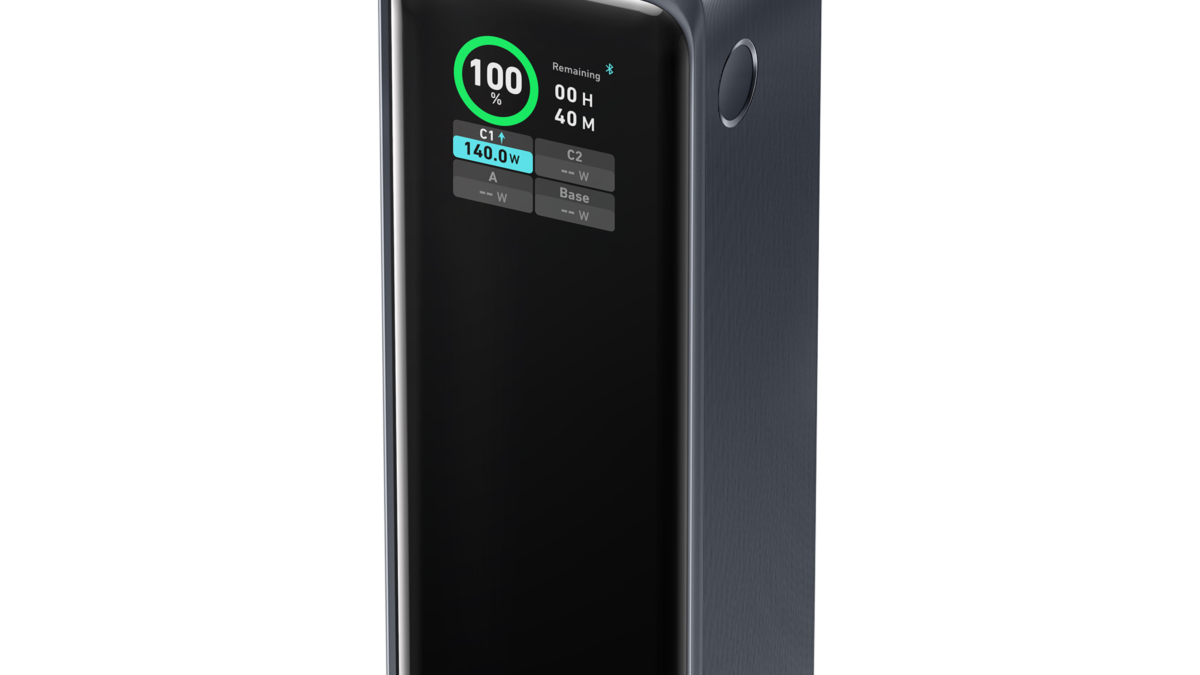
If you’re flying 10+ hours with a laptop, tablet, and two phones, the Anker Prime is the one bank that doesn’t make you choose. At 99.5Wh, it sits right at the TSA maximum — which means you’re legally carrying the most energy storage allowed on a plane, full stop.
Why pick it for travel: 250W total output means you can fast-charge a MacBook Pro and a phone simultaneously. The Bluetooth app lets you monitor charging sessions and configure power distribution. Two USB-C ports plus one USB-A covers every cable in your bag. It’s the only power bank that genuinely replaces a hotel wall outlet for most travelers.
| Specs | |
|---|---|
| Capacity | 27,650mAh / 99.5Wh |
| Output | 250W total (140W USB-C1, 100W USB-C2) |
| Weight | 1.6 lbs (725g) |
| TSA Compliant | Yes (under 100Wh) |
| Built-in Cable | No |
Liked:
- Maximum legal carry-on capacity — no compromises
- 250W output handles laptops that other banks can’t touch
- Bluetooth app is actually useful, not gimmicky
Could be better:
- $110 is real money — budget travelers should look elsewhere
- 1.6 lbs adds up on a week-long backpacking trip
Anker Nano 10K — Best for Travelers Who Pack Light
The Nano 10K is the power bank equivalent of a carry-on personal item: small enough that you forget it’s there until you need it. At 7.4 oz with a built-in foldable USB-C cable, it solves the “forgot my cable” problem and the “my bag is full” problem at the same time.
Why pick it for travel: 10,000mAh gives you roughly 2–2.5 full iPhone charges — enough for a full travel day without hunting for outlets. The foldable cable means one less thing to pack and one less thing to lose in a seat pocket. 30W output fast-charges modern phones quickly. This is the bank that lives in your personal item permanently.
| Specs | |
|---|---|
| Capacity | 10,000mAh (~37Wh) |
| Output | 30W USB-C |
| Weight | 7.4 oz (210g) |
| TSA Compliant | Yes |
| Built-in Cable | Yes (USB-C, foldable) |
Liked:
- Built-in cable is a genuine convenience win
- Lightest option on this list — barely notice it
- $30 makes it an easy buy-and-forget travel essential
Could be better:
- No USB-A port — won’t help with older cables
- 10,000mAh won’t survive a two-device, multi-day trip alone
Mophie Powerstation PD 20K — Best for the Apple Ecosystem
Mophie charges a premium, and for most use cases, we’d tell you not to pay it. But if your travel kit is iPhone + AirPods + iPad, the Powerstation PD 20K earns its price tag with a build quality that matches Apple’s own accessories and PD charging that plays nicely with USB-C and MagSafe adapters.
Why pick it for travel: Two USB-C PD ports plus a USB-A covers the typical Apple travel loadout. The premium aluminum finish won’t look out of place in a work bag. At 20,000mAh (~74Wh), it’s TSA-clear with room to spare and will carry a full 4–5 iPhone charges across a long travel day.
| Specs | |
|---|---|
| Capacity | 20,000mAh (~74Wh) |
| Output | 20W (USB-C PD) |
| Weight | 12.5 oz (354g) |
| TSA Compliant | Yes |
| Built-in Cable | No |
Liked:
- Premium build — doesn’t feel like a cheap accessory
- Dual USB-C PD handles iPad + iPhone simultaneously
- Mophie’s reliability track record is genuinely excellent
Could be better:
- 20W max output won’t fast-charge a laptop
- $59 buys you more raw capacity elsewhere if build quality isn’t a priority
INIU 10000mAh Slim — Best Budget Pick
Thirty-five thousand Amazon reviews don’t lie. The INIU Slim is what you buy when you want a reliable power bank, not a conversation piece. At $22, it costs less than one airport meal and solves the dead-phone problem for the entire trip.
Why pick it for travel: At 0.47 inches thin, it slides into any pocket. 22.5W fast charge is genuinely quick for a budget option — not as fast as premium picks, but fast enough that a 30-minute layover charge actually moves the needle. This is the right answer for budget travelers, students, or anyone who loses power banks regularly enough that spending $100 feels wrong.
| Specs | |
|---|---|
| Capacity | 10,000mAh (~37Wh) |
| Output | 22.5W |
| Weight | 6.7 oz (190g) |
| TSA Compliant | Yes |
| Built-in Cable | No |
Liked:
- $22 — you won’t lose sleep if it gets confiscated or lost
- 0.47″ thickness fits anywhere
- 35,000+ verified reviews give real-world confidence
Could be better:
- Build quality reflects the price — not a premium feel
- No laptop charging capability at all
Baseus Blade HD 20000mAh — Best Slim Option for Laptop Charging
The Baseus Blade HD is an engineering trick: 100W USB-C laptop charging in a body that’s only 0.7 inches thick. If you need to charge a laptop on the road but hate how bulky most high-wattage banks feel, this is the one.
Why pick it for travel: The digital battery percentage display removes the guesswork — you know exactly how much power you have left, which matters when you’re managing a long layover. 100W output handles most modern ultrabooks (MacBook Air, Dell XPS, ThinkPad) without throttling. At $55 and 20,000mAh (~74Wh), you get near-premium performance for a mid-range price.
| Specs | |
|---|---|
| Capacity | 20,000mAh (~74Wh) |
| Output | 100W USB-C |
| Weight | 14.1 oz (400g) |
| TSA Compliant | Yes |
| Built-in Cable | No |
Liked:
- Digital display is genuinely useful — not just aesthetic
- 100W laptop charging at this price is hard to beat
- 0.7″ thickness slides into a laptop sleeve easily
Could be better:
- Heaviest mid-range option at 14.1 oz
- Baseus brand has less support infrastructure than Anker if something goes wrong
How to Pick the Right Travel Power Bank
Capacity: How Much Do You Actually Need?
10,000mAh gives you roughly 2–2.5 full iPhone charges — enough for a single travel day if you’re not streaming. 20,000mAh doubles that and covers most tablets. For laptop users, focus on Wh (watt-hours), not mAh: you need at least 60–65Wh to meaningfully charge most ultrabooks. The 100Wh TSA ceiling is your absolute maximum without special permission — the Anker Prime hits 99.5Wh and is the smartest use of that ceiling.
Weight: What You’ll Actually Carry
The best power bank is the one you pack every trip, not the one you leave home because it’s too heavy. For phone-only travel, stay under 8 oz. For laptop travel, accept that 14–16 oz is the cost of real capacity. A 1.6 lb bank that charges your laptop is a better deal than a 7 oz bank that doesn’t.
Ports and Compatibility
Check your devices before you buy. If everything you own charges via USB-C, a USB-C-only bank is fine. If you still carry USB-A accessories (older headphones, travel gadgets), make sure the bank has at least one USB-A port. For multi-device trips, two output ports is the minimum — charging one device at a time defeats the purpose of a high-capacity bank. Also check if your laptop requires 65W or 100W input to charge at full speed.
Frequently Asked Questions
Can I bring a power bank on a plane?
Yes — but only in your carry-on or personal item. Power banks are prohibited in checked baggage. The TSA limit is 100Wh per bank without airline approval. Every bank on this list is under that limit. See the full rules at TSA.gov.
How many power banks can I bring on a flight?
Most airlines allow 2 spare lithium batteries (including power banks) per passenger. American Airlines officially limits you to 2 as of 2026. Some carriers allow more if they’re under 100Wh — always check your specific airline’s policy before you fly.
Will a 20,000mAh power bank fully charge my laptop?
Partially, yes. A 20,000mAh bank at 3.7V is about 74Wh. A MacBook Air 13″ has a 52.6Wh battery — so in theory you’d get more than a full charge. In practice, expect 70–80% efficiency due to heat loss and conversion, so plan on roughly one full laptop charge from a 20,000mAh bank.
What’s the difference between mAh and Wh on power banks?
mAh measures charge capacity at a given voltage; Wh measures actual energy and is the number TSA and airlines care about. To convert: Wh = mAh × voltage ÷ 1000. Power banks operate at 3.7V internally, so 20,000mAh × 3.7 ÷ 1000 = 74Wh. Airlines use Wh for regulations, but most product listings show mAh — always check the fine print.
If you’re planning for a longer trip off-grid and need something that can power more than just phones, check out our guide to the best portable power stations under $300 in 2026 — the right tool for camping, road trips, and blackout prep.
Deixe um comentário